
Why Marine Protected Areas Matter for Biodiversity
Two reefs, a few kilometres apart. Same water, same coral. One is busy with big fish and the odd shark. The other feels quiet and picked over. Very often the difference is a line on a map that people actually respect.
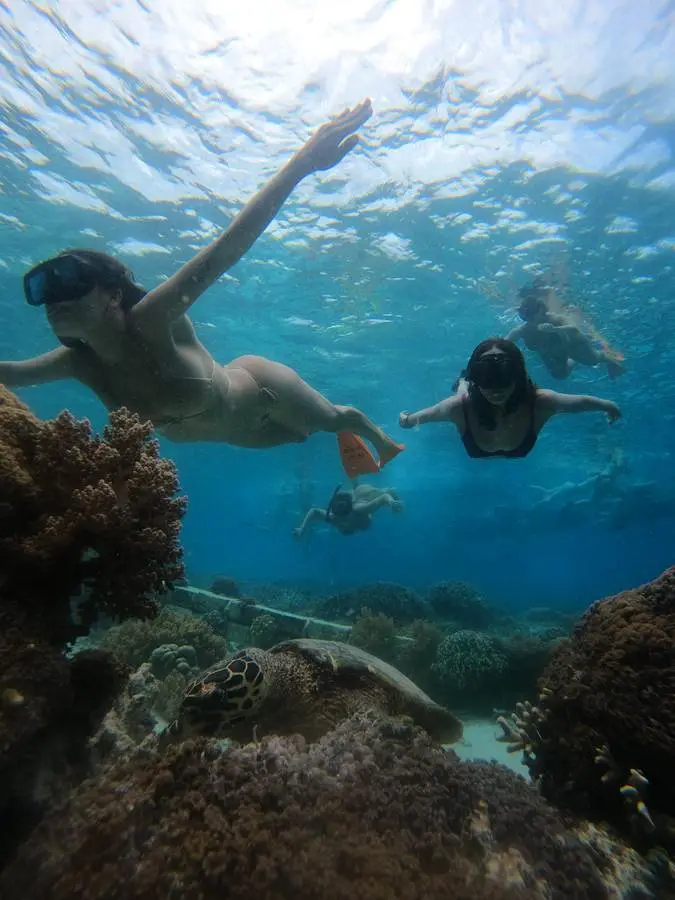
You can feel this difference the moment you put your face in the water. And it is the simplest way to explain why marine protected areas matter for biodiversity. When they are well designed and enforced, fish populations recover, and whole ecosystems get room to work again.
What is a marine protected area, actually?
A marine protected area, or MPA, is a part of the ocean where human activity is managed on purpose to protect what lives there. That covers a lot of ground: coral reefs, mangroves, seagrass meadows, open water, sometimes a whole coastline. Some MPAs are no-take reserves, where nothing is fished or removed. Others are zoned, with regulated diving, snorkelling or small-scale fishing in some parts and full protection in the most sensitive ones.
People often assume “protected” means “closed”. Usually it means something more specific. Fishing, anchoring, coastal building or extraction are limited enough that the ecosystem gets room to work the way it would without us. The rules differ a lot from one MPA to the next, which is why it always pays to read the rules of the exact place you visit.
What changes in the water
This part is not guesswork. It has been measured. A widely cited 2014 study in Nature, led by Graham Edgar and based on underwater surveys in 87 MPAs around the world, found that the conservation benefits grew sharply with five key features: no fishing allowed (no-take), good enforcement, more than ten years of protection, a size larger than 100 square kilometres, and natural isolation by deep water or sand.
MPAs with four or five of these features had, on average, twice as many large fish species per survey, five times more large fish biomass and fourteen times more shark biomass than nearby fished areas. Using these effective reserves as a baseline, the authors also estimated that fishing has reduced the total fish biomass on reefs by about two-thirds of what it would otherwise be.
The same study had a more sobering finding. 59% of the MPAs it looked at had only one or two of those features, and could not be told apart, ecologically, from fished sites. An MPA on a map is not automatically an MPA in the water. Enforcement, time and design matter as much as the boundary line, which is part of why we work with local experts and teams who know which protected areas near a given site are really working.
Recovery takes time, and it is not even across species
One of the five features in that study is age: more than ten years of protection. That fits what many reef scientists see in practice. Fast-growing reef fish can respond quite quickly when pressure drops, while sharks, rays, groupers and other long-lived species that breed slowly need much longer to rebuild their numbers.
This is one reason a newly declared MPA and a long-established one can look completely different underwater, even with similar rules on paper. Time, more than the announcement, does the work. Patience is part of conservation, just as it is part of a good dive.
Habitats are connected, and protection has to be too
Many species do not stay in one habitat their whole life. A young fish might grow up sheltered in a mangrove, move to a seagrass meadow to feed, and only settle on a coral reef as an adult. Break one link in that chain, by clearing the mangrove or damaging the seagrass, and the reef loses fish it never directly touched. That is why it makes sense to protect connected systems rather than one isolated reef. The goal is to keep a whole life cycle intact, not just a pretty patch of coral. We explain more in why seagrass meadows matter.
A side benefit: carbon and coastal defence
Mangroves and coastal wetlands do more than shelter fish. According to NOAA, current studies suggest these habitats take up carbon each year at a rate about ten times greater than mature tropical forests, and store three to five times more carbon per equal area, much of it in their soils for a long time. Seagrass meadows cover only a tiny part of the seafloor, but they are also important carbon stores.
NOAA also warns about the other side. When these habitats are damaged, the carbon stored in their soils can be released back into the atmosphere. And because they cover a fairly small area, they cannot solve climate change on their own. Protecting them for biodiversity also protects shorelines, since healthy mangroves and reefs help soften waves before they reach the coast.
Where global ocean protection actually stands
It is worth being honest about the scale. The Protected Planet Report 2024, from UNEP-WCMC and IUCN, found that 8.4% of marine and coastal areas were inside protected and conserved areas, compared with 17.6% of land. In April 2026, IUCN announced that 10.01% of the ocean is now officially designated as protected or conserved. That milestone was measured in a slightly different way, so the two numbers should not be compared too closely.
Under Target 3 of the Kunming-Montreal Global Biodiversity Framework, countries agreed to conserve 30% of land and sea by 2030. The Edgar study shows why area alone is not enough: a big percentage made of weak, unenforced MPAs would look good on paper and change little in the water. We could not find a single reliable, up-to-date figure for how much of the ocean is fully or highly protected, so we prefer not to quote one. Our page on protected areas collects the places we visit.
The ethical layer: what this means when we are in the water
None of this feels like statistics when you are snorkelling or freediving over a healthy MPA. It feels like more fish, bigger fish, and a reef that seems less picked over. We take that as a reason for care, not a photo opportunity: no touching, no chasing, no standing on coral, no anchoring on the reef, and following the local rules of that specific protected area. Sightings are never guaranteed, and that is part of what makes these places wild rather than staged.
A few small choices help. A rash guard means less sunscreen in the water, and a refillable bottle from a tropical travel kit means less plastic on small islands. Many MPAs also charge entry or conservation fees. Paying them gladly is one of the simplest ways a visitor can support the rangers who keep the rules alive.
This connects to something we have written about separately: how island communities balance tourism and conservation, often with far fewer resources than their reefs deserve. MPAs are one of the clearest tools they have, but tools only work when someone looks after them. If this made you curious about experiencing a healthy reef yourself, you can explore our upcoming retreats.
Questions people ask
What is a marine protected area?
A part of the ocean where human activities like fishing, anchoring or building are regulated to protect the ecosystems and species within it. Some are no-take reserves, and others allow limited, zoned activity.
Do marine protected areas actually increase fish numbers?
Well-designed and well-enforced ones do. A 2014 global study in Nature found that MPAs with four or five key features had five times more large fish biomass and fourteen times more shark biomass than nearby fished areas.
What makes an MPA effective?
The same study named five features: no-take rules, good enforcement, more than ten years of protection, more than 100 square kilometres, and isolation by deep water or sand.
Are all marine protected areas equally effective?
No. In that study, 59% of the MPAs had only one or two key features and could not be told apart, ecologically, from fished sites.
How much of the ocean is protected?
The Protected Planet Report 2024 put marine and coastal coverage at 8.4%. In April 2026 IUCN reported 10.01% of the ocean officially designated as protected or conserved. The global target is 30% by 2030.
Do marine protected areas help with climate change too?
Indirectly. NOAA says mangroves and coastal wetlands store three to five times more carbon per area than tropical forests, so protecting them keeps that carbon in the ground, but their small area limits the global effect.
Wildlife encounters are never guaranteed and never forced. Ocean Calling works only with vetted, ethical local operators, and every animal is free to approach, or not, entirely on its own terms.
Sources & further reading
- UNEP-WCMC and IUCN, 2024. Protected Planet Report 2024, Executive Summary.
- IUCN, 2026. World reaches milestone for nature: 10% of the ocean now officially protected (press release).
- NOAA National Ocean Service. Coastal blue carbon.
- Edgar, G.J. et al., 2014. Global conservation outcomes depend on marine protected areas with five key features. Nature 506: 216-220.
- Reef Resilience Network. Summary: Global conservation outcomes depend on marine protected areas with five key features.
- MPA News (OpenChannels). Global study finds conservation success increases dramatically when MPAs have five key features.
Further reading on Ocean Calling: More from the journal · Wildlife & the law · See the retreats · Ocean Atlas
Find the retreat that fits you
Small groups of up to six guests, unhurried days and local experts. Tell us how you feel in the water and we will point you to the right trip.