
Protected waters at our retreat locations
Five places, five reasons they are worth protecting. Marine sanctuaries, marine parks, ancestral domains and UNESCO places, zone by zone, and since when.
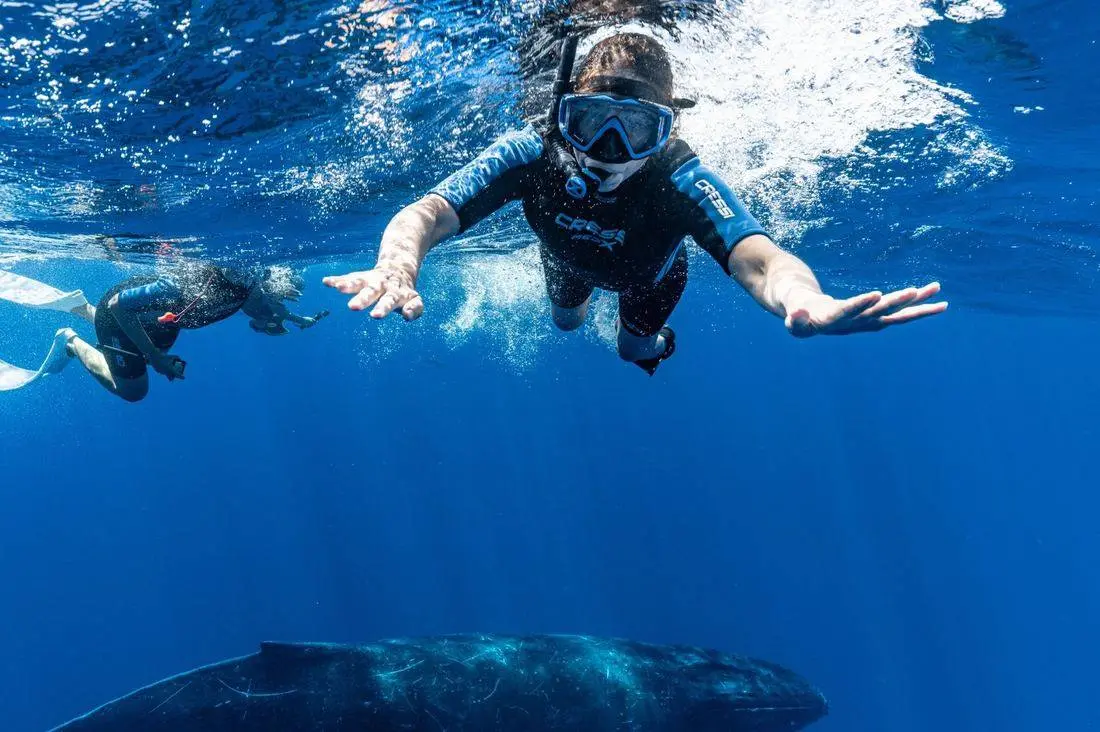
Moʻorea, French Polynesia
Yes. Moʻorea’s waters are a marine mammal sanctuary, and the lagoon has its own management plan.
Why it is special. French Polynesia’s waters are special for a simple reason: they sit in the path of a whale migration and a marine sanctuary large enough to hold it. Few places let you be a quiet guest in a recovery story this size.
Why we protect it
French Polynesia marine mammal sanctuary. All of French Polynesia’s waters are a sanctuary for whales, dolphins and every other marine mammal that passes through. Each year, from July to November, humpback whales travel thousands of kilometres to reach these warm, sheltered waters to mate, give birth and nurse their calves, then leave again. Here is the part worth sitting with: as a global species, humpback whales have recovered enough to be rated Least Concern by the IUCN Red List, but the smaller Oceania population that migrates through French Polynesia is still classified as Endangered. Time in the water with them, at a respectful distance, is not something anyone can promise you. It is a small privilege inside a much longer story of recovery, and the sanctuary exists to protect that story: professional whale-watching operators need approval from the Environment Department, boats must slow to 3 knots within 300 m (about 985 ft) of a whale and may never encircle it, and the regulated whale-watching season runs from 20 July to 20 November.
Moʻorea marine area management plan (PGEM). A local plan, created by the municipality in 2004 and revised from 2014, that sets out how Moʻorea’s lagoon and reef are shared and cared for — quiet governance behind the calm water you swim in.
Amed and Tulamben, Bali
Yes. Amed and Tulamben are in the Karangasem marine conservation area.
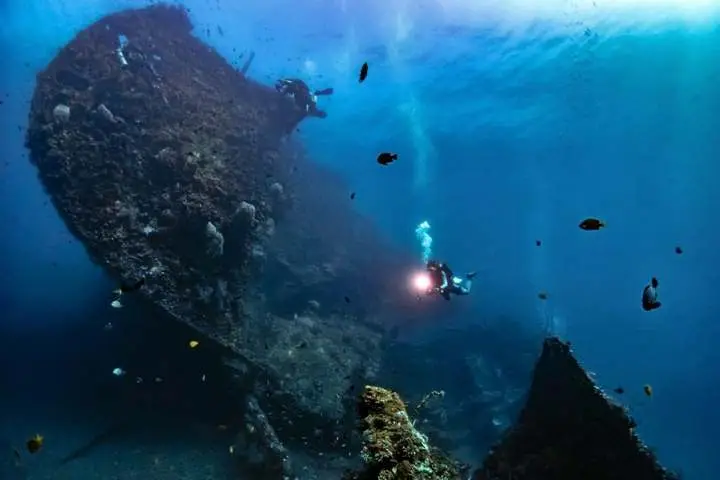
Why it is special. The USAT Liberty is not a purpose-built dive site — it is a real ship with a real story. Torpedoed by a Japanese submarine on 11 January 1942 while carrying railway parts and rubber, it was under tow toward safety when it began taking on too much water, so it was beached at Tulamben to save what could be saved. It sat quietly on the sand for two decades, until tremors from the 1963 eruption of nearby Mount Agung shook it loose into the sea, where it still rests, in about 7.6 to 30.5 m (25 to 100 ft) of water, some 40 m from shore. Freediving down to a slice of that history, on a single breath, is part of what makes Tulamben unlike anywhere else you will train.
Why we protect it
Karangasem marine conservation area. Established by Ministerial Decree KepMen KP No. 123/2023. The area includes Tulamben, where the USAT Liberty wreck lies, and Amed. It has protected zones and zones where diving is allowed.
Coron, Palawan
Yes. Coron Island and its lakes are protected, and the whole of Palawan is a UNESCO biosphere reserve.
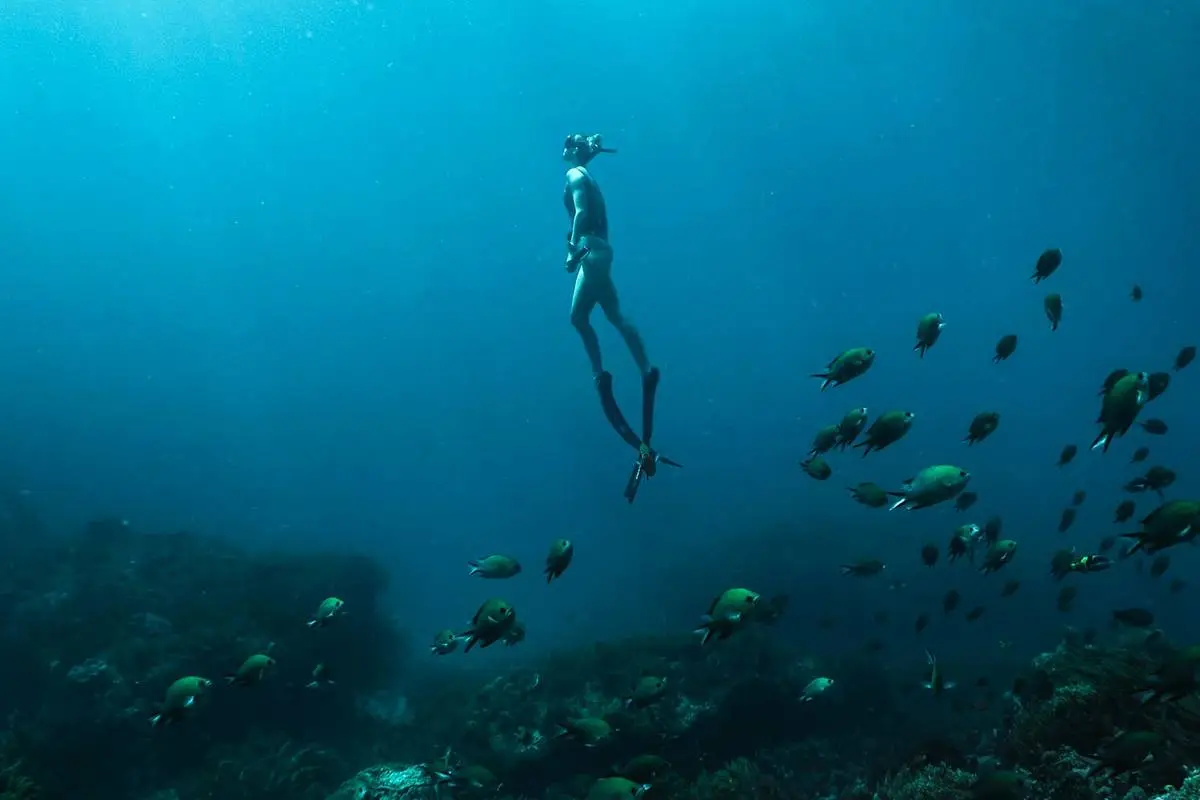
Why it is special. Coron Bay’s wrecks have a real, sober history: on 24 September 1944, US Navy aircraft found a Japanese supply fleet sheltering at anchor there and sank much of it in a single raid, which is why so many ships still rest here, some shallow enough for a snorkeller to see, some deeper for a diver. None of it is an official marine protected area, so it survives simply because people keep choosing to treat it with care. Nearby, Maquinit hot spring is a small, real curiosity worth knowing: a naturally geothermally-heated saltwater pool, one of very few of its kind in the Philippines — not a protected reserve of any kind, just a strange, warm gift from the ground itself.
Why we protect it
Coron Island: Tagbanua ancestral domain and Natural Biotic Area. Coron Island, home to Barracuda Lake, is the ancestral domain of the Tagbanua people, who have looked after these waters for generations, and it is protected by several government proclamations.
UNESCO Tentative List. Coron Island Natural Biotic Area is on UNESCO’s Tentative List, the first step towards World Heritage status. It is not yet a World Heritage site.
Palawan Biosphere Reserve (UNESCO). The whole province of Palawan — more than 1.4 million hectares of land and sea, spread across the main island and over 1,700 smaller ones — has carried UNESCO Biosphere Reserve status since 1990. Unlike a World Heritage listing, which recognises outstanding natural or cultural value on its own, a Biosphere Reserve is UNESCO’s idea that people and nature belong together: it protects a living, working landscape where local fishing and farming continue alongside conservation, not apart from it. Palawan earns the description honestly, with well over a hundred of the Philippines’ threatened species, dozens found nowhere else on Earth, and reefs, seagrass meadows and mangroves that ring its coastline.
Moalboal, Cebu
Yes. Pescador Island is a marine park and fish sanctuary.
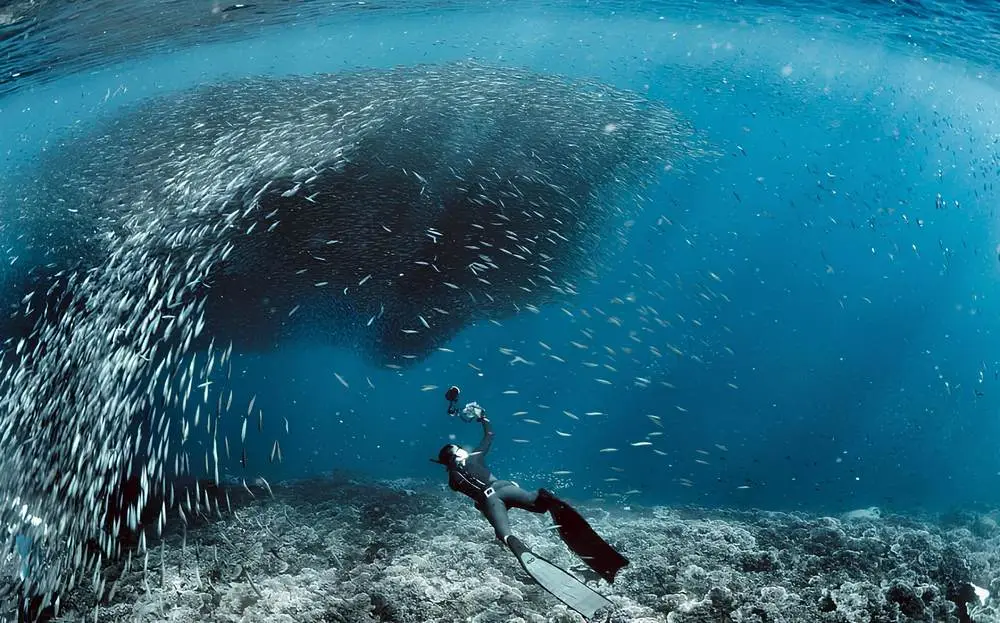
Why it is special. Pescador’s reputation was built one dive at a time: a soft-coral slope that drops into a hard-coral wall, and a sardine shoal that moves like a single silver animal just offshore, present all year and always wild.
Why we protect it
Pescador Island marine park and fish sanctuary. Declared by the municipality of Moalboal in 1990. Entrance fees are managed by the municipality and the Moalboal Dive Center Association.
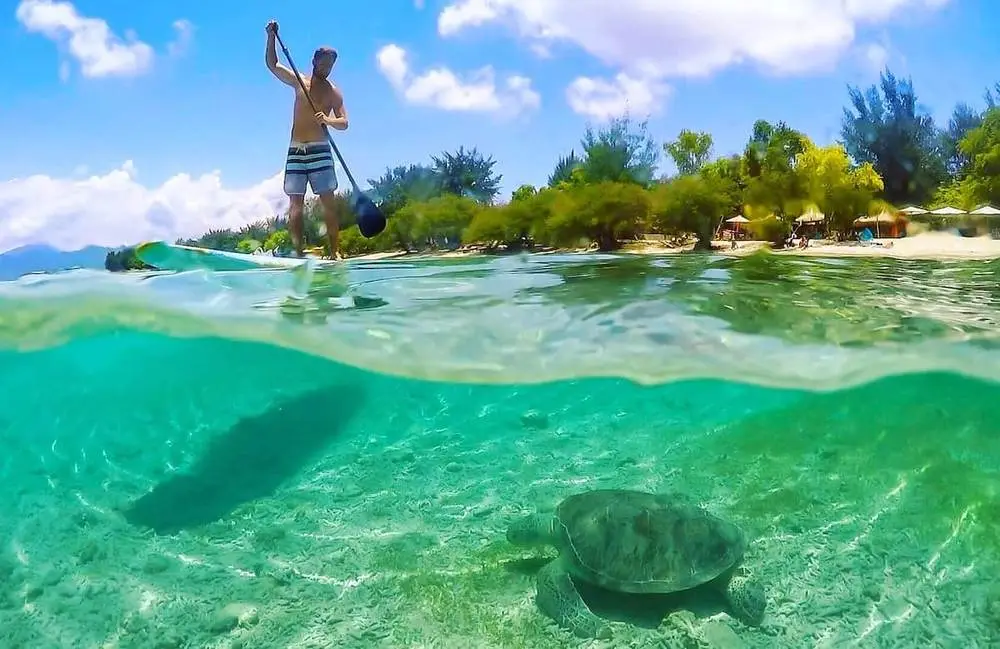
Gili Islands, Lombok
Yes. The three Gilis are a marine recreational park.
Why it is special. The park records 69 kinds of coral and 523 species of reef fish. That is the quiet payoff of a no-take zone: leave enough of the water alone, and it fills back up.
Why we protect it
Gili Matra marine recreational park (Gili Ayer, Gili Meno, Gili Trawangan). The park covers about 2,274 hectares (roughly 5,620 acres), including about 95 hectares (about 235 acres) of no-take zones where fishing is never allowed — a quiet buffer that lets the reef recover and keep giving back.
Where else is it legal to swim with whales?
A handful of confirmed, warm-water destinations where swimming with whales is currently legal and regulated. Moʻorea is the only one of these that is an Ocean Calling retreat today, but it is useful context for how this kind of encounter is managed around the world.
| Destination | Species | Season | Status |
|---|---|---|---|
| Tonga | Humpback whales | Jul–Oct | Legal, well-established (4 swimmers + guide max) |
| French Polynesia (Moʻorea, Tubuai) | Humpback whales | Jul–Nov | Legal — whole EEZ is a whale sanctuary since 2002 |
| Niue | Humpback whales | Jul–Oct | Legal, small-scale, similar regulations to Tonga |
| Dominican Republic (Silver Bank) | Humpback whales | Jan–Apr | Legal, government-sanctioned marine sanctuary |
| Dominica | Sperm whales, pilot whales | Jan–Apr, Nov | Legal, strict permit |
| Mozambique (Tofo) | Humpback whales | Jul–Oct | Legal |
| Western Australia (Ningaloo) | Humpback whales | Aug–Sep | Legal, licensed operators |
| Queensland / Great Barrier Reef | Dwarf minke whales | Jun–Jul | Legal, licensed |
| Timor-Leste | Blue whales, sperm whales | Sept–Dec | Legal, but the regulatory framework is still young — vet the operator carefully |
Regulations change, group-size limits and permit rules vary by operator and season, and “legal” does not always mean the operator in front of you is a good one. Always check current rules and vet the operator before booking, wherever you go.
How to read this
“Protected” means different things: a sanctuary, a marine park, an ancestral domain or a UNESCO listing. A UNESCO Tentative List entry is not a World Heritage listing. Rules can change, so please check the local rules before you travel.
A few terms, explained
Protected area or protected species. A legal status, granted by a government or an international treaty, that restricts or bans certain activities in a place, or around a species — touching, feeding, fishing, taking. It says what is or is not allowed. It does not, by itself, say how much danger a species is in.
Endangered, and the scale around it. A separate, science-based measure of extinction risk, most often set by the IUCN Red List, from lowest to highest concern: Least Concern, Near Threatened, Vulnerable, Endangered, Critically Endangered, Extinct in the Wild, and Extinct (with Data Deficient and Not Evaluated for species we simply do not know enough about yet). “Threatened” is the umbrella term for Vulnerable, Endangered and Critically Endangered together. A place can be legally protected with nothing endangered in it, and a species can be endangered somewhere with no legal protection at all — the two ideas measure different things, and both matter.
What is NOAA? The National Oceanic and Atmospheric Administration, the United States’ ocean and atmosphere science agency. It has no authority over French Polynesian, Indonesian or Philippine waters, but its research and its role in international ocean science bodies mean its name turns up often in marine conservation writing worldwide, including some of the sources behind this page.
New: mobula rays in La Ventana, May 2027
CHF 2,450