
Why the Ocean Heals: An Ethical Travel Guide
What the science says about why water calms us, what the Balinese idea of balance adds, and how to visit the ocean in a way that gives something back.
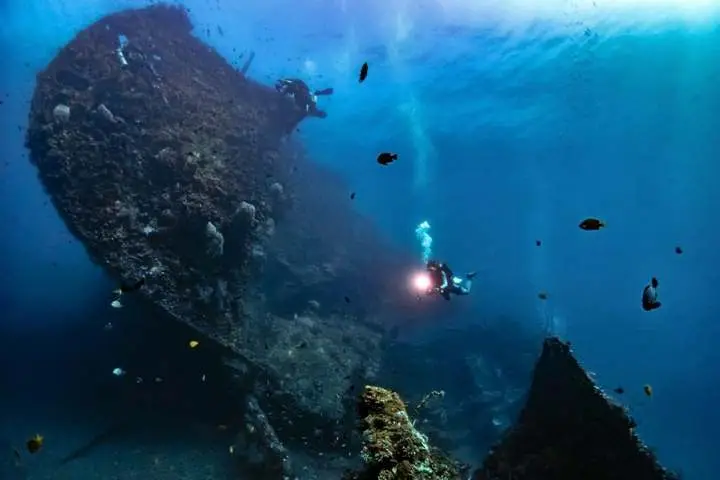
Do you ever feel like your brain has too many tabs open? Notifications, the noise of the city, a to-do list that never ends. At some point the mind just hits a wall.
Then you stand at the edge of the shore. You hear the waves, you taste salt in the air, and for a moment you actually breathe. That is not an accident. So why does the ocean heal, or at least calm, so many of us? Research on "blue spaces" links time near water with better wellbeing for many people. It is not a cure, but it is a real effect worth taking seriously. It is also part of why more people choose what we call ethical ocean travel: exploring the sea in a way that restores something in you, without taking anything away from the place.
A short note before we go on: nothing here is a medical claim. If you are carrying something heavier than everyday tiredness, like grief, anxiety, depression or anything that feels bigger than a good holiday can fix, the ocean can sit next to real support, never replace it. Please keep talking to a doctor or therapist alongside any trip you plan. What follows is about wellbeing and a gentle reset, not treatment.
Why does the water make you feel human again?
Marine biologist Wallace J. Nichols made popular a name for the feeling many of us get near the sea: Blue Mind. It describes a calm, slightly meditative state around water. It is a useful name, not a medical diagnosis, but the research behind it is growing. A 2017 systematic review by Mireia Gascon and colleagues found the evidence leaned towards more time around outdoor blue spaces being linked with better mental health and wellbeing. The authors also warned that the studies were still few and very different from each other.
Here is the idea in plain words. In the city, your attention is "directed" almost all the time: traffic lights, inboxes, schedules. That kind of focus is tiring. Environmental psychologists, following the "attention restoration" idea of Rachel and Stephen Kaplan, call the opposite "soft fascination". Light moving on the water or the sound of the tide holds your attention gently, without effort. The part of your brain that does the hard focusing gets a chance to rest.
A few ways this shows up:
- A real break. Time away from your usual routine gives your mind room to step back, even briefly.
- The power of big. A wide horizon is a classic way to put daily worries in their place. It is hard to feel your inbox is the centre of the universe while you look at the Pacific.
- Slower breathing. Many people find that slow, steady breathing at the water's edge helps them settle. It is a simple habit, not a treatment, but it is free and you can take it home.
The Balinese idea of a balanced life
While Western researchers measure why water calms us, Balinese Hindu philosophy has long had a name for the bigger picture: Tri Hita Karana, roughly "three causes of wellbeing". A good life depends on keeping three relationships in balance: with the divine (parhyangan), with other people (pawongan) and with nature (palemahan). This is not only an idea. In 2012 UNESCO listed Bali's subak system of rice terraces and water temples as a World Heritage cultural landscape, described as "a manifestation of the Tri Hita Karana philosophy".
In Bali, the sea is not just a backdrop for a swim. It carries meaning. Travelling with care there, by paying local families fairly, respecting local customs and looking after the reefs, is not a separate "ethical" extra. It is close to the spirit of Tri Hita Karana itself. When nature is respected, the community tends to do better too, and a traveller passing through gets to be part of that instead of apart from it.
Why slower travel matters more now
To be honest, Bali has been under real pressure. According to Indonesia's statistics bureau, as reported by Reuters, the island received more than 6.3 million international tourist arrivals in 2024, more than in 2019. In September 2025, Bali had its worst flooding in years, and Reuters reported 18 deaths. The environmental group Walhi Bali blamed overdevelopment and farmland turned into buildings. Bali's governor disputed that land conversion caused the Denpasar floods. After the floods, the national government reportedly moved to ban new hotels and restaurants on rice fields and converted farmland. The debate is still open, but the pressure is real.
None of this means you should avoid Bali. It means it is worth visiting with a bit more thought. Choosing quieter regions, staying longer in fewer places and picking small operators over mass-market ones is sometimes called regenerative travel: trying to leave a place a little better than you found it, not just passing through.
The ethical layer: manners for the deep
Sharing the water with a whale or a manta ray is the kind of moment people remember for years. To keep it good for you and for the animal, a little ocean etiquette goes a long way. And no sighting is ever guaranteed.
Around whales:
- Let them choose. Never chase a whale or swim straight at it. Hold back and let the whale decide whether to come closer. Legal distances for boats and swimmers vary a lot between countries and they change, so a good operator always briefs you on the current local rules, not a generic number.
- Stay together. A small, calm group in the water is far less stressful for a whale than several people splashing in different directions.
Around manta rays:
- Keep your distance. The Manta Trust's swim-with-mantas code, built from research in the Maldives, asks swimmers to enter the water quietly, no closer than about 10 metres from a manta, and then not to approach closer than 3 metres. Stay still and let the manta decide. The research behind the code found that interactions within three metres caused more avoidance behaviour.
- Leave the cleaning station alone. Mantas visit special reef spots called cleaning stations, where small fish clean their skin. The Manta Trust names divers crowding over cleaning stations as a problem, because it can stop mantas from using them. Stay at the edge, low and still.
Wildlife encounters are unpredictable. Swimming with whales and manta rays should always follow local regulations and experienced professional guidance.
The Ocean Calling way: no performance, just presence
Some people hesitate before a "retreat" because they worry they are not fit enough, experienced enough or "zen" enough. We built Ocean Calling to take that worry away.
On our hosted retreats the group is six guests at most, so it feels like travelling with friends, not joining a tour.
- Quiet time. Days are unhurried, and you can skip any activity. We believe you cannot really reset if you never have a quiet moment to take in the day.
- No pressure. Whether you are learning to freedive or just want to float and watch the light, nobody is performing. We go at your pace.
- Real connection. We work with vetted local guides who know these waters and islands far better than we ever could, and who share the real stories behind the places.
If you want to know what guests actually thought, our guest reviews are a good place to look.
How to be a mindful explorer
Choosing your next trip? Here are a few simple ways to tell whether an operator is doing it right, the "ethical" part of ethical ocean travel:
- Ask about local people. Does the company hire local guides? Does it visibly support the community where it works?
- Check the group size. Bigger groups are usually harder on the environment and on the animals. Smaller is almost always gentler.
- Look for Green Fins. This is an environmental standard for dive and snorkel operators, run by the Reef-World Foundation. Ask an operator whether they are a member and what that changes in how they anchor, brief guests and behave around wildlife.
- Bring your own reusables. A refillable bottle from a simple tropical travel kit cuts plastic waste, and covering up with a long-sleeve rash guard means less sunscreen in the water. If you do use sunscreen, our guide to sunscreen and coral reefs explains what is known. A roll-top dry bag keeps your things dry on boat days.
Curious what this looks like with one specific animal? Our guide to swimming with manta rays in Bali goes into detail. And if you have questions about how we run things day to day, our planning page answers most of them.
The ocean is calling
The ocean is not just a backdrop for a photo. It is one of the few places left that slows most people down. It reminds you how to breathe, how to be still for a minute, and how small your worries can look next to a wide horizon.
None of that needs the ocean to "fix" anything. It is simply a good place to rest, if you visit with a bit of care. Travel to the ocean also has a real environmental cost, so staying longer in fewer places is part of that care.
If this made you curious to try it yourself, you can look at our Bali freediving trip in Amed. It is a referral trip through Ocean Match: we connect you with a trusted local team, and you book with them directly.
Our commitment
We are not perfect, but we try to be intentional. We commit to:
- Small groups on hosted retreats, six guests at most, for a calm and personal rhythm.
- Respectful wildlife encounters: we wait and observe, we never chase, touch or bait.
- Supporting our local partners and guides fairly.
- Learning all the time from marine experts and the communities we visit.
- Making our retreats a space for real rest, not performance.
FAQ
What is ethical ocean travel?
A way of travelling that respects the ocean's health and the people who live by it: choosing operators that protect reefs, pay local partners fairly, follow wildlife codes and make sure your presence does not stress marine life.
Is there real science behind the ocean making us feel better?
Some. A 2017 systematic review of 35 studies found the evidence leaned towards blue space exposure being linked with better mental health and wellbeing, but the studies were few and varied. It supports rest, not treatment.
What is "Blue Mind"?
A term made popular by marine biologist Wallace J. Nichols for the calm, slightly meditative state many people feel near water. It is a helpful name, not a diagnosis or a treatment.
What is Tri Hita Karana?
A Balinese Hindu philosophy of balance between people and the divine, people and each other, and people and nature. UNESCO's 2012 World Heritage listing of Bali's subak system describes the system as a manifestation of this philosophy.
How close can I swim to a manta ray?
The Manta Trust's code asks swimmers to enter the water quietly about 10 metres away, not to approach closer than 3 metres, to let the manta come to them, and not to crowd cleaning stations.
Is Bali still worth visiting despite overtourism concerns?
Yes, with thought. Bali received more than 6.3 million international arrivals in 2024, and the September 2025 floods started a debate about overdevelopment. Quieter regions, longer stays in fewer places and small local operators ease the pressure.
Wildlife encounters are never guaranteed and never forced. Ocean Calling works only with vetted, ethical local operators, and every animal is free to approach, or not, entirely on its own terms.
Sources & further reading
- Decision: Cultural Landscape of Bali Province: the Subak System as a Manifestation of the Tri Hita Karana Philosophy, UNESCO World Heritage Centre, 2012.
- Manta ray tourism code of conduct (Manta Trust guidance), Convention on Migratory Species (CMS).
- Swim with mantas with a responsible operator (Manta Trust code), Divernet.
- Outdoor blue spaces, human health and well-being: a systematic review of quantitative studies, Gascon M. et al., International Journal of Hygiene and Environmental Health, 2017.
- Waters recede in Bali after floods (Reuters report), Tuoi Tre News / Reuters, 2025.
- Bali takes massive economic hit from worst flooding in years, The Jakarta Post, 2025.
- After floods, construction of new hotels and restaurants banned in Bali, Adnkronos, 2025.
Further reading on Ocean Calling: More from the journal · Wildlife & the law · See the retreats · Ocean Atlas
Find the retreat that fits you
Small groups of up to six guests, unhurried days and local experts. Tell us how you feel in the water and we will point you to the right trip.