
Eco-Friendly Tourism: Why the Word Is Not Regulated
“Eco-friendly” has no single legal definition in tourism. Here is what the word really means, how the rules are changing, and how to read green claims with clearer eyes.
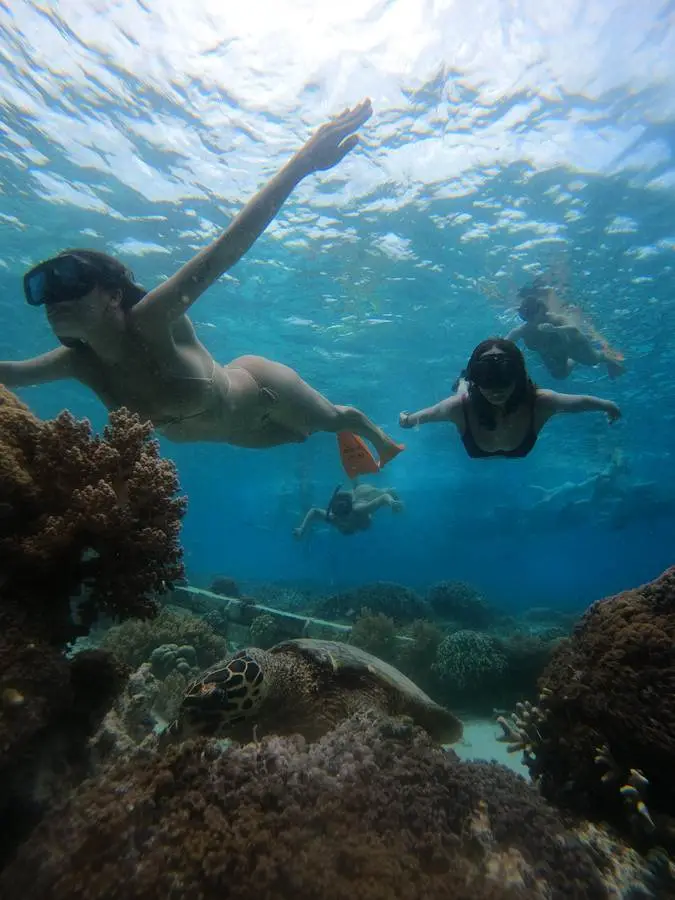
You are choosing between two dive resorts. Both websites show turtles. Both say “eco-friendly”. One is cheaper. Which one is really kinder to the sea? The honest answer: the word alone cannot tell you. “Eco-friendly” has no single legal definition in tourism, and no global body approves it before a company uses it. What helps is knowing how the word is, and is not, regulated, and which questions show what a company really does.
What does eco-friendly mean in tourism?
I read “eco-friendly” on hotel websites, tour listings, even T-shirts. I still cannot give you one clean sentence for what it legally means in tourism, because there is no single one. No global law defines “eco-friendly tourism”, and no single body has to approve a company before it uses the phrase. That surprises a lot of people.
It does not mean the word is empty, or that everyone using it is exaggerating. Some operators invest seriously in a smaller footprint. Others use the language loosely, as general branding. Seeing that gap is what helps you read these claims more clearly, and that is the whole point of this piece.
Why there is no single global definition
Tourism happens across many countries, each with its own environmental rules. In this industry, green language mostly grew out of voluntary guidelines, not one binding law. But it is not a free-for-all everywhere, and the rules are getting tighter. Two examples matter for travellers.
In the United States, the Federal Trade Commission’s “Green Guides” (last revised in 2012) explain how the FTC judges environmental marketing. They strongly discourage broad, unqualified claims like “green” or “eco-friendly”, because consumer research showed that people read big benefits into them that almost no product or service can prove. A company can still qualify a claim by naming the specific benefit, clearly and close to the claim. The Guides are not binding regulations in themselves, but the FTC can act against claims it considers deceptive under the FTC Act.
In the European Union, Directive (EU) 2024/825, often called the “Empowering Consumers for the Green Transition” directive, was adopted on 28 February 2024 and published in the Official Journal on 6 March 2024. Member states had to adopt their national rules by 27 March 2026 and must apply them from 27 September 2026. It adds to the list of commercial practices treated as unfair in all circumstances: making a generic environmental claim for which the trader cannot demonstrate recognised excellent environmental performance relevant to the claim. It mainly covers marketing from businesses to consumers, and each country may apply it a little differently. I am not a lawyer, and I could not confirm exactly how it will be enforced against words like “eco-friendly” in tourism, so please read this as a direction of travel and check the current rule in your country.
So the picture holds. These frameworks police whether a claim is misleading. They do not hand out one agreed definition of “eco-friendly”.
Eco-friendly, ecotourism, sustainable travel: not the same thing
These words get used almost as if they were one, and I understand why: they point toward similar values. But they are not identical.
Ecotourism has its own definitions from ecotourism organisations. The Global Ecotourism Network, for example, describes it as responsible travel to natural areas that conserves the environment, sustains the well-being of local people, and involves interpretation and education. The Global Sustainable Tourism Council (GSTC) explains the difference well. Ecotourism is a niche, a type of tourism in natural areas. Sustainable tourism is not a type of tourism at all. It is an aspiration for the impacts of every kind of tourism. Responsible travel usually describes the choices each traveller makes. “Eco-friendly” is the vaguest of them all.
None of these words is wrong. They just answer slightly different questions, and mixing them up is where much of the confusion starts.
Certification exists, but it is voluntary
Real standards do exist. The GSTC describes its Criteria as the global baseline standards for sustainability in travel and tourism, with separate sets for the industry (hotels and tour operators) and for destinations. They rest on four pillars: sustainable management, socio-economic impacts, cultural impacts and environmental impacts. Certification bodies can use them as the base for their own labels.
But taking part is optional. A company can be truly careful about its impact and simply never apply for a badge. Another can hold a certificate that covers only part of what it does. So a logo is useful information, not the whole story, and no logo is not proof of anything either. Our guide to how eco-tourism standards differ goes deeper, and greenwashing in marine tourism shows the common tricks.
What I look at instead of the label
Because the word itself cannot tell you much, I pay more attention to how clearly an operator explains what it actually does. Do they say how many people join a trip at once? Do they describe what happens, and what does not happen, around wildlife? Do they tell you who the local guides and boat crews are, or do they stay vague?
This is part of why we keep our own groups to six guests at most and introduce the local experts we work with. Not because a small number is automatically “eco”, but because it is something concrete you can check instead of taking on faith. Small habits are the same idea at a personal scale. A refillable bottle from a tropical travel kit means fewer plastic bottles bought on an island with limited waste systems, and a rash guard means less sunscreen washing off into the water. Neither makes a trip “eco-friendly”. They just take away a little of the load.
Context changes what “low impact” even means
The same activity can weigh very differently depending on where it happens. A boat near a whale in open water and a snorkeller entering a shallow coral garden are not comparable, even if both are filed under “wildlife tourism”. Fragile reefs, breeding grounds and busy sites usually ask for more caution than open, resilient places.
This is one reason we never promise a sighting on any of our freediving and snorkelling trips. The ocean does not work on a schedule, and I will not pretend otherwise just to sound more appealing. Honesty also includes the hard part: flights are usually a large share of a trip’s footprint, and no label changes that.
What actually helps as a traveller
The most useful thing is not memorising a list of eco-labels. It is asking a few direct questions before you book. How big is the group? Who runs the boat or the dive? What happens if wildlife does not show up? What is the policy on touching or feeding animals? Which specific environmental claim can they back up? Under the FTC’s approach, a good claim names its specific benefit. Under the new EU rules, a generic claim needs proof. You can ask for the same thing: “eco-friendly how, exactly?”
“Eco-friendly” is not a lie, and it is not a guarantee either. It is a word without a fixed legal meaning in tourism, in an industry where good practice is still mostly voluntary, even though the EU and the FTC now push hard against vague green claims. What we can change, as travellers, is how carefully we read past the word.
Questions people ask
What does eco-friendly mean in tourism?
It usually signals an effort to reduce environmental impact, but there is no single global legal definition that a company must meet to use the word.
Is “eco-friendly” a regulated term?
Not as a definition. In the US, the FTC’s Green Guides discourage broad, unqualified claims like “eco-friendly”. In the EU, Directive (EU) 2024/825, applied from 27 September 2026, treats a generic environmental claim as unfair when the trader cannot demonstrate recognised excellent environmental performance relevant to the claim. Check the current rule where you live.
Is ecotourism the same as sustainable tourism?
No. The GSTC describes ecotourism as a niche type of travel to natural areas, while sustainable tourism is an aspiration for the impacts of every kind of tourism.
Are there real certification standards for sustainable tourism?
Yes. The GSTC Criteria are a global baseline with sets for industry and for destinations, built on four pillars. Certification is voluntary, so some careful operators simply do not hold one.
How can I check an eco-friendly claim?
Ask what the specific benefit is, and look at concrete facts: group size, wildlife rules, local partners and what happens if animals do not appear. Specific answers you can check tell you more than the label.
If this made you curious about meeting the ocean this way, you can explore our upcoming retreats.
Wildlife encounters are never guaranteed and never forced. Ocean Calling works only with vetted, ethical local operators, and every animal is free to approach, or not, entirely on its own terms.
Sources & further reading
- European Parliament and Council. Directive (EU) 2024/825 of 28 February 2024 amending Directives 2005/29/EC and 2011/83/EU (empowering consumers for the green transition). Official Journal of the European Union, OJ L 2024/825, 6 March 2024. Article 4 (application from 27 September 2026) and Annex I point 4a. Checked 17 October 2026.
- US Federal Trade Commission. Environmental claims: summary of the Green Guides.
- Bird & Bird, 2024. Directive to empower consumers for the green transition has been adopted.
- COSLaw. Environmental claims after 27 September 2026: strengthening consumer protection against greenwashing.
- Foley & Lardner, 2012. New FTC Green Guides address environmental claims.
- Global Sustainable Tourism Council. The difference between ecotourism and sustainable tourism.
- Global Sustainable Tourism Council. GSTC Industry Criteria for Tour Operators.
Further reading on Ocean Calling: More from the journal · Wildlife & the law · See the retreats · Ocean Atlas
Find the retreat that fits you
Small groups of up to six guests, unhurried days and local experts. Tell us how you feel in the water and we will point you to the right trip.