
First Time Snorkeling: An Honest Beginner Guide
What nobody tells you before your first time snorkeling: the mask, the breathing, the quiet fear, and what to do with your hands.
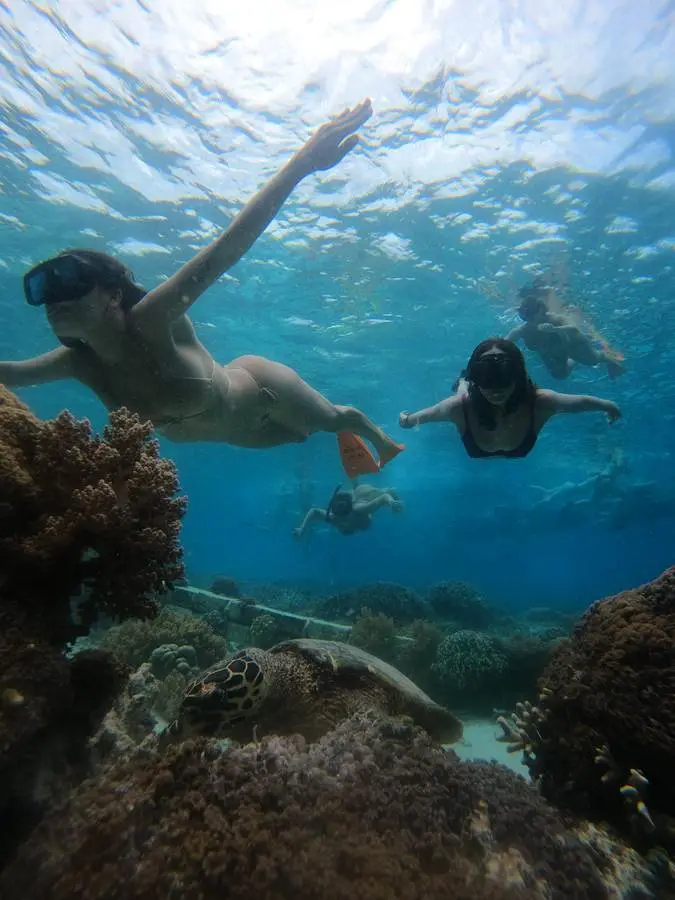
Nobody warns you about the hands. Before your first time snorkeling, you read about breathing through a tube, about masks fogging up, about the strange feeling of putting your face in the sea on purpose. Nobody mentions that once you are floating there, face down, breathing in that loud, close way a snorkel makes you breathe, your hands suddenly have nothing to do. So here is the short answer for beginners: find a mask that seals, breathe slowly, let your fins do the work and your hands rest, go with a buddy, and never touch the reef.
A good beginner guide should tell you more than how to clear a mask. It should tell you how strange the whole thing feels before it becomes wonderful. This is the version I wish more people read before their first swim.
The gear matters more than you expect
It is easy to think any mask will do. It will not. A mask that does not seal against your own face lets water trickle in every few minutes, a small thing that quietly eats a big amount of confidence. A snorkel that is too stiff knocks against your teeth every time you turn your head. A low-volume mask and a soft, flexible snorkel that fit you well make your first hour feel like floating, not like fighting with equipment.
If you can, try a mask on dry land before you buy or rent it. Hold it gently against your face without the strap, breathe in a little through your nose, and let go. If it stays on by suction for a moment, it will probably seal in the water too. Keep the strap flat and untwisted around the widest part of the back of your head, not pulled tight. A tight strap often causes leaks instead of stopping them.
Why does your heart feel strange when your face goes in the water?
The first time your face goes under, especially if the water is cooler than a warm bath, something happens that has nothing to do with courage. The Divers Alert Network explains that cold water on the face activates the trigeminal nerve, which sends signals to the brain, which then activates the vagus nerve, and the vagus nerve slows the heart. This is part of the dive reflex, the same family of responses that helps marine mammals save oxygen underwater. DAN adds that the effect is stronger when you also hold your breath.
That small lurch you may feel in your chest is not only fear. It is your body doing something very old and automatic. Knowing this helps many people stop treating the feeling as a warning and start treating it as background noise. If you have a heart condition, though, talk to your doctor before you snorkel.
Where the hands actually go
Here is the practical answer, since it is the one beginners want most: let them float. Cross them loosely in front of your chest, or let them rest along your sides, moving only enough to steer a little. You do not need to swim with your arms. Your fins do the work, and moving arms stir up sand, startle fish and use energy you will want later. The stillness that feels awkward on land is exactly the stillness that works in the water. Watch an experienced guide snorkel and you will often see their arms doing almost nothing at all.
Breathing through a tube is a skill, briefly
For the first few minutes, breathing through a snorkel can feel like an imitation of breathing, not the real thing. Slow it down. Long inhale, long exhale, your mouth doing all the work while your nose rests. If water gets into the tube, one sharp, strong exhale pushes it out of the top. You do not need to lift your head or panic. Practise this once in shallow water where you can stand, and it becomes much less scary later. For most people it feels natural within one real session, which is faster than many beginners expect, and slower than any brochure will admit.
Snorkeling safely: never alone, and know the water
Snorkeling looks gentle, but it is still swimming in the open sea. Snorkeling safety advice repeats the same basics: go with a buddy, stay where the conditions suit how well you swim, and watch for currents, waves and boats. Tell someone where you are going and when you expect to be back. If you are not a strong swimmer, stay in shallow water and think about using a flotation aid.
A roll-top dry bag on the beach or boat keeps your phone and towel dry and in one place. It sounds small, but it makes it easier to think about the water and not about your things.
The ethical layer: one rule that matters more than technique
Whatever else you forget, keep this one: hands and fins stay off the reef, always, with no exceptions for a better photo or a closer look. Reef-building coral is a living animal. Our guide on how to snorkel without damaging coral covers the details.
Sunscreen is part of the same habit. The US National Park Service has found high levels of the chemical filters oxybenzone, octinoxate and avobenzone near reef sites. It recommends mineral sunscreens with zinc oxide or titanium dioxide, or covering up with clothing such as a rash guard, so you need less sunscreen in the first place. The park service also warns that a "reef-friendly" label alone is not reliable, which we explain in our reef-safe sunscreen guide.
None of this is about being a perfect guest. It is a small habit that costs almost nothing and adds up, across every visitor who does the same. Turtles, rays or anything else are never guaranteed, and an animal that swims away is telling you something worth respecting.
What to tell yourself before that first swim
Go slowly. Try the mask on land first. Let your hands do nothing. Trust the strange lurch in your chest as biology, not failure. Stay close to your buddy. And when a fish or a patch of coral surprises you, resist the wish to reach for it. Not touching is not a rule that takes something away from the experience. It is part of what makes the experience worth having. If you later feel curious about going deeper, our piece on the difference between snorkeling, scuba diving and freediving is a good next step.
Snorkeling well is less about being fearless and more about a quiet, borrowed calm. The sea does most of the work, if you let your hands stop trying to help.
If this made you curious about experiencing it yourself, you can explore our upcoming retreats.
Questions people ask
How do I know if a snorkel mask fits?
Hold the mask against your face without the strap and breathe in gently through your nose. If it stays on by suction for a moment, it should seal in the water. Wear the strap flat around the widest part of your head, not too tight.
Why does my heart feel strange when I put my face in the water?
Cool water on the face activates the trigeminal nerve, and the brain then slows the heart through the vagus nerve. The Divers Alert Network describes this as part of the dive reflex. It is stronger if you also hold your breath.
What should I do if water gets into my snorkel?
Blow out sharply and strongly through the snorkel to push the water out of the top. Practise it first in shallow water where you can stand.
Can I snorkel alone?
It is safer not to. Snorkeling safety advice always says to go with a buddy or a group, tell someone your plans, and choose conditions that match how well you swim.
What sunscreen should I use for snorkeling?
The US National Park Service recommends mineral sunscreens with zinc oxide or titanium dioxide, or covering up with clothing such as a rash guard. It notes that a "reef-friendly" label alone is not a guarantee.
Wildlife encounters are never guaranteed and never forced. Ocean Calling works only with vetted, ethical local operators, and every animal is free to approach, or not, entirely on its own terms.
Sources & further reading
- US National Park Service. Sunscreen and ocean protection.
- US National Park Service. Protect yourself and protect the reef.
- Hawaii Ocean Safety Office, State of Hawaii. Snorkeling safety.
- Divers Alert Network, 2018. How the dive reflex protects the brain and heart. Alert Diver.
- StatPearls (NCBI Bookshelf). Physiology, diving reflex.
- PADI. How to choose a mask.
- NOAA Coral Reef Conservation Program. Effects of ultraviolet filters in sunscreen on corals.
Further reading on Ocean Calling: More from the journal · Wildlife & the law · See the retreats · Ocean Atlas
Find the retreat that fits you
Small groups of up to six guests, unhurried days and local experts. Tell us how you feel in the water and we will point you to the right trip.