
Adélie penguin
Pygoscelis adeliae
A small black and white penguin of the Antarctic coast, busy and unbothered by the cold. Seeing one is a gift of place and season, never a promise.
Least Concern (IUCN, 2020) means it is not close to being threatened at present. Numbers differ by region, with declines on the western Antarctic Peninsula.
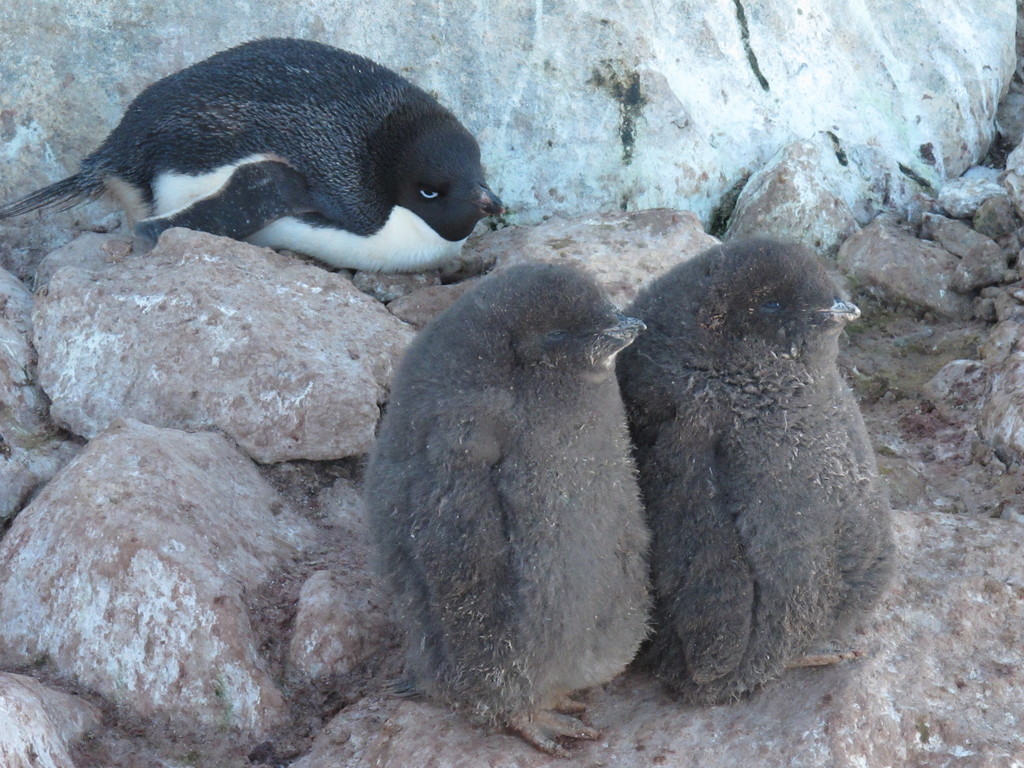
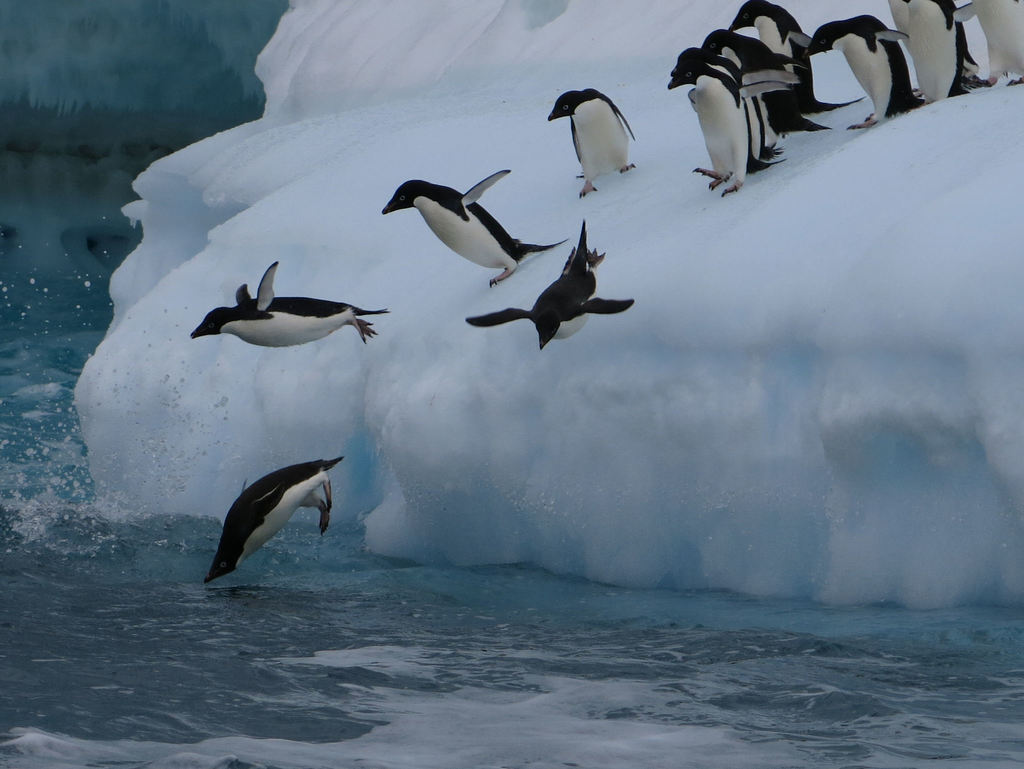
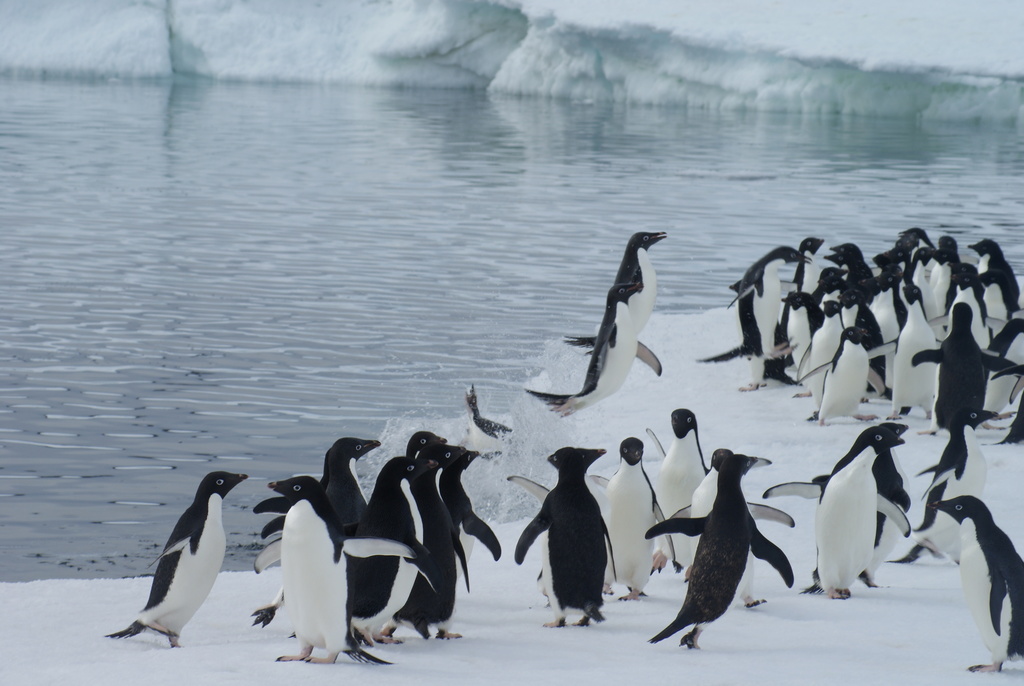

Photos show the species, not always the places on this page.
Length
About 70 to 73 cm (28 to 29 in) long; females are smaller than males
Weight
About 3.8 to 8.2 kg (8.4 to 18.1 lb); the Australian Antarctic Division gives 3 to 6 kg (6.6 to 13.2 lb)
Next to a person
About as tall as an adult's thigh, and as heavy as a newborn baby up to a small dog
What it eats
Mostly Antarctic krill offshore. Near the colony, within about 20 km, meals are mostly fish, amphipods and crystal krill. Silverfish and lanternfish are also eaten. Meals fed to chicks weigh about 300 to 650 g.
Around people
Calm, give space
How it lives
Adélies breed from October to February in colonies on dry ground, building nests of pebbles. Pairs usually lay two eggs by mid-November, chicks hatch in December and leave the nest at 7 to 9 weeks. Chicks do not return to the colony until they are 3 to 5 years old. Life expectancy is about 10 to 20 years. Leopard seals hunt adults, and skuas and giant petrels take eggs and chicks.
Where it goes
Adélie penguins breed all around the coast of Antarctica and on some sub-Antarctic islands, making them the most widespread penguin in the Antarctic. Breeding birds come ashore on dry, sloping ground from October to February. I did not read a detailed account of where they go in winter.
We only draw a journey on the map when scientists have tracked it or clearly documented it. For this animal we have not found one yet.
Populations
The first global census, in 2014, counted about 3.79 million breeding pairs (95 percent range 3.52 to 4.10 million) in 251 colonies. That was 53 percent more than the 1993 estimate of 2.47 million, partly because 41 colonies were newly counted. Trends differ by region: declines along the western Antarctic Peninsula, increases in East Antarctica and the Ross Sea. The Windmill Islands near Casey grew from 30,000 pairs in the 1950s to nearly 200,000. In 2024, more than 532 dead Adélies were found, with bird flu suspected. The IUCN lists it as Least Concern (2020).
Meet it respectfully
Watch from a distance and let penguins come and go on their own paths. Never walk into a colony, chase, touch or feed them, and keep quiet near nests. Give chicks, eggs and nesting birds extra room. Follow your guide and the rules of the place you are visiting.
Fun fact
Tap the bulb to light it up.
The 2014 census found about 3.79 million breeding pairs in 251 colonies.
It is the most widespread penguin species in the Antarctic.
Adélies swim at about 8 km/h (5 mph) and can leap about 3 m (10 ft) out of the water.
Adélie penguin in the Ocean Atlas
Places we have researched where this animal is recorded. It is never guaranteed, and some places are for watching from the boat only.
Travel with usComing soonTrusted referralExploringOn pause, story onlyEthics pass
Country colour: pink where we travel, blue where we are exploring or refer, grey for story only.
 Antarctica
 Australia
Sources for this page
- Wikipedia, Adélie penguin
- Australian Antarctic Division, Adélie penguin
- Lynch and LaRue, 2014, First global census of the Adélie penguin, The Auk
- GBIF, IUCN Red List category record
Facts checked 5 October 2026. Photos: Unsplash licence, or Creative Commons as shown on each photo.
Work in ocean travel?
We are always happy to hear from exceptional local operators, accommodation, conservation organisations and destination experts. If your work fits responsible, small-group ocean travel, we would love to learn more.
Partner with Ocean CallingSwim with humpback whales in Moʻorea, September 2027
from CHF 4,500