
Atlantic walrus
Odobenus rosmarus rosmarus
Atlantic walruses rest in tight groups on Arctic ice or beaches and feed on seabed clams. We watch quietly from a distance and never chase or crowd them.
Near Threatened (IUCN, 2016) means it is close to becoming threatened. This status is for the Atlantic walrus. The walrus as a whole is Vulnerable (2016).
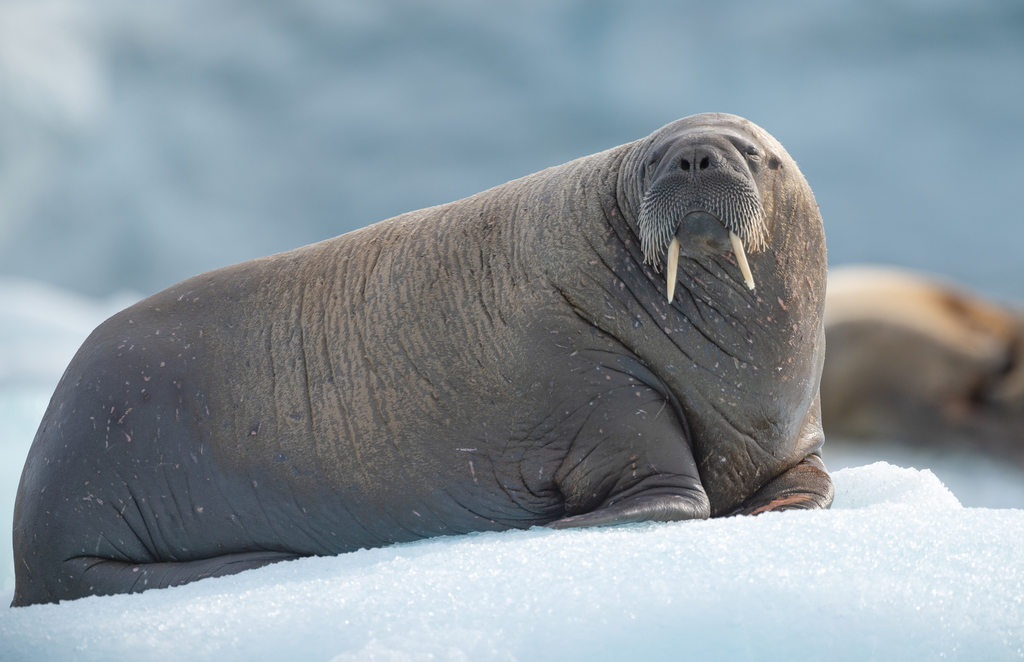
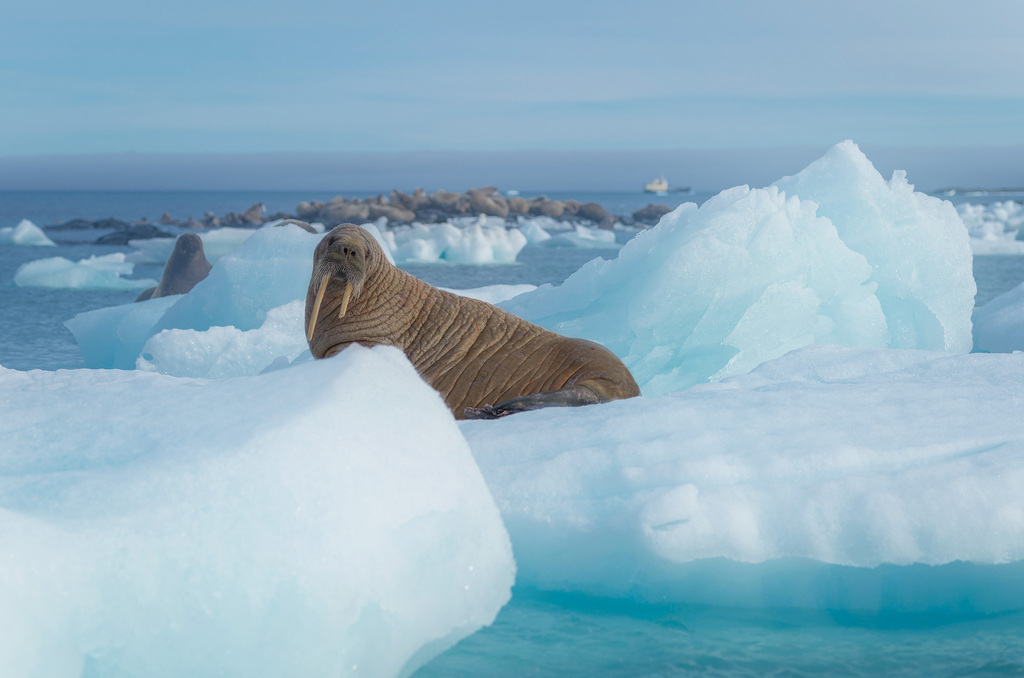
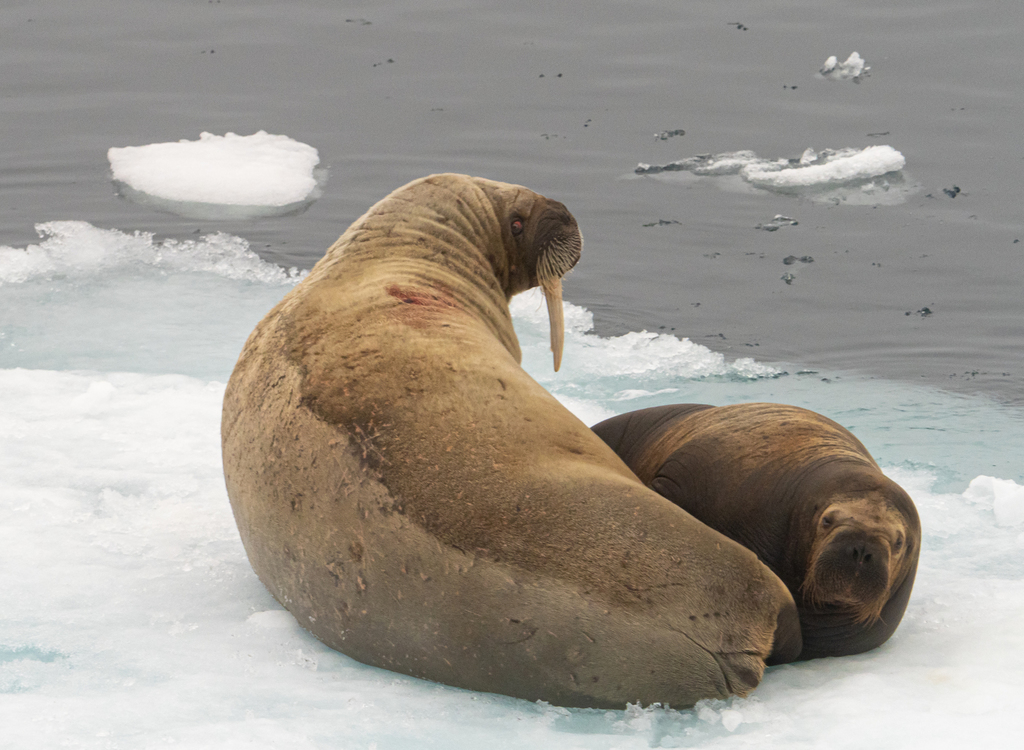
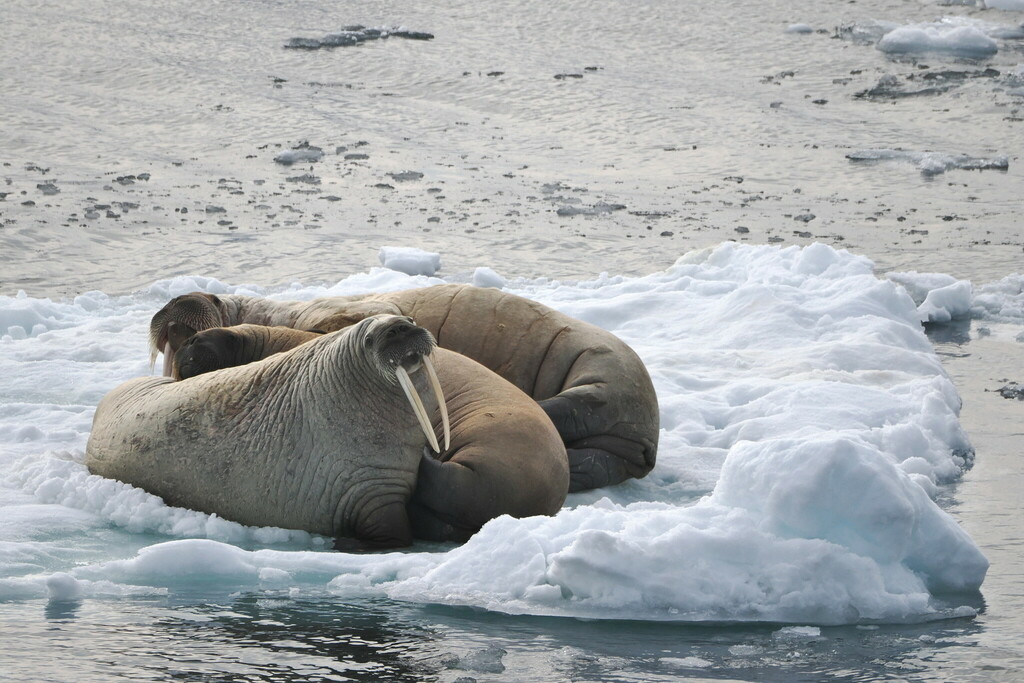
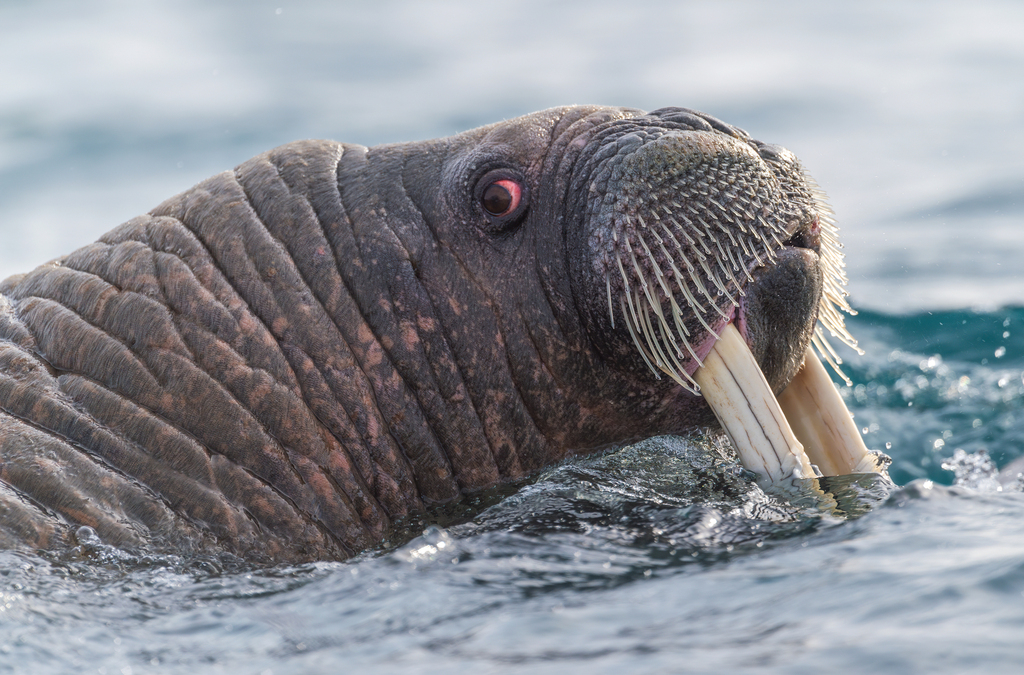
Photos show the species, not always the places on this page.
Length
Males usually close to 3 m (9.8 ft); females about 2.5 m (8.2 ft). Sizes vary by stock and study
Weight
Males often about 1,200 to 1,500 kg (2,650 to 3,300 lb); females about 600 to 700 kg (1,320 to 1,540 lb). Other studies give lower averages, so figures vary by stock
Next to a person
A large male can weigh as much as 15 to 20 adults and is about as long as two people end to end
What it eats
Mainly clams and other seabed animals, found with their sensitive whiskers and sucked from the shell. Some large males also eat seals or seabirds.
Around people
Potentially dangerous, respect
How it lives
Atlantic walruses feed on the seabed in shallow Arctic waters, mostly on clams, which they suck from the shell. They rest in tight groups on sea ice or beaches, spending about a quarter of their time hauled out in late summer. Both sexes have tusks, up to about 1 m long, used for fighting, display, pulling onto the ice and keeping breathing holes open, not mainly for digging.
Where it goes
Many walruses move between summer feeding areas and winter breeding areas in the ice. In Svalbard, tagged males returned to the same places year after year. Most wintered between Nordaustlandet and Franz Josef Land north of 80 degrees North, and some travelled 5,225 to 10,406 km in a year.
Populations
NAMMCO gives a rough total of about 30,000 Atlantic walruses, in separate stocks from Canada and Greenland to Svalbard and the Russian Arctic. The Svalbard and Franz Josef Land group, protected from hunting in 1952, grew from about 2,629 in 2006 to 5,503 in 2018, but trends in other stocks are mixed or uncertain. On the IUCN Red List the Atlantic subspecies is Near Threatened and the walrus as a whole is Vulnerable. The walruses that once lived around Nova Scotia, Newfoundland and the Gulf of St Lawrence are gone.
Meet it respectfully
Walruses at haul-outs panic easily, and a stampede can kill calves. In Svalbard, the law asks boats to stay at least 150 m from walrus haul-outs and go no faster than 5 knots within 300 m; rules are different in Canada, Greenland and Russia. We stay far back, approach slowly from downwind, keep low and quiet and leave at the first sign of unease. Never touch, feed or chase walruses, never block their way to the sea, and never get in the water with them.
Fun fact
Tap the bulb to light it up.
One tagged walrus ate an estimated 57 kg of clams in a single day.
Svalbard walruses were almost gone before protection in 1952 and have increased since.
In Svalbard, 12 tagged male walruses returned to the same summer and winter areas year after year, and one tag worked for 6.2 years.
Source: Mikkelsen et al., 2024, Scientific Reports, interannual site fidelity by Svalbard walruses
The Svalbard and Franz Josef Land walrus population more than doubled from 2006 to 2018, to about 5,503 animals.
Source: NAMMCO, Atlantic walrus
Follow its journey
Watch it travel. Every line comes from satellite tracking or documented research, and the source is named.
StartEndJourney (the line joins documented areas; real paths vary)
Atlantic walrus in the Ocean Atlas
Places we have researched where this animal is recorded. It is never guaranteed, and some places are for watching from the boat only.
Travel with usComing soonTrusted referralExploringOn pause, story onlyEthics pass
Country colour: pink where we travel, blue where we are exploring or refer, grey for story only.
 Canada
 Greenland
 Iceland
 Norway
 Russia
 United Kingdom
Sources for this page
- NAMMCO, Atlantic walrus
- Mikkelsen et al., 2024, Scientific Reports, interannual site fidelity by Svalbard walruses
- Kovacs, 2016, IUCN Red List, Atlantic walrus
- Lowry, 2016, IUCN Red List, walrus
- COSEWIC, 2017, Assessment and status report on the Atlantic walrus
- MOSJ, Norwegian Polar Institute, Walrus in Svalbard
- Lovdata, Regulations on motor traffic in Svalbard, section 12b
- GBIF occurrence records by country, checked 26 Sep 2026
Facts checked 26 September 2026. Photos: Unsplash licence, or Creative Commons as shown on each photo.
Work in ocean travel?
We are always happy to hear from exceptional local operators, accommodation, conservation organisations and destination experts. If your work fits responsible, small-group ocean travel, we would love to learn more.
Partner with Ocean CallingSwim with humpback whales in Moʻorea, September 2027
from CHF 4,500