
Australian humpback dolphin
Sousa sahulensis
A dark back and a low fin along a shallow, muddy coast. These dolphins tend to keep away from boats, and no sighting is ever a promise.
Vulnerable (IUCN, 2017) means it is at high risk of extinction in the wild. Its groups are small and tied to the coast, and threats include fishing and shark nets, habitat loss and boat traffic.
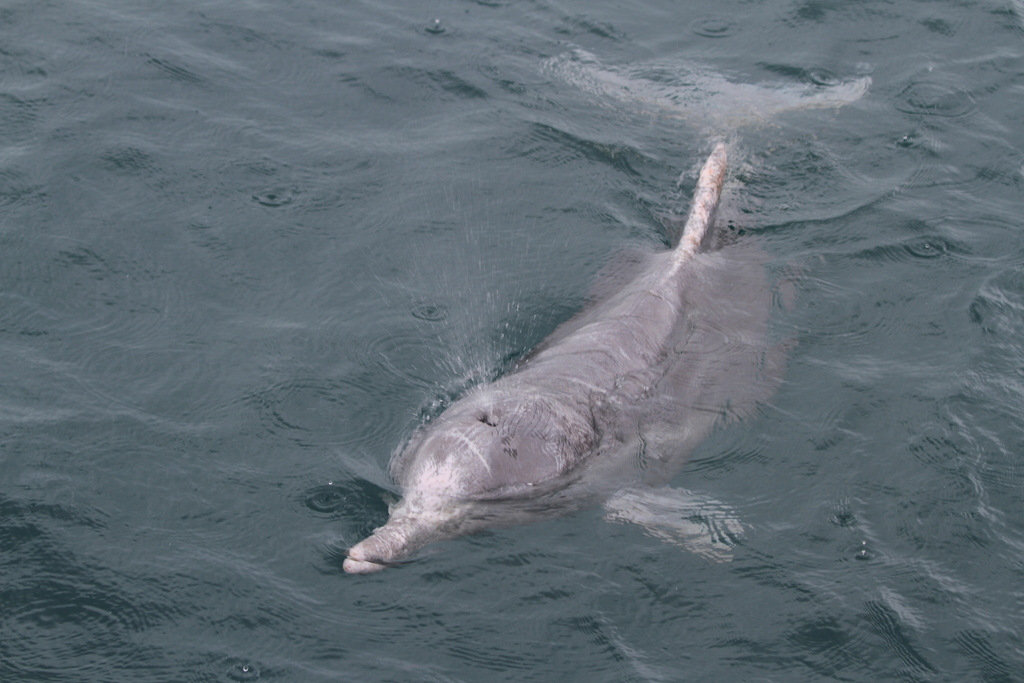
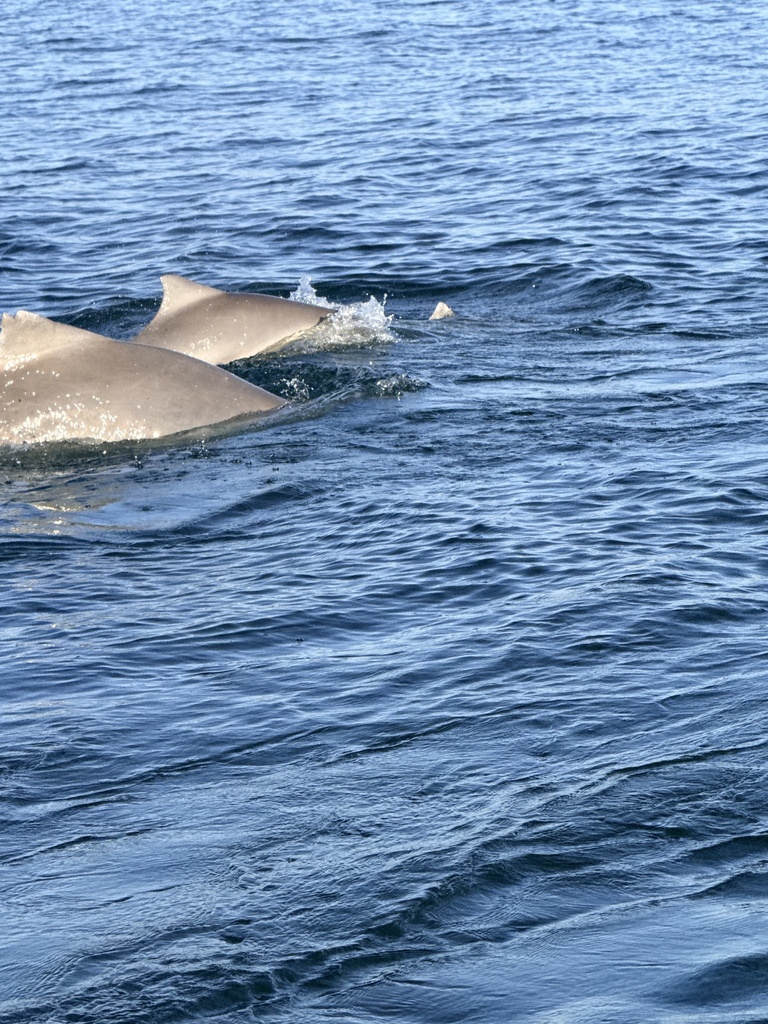
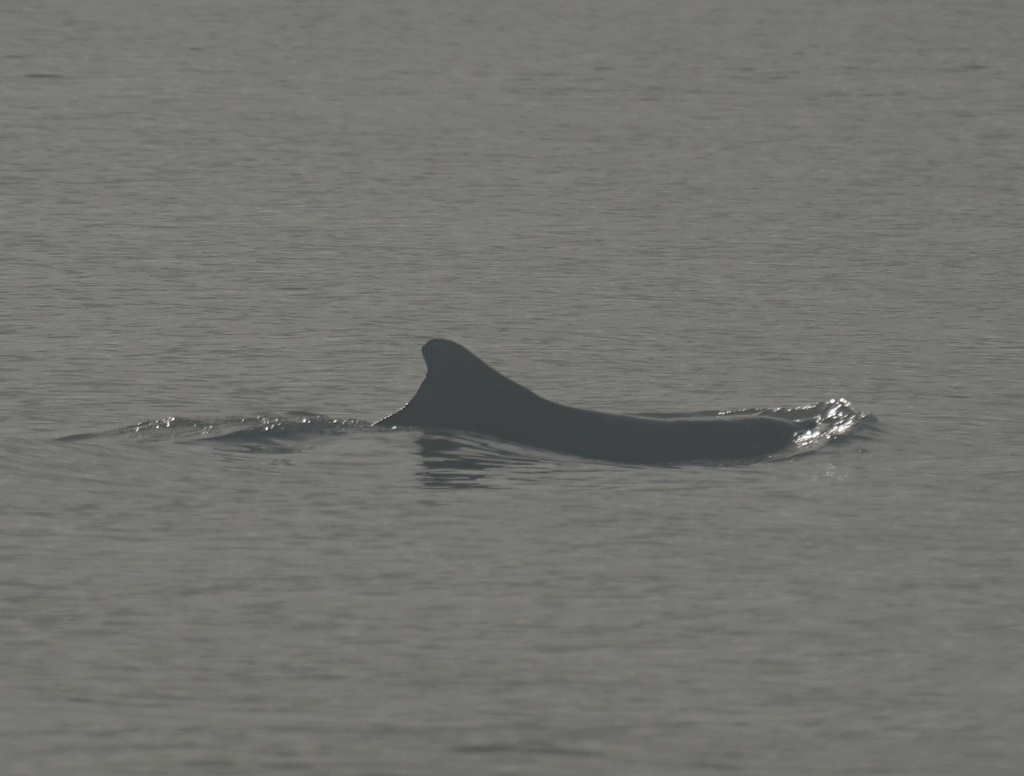
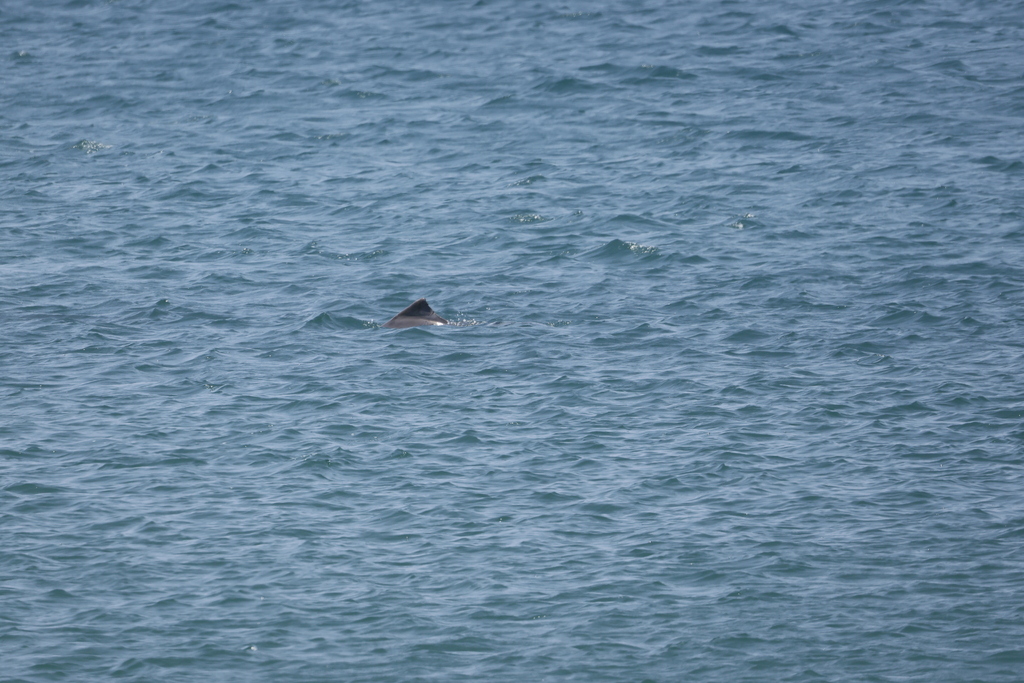
Photos show the species, not always the places on this page.
Length
Body lengths range from about 100 to 270 cm (3.3 to 8.9 ft). Adult females average about 231 cm (7.6 ft) and males about 238 cm (7.8 ft)
Weight
The official species profile gives no weights. Wikipedia reports about 230 to 250 kg (510 to 550 lb) for adults and 40 to 50 kg (88 to 110 lb) at birth, so treat these as approximate
Next to a person
An adult dolphin is about 1.4 times as long as an adult person is tall, and about as heavy as three to four adults
What it eats
Opportunistic feeders that take a wide variety of fish from coastal, estuarine and inshore reef waters. They feed in mangroves, sandy estuaries, seagrass meadows and inshore reefs, and have been seen chasing fish into the shallows and even sliding onto the shore to catch them. A 2022 study of skin chemistry found their diet overlaps by more than half with the snubfin dolphin, and that humpback dolphins may use a wider range of habitats.
Around people
Calm, give space
How it lives
They live in small populations that average roughly 54 to 89 animals. Life history is little studied, and is thought to resemble the Indo-Pacific humpback dolphin: pregnancy of about 10 to 12 months, nursing that may last more than 2 years, and females maturing at about 9 to 10 years and males at 12 to 14. Mother and calf bonds are strong for the first 3 to 4 years. Individuals are thought to live 30 years or more.
Where it goes
Australian humpback dolphins are mostly coastal and tied to home areas. Genetic work along the Queensland coast (Repulse Bay, Keppel Bay and Gladstone) found strong genetic structure and limited recent exchange between sites, and resident groups of about 50 to 150 animals have few sightings between them. In Cleveland Bay they favoured water 2 to 5 m deep close to the coast. Their range is thought to run from about the Queensland and New South Wales border to Shark Bay in Western Australia, but this is inferred from local studies, not from wide surveys.
We only draw a journey on the map when scientists have tracked it or clearly documented it. For this animal we have not found one yet.
Populations
There is no range-wide estimate. Local groups are small, typically under 150 animals, and the number of mature adults is unlikely to exceed 10,000. The IUCN lists the species as Vulnerable (2017) and Wikipedia describes the numbers as declining. Australia has listed it as Vulnerable under national law since 5 March 2025, and Queensland lists it as Vulnerable too. It was recognised as a separate species in 2014, so older Australian reports often use the name Indo-Pacific humpback dolphin (Sousa chinensis).
Meet it respectfully
Stay quiet and let the dolphins choose the distance. They are known to keep away from boats, so never chase, surround, touch or feed them, and keep boat speed low. In Queensland waters, boats keep to 6 knots or less within 150 m of a dolphin and stay out of a no approach zone of 50 m around it and 150 m in front of and behind it. People in the water stay at least 50 m away, and in the Great Barrier Reef Marine Park boats keep 150 m from a dolphin calf. Do not touch or feed wild dolphins. Rules differ by place and change over time, so follow local rules and your guide.
Fun fact
Tap the bulb to light it up.
Scientists named it as its own species in 2014. The name sahulensis refers to the Sahul Shelf, the shallow sea floor between northern Australia and southern New Guinea.
Despite the name, it has no obvious dorsal hump. Its fin is low, triangular and wide at the base, and a diagonal cape line separates its dark back from its paler belly.
In a photo study in Queensland, 24.1 percent of Australian humpback dolphins carried scars from shark bites.
Australian humpback dolphin in the Ocean Atlas
Places we have researched where this animal is recorded. It is never guaranteed, and some places are for watching from the boat only.
Travel with usComing soonTrusted referralExploringOn pause, story onlyEthics pass
Country colour: pink where we travel, blue where we are exploring or refer, grey for story only.
 Australia
Sources for this page
- Australian Government, 2026
- IUCN Red List, 2017
- GBIF, IUCN Red List category record, 2026
- Wikipedia, Australian humpback dolphin, 2026
- Marine Mammal Protected Areas Task Force, Hinchinbrook to Round Hill IMMA
- Parra et al., 2022, Ecology and Evolution
- Nicholls et al., 2023, Ecology and Evolution
- Queensland Government, 2026
Facts checked 5 October 2026. Photos: Unsplash licence, or Creative Commons as shown on each photo.
Work in ocean travel?
We are always happy to hear from exceptional local operators, accommodation, conservation organisations and destination experts. If your work fits responsible, small-group ocean travel, we would love to learn more.
Partner with Ocean CallingNot sure where to go? Get your Ocean Match
from CHF 19