
Australian sea lion
Neophoca cinerea
Found only in southern and western Australia, these rare sea lions rest on quiet beaches and islands. We watch from a respectful, legal distance and never chase or crowd them. Sightings are not guaranteed.
Endangered (IUCN, 2015) means it is at very high risk of extinction in the wild.
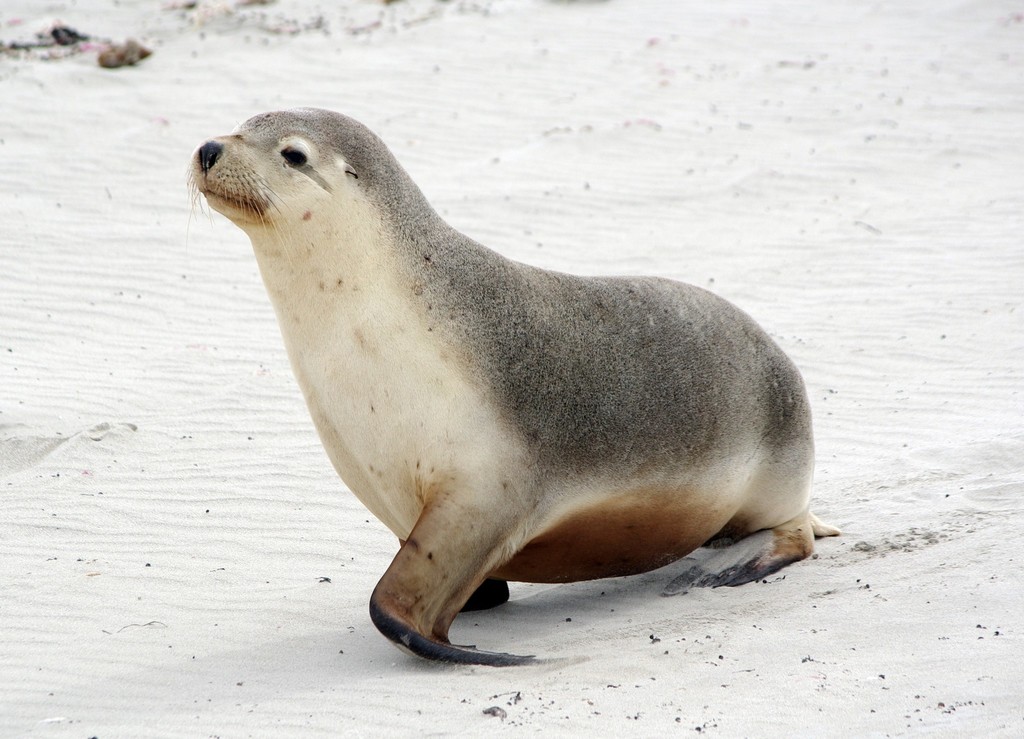
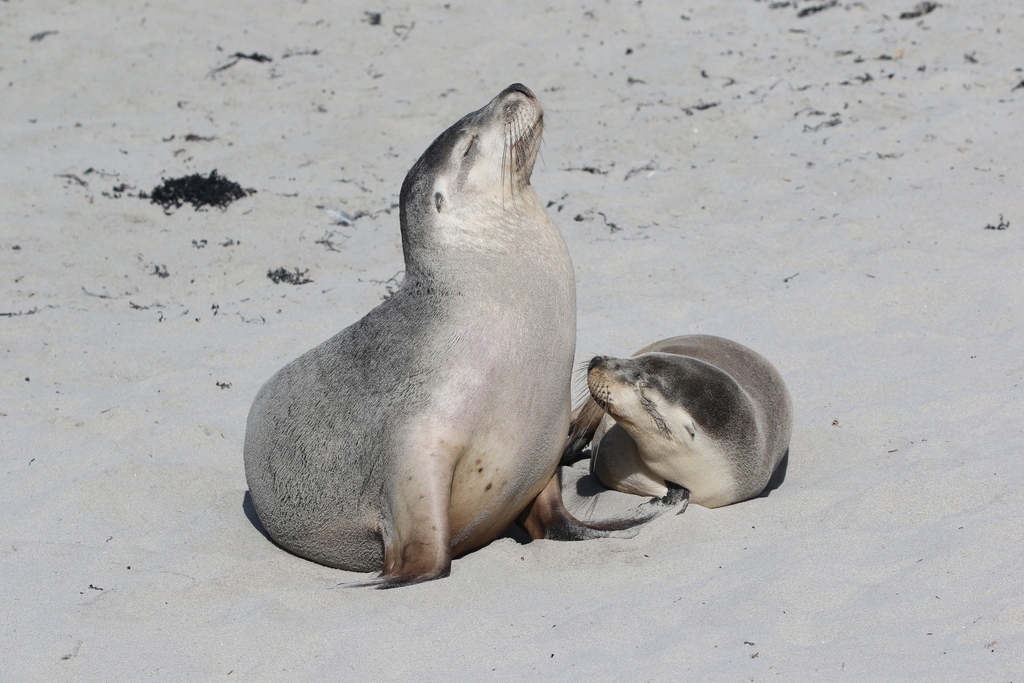
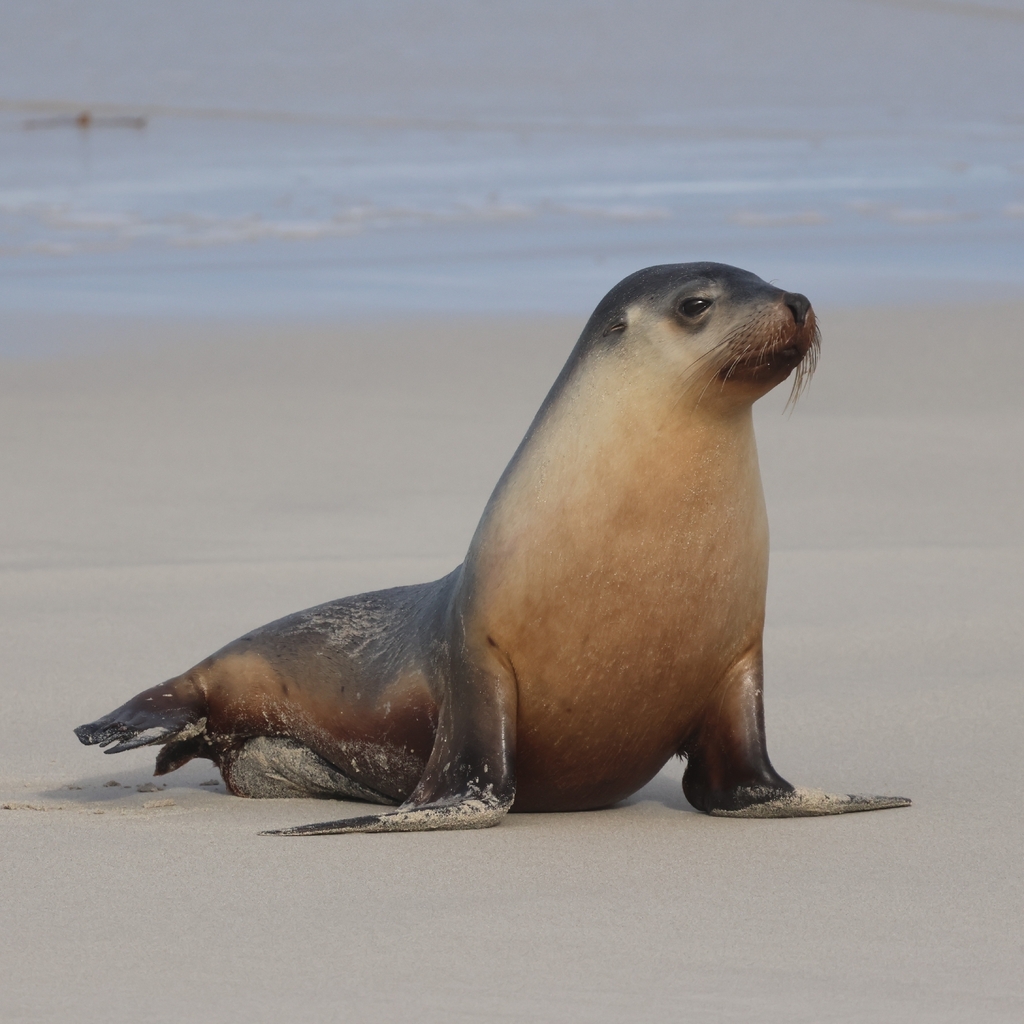
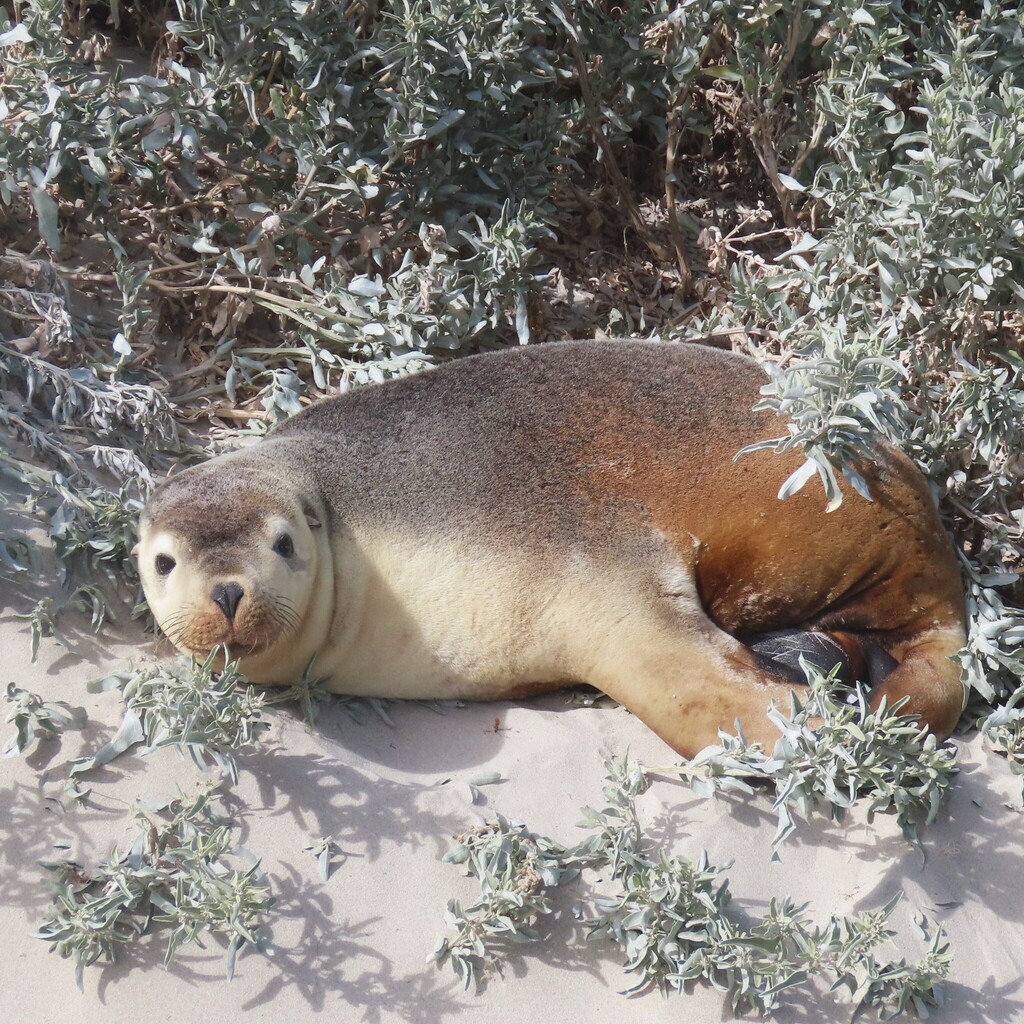
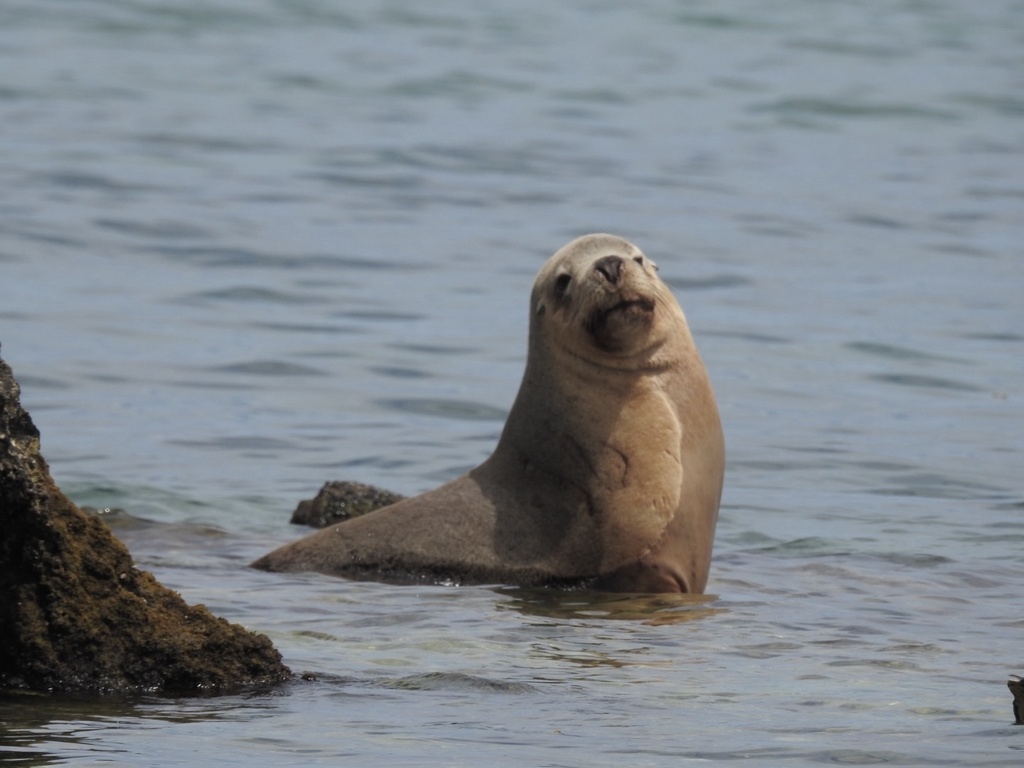
Photos show the species, not always the places on this page.
Length
Males 1.85 to 2.25 m (6.1 to 7.4 ft); females 1.3 to 1.85 m (4.3 to 6.1 ft), nose to tail
Weight
Males 180 to 250 kg (about 400 to 550 lb); females 65 to 100 kg (about 145 to 220 lb)
Next to a person
A bull is about as long as a tall adult and weighs about 3 adults; a female is shorter than most adults
What it eats
Fish, squid, cuttlefish and octopus, small sharks and rays, rock lobsters, crabs and prawns, and sometimes penguins.
Around people
Potentially dangerous, respect
How it lives
The Australian sea lion is the only seal or sea lion with a breeding cycle that is not yearly: pups are born every 17 to 18 months, and each colony breeds at its own time. Pups drink their mother's milk for about 15 to 18 months, sometimes longer. Adults feed mostly on the sea floor on the continental shelf.
Where it goes
Not a migrant. Females stay very loyal to the colony where they were born, with little or no movement between colonies. Adult males travel more; some have been tracked up to 340 km from their colony, and some move up to 280 km north each breeding season.
We only draw a journey on the map when scientists have tracked it or clearly documented it. For this animal we have not found one yet.
Populations
Lives only in Australia, from the Houtman Abrolhos Islands in Western Australia to the Pages Islands in South Australia. Breeding has been recorded at about 81 sites, 34 in Western Australia and 47 in South Australia. About 86% of pups are born in South Australia, including Seal Bay on Kangaroo Island. Pup numbers fell by an estimated 64% over about 42 years, and only 2,993 pups were counted in 2017.
Meet it respectfully
Rules differ by state. In South Australia, local rules ask swimmers and people on land to stay at least 30 m away, boats 50 m, and 150 m from distressed or stranded animals. In Western Australia, rules ask people in the water to stay at least 50 m away and boats 100 m. Licensed operators may run managed swims under permit, but close contact is never promised. Never touch, feed, chase or crowd sea lions, never block their way to the sea, and give mothers and pups extra space. Bulls can be aggressive and can bite.
Fun fact
Tap the bulb to light it up.
Australian sea lions breed about every 18 months, and neighbouring colonies can breed at different times.
Females almost never move to a new colony, so each colony is like its own small family line.
It is the only seal or sea lion found only in Australia.
It is the only seal or sea lion with a non-yearly breeding cycle, with 17 to 18 months between pupping seasons.
Source: Australian Government, 2020, Conservation Advice for the Australian sea lion
Adult male Australian sea lions have been tracked up to 340 km from their colony.
Source: Australian Government, 2020, Conservation Advice for the Australian sea lion
Australian sea lion in the Ocean Atlas
Places we have researched where this animal is recorded. It is never guaranteed, and some places are for watching from the boat only.
Travel with usComing soonTrusted referralExploringOn pause, story onlyEthics pass
Country colour: pink where we travel, blue where we are exploring or refer, grey for story only.
 Australia
Sources for this page
- Australian Government, 2020, Conservation Advice for the Australian sea lion
- Ahonen et al., 2016, Frontiers in Marine Science, dispersal of Australian sea lions
- South Australia Department for Environment and Water, The Australian Sea Lion: respecting colonies
- Marine Parks South Australia, viewing marine mammals (2025 regulations)
- DBCA Western Australia, 2023, Management program for seal interactions
- Campbell et al., 2008, Biology Letters
Facts checked 26 September 2026. Photos: Unsplash licence, or Creative Commons as shown on each photo.
Work in ocean travel?
We are always happy to hear from exceptional local operators, accommodation, conservation organisations and destination experts. If your work fits responsible, small-group ocean travel, we would love to learn more.
Partner with Ocean CallingShop with Ocean Calling
Visit the Ocean Calling storefront on Amazon.
As an Amazon Associate I earn from qualifying purchases. You are not only choosing products that respect the ocean, you are also helping us keep going: paying our local partners fairly and keeping our retreats ethical, sustainable and honestly priced for you. 💗