
Chinstrap penguin
Pygoscelis antarcticus
A small penguin with a thin black line under its chin, busy on the rocks. Colonies are wild and no sighting is ever a promise.
Least Concern (IUCN) means the species is not judged to be at high risk of extinction, although some colonies are shrinking; a 2018 estimate put the world population at about 8 million.
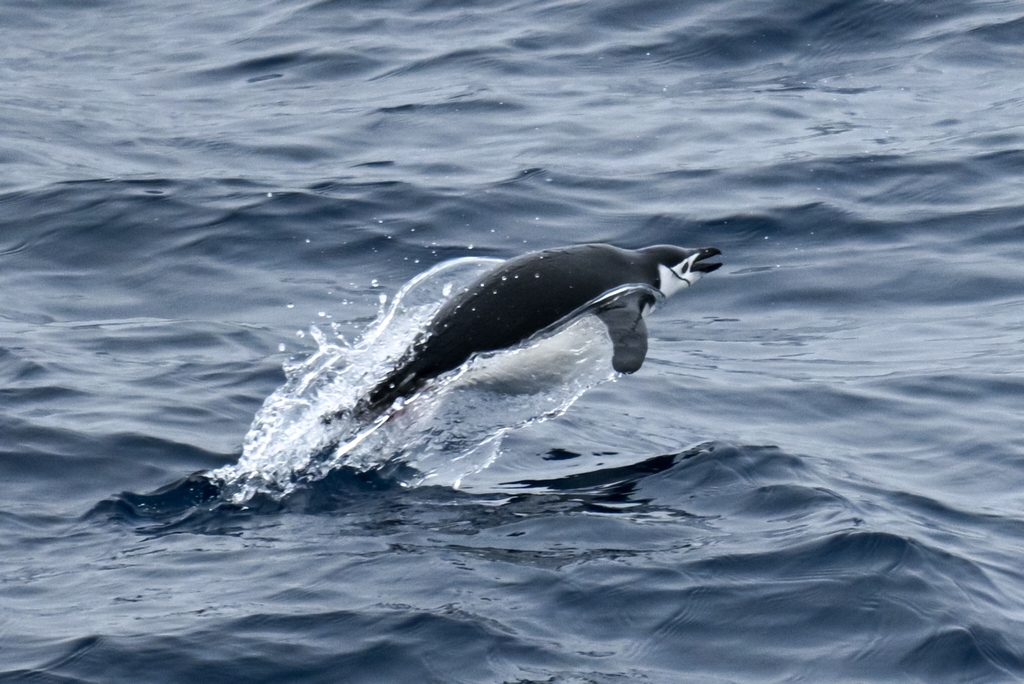
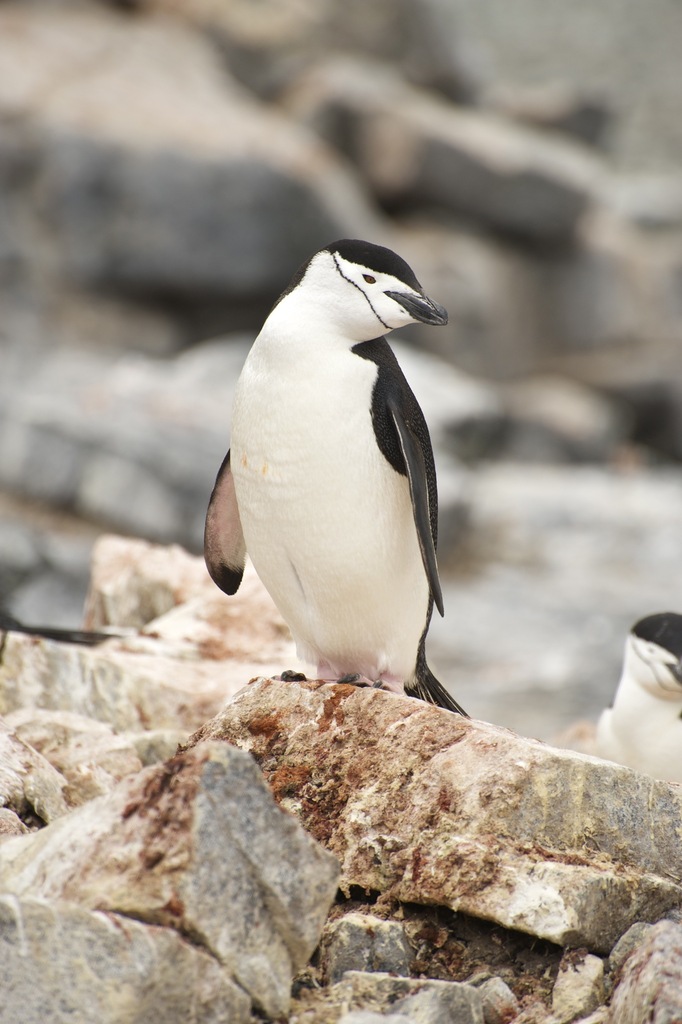
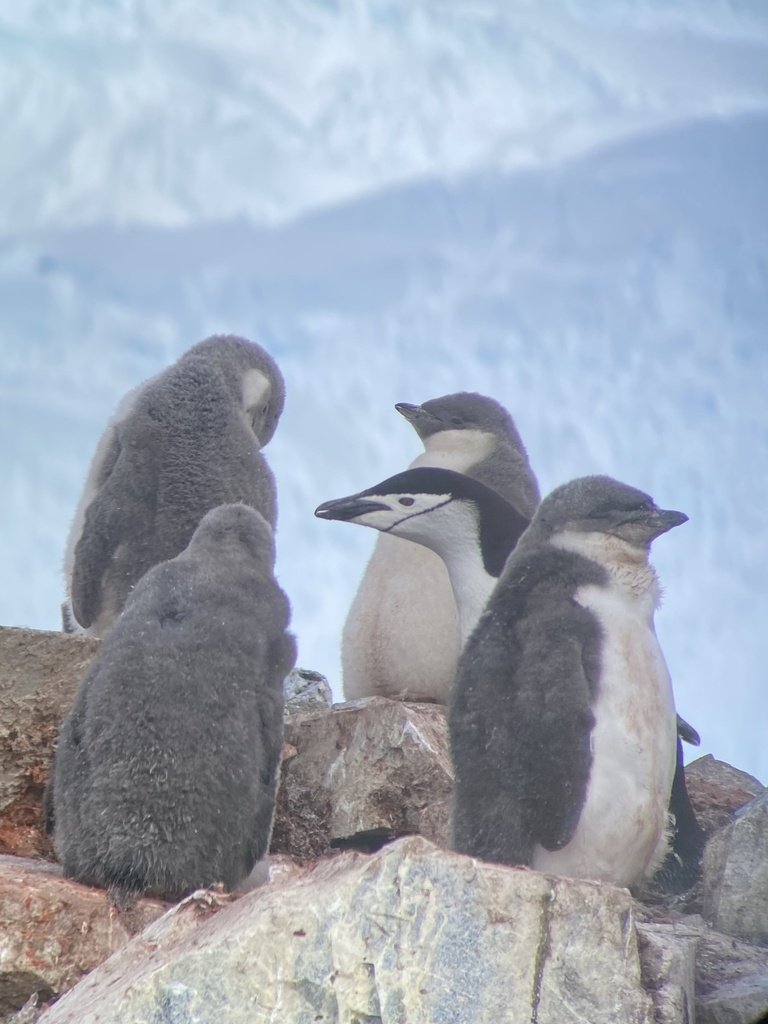
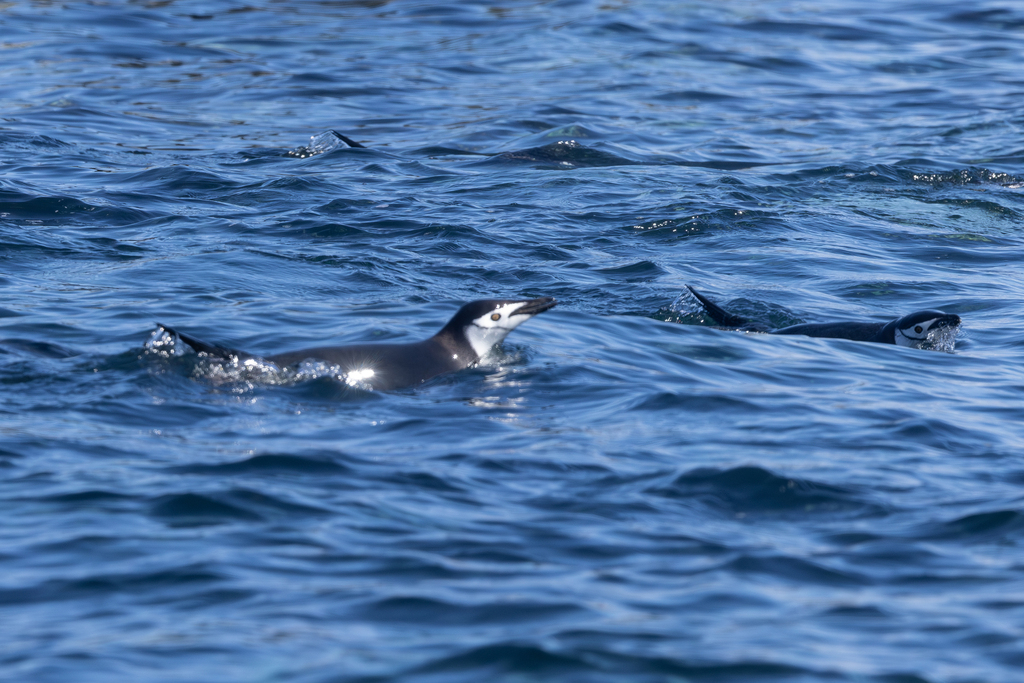
Photos show the species, not always the places on this page.
Length
About 68 to 76 cm (27 to 30 in) tall
Weight
About 3.2 to 5.3 kg (7.1 to 11.7 lb); another source gives 3.5 to 5.5 kg (7.7 to 12.1 lb). Males are larger than females.
Next to a person
About half an adult's height and about as heavy as a newborn baby
What it eats
Mainly krill, plus small fish, shrimp and squid. Sources differ on how far they feed from the colony: one says up to about 80 km offshore in a day, another describes them as near-shore feeders that dive to under about 40 m.
Around people
Calm, give space
How it lives
Chinstraps nest on stones and usually lay two eggs, in late November in one source. Both parents share incubation for about 33 to 37 days. Chicks leave the nest at about 7 to 8 weeks. Penguins first breed at about 3 years and can live about 16 to 20 years.
Where it goes
Chinstrap penguins breed in colonies on the Antarctic Peninsula and on islands of the South Atlantic. After breeding they travel long distances at sea. Researchers think the timing of that winter migration may no longer match shifting food supplies in the Southern Ocean.
We only draw a journey on the map when scientists have tracked it or clearly documented it. For this animal we have not found one yet.
Populations
A 2020 survey (Strycker et al.) counted about 3.42 million breeding pairs (95% range 2.98 to 4.00 million) in 375 colonies. About 39% of them are in the South Sandwich Islands, 32% on the Antarctic Peninsula region and 28% in the South Orkney Islands. Of the colonies that could be compared with 1980s counts, 45% have probably or certainly declined and 18% have probably or certainly increased. Wikipedia reports an IUCN estimate of about 8 million individuals in 2018, and a decline of about half in under 50 years on Elephant Island. The IUCN lists the species as Least Concern.
Meet it respectfully
Stay quiet and keep a respectful distance, and let penguins cross your path rather than the other way round. Do not walk through a colony, block their routes to the sea, touch, feed or chase them. Falling krill supplies and a warming climate are the main threats, so give nesting birds space. I did not read local or treaty visitor rules, so follow your guide's instructions.
Fun fact
Tap the bulb to light it up.
A narrow black band under the head makes it look as if it is wearing a helmet, which is where the name comes from.
Chinstraps build their nests from stones.
More than a third of the world's chinstraps live in a few large colonies in the South Sandwich Islands, where numbers appear stable.
Chinstrap penguin in the Ocean Atlas
Places we have researched where this animal is recorded. It is never guaranteed, and some places are for watching from the boat only.
Travel with usComing soonTrusted referralExploringOn pause, story onlyEthics pass
Country colour: pink where we travel, blue where we are exploring or refer, grey for story only.
 Antarctica
 Argentina
 Australia
 United Kingdom
Sources for this page
- Wikipedia, Chinstrap penguin
- Australian Antarctic Division, Chinstrap penguin
- Strycker et al., 2020, Scientific Reports
- GBIF, IUCN Red List category lookup, 2026
Facts checked 5 October 2026. Photos: Unsplash licence, or Creative Commons as shown on each photo.
Work in ocean travel?
We are always happy to hear from exceptional local operators, accommodation, conservation organisations and destination experts. If your work fits responsible, small-group ocean travel, we would love to learn more.
Partner with Ocean CallingShop with Ocean Calling
Visit the Ocean Calling storefront on Amazon.
As an Amazon Associate I earn from qualifying purchases. You are not only choosing products that respect the ocean, you are also helping us keep going: paying our local partners fairly and keeping our retreats ethical, sustainable and honestly priced for you. 💗