
Christmas Island frigatebird
Fregata andrewsi
A long-winged seabird that glides for days over open water. Where and when it appears is up to the wind, and no sighting is ever promised.
Vulnerable (IUCN) means it is at high risk of extinction in the wild. It was previously listed Critically Endangered, and it breeds on only one island.
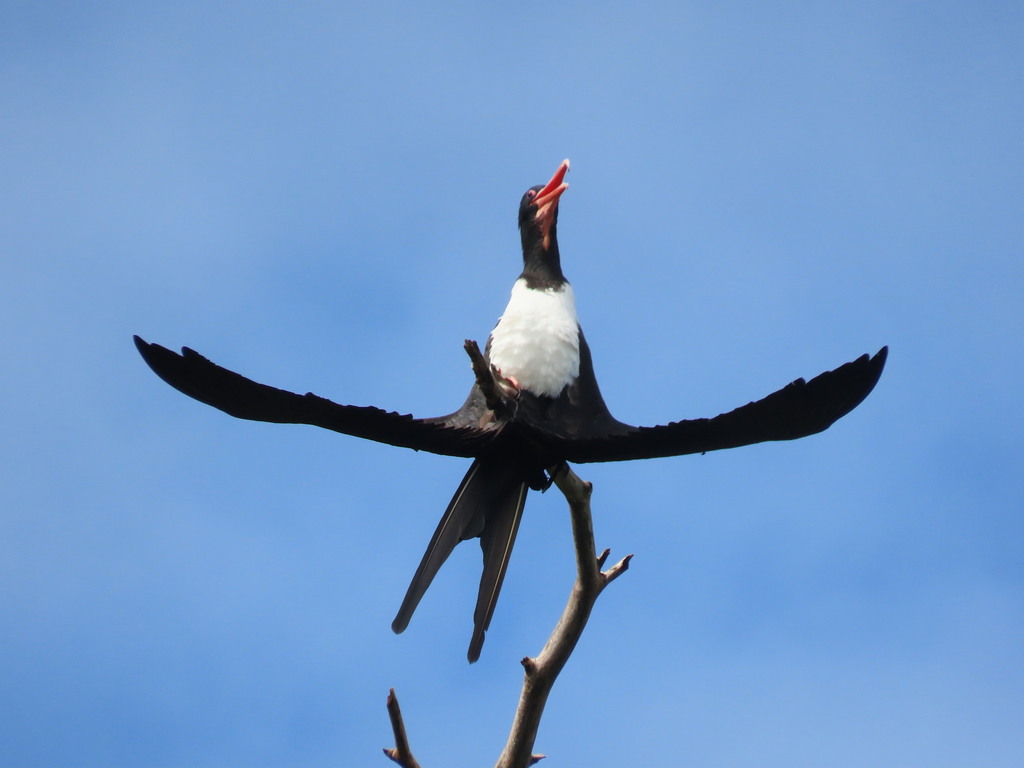
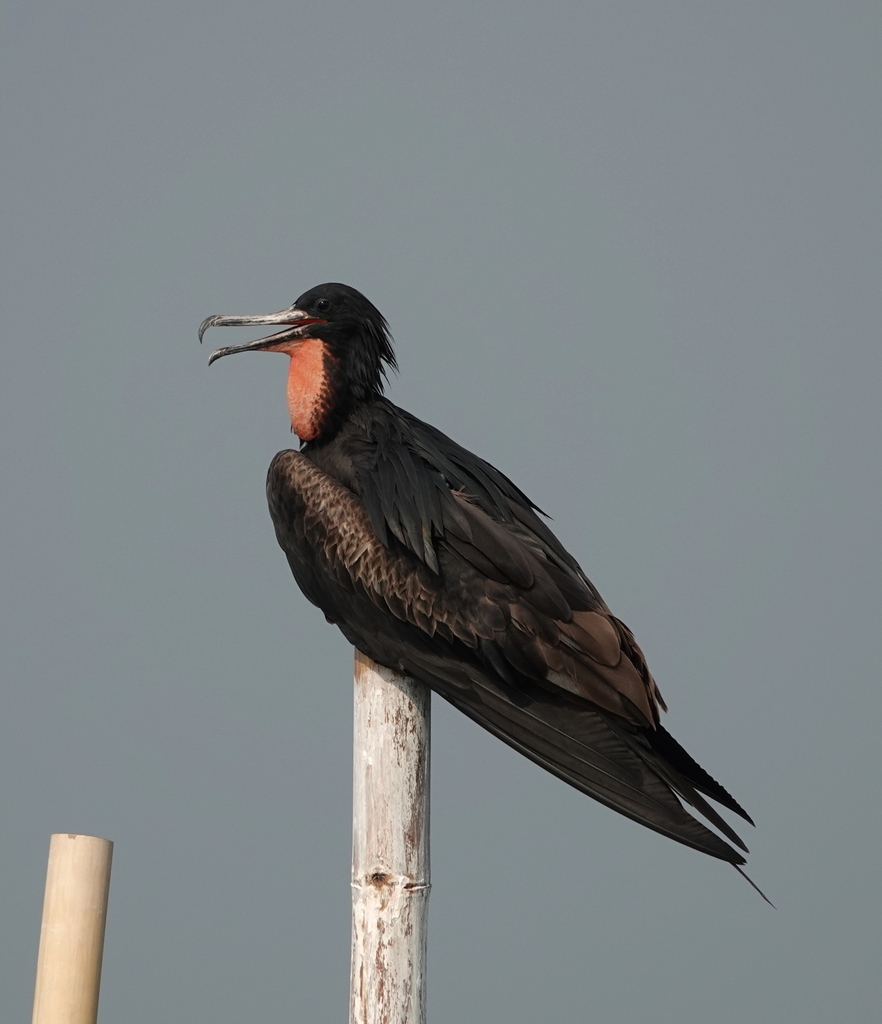
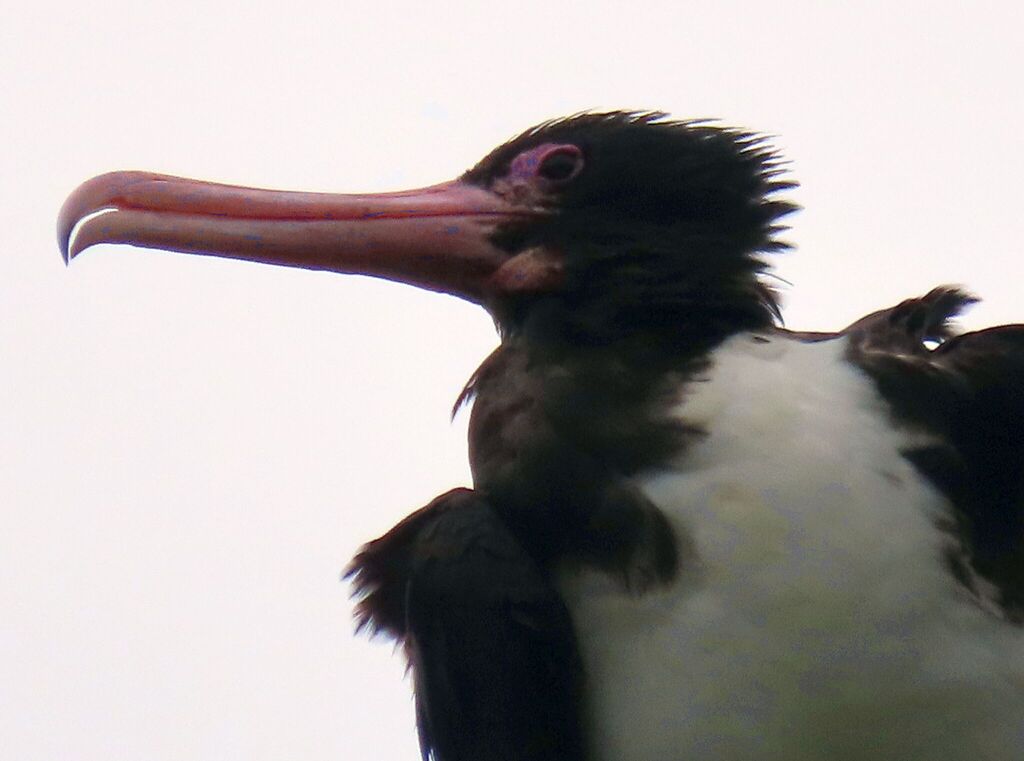
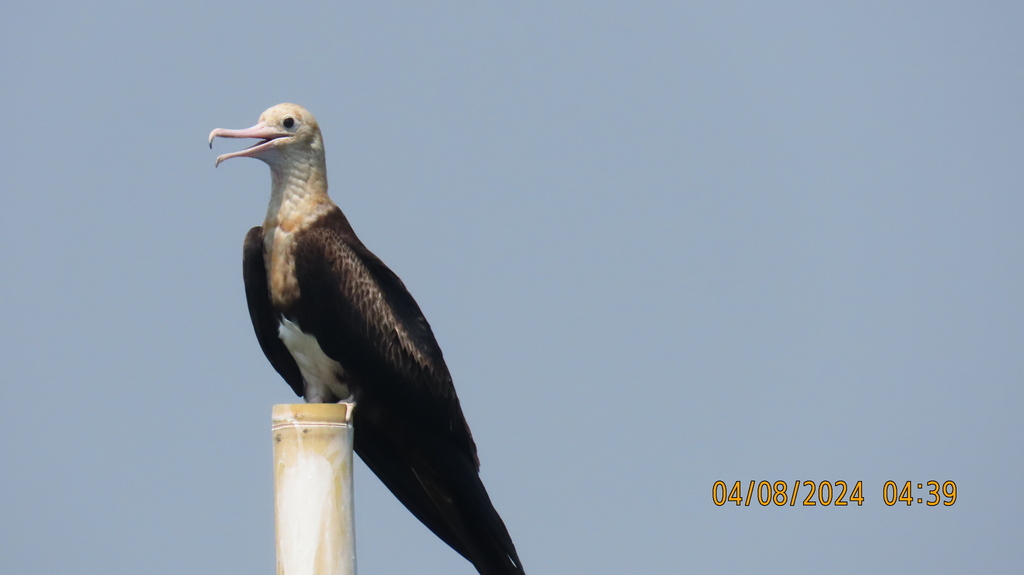
Photos show the species, not always the places on this page.
Length
About 89 to 100 cm (35 to 39 in) long, with a wingspan of about 205 to 230 cm (81 to 91 in) (Wikipedia)
Weight
About 1,550 g (3.4 lb) (Wikipedia). Females are up to 28 percent heavier than males (Hennicke et al., 2015).
Next to a person
The wingspan is wider than most adults are tall, yet the bird weighs about as much as a 1.5 litre bottle of water.
What it eats
Mainly flying fish taken in flight from the ocean surface. Frigatebirds also harass other seabirds to make them give up their catch.
Around people
Quiet, keep distance
How it lives
The species breeds only on Christmas Island, in four main nesting colonies. Frigatebirds normally breed every other year, and chicks are cared for up to 15 months after hatching. Males have a black body, a white belly patch and an inflatable red throat pouch for courtship, while females have a whiter chest and belly. GPS tracking from 2005 to 2010 showed that, outside breeding, females roosted on the Sunda Shelf for months.
Where it goes
Satellite and GPS tracking show that the birds range far from Christmas Island. In a poor food year (2010), males shifted to productive coastal waters near Java while females stayed closer to the colony, and after breeding females roosted on the Sunda Shelf for months. Birds outside the breeding season spread across Southeast Asian waters, from Indochina south to northern Australia, and a few are recorded in places such as Singapore as very rare visitors.
We only draw a journey on the map when scientists have tracked it or clearly documented it. For this animal we have not found one yet.
Populations
Global: Vulnerable on the IUCN Red List (CMS and GBIF records), after earlier being listed as Critically Endangered according to Wikipedia. The year of the current assessment was not shown on the pages read. Wikipedia reports about 1,200 breeding pairs in 2003, which suggests 3,600 to 7,200 adults; newer counts were not read. Threats include persecution by fishermen, loss of breeding habitat to phosphate mining, marine pollution and entanglement in fishing gear. The species is on CITES Appendix I, and on CMS Appendix I since 2017.
Meet it respectfully
Watch from a distance and let the birds go about their day. Do not approach nesting areas, flush roosting birds, or use drones. Seabird colonies are easily disturbed, and local park rules were not read for this card, so follow the guidance of local staff. Sightings depend on weather and season, and no one can promise one.
Fun fact
Tap the bulb to light it up.
Female Christmas Island frigatebirds are larger than males, by up to 28 percent in weight.
It breeds only on Christmas Island, but outside the breeding season it roams across Southeast Asian seas.
Males inflate a bright red throat pouch to attract a mate.
Christmas Island frigatebird in the Ocean Atlas
Places we have researched where this animal is recorded. It is never guaranteed, and some places are for watching from the boat only.
Travel with usComing soonTrusted referralExploringOn pause, story onlyEthics pass
Country colour: pink where we travel, blue where we are exploring or refer, grey for story only.
 Australia
 Christmas Island
 India
India Indonesia
 Malaysia
 Thailand
Sources for this page
- Wikipedia, Christmas frigatebird
- Hennicke, James and Weimerskirch, 2015, PLoS ONE, Sex-specific habitat utilization in Christmas Island frigatebirds
- CMS, Fregata andrewsi species page
- GBIF Backbone Taxonomy, Fregata andrewsi
- GBIF, IUCN Red List category record
- Singapore Birds Project, Christmas frigatebird
Facts checked 5 October 2026. Photos: Unsplash licence, or Creative Commons as shown on each photo.
Work in ocean travel?
We are always happy to hear from exceptional local operators, accommodation, conservation organisations and destination experts. If your work fits responsible, small-group ocean travel, we would love to learn more.
Partner with Ocean CallingNot sure where to go? Get your Ocean Match
from CHF 19