
Christmas Island red crab
Gecarcoidea natalis
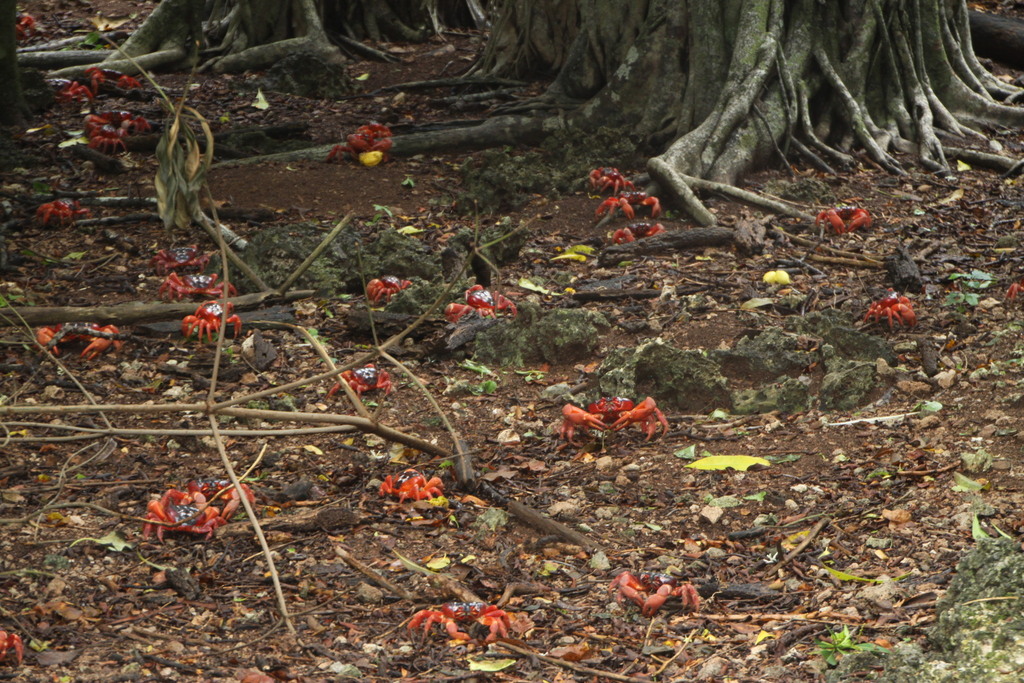
A forest floor that turns red for a few weeks each wet season. The timing follows rain and the moon, so no one can promise when it will happen.
Not Evaluated means the IUCN has not yet assessed this species, so it has no Red List category. The invasive yellow crazy ant is a known threat.
Photos show the species, not always the places on this page.
Length
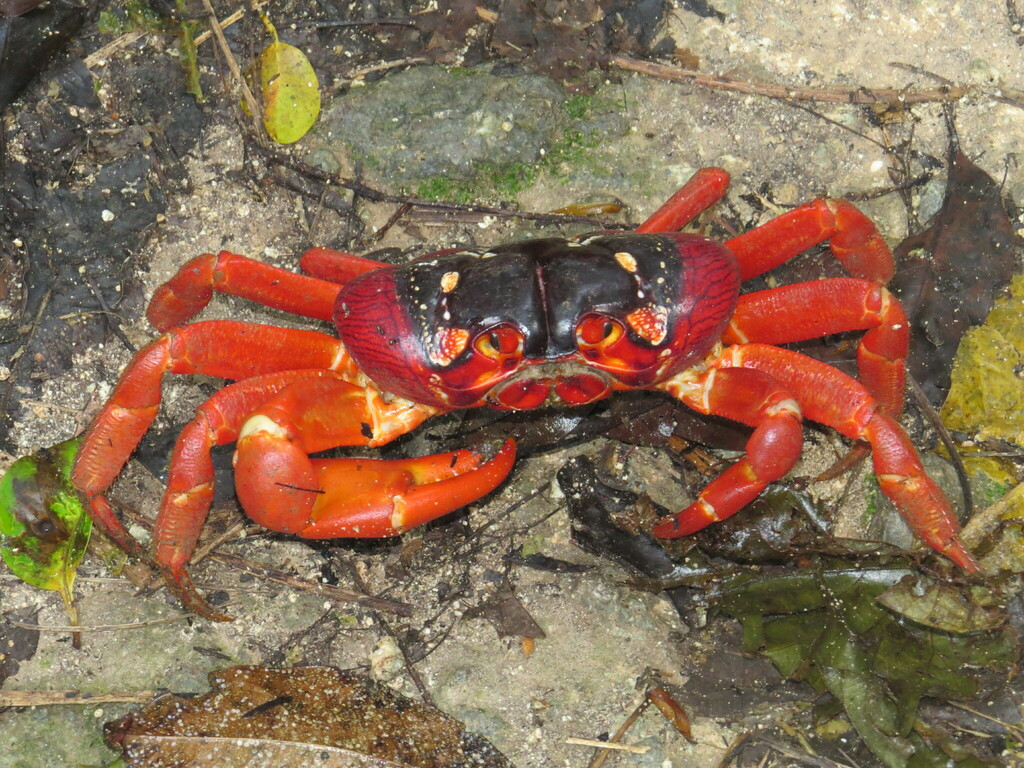
Carapace (shell) up to about 116 mm (4.6 in) wide; males are generally larger than females (Wikipedia, citing earlier studies)
Weight
Weight was not given in the sources read.
Next to a person
The shell is up to about the width of a large adult hand, and the legs make the whole crab wider.
What it eats
Mostly fallen leaves, fruits, flowers and seedlings. They are not strictly vegetarian and will also eat dead crabs, birds and the introduced giant African snail (Parks Australia).
Around people
Calm, watch your step
How it lives
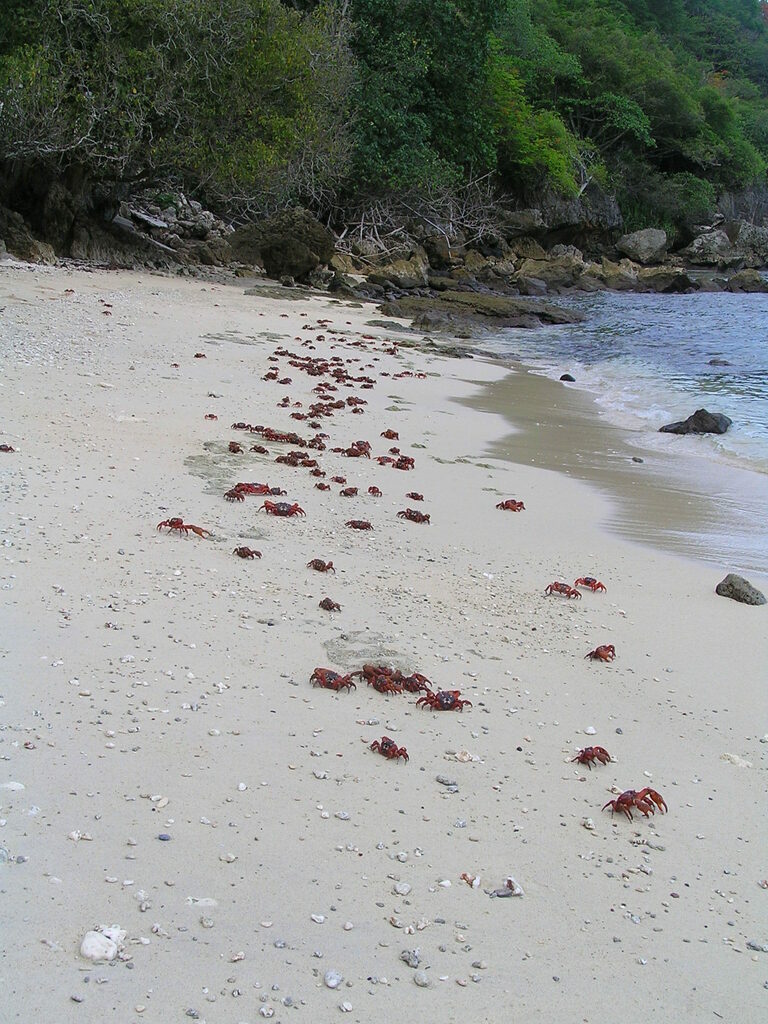
Red crabs live in the moist rainforest. They live about 12 years and mature at around 4 to 5 years of age. Each wet season, they walk to the sea to breed. The migration starts with the first heavy rain, usually in October or November but sometimes as late as December or January. Males arrive first and dig burrows. Females follow and spawn over about 5 to 6 nights near the last quarter moon, before dawn on a falling high tide, releasing up to 100,000 eggs each. The larvae spend about a month in the sea, and the tiny crabs then come ashore and climb to the forest. Most larvae are eaten, and large numbers survive only once or twice a decade.
Where it goes
Adults make a round trip each wet season between the inland forest and the shore, timed by rain, moon and tide. Young crabs make the trip up from the coast, reported at about 9 days to reach the island's centre. The exact dates change every year.
We only draw a journey on the map when scientists have tracked it or clearly documented it. For this animal we have not found one yet.
Populations
Christmas Island is the only place the species lives. Parks Australia says the island has more than 100 million red crabs. An earlier estimate cited by Wikipedia put the adult population at about 43.7 million, so the figures differ by source and method. Yellow crazy ants, an invasive species, killed an estimated 10 to 15 million crabs, and tens of millions of land crabs since the late 1990s according to Parks Australia. A biological control project using a tiny wasp is under way: lac scale insects have been reduced, but the effect on the ants is still uncertain. The IUCN has not assessed this species (GBIF record, 2026).
Meet it respectfully
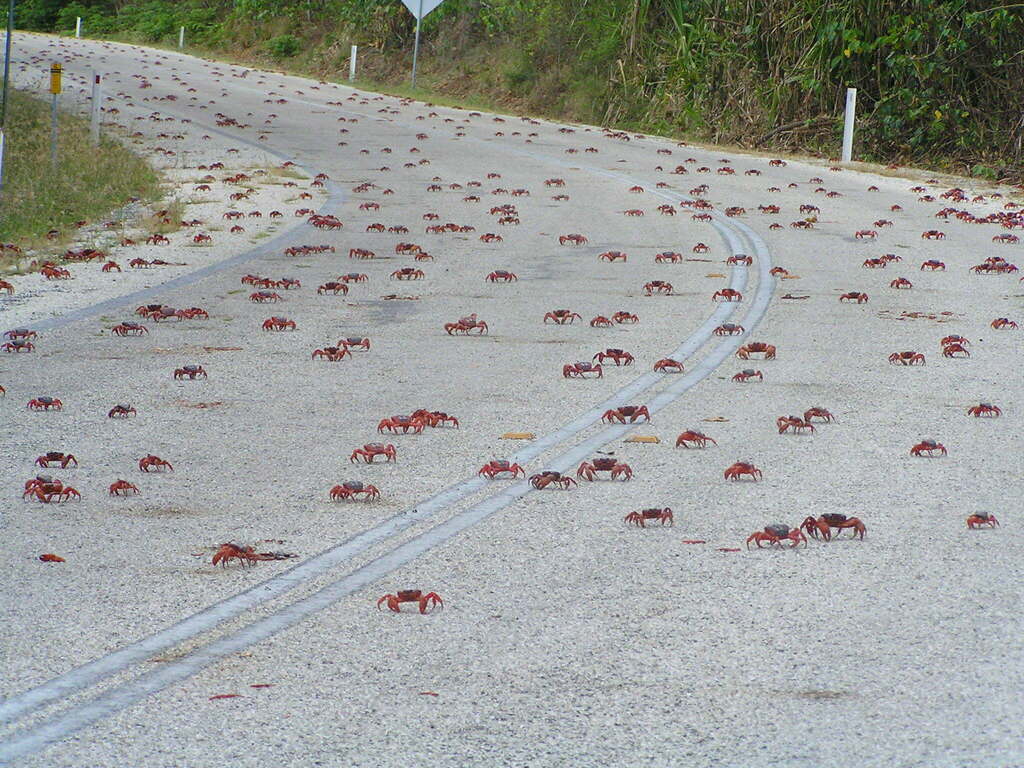
Watch where you step and move slowly, because crabs can be underfoot on paths, beaches and roads. Do not pick up, block, feed or herd the crabs. Parks Australia asks visitors to follow all signs and staff guidance, notes that some road sections can close for part or all of the day during the peak, and lists viewing spots such as Drumsite, Flying Fish Cove, Ethel Beach and Greta Beach. The dates change every year, and no one can promise the migration.
Fun fact
Tap the bulb to light it up.
Males arrive at the coast first and dig the mating burrows before the females come down.
Red crabs keep the rainforest healthy by eating leaves, cleaning up leaf litter and turning over the soil.
Park staff build temporary barriers, tunnels and crab bridges so crabs can cross roads, and some roads close, often at short notice.
Christmas Island red crab in the Ocean Atlas
Places we have researched where this animal is recorded. It is never guaranteed, and some places are for watching from the boat only.
Travel with usComing soonTrusted referralExploringOn pause, story onlyEthics pass
Country colour: pink where we travel, blue where we are exploring or refer, grey for story only.
 Christmas Island
Sources for this page
- Parks Australia, Red crab
- Parks Australia, Red crab migration
- Parks Australia, 2021, Millions of crabs march on Christmas Island
- Parks Australia, Yellow crazy ant biocontrol
- Wikipedia, Christmas Island red crab
- GBIF Backbone Taxonomy, Gecarcoidea natalis
- The Conversation, A tiny wasp could save Christmas Island's red crabs
- University of Melbourne, Red crab population genetics (Conservation Genetics)
Facts checked 5 October 2026. Photos: Unsplash licence, or Creative Commons as shown on each photo.
Work in ocean travel?
We are always happy to hear from exceptional local operators, accommodation, conservation organisations and destination experts. If your work fits responsible, small-group ocean travel, we would love to learn more.
Partner with Ocean CallingNew: mobula rays in La Ventana, May 2027
CHF 2,720