
Crabeater seal
Lobodon carcinophaga
A pale seal asleep on a drifting floe. Where it hauls out is its own choice, and no sighting is ever a promise.
Least Concern (IUCN, 2025) means the species is not close to being threatened with extinction. The population is large, though the exact number and the trend are uncertain.
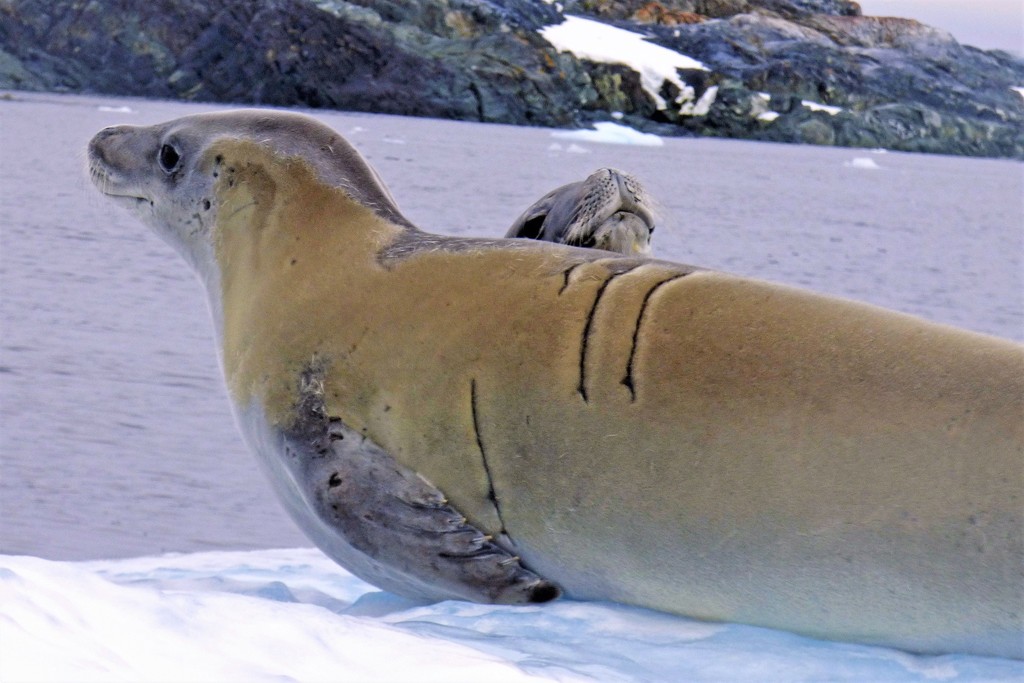
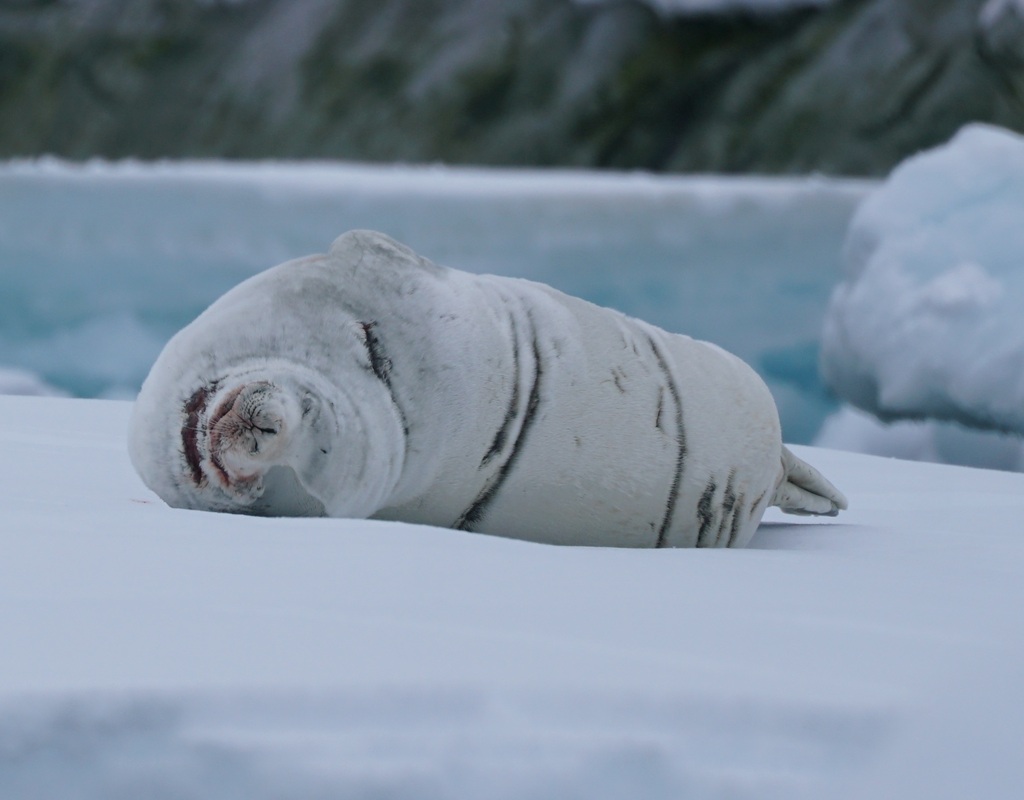
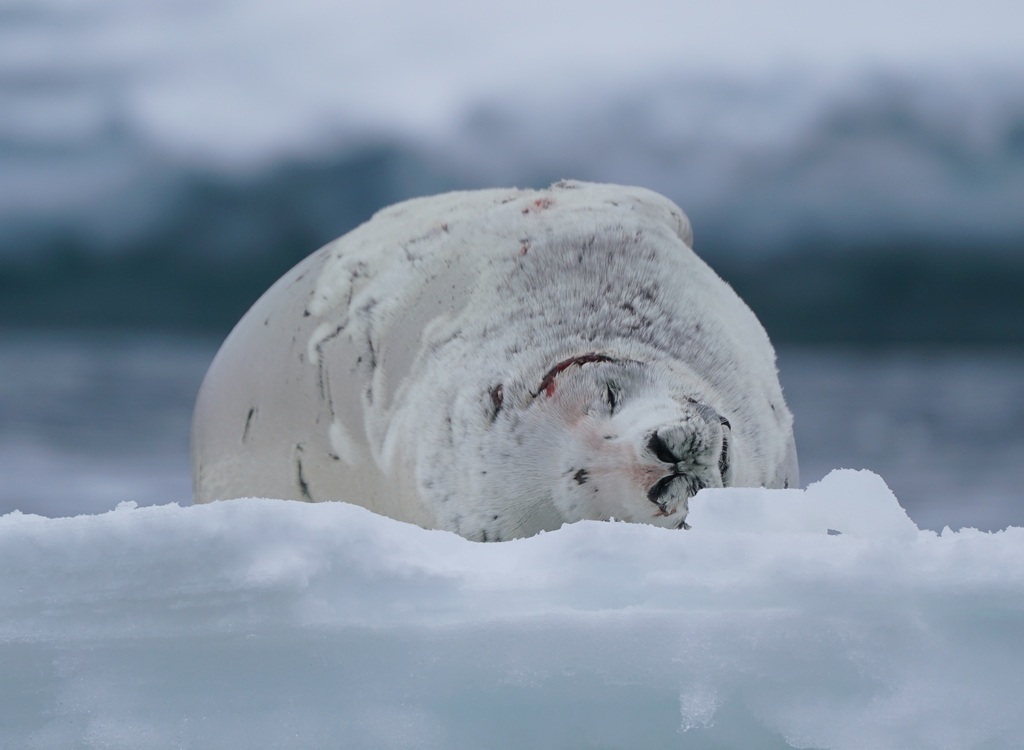
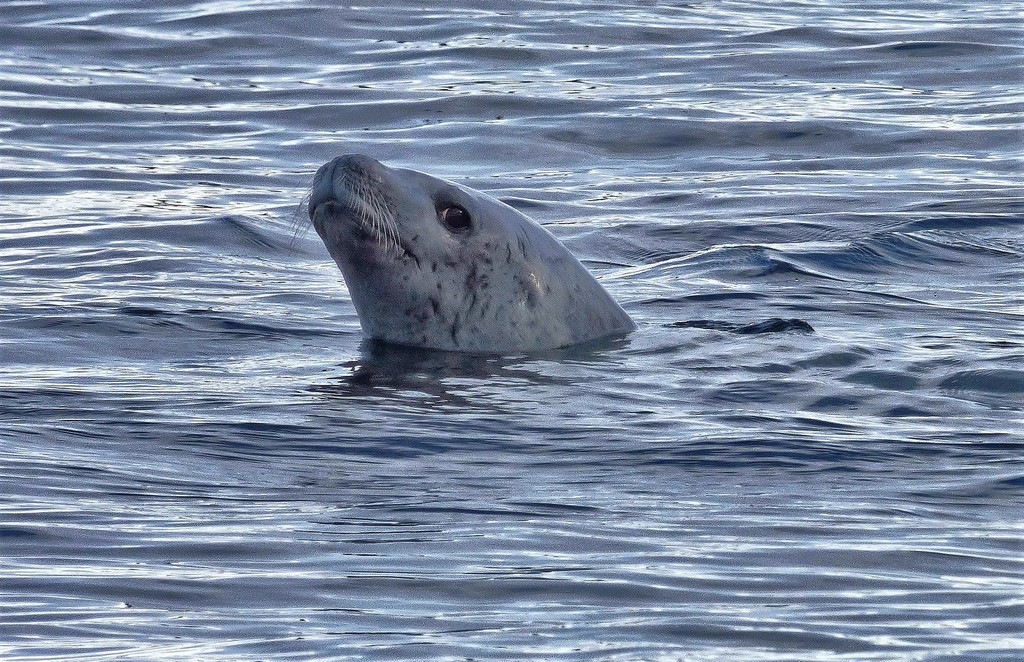
Photos show the species, not always the places on this page.
Length
About 2.0 to 2.6 m (6.6 to 8.5 ft). Sources give an average of about 2.3 m (7.5 ft) and a maximum near 2.6 m (8.5 ft). Females are slightly larger than males.
Weight
Roughly 200 to 300 kg (440 to 660 lb). One source gives up to about 400 kg (880 lb). Females can lose up to half their body weight while nursing.
Next to a person
About 1.3 times as long as an adult is tall, and as heavy as about three adults
What it eats
Mostly Antarctic krill, over 90% of the diet by one account. Despite the name, it does not eat crabs. It also takes some squid and fish. Its teeth have extra projections that strain krill out of the water. It usually hunts in the top 20 m but can go down to about 250 m.
Around people
Calm, give space
How it lives
Crabeater seals spend their whole lives in the pack-ice zone and use floes to rest, breed and moult. Pups are born on the ice in spring, from about September to December. A single pup is nursed for about 3 to 4 weeks and then weaned. Seals reach breeding age at about 3 to 4 years. Their main predators are leopard seals and killer whales. The sources I read do not give a lifespan.
Where it goes
Crabeater seals live in and around the Antarctic pack ice, so where they are depends on where the ice is. The sources I read do not describe a fixed migration route. A few wanderers turn up on the southern coasts of Argentina, South Africa, Australia and New Zealand.
We only draw a journey on the map when scientists have tracked it or clearly documented it. For this animal we have not found one yet.
Populations
Often called the most abundant seal in the world, but nobody has a precise count. Estimates I found are about 7 million (called a likely underestimate), about 15 million, and 15 to 40 million. They range around the whole Antarctic continent. IUCN lists the species as Least Concern (2025).
Meet it respectfully
Watch from a distance and keep your voice low. Never chase, surround, touch or feed a seal, and never come between a mother and her pup. The Australian Antarctic Program guidelines for its own staff ask for 5 m from non-breeding seals and 15 m from breeding or moulting seals, and more if the animal shows any sign of disturbance. Follow the rules of your ship, your guide and the Antarctic Treaty visitor guidance.
Fun fact
Tap the bulb to light it up.
Despite the name, a crabeater seal does not eat crabs. Krill makes up over 90% of its diet.
Its teeth have extra projections, so it can gulp seawater and strain out the krill.
The long scars on many crabeater seals are most likely from leopard seals, their main predator.
Crabeater seal in the Ocean Atlas
Places we have researched where this animal is recorded. It is never guaranteed, and some places are for watching from the boat only.
Travel with usComing soonTrusted referralExploringOn pause, story onlyEthics pass
Country colour: pink where we travel, blue where we are exploring or refer, grey for story only.
 Antarctica
 Argentina
 Australia
Sources for this page
- Wikipedia, Crabeater seal
- Australian Antarctic Program, Crabeater seal
- Australian Antarctic Program, Guidelines for animal approach distances
- SeaLifeBase, Lobodon carcinophaga
- Animal Diversity Web, University of Michigan
- GBIF, IUCN Red List category, 2026
Facts checked 5 October 2026. Photos: Unsplash licence, or Creative Commons as shown on each photo.
Work in ocean travel?
We are always happy to hear from exceptional local operators, accommodation, conservation organisations and destination experts. If your work fits responsible, small-group ocean travel, we would love to learn more.
Partner with Ocean Calling5-day freediving course in Bali
CHF 1,180