
Emperor penguin
Aptenodytes forsteri
An emperor penguin colony stands on fragile sea ice in the Antarctic winter, far from anywhere, and no sighting is ever a promise.
Endangered (IUCN, 2026) means it is at very high risk of extinction in the wild. It was Near Threatened before April 2026, and the change is driven mainly by sea-ice loss.
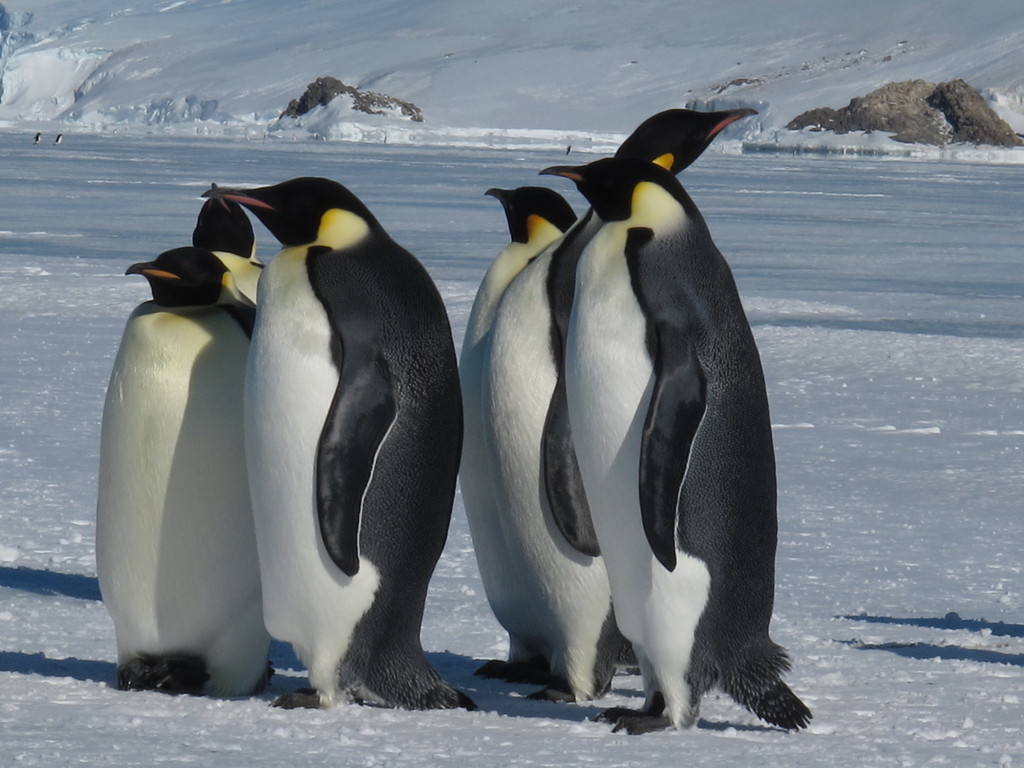
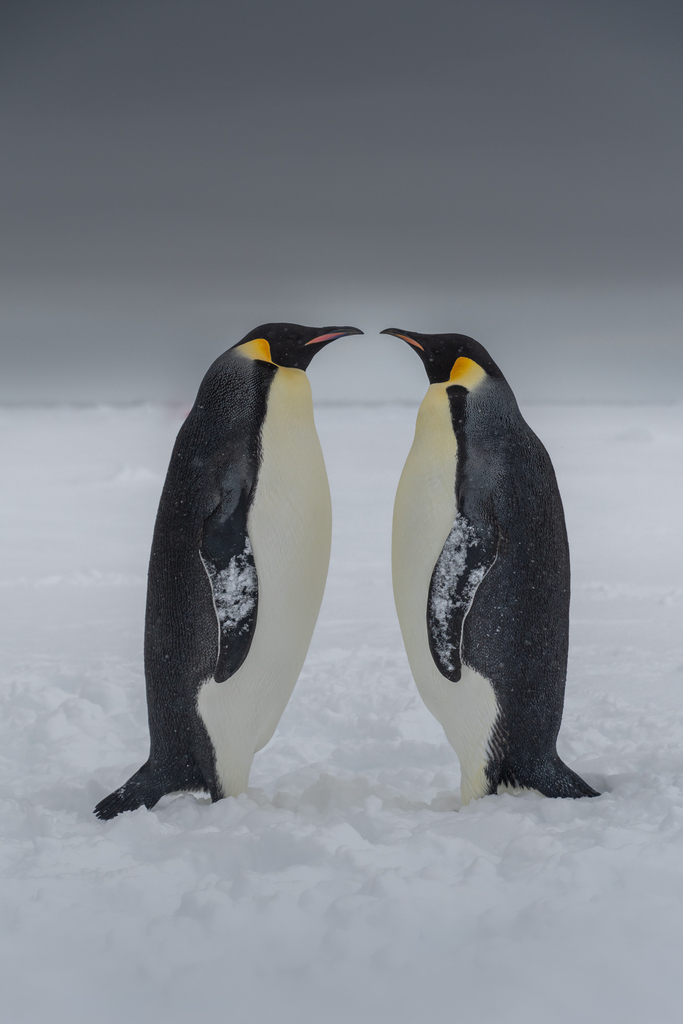
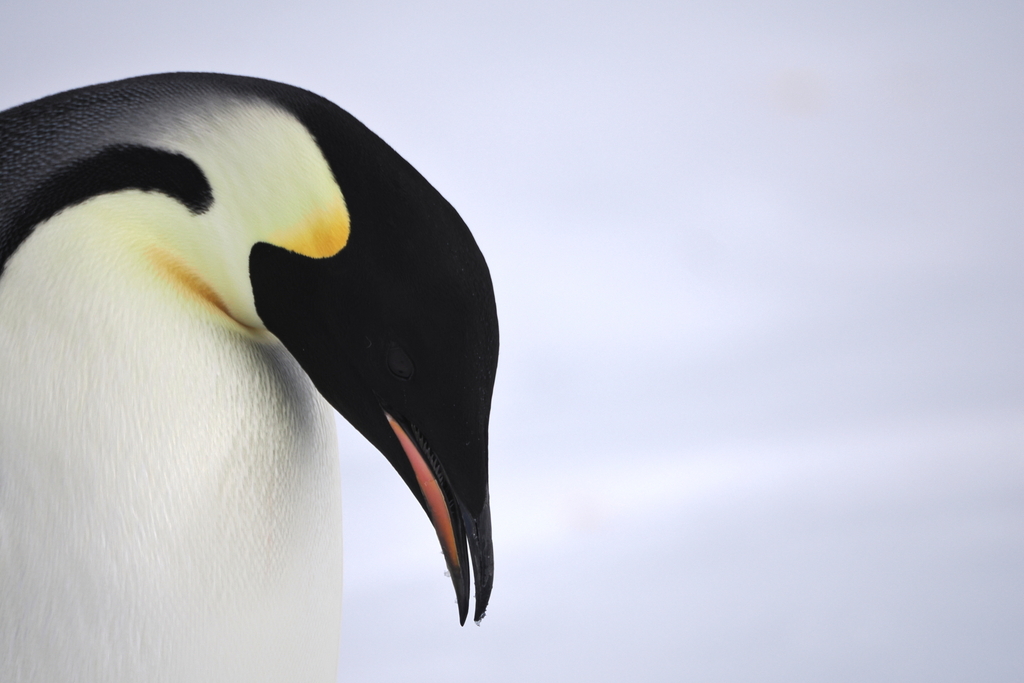
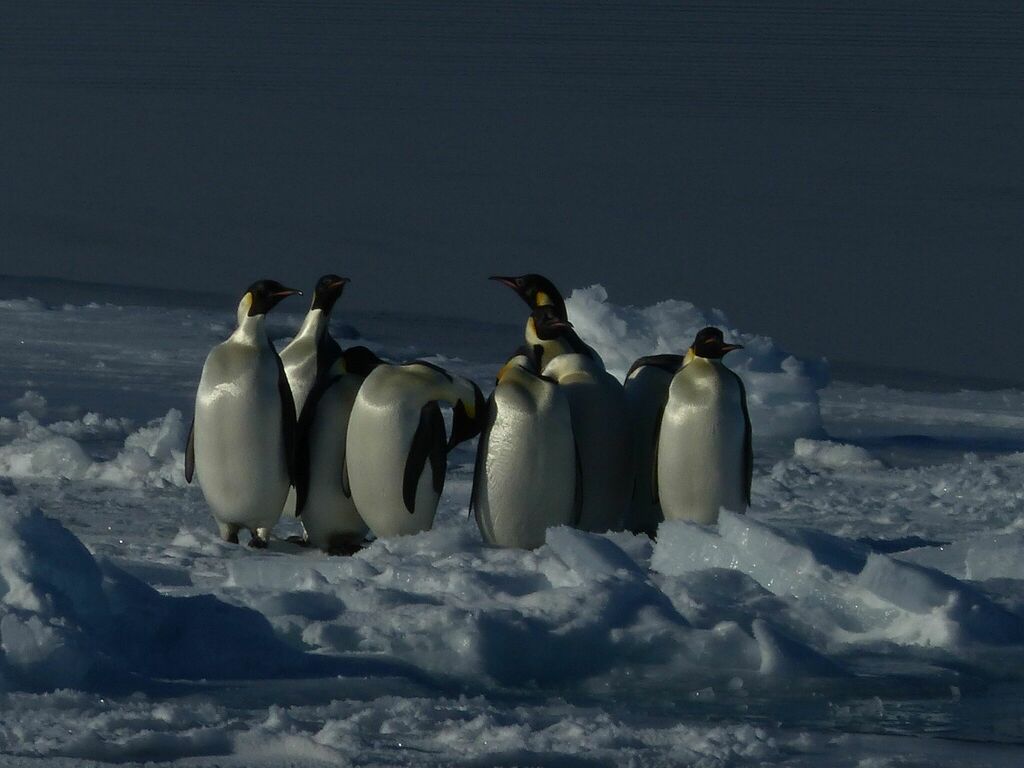
Photos show the species, not always the places on this page.
Length
About 110 to 120 cm (3.6 to 3.9 ft) tall
Weight
About 22 to 45 kg (49 to 99 lb); adults can weigh up to about 40 kg (88 lb) at the start of the breeding season. Males are heavier than females
Next to a person
Roughly up to an adult's chest in height, and about one third to two thirds of an adult's weight (taking an adult as 70 kg)
What it eats
Mostly fish, especially Antarctic silverfish, plus krill and squid. An adult eats about 2 to 3 kg a day, and up to 6 kg a day when building fat reserves.
Around people
Calm, give space
How it lives
The largest of the penguins and the only animal that breeds through the Antarctic winter. A female lays a single egg, and only the male incubates it, for about 65 to 75 days without eating. Both parents then take turns to feed the chick, which needs about 42 kg of food from each parent. In the cold, birds huddle together, with as many as 10 in every square metre, which cuts heat loss by as much as 50%. They usually feed at 150 to 250 m. Most dives last 3 to 6 minutes, and the longest recorded is 22 minutes.
Where it goes
Emperor penguins stay in the Antarctic and Southern Ocean. They breed on fast ice, which is sea ice attached to the coast, and travel out to open water to feed. Colonies are often a long way from the fishing grounds, so adults fill up before they return.
We only draw a journey on the map when scientists have tracked it or clearly documented it. For this animal we have not found one yet.
Populations
A 2009 satellite survey counted about 238,000 breeding pairs, roughly 595,000 adult birds, in 46 colonies. About 66 colonies were known by 2022. Colonies range from a few hundred to over 20,000 pairs. Satellite data show a loss of about 10% between 2009 and 2018, more than 20,000 adults. On 9 April 2026 the IUCN moved the species from Near Threatened to Endangered because of sea-ice loss, and its models show the population could halve by the 2080s without sharp cuts in greenhouse gas emissions. Early break-up of sea ice can make a breeding colony collapse into the sea before the chicks can swim.
Meet it respectfully
Watch quietly from a distance and let the birds decide how close to come. Never chase, touch, feed or bait them, and never walk into a colony. The Australian Antarctic Division's guidelines recommend at least 50 m from emperor penguins and more if the birds show signs of disturbance. If you sit still, they may come closer on their own, and then you stay quiet until they move away. Colonies stand on fragile sea ice, so access depends on ice and weather. Follow your guide, and nothing about a visit is guaranteed.
Fun fact
Tap the bulb to light it up.
Only the male incubates the egg, standing through the Antarctic winter for about 65 to 75 days without eating.
Emperors huddle with up to ten birds in every square metre, which can cut heat loss by as much as half.
The deepest recorded emperor dive is 565 m, and the longest recorded dive lasted 22 minutes.
Emperor penguin in the Ocean Atlas
Places we have researched where this animal is recorded. It is never guaranteed, and some places are for watching from the boat only.
Travel with usComing soonTrusted referralExploringOn pause, story onlyEthics pass
Country colour: pink where we travel, blue where we are exploring or refer, grey for story only.
 Antarctica
Sources for this page
- IUCN, 2026
- BirdLife International, 2026
- Australian Antarctic Division, 2026
- Fretwell et al., 2012, PLOS ONE
- Wikipedia, 2026
- Australian Antarctic Division, Animal approach distances, 2026
Facts checked 5 October 2026. Photos: Unsplash licence, or Creative Commons as shown on each photo.
Work in ocean travel?
We are always happy to hear from exceptional local operators, accommodation, conservation organisations and destination experts. If your work fits responsible, small-group ocean travel, we would love to learn more.
Partner with Ocean Calling5-day freediving course in Bali
CHF 1,180