
European storm-petrel
Hydrobates pelagicus
A sparrow-sized seabird that comes to land only in the dark. Storm-petrels keep their own hours, and no sighting is ever a promise.
Least Concern (IUCN) means it is not close to being at risk of extinction worldwide because it is numerous. I could not confirm the assessment year from the sources I opened.
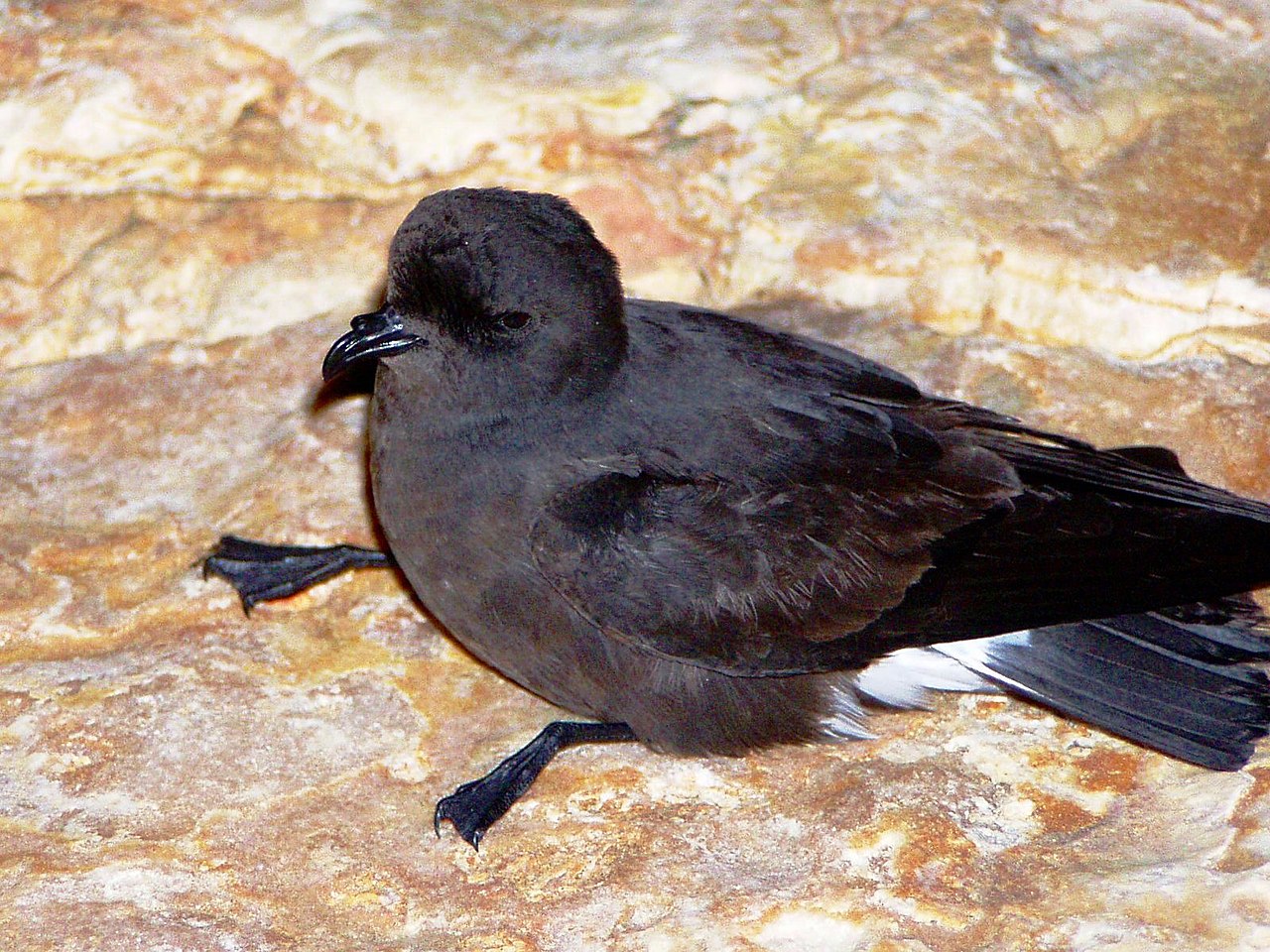
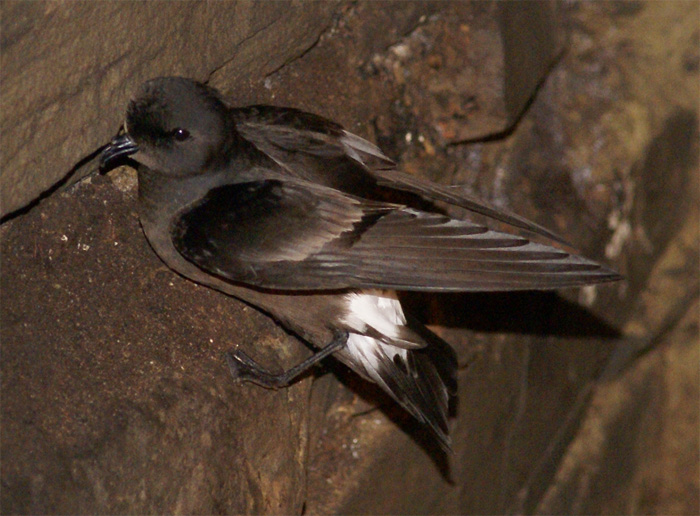


Photos show the species, not always the places on this page.
Length
About 14 to 18 cm (5.5 to 7.1 in) long, with a wingspan of about 36 to 39 cm (14 to 15 in)
Weight
About 20 to 38 g (0.7 to 1.3 oz); BTO gives an average of about 26 g (0.9 oz) for adults
Next to a person
About as long as an adult hand, and as heavy as three or four coins
What it eats
Small fish, squid and zooplankton, taken from the sea surface while pattering on the water with its feet. It has a good sense of smell for finding food.
Around people
Quiet, lights low
How it lives
It nests in rock crevices or burrows on small, remote, rat-free islands and is overwhelmingly active at night. Breeding starts at about 4 years. A pair raises one egg a year, incubated for about 38 to 50 days, and the chick fledges after about 56 to 73 days. Typical life expectancy is about 11 years once breeding, and the oldest ringed bird reached 38 years.
Where it goes
Breeds on small Atlantic islands, from the Faroe Islands and Iceland through Britain and Ireland. Outside the breeding season it is highly oceanic, and the sources I read give no single migration route. At sea it may follow ships, especially trawlers.
We only draw a journey on the map when scientists have tracked it or clearly documented it. For this animal we have not found one yet.
Populations
One summary gives about 430,000 to 510,000 breeding pairs worldwide, with slight declines in places. The Faroe Islands hold the largest known colony, about 50,000 pairs on Nolsoy (Seabird Group). I did not find a firm Faroe-wide count, and published figures vary, so treat the number with care. In the UK, about 26,000 nests were counted in 1998 to 2002, and the UK status is Amber. Britain and Ireland hold over 30% of the North Atlantic population.
Meet it respectfully
Colonies are best left alone, so keep lights low and follow your guide near them. Never handle, chase or call in birds, and stay on paths so burrows are not crushed. I did not read local rules for the Faroe Islands, so follow your guide.
Fun fact
Tap the bulb to light it up.
It is overwhelmingly active at night, so colonies are quiet and hard to see by day.
Artificial light at night is a known concern for storm-petrels, and researchers in the Faroe Islands are studying how they react to it.
On Nolsoy, researchers added nest boxes. In 2022, 28 of 59 boxes were used and seven fledged chicks.
European storm-petrel in the Ocean Atlas
Places we have researched where this animal is recorded. It is never guaranteed, and some places are for watching from the boat only.
Travel with usComing soonTrusted referralExploringOn pause, story onlyEthics pass
Country colour: pink where we travel, blue where we are exploring or refer, grey for story only.
 Faroe Islands
Sources for this page
- Seabird Group, Faroe Islands storm-petrel pilot study, 2022
- BTO, Storm Petrel BirdFacts
- RSPB, Storm Petrel
- Wikipedia, European storm petrel, 2026
- Inside Ecology, Seabirds Count results, 2023
Facts checked 5 October 2026. Photos: Unsplash licence, or Creative Commons as shown on each photo.
Work in ocean travel?
We are always happy to hear from exceptional local operators, accommodation, conservation organisations and destination experts. If your work fits responsible, small-group ocean travel, we would love to learn more.
Partner with Ocean CallingSwim with humpback whales in Moʻorea, September 2027
from CHF 4,500