
Flatback turtle
Natator depressus
Flatbacks are Australian breeding specialists that keep to shallow coastal shelf waters, with nesting seasons that differ from region to region.
Data Deficient (IUCN, 1996) means there was not enough data to judge the risk. This assessment is very old. Australia, where all flatbacks nest, protects the species as Vulnerable.
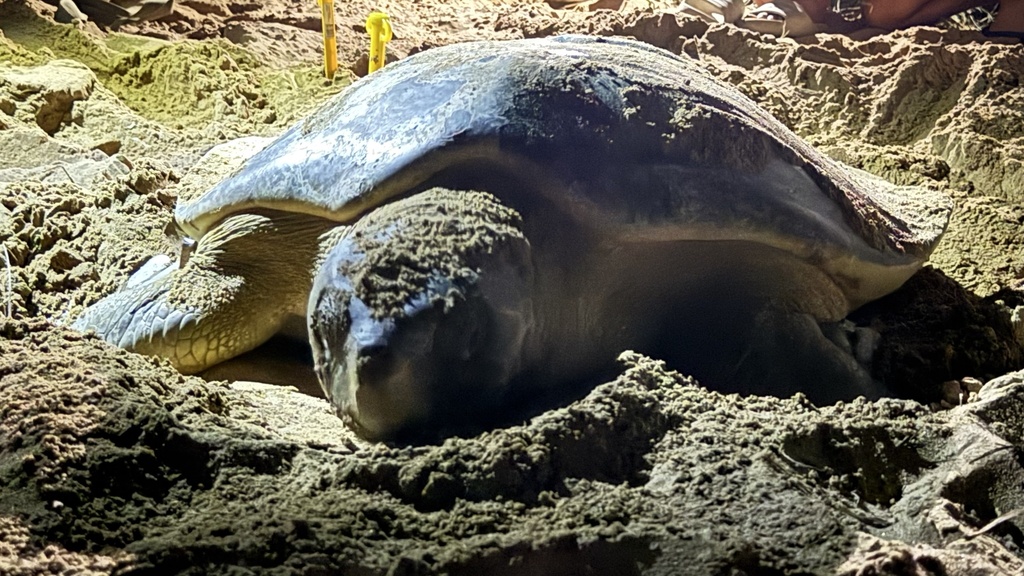
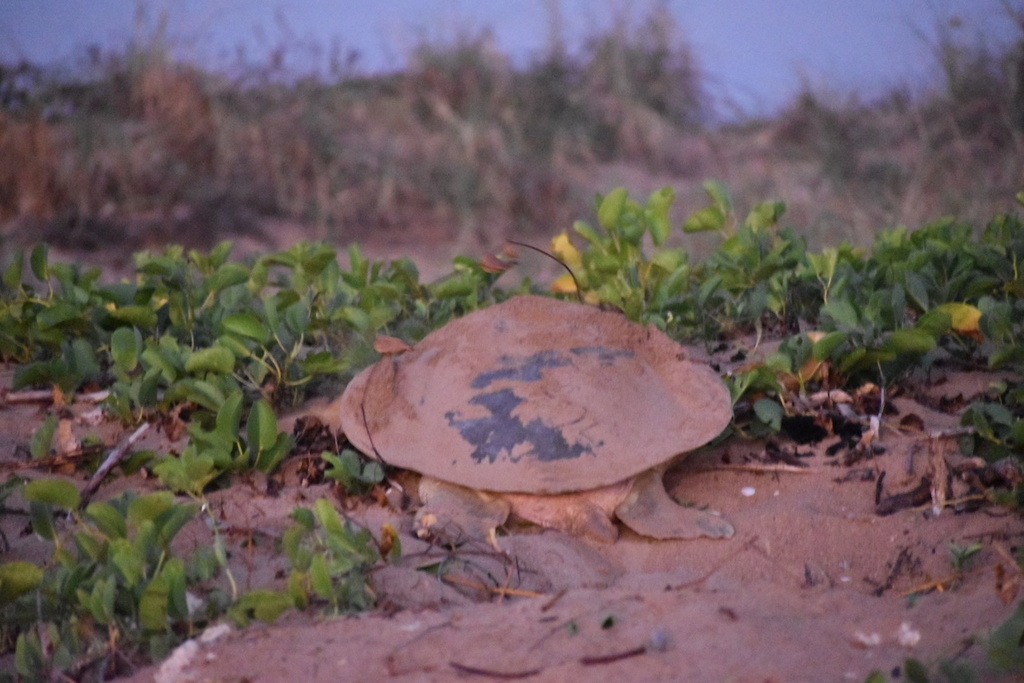
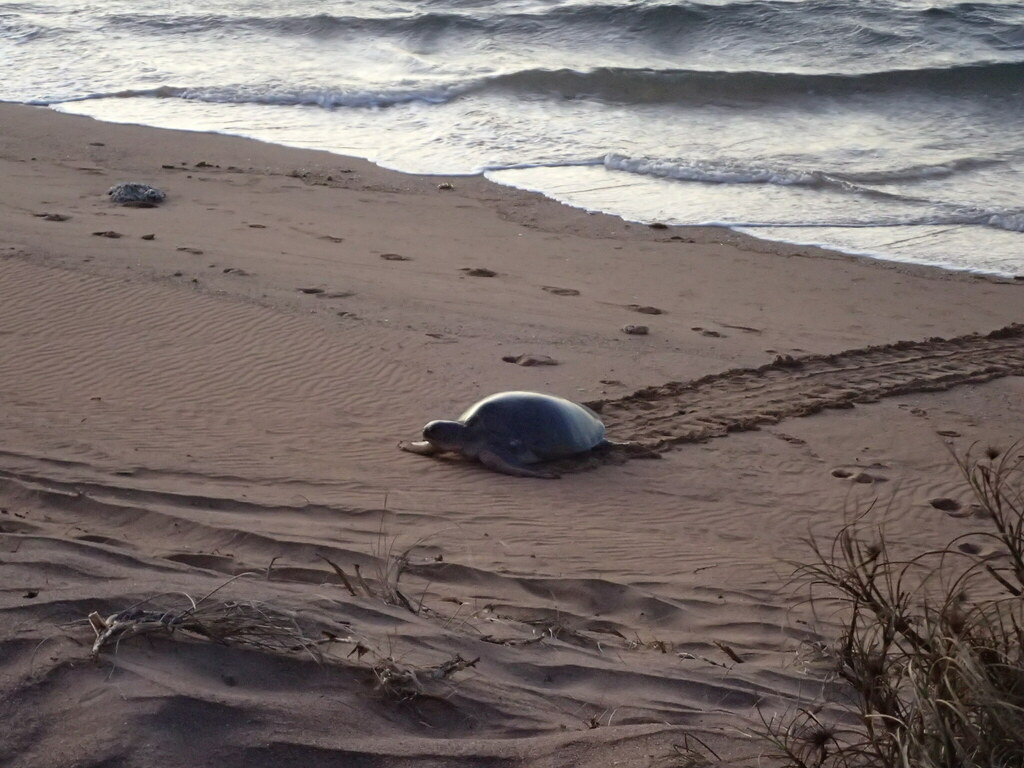
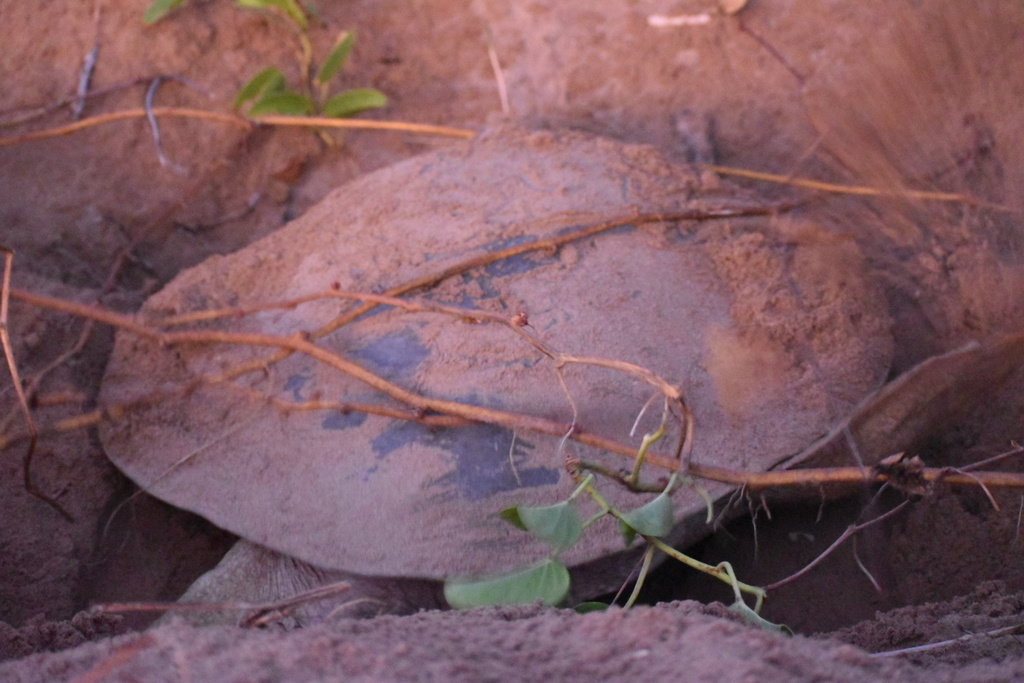
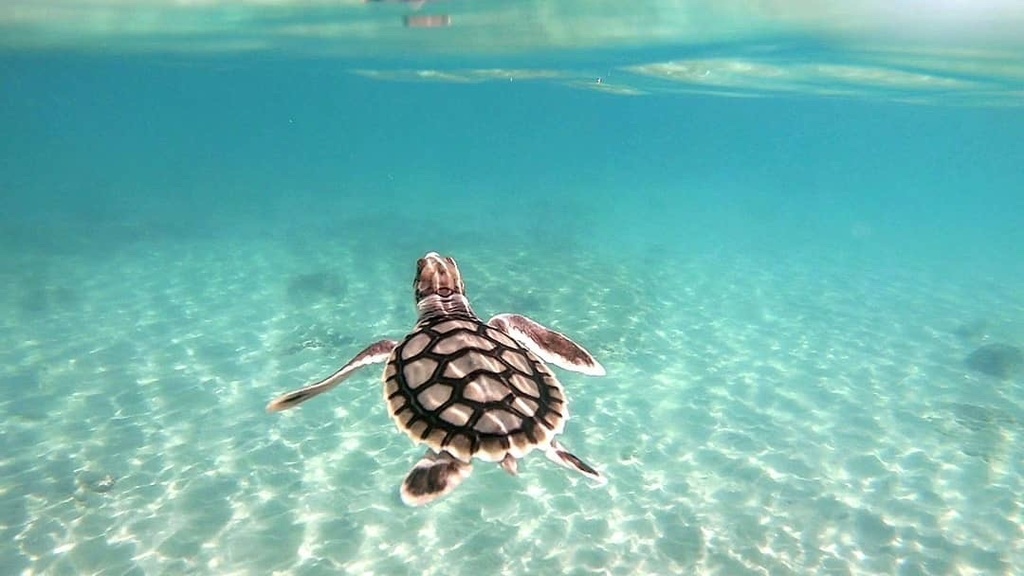
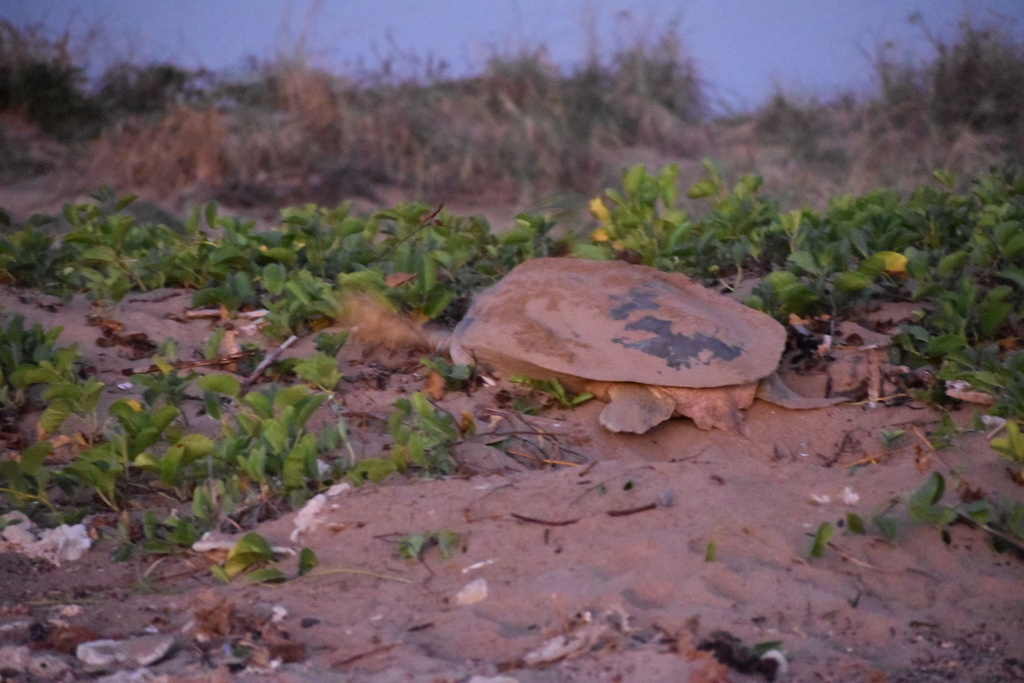
Photos show the species, not always the places on this page.
Length
Shell usually about 0.78 to 1.06 m (2.6 to 3.5 ft); adult females average about 0.92 m (3 ft)
Weight
Usually about 70 to 99 kg (154 to 218 lb)
Next to a person
A medium sea turtle, usually smaller than a green; the shell is about as long as a seated adult's upper body
What it eats
Mostly soft animals such as sea cucumbers, jellyfish and soft corals, plus molluscs and crustaceans, found over soft coastal sea floors.
Around people
Calm, give space
How it lives
The flatback turtle nests only in Australia. Both adults and young turtles live in shallow coastal waters on the continental shelf, which is different from many other sea turtles. It feeds on sea cucumbers, soft corals, jellyfish and other soft animals.
Where it goes
Flatbacks mostly stay in Australian waters, but they do migrate. In Western Australia, 280 satellite tags fitted in 2005 to 2020 showed they spent 99.5 percent of their time in Australian waters. After nesting, 73 tracked females from four north-west beaches used a coastal corridor about 1,150 km long. Nesting seasons and routes differ between regional breeding groups.
We only draw a journey on the map when scientists have tracked it or clearly documented it. For this animal we have not found one yet.
Populations
The IUCN lists the flatback as Data Deficient, which means there is not enough information to judge its risk. Different regional breeding groups nest at different times of year, so one population cannot stand for all flatbacks.
Meet it respectfully
Look only, and never touch, chase or block a turtle or a hatchling. On nesting beaches, use no white light or flash, stay behind the turtle, and join a ranger or community turtle walk where one exists. Rules differ across Australia, so we check the local ones for each place.
Fun fact
Tap the bulb to light it up.
It nests only in Australia.
Both adults and young flatbacks use shallow coastal waters on the continental shelf.
A flatback lays only about 50 eggs per nest, the fewest of any sea turtle. But its hatchlings are larger than other sea turtle hatchlings, weighing around 43 grams.
Source: Australian Government DCCEEW, 2008, Flatback turtle fact sheet
A research programme in Western Australia found that flatbacks start breeding at about 16 years old on average, younger than scientists had first thought.
Source: WA DBCA North West Shelf Flatback Turtle Conservation Program, Life cycle and behaviour
In one of the world's biggest turtle tracking studies, 280 satellite tags showed flatbacks spend 99.5 percent of their time in Australian waters.
Source: Peel et al., 2024, Ecosphere, I still call Australia home: flatback satellite telemetry
Flatback turtle in the Ocean Atlas
Places we have researched where this animal is recorded. It is never guaranteed, and some places are for watching from the boat only.
Travel with usComing soonTrusted referralExploringOn pause, story onlyEthics pass
Country colour: pink where we travel, blue where we are exploring or refer, grey for story only.
 Australia
 Indonesia
 Papua New Guinea
Sources for this page
- Australian Government, 1971
- Sea Turtle Conservancy
- DCCEEW
- Peel et al., 2024, Ecosphere, I still call Australia home: flatback satellite telemetry
- Pendoley et al., 2014, Marine Biology, A coastal migratory corridor for flatbacks
Facts checked 26 September 2026. Photos: Unsplash licence, or Creative Commons as shown on each photo.
Work in ocean travel?
We are always happy to hear from exceptional local operators, accommodation, conservation organisations and destination experts. If your work fits responsible, small-group ocean travel, we would love to learn more.
Partner with Ocean Calling