
Guadalupe fur seal
Arctocephalus townsendi
A dark head with a long, pointed snout, rising from the swell. Guadalupe fur seals live by their own rhythm at sea, and no sighting is ever a promise.
Least Concern (IUCN, assessed 2015) means it is not currently judged at high risk of extinction, after a strong recovery from near extinction. The population is still a fraction of its historic size and breeds at a single island.
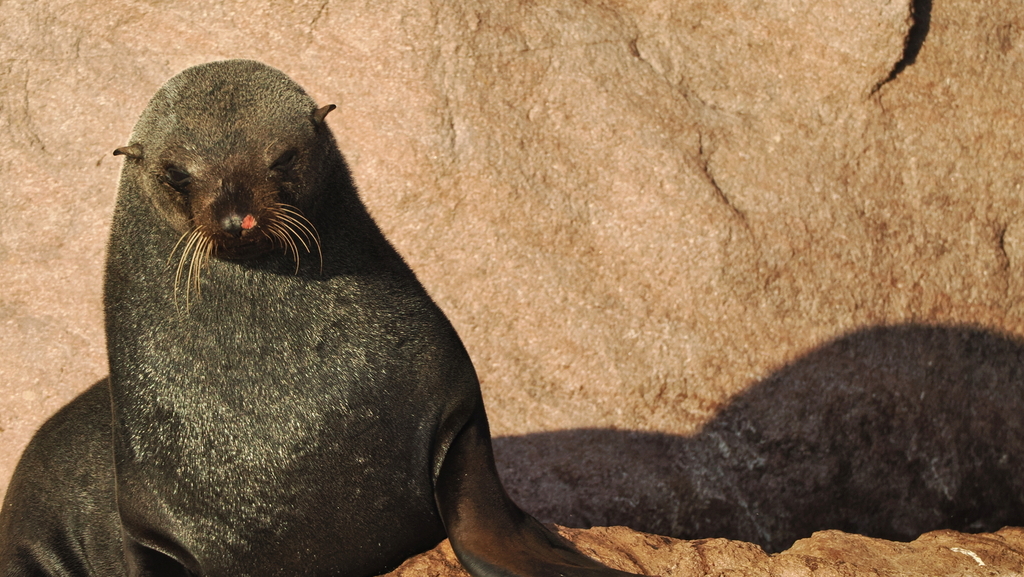
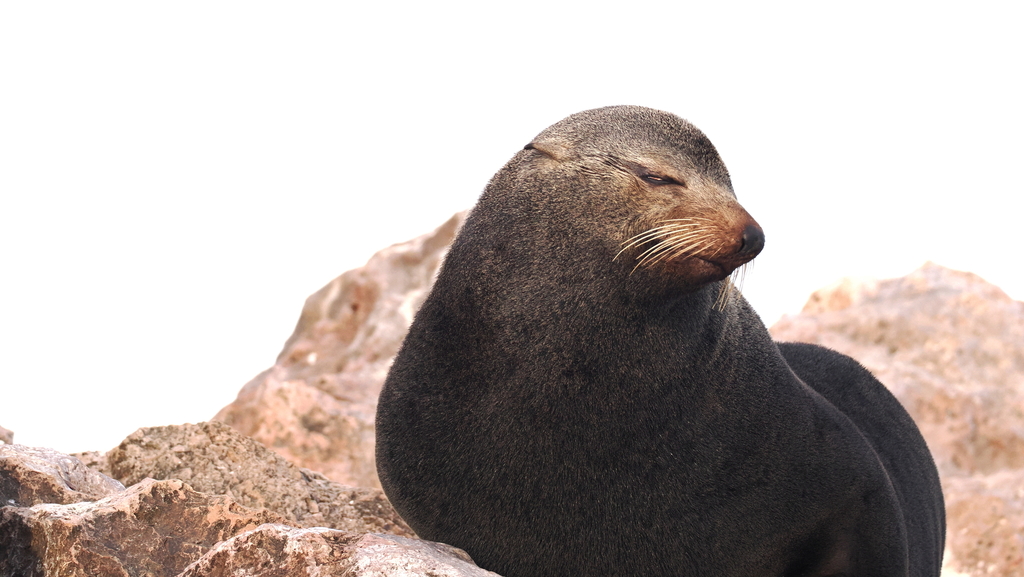
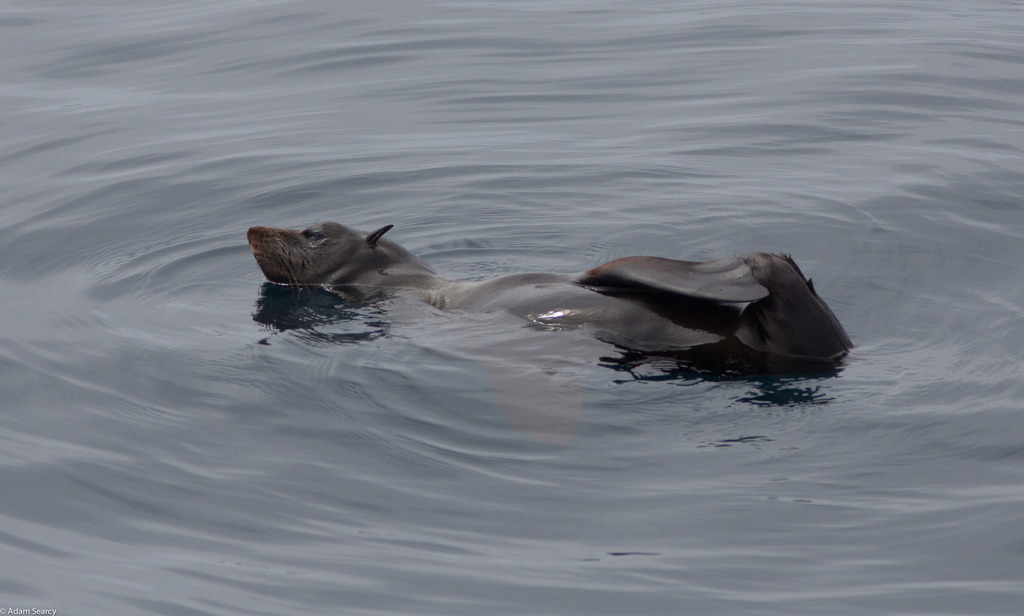
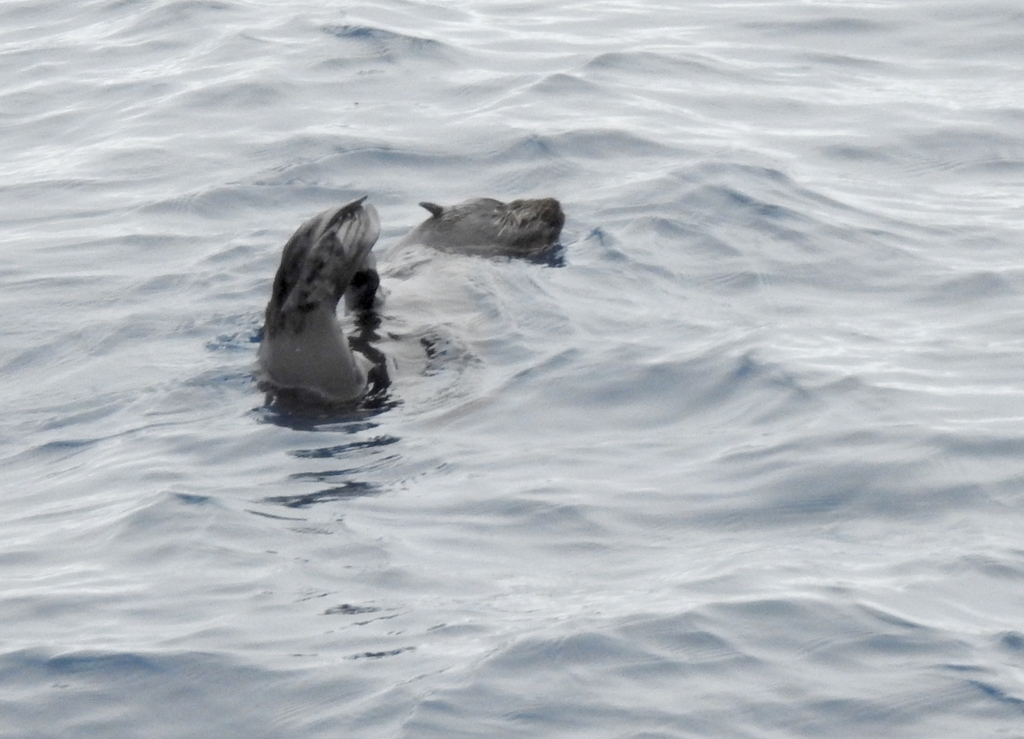
Photos show the species, not always the places on this page.
Length
Females about 1.5 m (5 ft); males about 2.1 m (7 ft), per NOAA Fisheries. Other sources give slightly smaller figures.
Weight
Females about 50 kg (110 lb); males about 180 kg (400 lb), per NOAA Fisheries. Another reference lists males at roughly 124 kg (270 lb), up to 160 kg (350 lb), so published weights differ.
Next to a person
A female is about as long as a tall adult is high and as heavy as a small adult; a male is longer than most people are tall and several times heavier than a child.
What it eats
Mostly squid and small fish such as mackerel and lanternfish. They feed mainly at night, diving on average to about 20 m (65 ft) and down to about 76 m (250 ft).
Around people
Calm, give space
How it lives
They live about 20 years. The breeding season runs from about May to August, and most pups are born in June. Males guard territories and may mate with up to 12 females in a season. A mother alternates feeding trips at sea with nursing ashore, and pups are weaned at about 9 months.
Where it goes
Almost all pups are born on Guadalupe Island, off Baja California, Mexico. Recent years have brought some recolonisation of the San Benito Archipelago and San Miguel Island, and more animals are seen off southern California. After the breeding season they spend time at sea. The sources I opened do not give a single migration route.
We only draw a journey on the map when scientists have tracked it or clearly documented it. For this animal we have not found one yet.
Populations
The species was hunted to a few dozen animals by the late 19th century. A 2019 estimate from pup counts put the population at about 63,850 animals (range 57,199 to 72,631), which is roughly 32% of its size before the 1890s. Pup production grew by about 8.4% a year between 1991 and 2019. NOAA Fisheries lists it as threatened under the US Endangered Species Act, and a 2015 to 2021 unusual mortality event affected young seals stranding in California, Oregon and Washington. There is one breeding colony on Guadalupe Island, protected in Mexico.
Meet it respectfully
Watch from a distance and let the seals choose what to do. Never chase, touch, feed or bait them, and keep clear of mothers and pups on land and in the water. NOAA Fisheries asks people in US waters to stay at least 50 yards (about 45 m) away and to keep watching to 30 minutes or less. Elsewhere, follow local rules and your guide.
Fun fact
Tap the bulb to light it up.
Its snout is pointed, flattened and long, which helps tell it from a northern fur seal.
In the late 19th century only a few dozen were thought to remain. The 2019 estimate is about 63,850.
It feeds mostly at night on squid and small fish.
Guadalupe fur seal in the Ocean Atlas
Places we have researched where this animal is recorded. It is never guaranteed, and some places are for watching from the boat only.
Travel with usComing soonTrusted referralExploringOn pause, story onlyEthics pass
Country colour: pink where we travel, blue where we are exploring or refer, grey for story only.
 Mexico
 United States
Sources for this page
- NOAA Fisheries, Guadalupe fur seal
- Wikipedia, Guadalupe fur seal
- ICES Journal of Marine Science, 2022, Guadalupe fur seal pup production and sea surface temperature
- The Marine Mammal Center, Guadalupe fur seal
- GBIF, IUCN Red List category for Arctocephalus townsendi
- Animal Diversity Web, Arctocephalus townsendi
Facts checked 5 October 2026. Photos: Unsplash licence, or Creative Commons as shown on each photo.
Work in ocean travel?
We are always happy to hear from exceptional local operators, accommodation, conservation organisations and destination experts. If your work fits responsible, small-group ocean travel, we would love to learn more.
Partner with Ocean CallingShop with Ocean Calling
Visit the Ocean Calling storefront on Amazon.
As an Amazon Associate I earn from qualifying purchases. You are not only choosing products that respect the ocean, you are also helping us keep going: paying our local partners fairly and keeping our retreats ethical, sustainable and honestly priced for you. 💗