
Hourglass dolphin
Lagenorhynchus cruciger
A small black and white dolphin of cold, open Southern Ocean water. It sometimes swims at the bow, and no sighting is ever a promise.
Least Concern (IUCN) means it is not close to being threatened at present. The assessment year was not shown in the record I read.
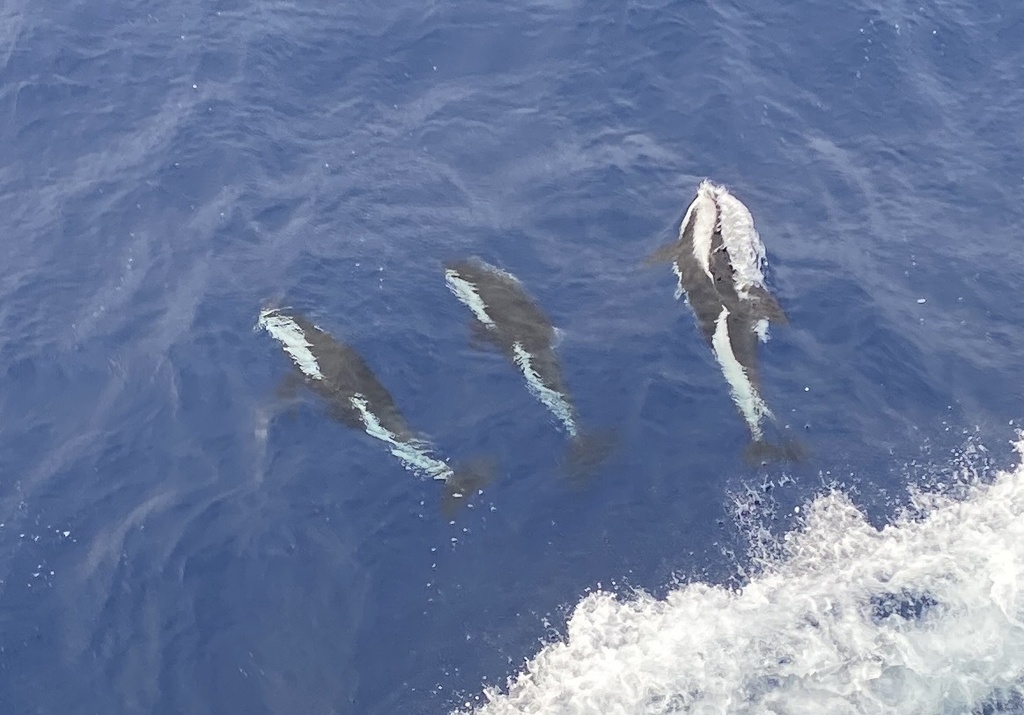
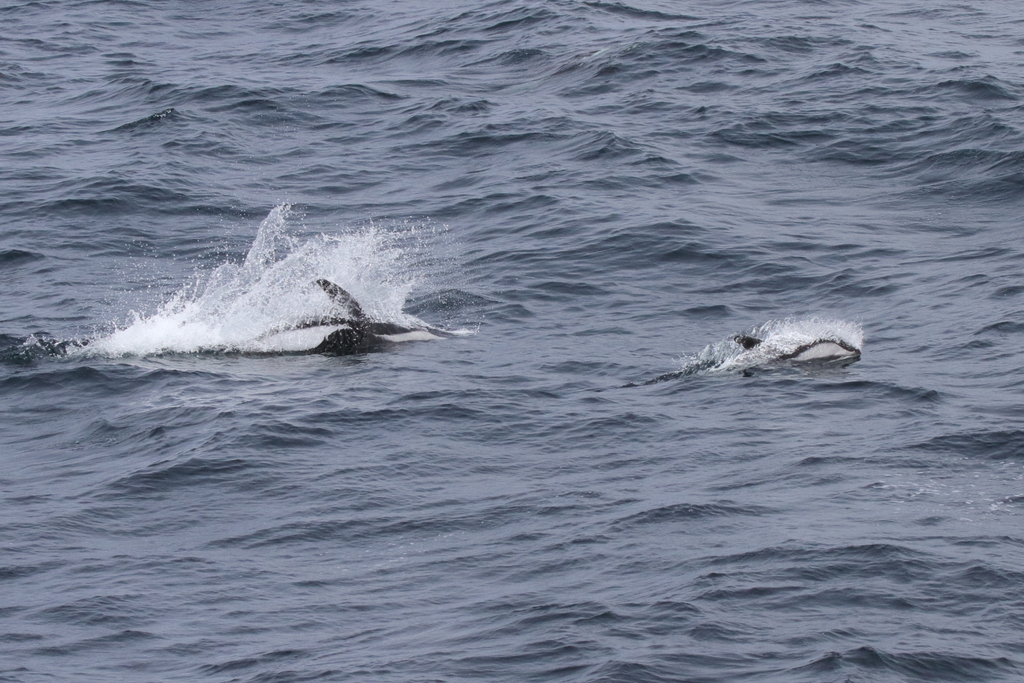
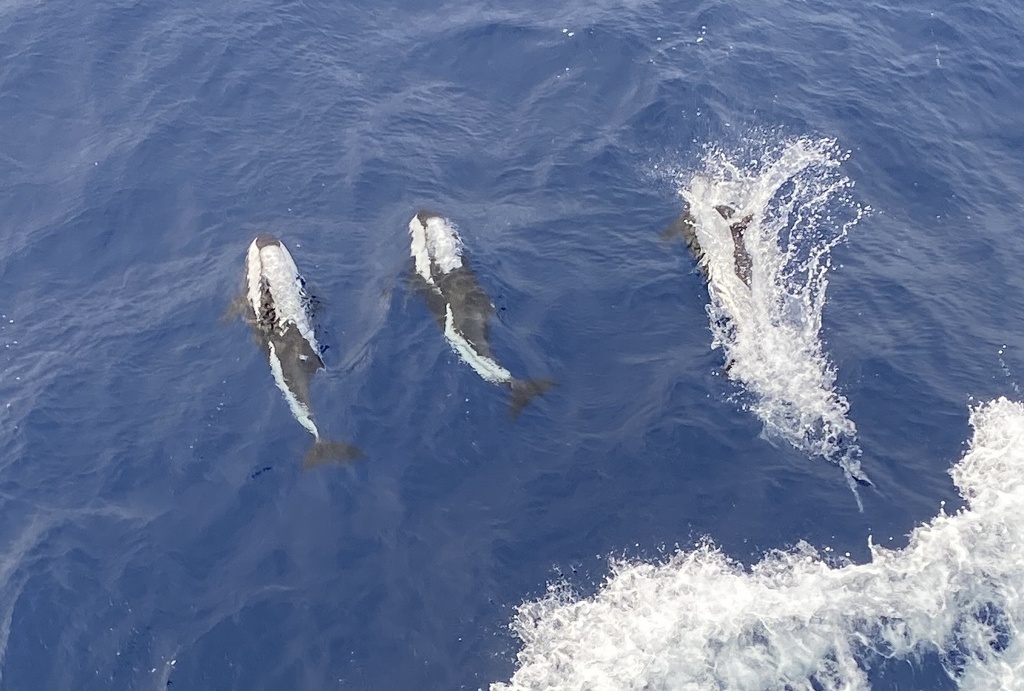
Photos show the species, not always the places on this page.
Length
About 1.6 to 1.8 m (5.2 to 5.9 ft); males are larger than females
Weight
About 74 to 94 kg (163 to 207 lb), based on only a few measured animals
Next to a person
About as long as a tall adult and about as heavy as one adult
What it eats
Fish, squid and crustaceans, with lanternfish and squid favoured. Stomach checks have also found mantis shrimp and worms. They often feed in large groups near the surface.
Around people
Calm, give space
How it lives
Groups are usually 10 to 15 animals in one account and average about seven in another, and they can reach about 100. They often ride the bow waves of ships and swim with large whales. Little is known about breeding in the wild, and what is quoted for gestation comes from related species.
Where it goes
Hourglass dolphins live in cold open water around Antarctica and the sub-Antarctic, between about 43 and 67 degrees south, and are rarely near land. They are seen most often near the Antarctic Convergence. Some sources say they follow cold-water currents and move north in winter, and there are sightings as far north as 36 degrees south in the South Atlantic.
We only draw a journey on the map when scientists have tracked it or clearly documented it. For this animal we have not found one yet.
Populations
The IUCN record I read lists it as Least Concern. A figure of about 144,300 animals south of the Antarctic Convergence comes from surveys between 1977 and 1988, so it is old. No major threats are known. A few bycatch reports exist, and some stranded animals have shown net scars.
Meet it respectfully
If hourglass dolphins come to your ship, let them choose. Hold a steady course and speed, never chase or cut across them, and keep noise down. Let them leave when they want to.
Fun fact
Tap the bulb to light it up.
It is the only small dolphin regularly seen south of the Antarctic Convergence.
It was accepted as a species from an 1820 drawing and witness accounts alone.
Since 2025 the Society for Marine Mammalogy lists it as Cephalorhynchus cruciger, after genetic work.
Hourglass dolphin in the Ocean Atlas
Places we have researched where this animal is recorded. It is never guaranteed, and some places are for watching from the boat only.
Travel with usComing soonTrusted referralExploringOn pause, story onlyEthics pass
Country colour: pink where we travel, blue where we are exploring or refer, grey for story only.
 Antarctica
 Argentina
 Chile
Sources for this page
- Wikipedia, Hourglass dolphin
- Animal Diversity Web, Lagenorhynchus cruciger
- MarineBio, Hourglass dolphins
- Society for Marine Mammalogy, species list, April 2026
- GBIF, IUCN Red List category record
- Mittermeier and Wilson, 2014, Handbook of the Mammals of the World (Zenodo record)
Facts checked 5 October 2026. Photos: Unsplash licence, or Creative Commons as shown on each photo.
Work in ocean travel?
We are always happy to hear from exceptional local operators, accommodation, conservation organisations and destination experts. If your work fits responsible, small-group ocean travel, we would love to learn more.
Partner with Ocean CallingNot sure where to go? Get your Ocean Match
from CHF 19