
Irukandji jellyfish
Carukia barnesi, Malo kingi and relatives
Tiny, often invisible box jellyfish linked to a delayed illness called Irukandji syndrome. In tropical Australia, choose patrolled beaches and follow local stinger advice.
Not Evaluated means IUCN has never assessed Irukandji jellyfish. We found no assessment for any of the species.
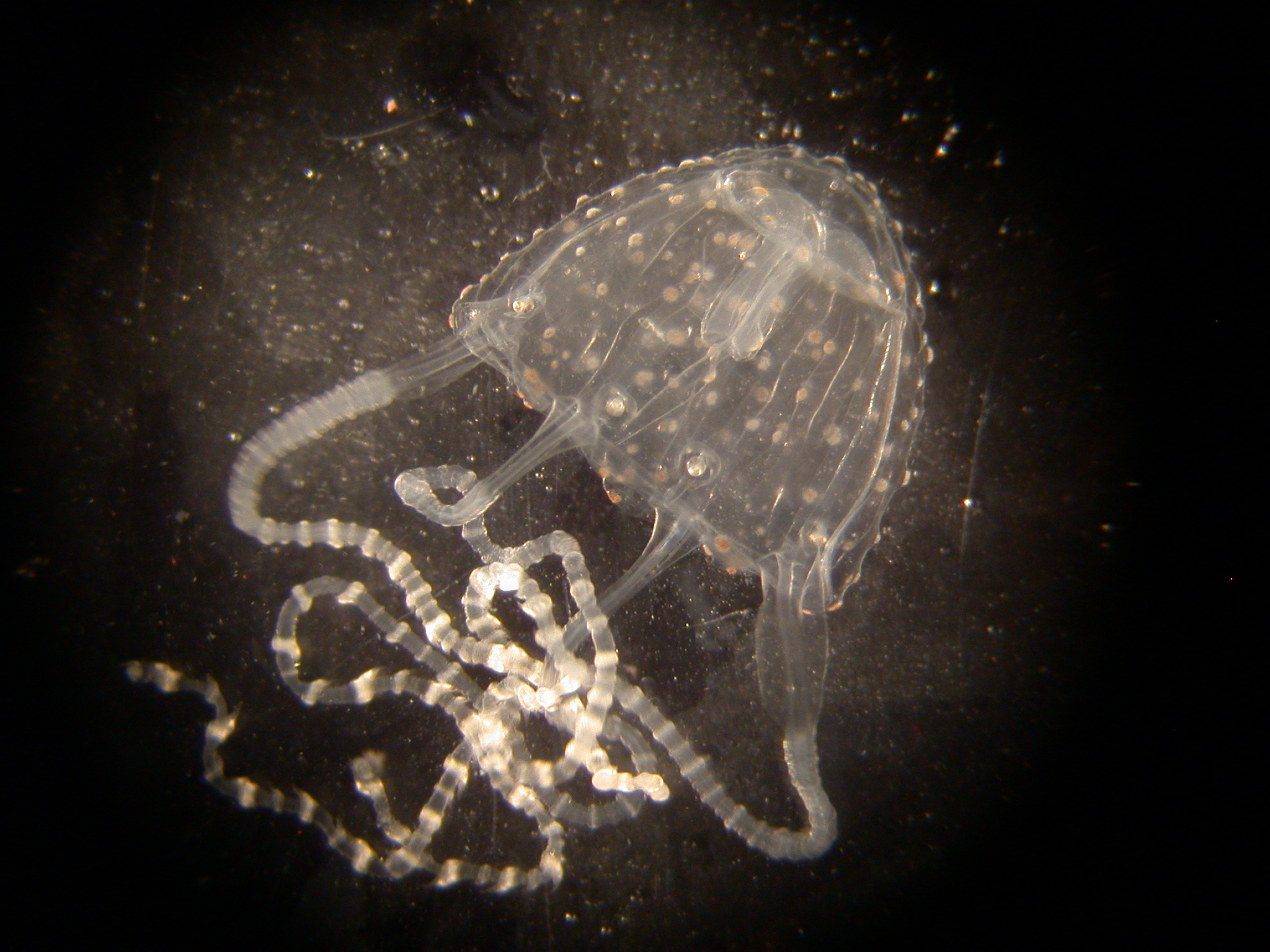
Photos show the species, not always the places on this page.
Length
Carukia barnesi bell usually about 6 to 16 mm (0.25 to 0.6 in) across; some Irukandji reach about 25 mm (1 in). Tentacles up to about 1 m (3.3 ft)
Weight
Not reliably measured
Next to a person
Often smaller than a fingertip; tentacles can trail many times longer than the bell
What it eats
Young Carukia barnesi eat tiny plankton animals like copepods. Adults catch larval fish. The diet of other Irukandji species is not well known.
Around people
Potentially dangerous, respect
How it lives
Irukandji are small box jellyfish with only four tentacles. About ten species are known or thought to cause Irukandji syndrome, including Carukia barnesi and Malo kingi. The sting can feel minor at first, but 5 to 40 minutes later strong pain, sweating, vomiting and anxiety can start, and this needs a hospital.
Where it goes
Not a migrant. Irukandji appear in coastal water mostly in the warmer months, mostly from Bundaberg northwards, but in Queensland they can be present in any month. One study linked Great Barrier Reef blooms to calm trade winds, but a later study found that wind and rain explain only a small part of when they appear.
We only draw a journey on the map when scientists have tracked it or clearly documented it. For this animal we have not found one yet.
Populations
Most dangerous stings happen along Australia's tropical coast, from Bundaberg in Queensland across the north to Geraldton in Western Australia, but stings have been seen as far south as Port Phillip Bay.
Meet it respectfully
We never look for or chase Irukandji. In stinger season, swim at patrolled beaches and wear a full body lycra stinger suit, also when snorkelling on the reef. Stinger nets help, but they may not stop all of these tiny animals. Australian first aid guidance: leave the water, call 000, consider vinegar on the sting for 30 seconds, and stay watched for delayed symptoms, even if you feel fine. This is not medical advice, and outside Australia follow local emergency advice.
Fun fact
Tap the bulb to light it up.
Irukandji have only four tentacles, while the Australian box jellyfish has bunches of many.
Adult Carukia barnesi twitch small clusters of stinging cells on their tentacles like fishing lures to attract larval fish.
In a study near Cairns, 91% of the Irukandji caught had a bell of only 6 to 16 mm.
Malo kingi is named after Robert King, who died after an Irukandji sting while snorkelling off Port Douglas in 2002. His story helped to raise stinger awareness in north Queensland.
Source: ABC News, 2008
Irukandji jellyfish in the Ocean Atlas
Places we have researched where this animal is recorded. It is never guaranteed, and some places are for watching from the boat only.
Travel with usComing soonTrusted referralExploringOn pause, story onlyEthics pass
Country colour: pink where we travel, blue where we are exploring or refer, grey for story only.
 Australia
Sources for this page
- ANZCOR Guideline 9.4.5, First aid management of marine envenomation
- Surf Life Saving Queensland, Marine stingers
- Queensland Government, Dangerous marine life
- Gershwin et al., 2014, Journal of the Royal Society Interface
- ABC News, 2008, Deadly jellyfish named in victim's honour
- Australian Museum, Irukandji
- Rowley et al., 2022, PLOS ONE
- Courtney et al., 2015, PLOS ONE
Facts checked 26 September 2026. Photos: Unsplash licence, or Creative Commons as shown on each photo.
Work in ocean travel?
We are always happy to hear from exceptional local operators, accommodation, conservation organisations and destination experts. If your work fits responsible, small-group ocean travel, we would love to learn more.
Partner with Ocean CallingShop with Ocean Calling
Visit the Ocean Calling storefront on Amazon.
As an Amazon Associate I earn from qualifying purchases. You are not only choosing products that respect the ocean, you are also helping us keep going: paying our local partners fairly and keeping our retreats ethical, sustainable and honestly priced for you. 💗