
Juan Fernández fur seal
Arctocephalus philippii
Endemic fur seals of Chile's Juan Fernández Islands. Watch quietly from a legal distance, never touch, feed or chase, and sightings are never guaranteed.
Least Concern (IUCN, 2015) means it is not at high risk of extinction worldwide today.
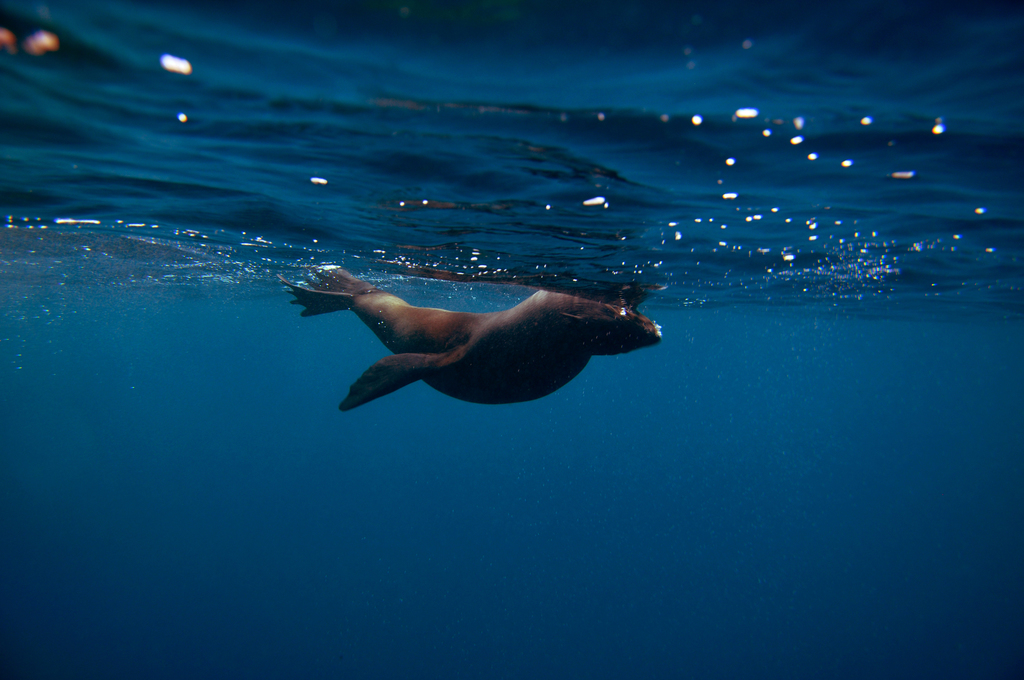
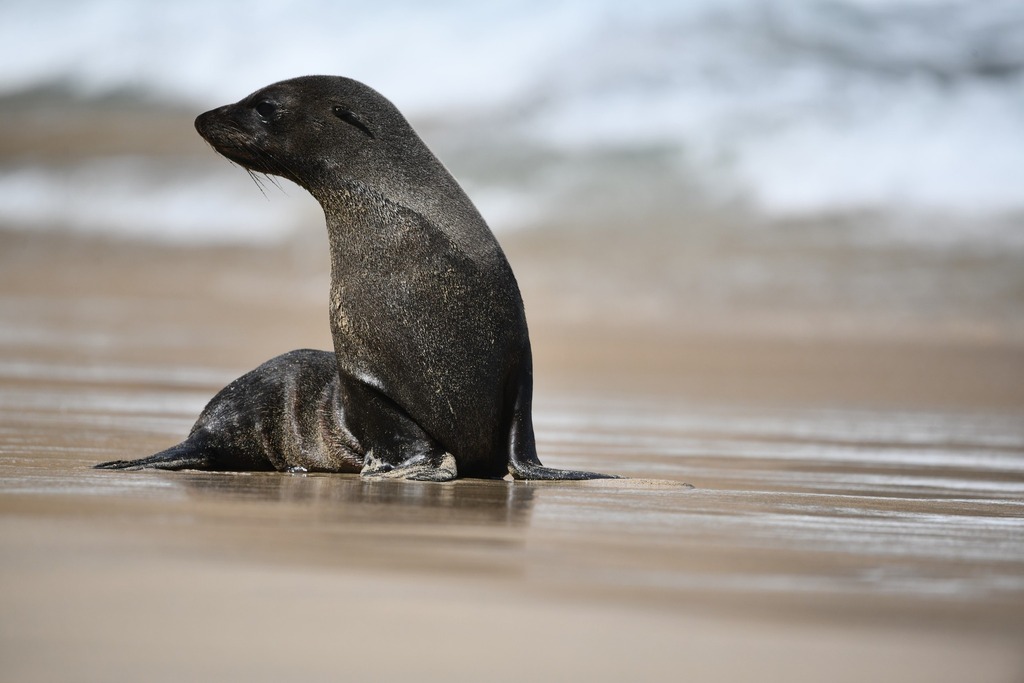
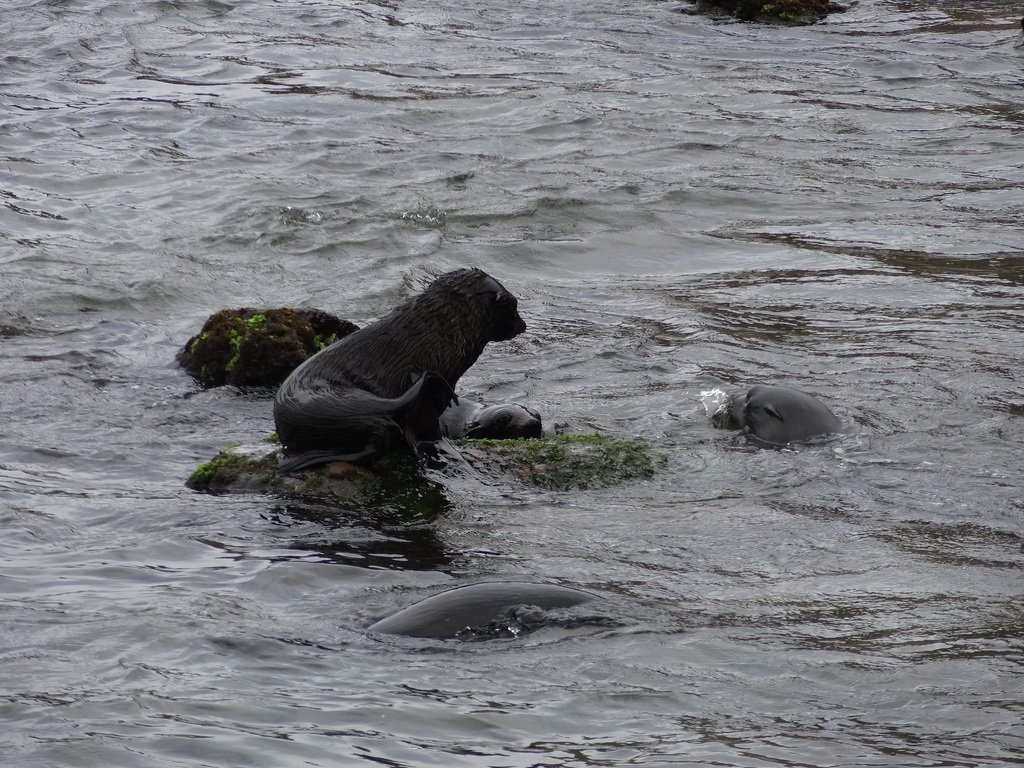
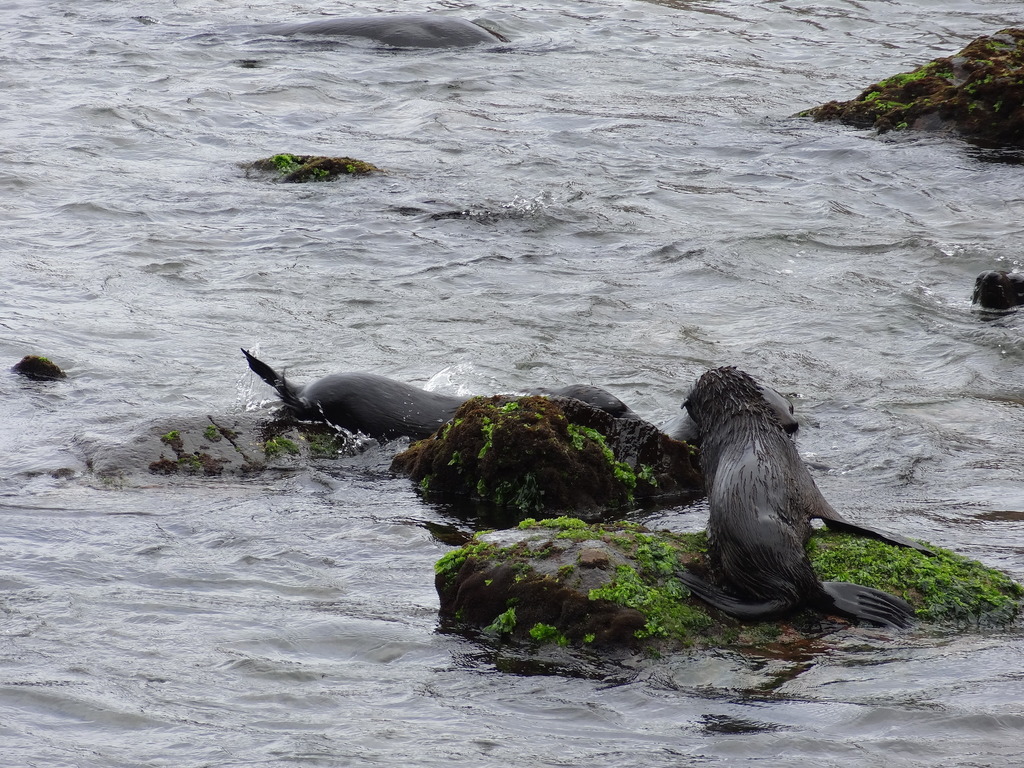
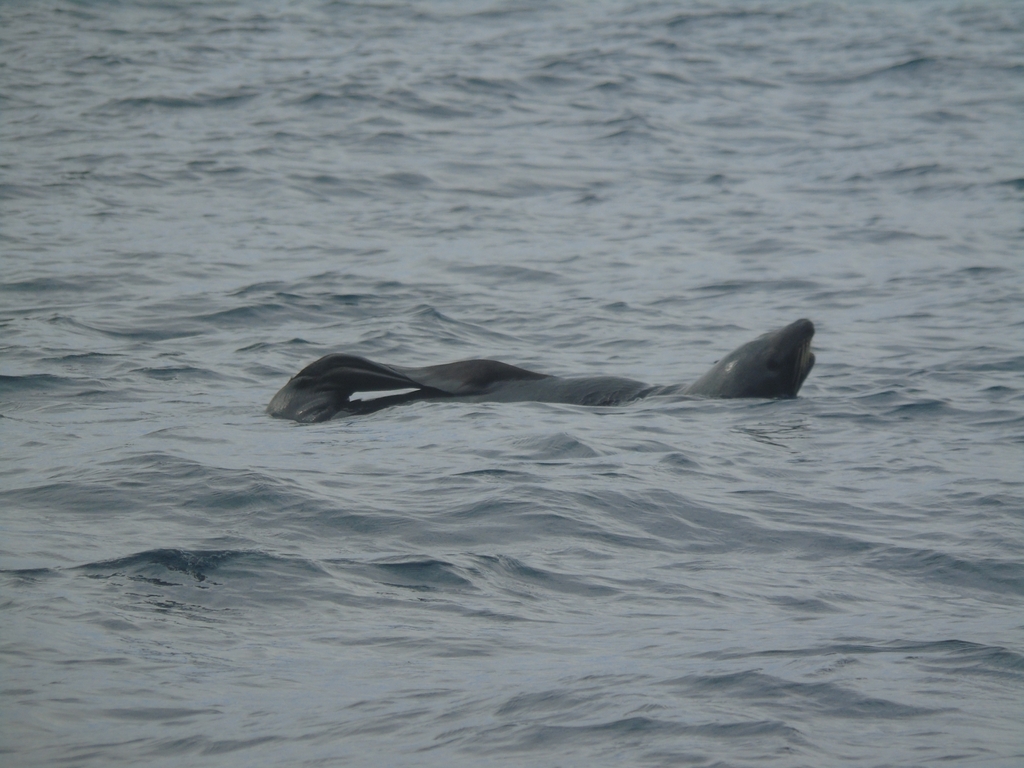
Photos show the species, not always the places on this page.
Length
Males about 2 to 2.1 m (6.6 to 6.9 ft); females about 1.4 to 1.5 m (4.6 to 4.9 ft)
Weight
Males about 140 to 159 kg (309 to 350 lb); females about 48 to 50 kg (106 to 110 lb)
Next to a person
A bull can be about as long as a tall adult and weigh about as much as two people. A female is much smaller and lighter.
What it eats
Mostly small deep-water lanternfish and squid, including Humboldt squid, plus some other fish.
Around people
Potentially dangerous, respect
How it lives
This fur seal breeds only on the Juan Fernández Islands off Chile. It rests and breeds on rocky coasts, boulder beaches and in sea caves. Mothers make some of the longest feeding trips of any fur seal or sea lion, about 12 days at sea on average. It was hunted almost to extinction in the past, but its numbers have since made a major recovery.
Where it goes
It is not a long-distance migrant. It stays around its home islands but makes long feeding trips offshore; tracked females travelled on average about 336 km per trip. Breeding is mainly from mid-November to late January.
We only draw a journey on the map when scientists have tracked it or clearly documented it. For this animal we have not found one yet.
Populations
It breeds only in the Juan Fernández Archipelago, on Robinson Crusoe, Santa Clara and Alejandro Selkirk, where more than half of the population lives. Worldwide, the IUCN Red List lists this seal as Least Concern (2025). Chile's own national classification lists it as Vulnerable (VU D2). These are two separate assessments at different scales.
Meet it respectfully
This is a protected marine mammal. In Chile, national rules ask boats to stay at least 50 m from fur seals and sea lions, and to move back to 100 m if the animals seem disturbed. Never chase, touch, feed or crowd them, and give mothers and pups extra space. Let the seal decide how near it comes, and move away if it seems restless.
Fun fact
Tap the bulb to light it up.
It is the only mammal found only in the Juan Fernández Archipelago.
Hunting nearly wiped it out, but it has since made a major recovery.
It is the second smallest fur seal, after the Galápagos fur seal.
Mothers spend about 12 days at sea on each feeding trip, among the longest of any fur seal or sea lion.
Juan Fernández fur seal in the Ocean Atlas
Places we have researched where this animal is recorded. It is never guaranteed, and some places are for watching from the boat only.
Travel with usComing soonTrusted referralExploringOn pause, story onlyEthics pass
Country colour: pink where we travel, blue where we are exploring or refer, grey for story only.
 Chile
Chile Mexico
 United States
Sources for this page
- MMA/SIMBIO Chile, 2026
- Mammal Diversity Database, 2026
- BCN Chile, 2025
- CONAF
- SERNAPESCA
- IUCN Red List, Borras-Chavez, 2026
- SERNAPESCA, viewing distances
- IMMA, Juan Fernández Archipelago factsheet
Facts checked 26 September 2026. Photos: Unsplash licence, or Creative Commons as shown on each photo.
Work in ocean travel?
We are always happy to hear from exceptional local operators, accommodation, conservation organisations and destination experts. If your work fits responsible, small-group ocean travel, we would love to learn more.
Partner with Ocean CallingNew: mobula rays in La Ventana, May 2027
CHF 2,720