
Leopard shark
Triakis semifasciata
In summer and autumn, hundreds of leopard sharks often gather in La Jolla's warm shallows, mostly mature females using protected coastal water as a seasonal warm refuge.
Least Concern (IUCN, 2014) means it is not at high risk of extinction worldwide today.

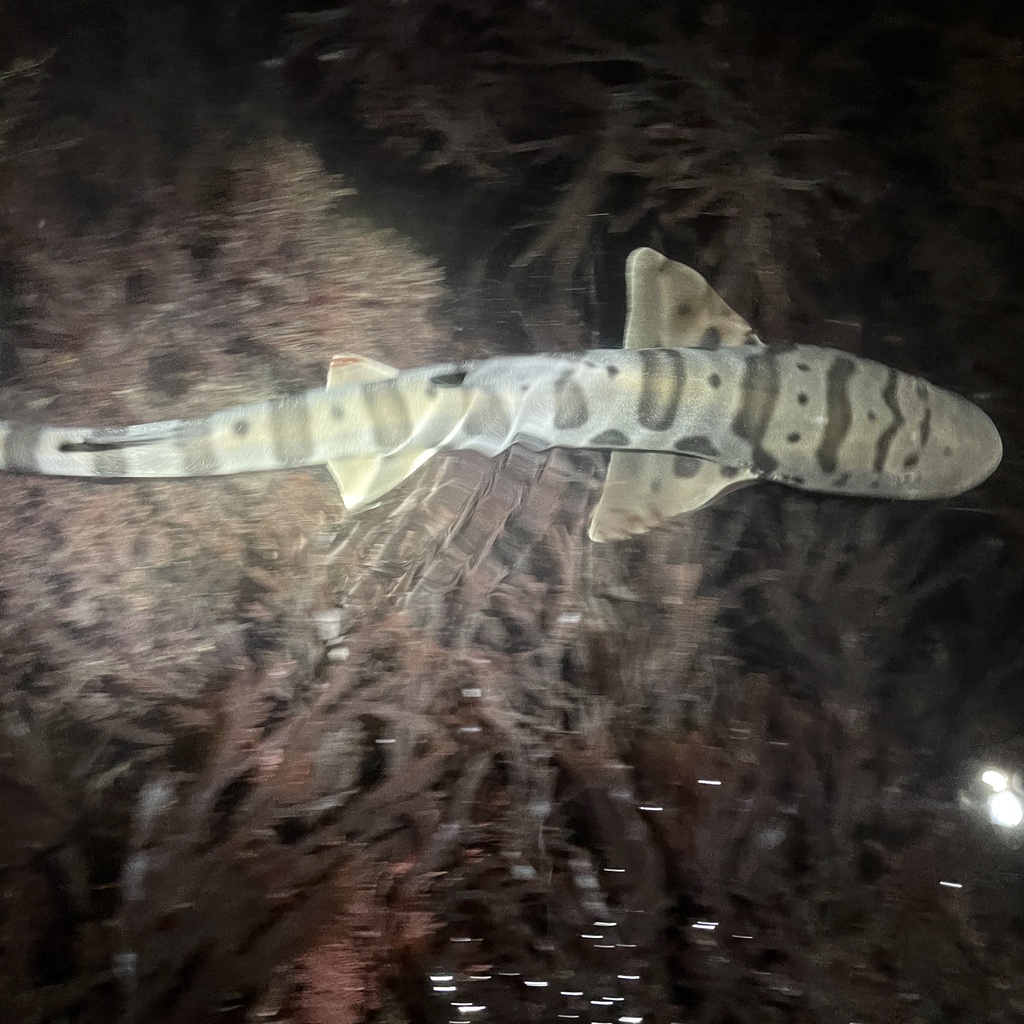
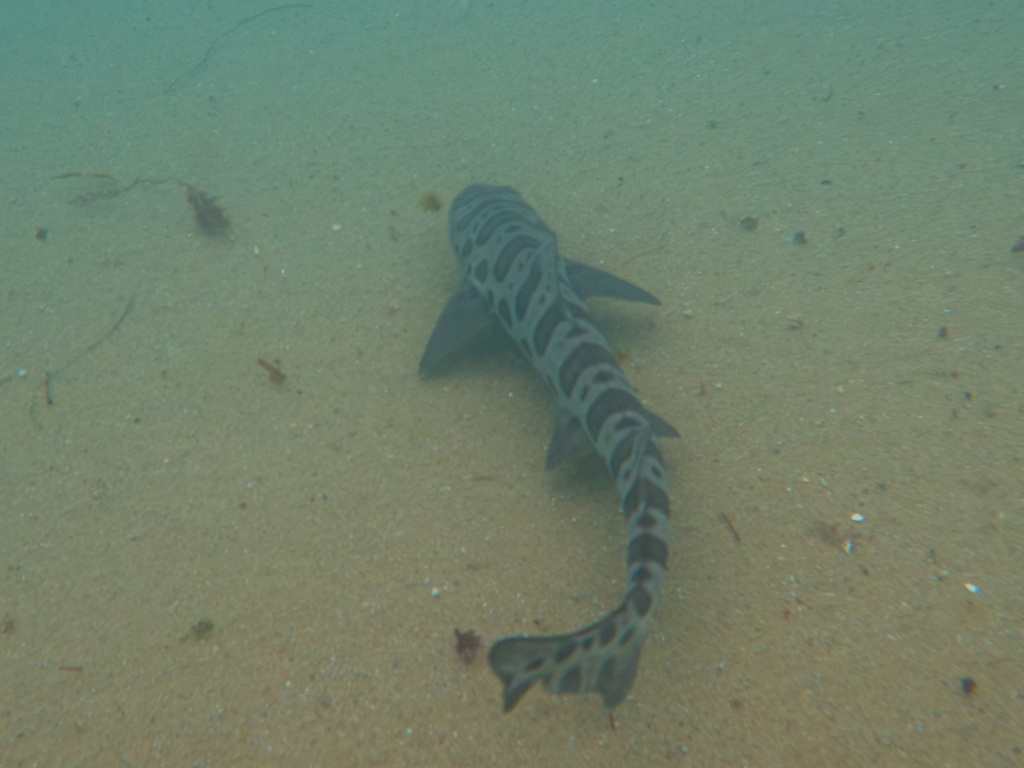
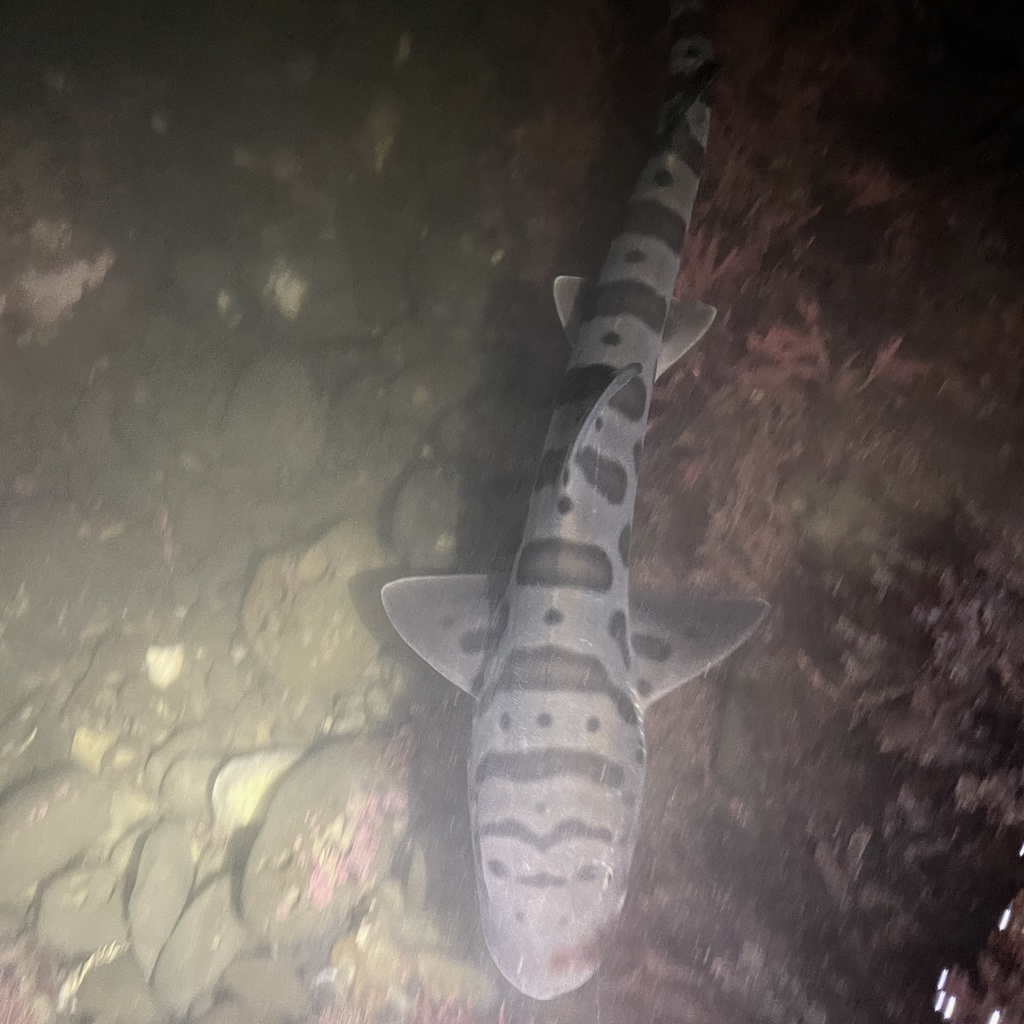
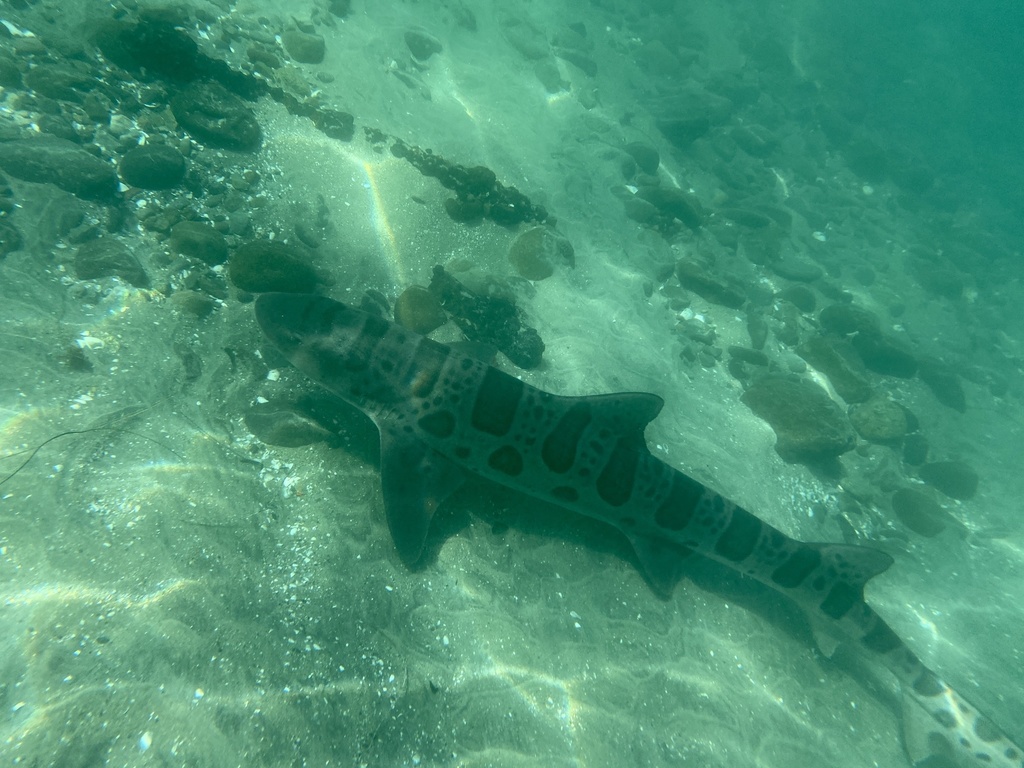
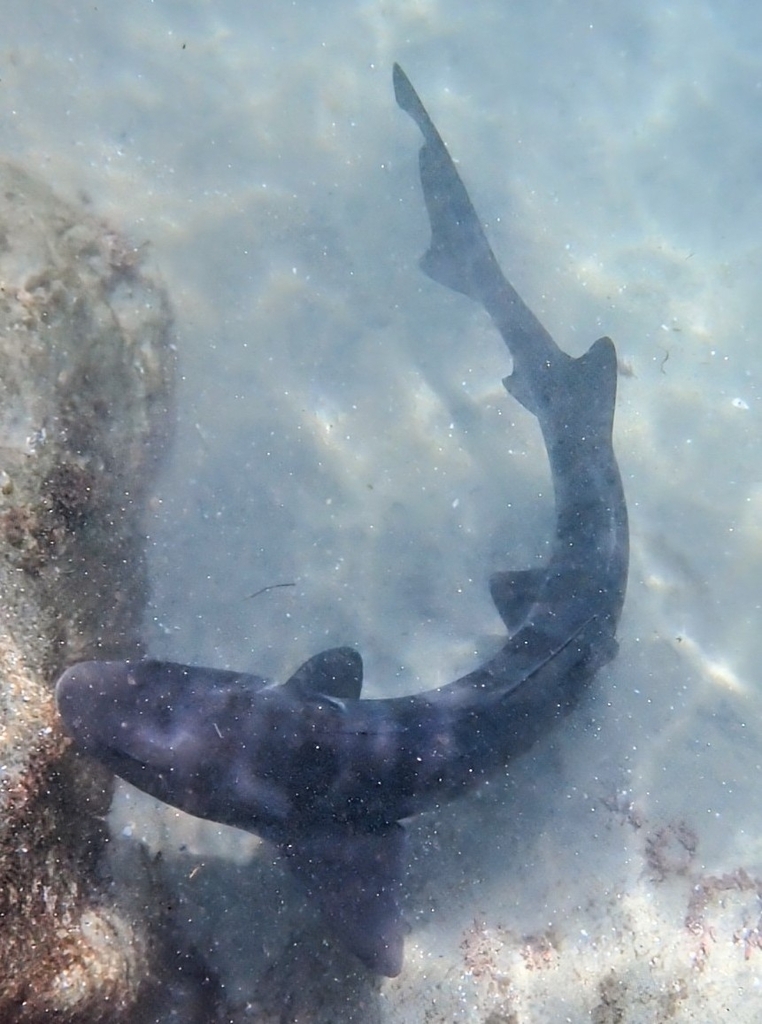
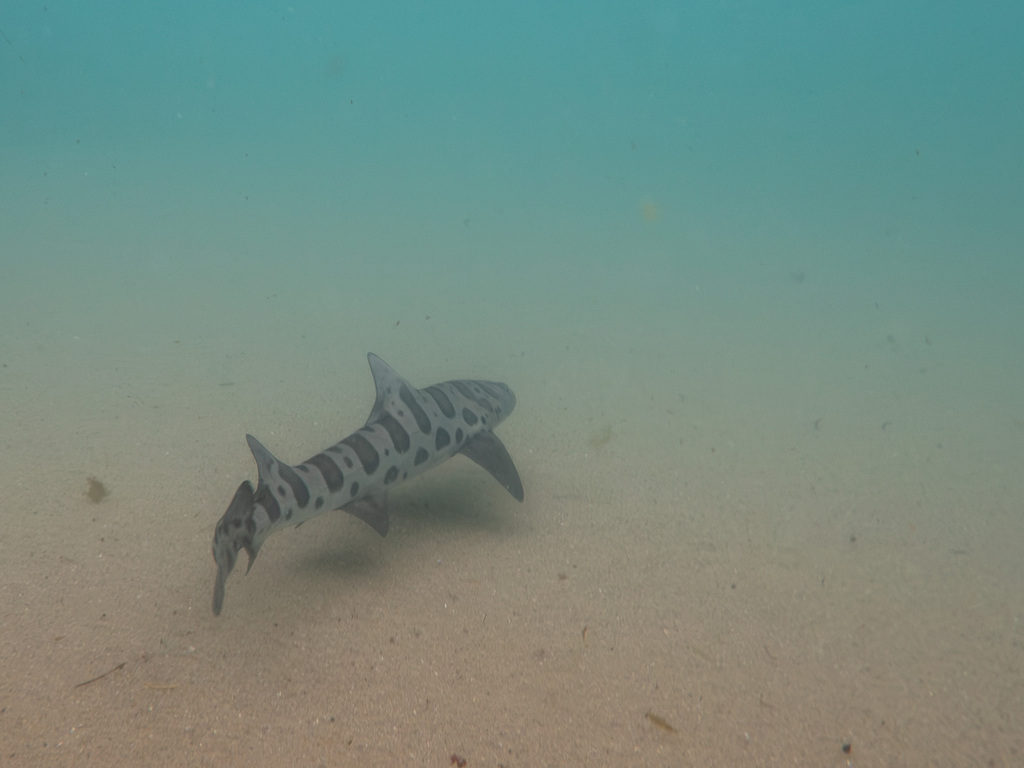
Photos show the species, not always the places on this page.
Length
Published ranges about 1.2 to 2.1 m (4 to 7 ft), females larger; largest measured about 1.98 m (6.5 ft)
Weight
Largest recorded about 18 kg (40 lb); typical adult weight not reliably measured
Next to a person
Often about as long as an adult person is tall
What it eats
It feeds on the bottom, eating clams, fish eggs, innkeeper worms, crabs and fishes.
Around people
Calm, give space
How it lives
The leopard shark is a houndshark that lives close to the shore. It feeds on the bottom, eating clams, worms, crabs, fish eggs and fishes, and it can form large schools. At La Jolla, big groups gather in warm, shallow water, and most of these sharks are mature females, many of them pregnant.
Where it goes
At La Jolla, large groups move into warm, shallow water in summer and autumn. Most are mature females, many of them pregnant. They use the warm shallows by day, and some move deeper after sunset. This is a seasonal, local pattern.
We only draw a journey on the map when scientists have tracked it or clearly documented it. For this animal we have not found one yet.
Populations
The species lives in the eastern Pacific, from Oregon to Mexico's Gulf of California. La Jolla, in the Matlahuayl State Marine Reserve, is known for large shallow-water gatherings in summer and autumn. This is special to this site and should not be expected across the rest of the species' range.
Meet it respectfully
Leopard sharks are generally harmless to people, but they still need space. Snorkelling is allowed in the reserve, but do not touch, chase, block, crowd or surround them. Keep enough distance that their direction and speed do not change because of you, and take extra care near the groups of females at La Jolla.
Fun fact
Tap the bulb to light it up.
In one study, 97% of leopard sharks sampled at La Jolla were mature females.
Warm shallow water may help their digestion, growth and reproduction.
They can push their snout into the sand to pull out buried prey.
In one study, pups in some litters had different fathers.
Leopard shark in the Ocean Atlas
Places we have researched where this animal is recorded. It is never guaranteed, and some places are for watching from the boat only.
Travel with usComing soonTrusted referralExploringOn pause, story onlyEthics pass
Country colour: pink where we travel, blue where we are exploring or refer, grey for story only.
 Mexico
 Thailand
 United States
Sources for this page
Facts checked 26 September 2026. Photos: Unsplash licence, or Creative Commons as shown on each photo.
Work in ocean travel?
We are always happy to hear from exceptional local operators, accommodation, conservation organisations and destination experts. If your work fits responsible, small-group ocean travel, we would love to learn more.
Partner with Ocean CallingNew: mobula rays in La Ventana, May 2027
CHF 2,720