
Narwhal
Monodon monoceros
The narwhal, with its long spiral tusk, is the unicorn of the Arctic. It lives close to the ice and is a rare, special sight.
Least Concern (IUCN, 2017) means it is not at high risk of extinction worldwide today.
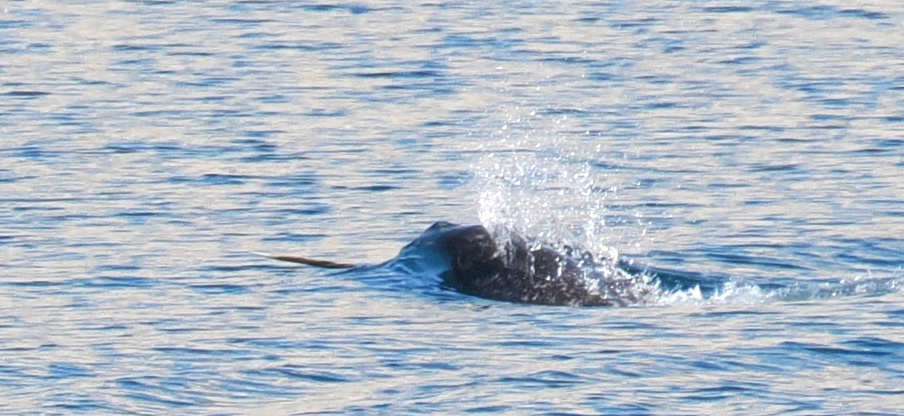
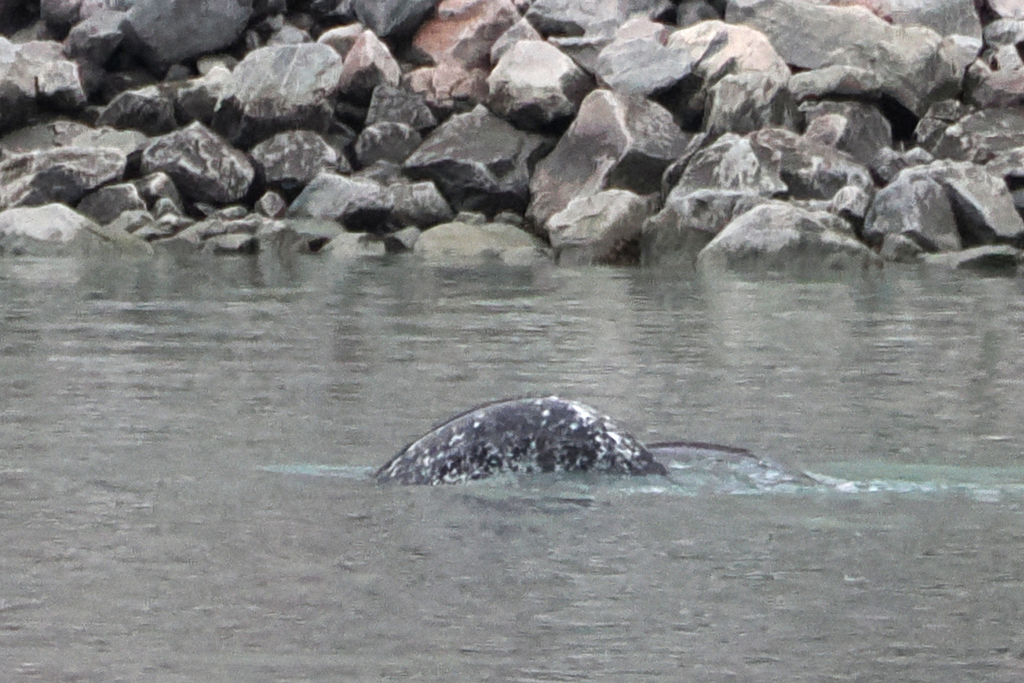
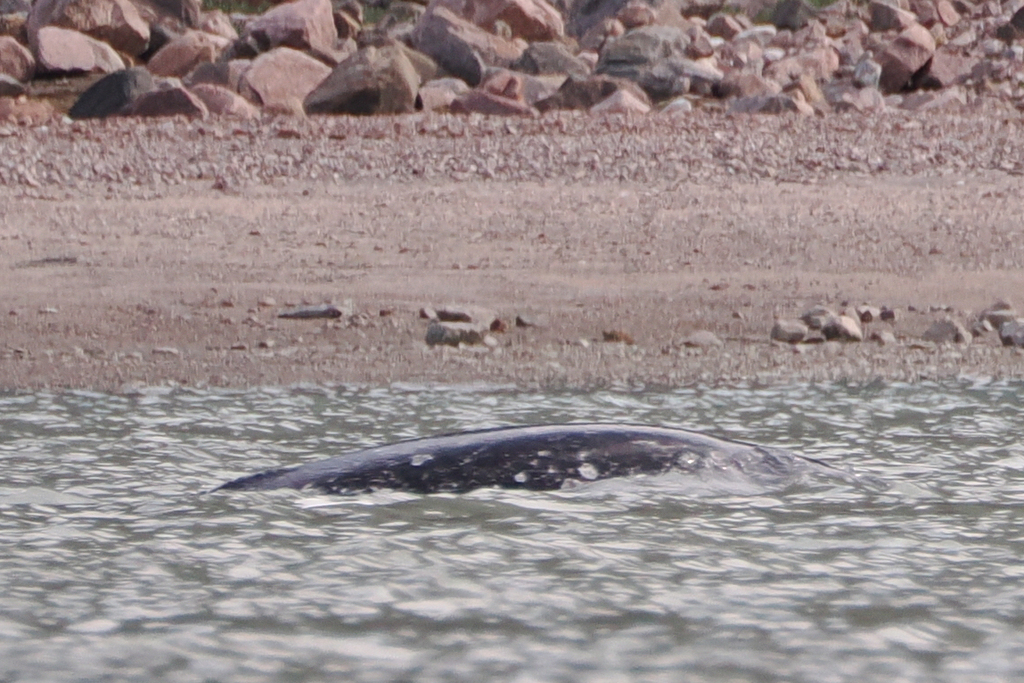
Photos show the species, not always the places on this page.
Length
Males up to about 4.6 m (15 ft); females up to about 4 m (13 ft). Many males also have a tusk that can pass 2 m (6.6 ft)
Weight
Males up to about 1,645 kg (3,630 lb); females up to about 1,200 kg (2,650 lb)
Next to a person
A male is more than twice as long as a person, not counting the tusk
What it eats
Polar cod, Arctic cod, Greenland halibut and squid, often caught on deep dives.
Around people
Calm, give space
How it lives
Narwhals live in Arctic waters that freeze in winter. In winter they often dive hundreds of metres, sometimes deeper than 1,000 m, to hunt fish and squid near the bottom. The tusk is a long tooth, mostly found in males, and not every narwhal has one. Females have one calf about every 3 years, and narwhals can live more than 100 years.
Where it goes
Many narwhal populations return to the same summer and winter areas each year, but routes differ between populations. The Baffin Bay narwhals spend June to September in fjords and inlets such as Admiralty Inlet and Eclipse Sound, near Arctic Bay and Pond Inlet. In October and November these narwhals travel about 1,700 km to winter in deep water in Baffin Bay and Davis Strait.
Populations
Rough estimates suggest there may be about 85,000 to 100,000 narwhals, but this is not a precise count. The largest groups summer in the Canadian Arctic, with more than 40,000 in some areas, while groups in Mideast and Southeast Greenland number fewer than 2,000 each and are under pressure from warming water. The species is Least Concern worldwide, but that does not mean every population is secure.
Meet it respectfully
Watch quietly from the floe edge or a slow boat and keep well back. Narwhals are sensitive to noise and boats, so we keep engines quiet. Never approach, chase or cut across a group, and follow local rules and Inuit community guidance. We watch only and do not enter the water with narwhals.
Fun fact
Tap the bulb to light it up.
The narwhal's tusk is a tooth that grows through the upper lip, and in some males it can be longer than 2 m.
Narwhals can dive deeper than 1,000 m to hunt Greenland halibut and other deep fish.
Narwhals from Admiralty Inlet and Eclipse Sound travel about 1,700 km each autumn to their winter grounds in Baffin Bay and Davis Strait.
Source: Hornby et al., 2025, PLOS ONE, narwhal winter behaviour in Baffin Bay from satellite tags
Satellite data from 144 narwhals show that warming water in parts of Greenland matches the smallest narwhal groups there.
Follow its journey
Watch it travel. Every line comes from satellite tracking or documented research, and the source is named.
StartEndJourney (the line joins documented areas; real paths vary)
Narwhal in the Ocean Atlas
Places we have researched where this animal is recorded. It is never guaranteed, and some places are for watching from the boat only.
Travel with usComing soonTrusted referralExploringOn pause, story onlyEthics pass
Country colour: pink where we travel, blue where we are exploring or refer, grey for story only.
 Canada
 Greenland
 Norway
 Russia
 United States
Sources for this page
- NAMMCO, Narwhal
- Hornby et al., 2025, PLOS ONE, narwhal winter behaviour in Baffin Bay from satellite tags
- Chambault et al., 2020, Scientific Reports, rising sea temperatures and narwhals
- Dietz et al., 2008, Polar Biology, narwhals from Admiralty Inlet tracked by satellite
- IUCN SSC Cetacean Specialist Group, Red List status of cetaceans
- GBIF occurrence records by country, checked 26 Sep 2026
Facts checked 26 September 2026. Photos: Unsplash licence, or Creative Commons as shown on each photo.
Work in ocean travel?
We are always happy to hear from exceptional local operators, accommodation, conservation organisations and destination experts. If your work fits responsible, small-group ocean travel, we would love to learn more.
Partner with Ocean Calling5-day freediving course in Bali
CHF 1,180