
Northern right whale dolphin
Lissodelphis borealis
A sleek, dark dolphin races through deep Pacific water in a big group, and no sighting is ever a promise.
Least Concern (IUCN) means it is not at high risk of extinction today. The sources I opened did not show the year of this assessment.
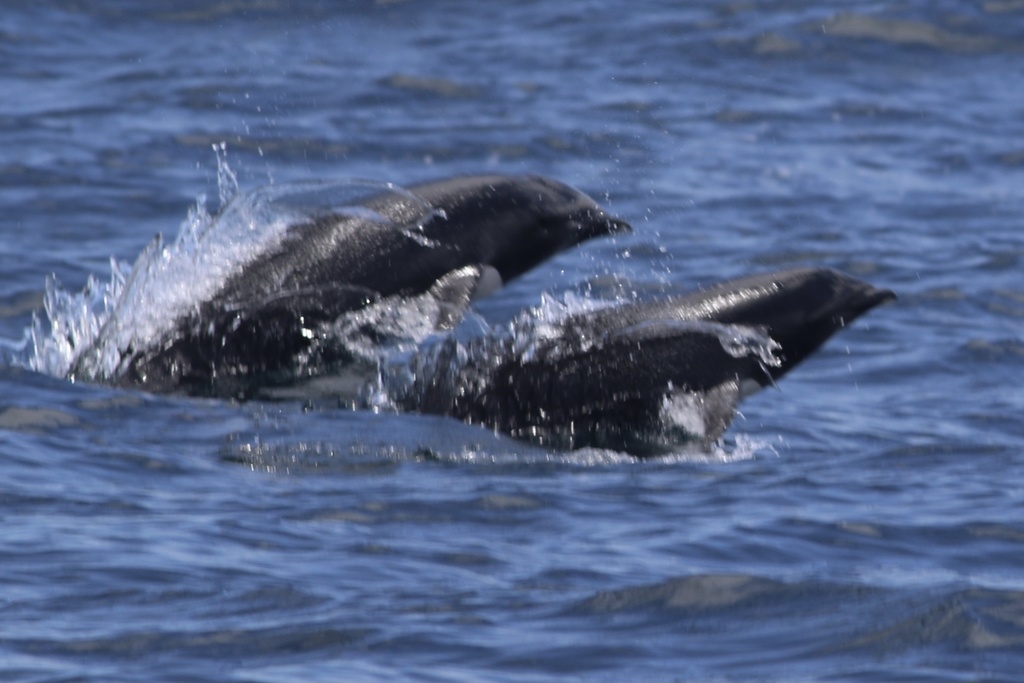
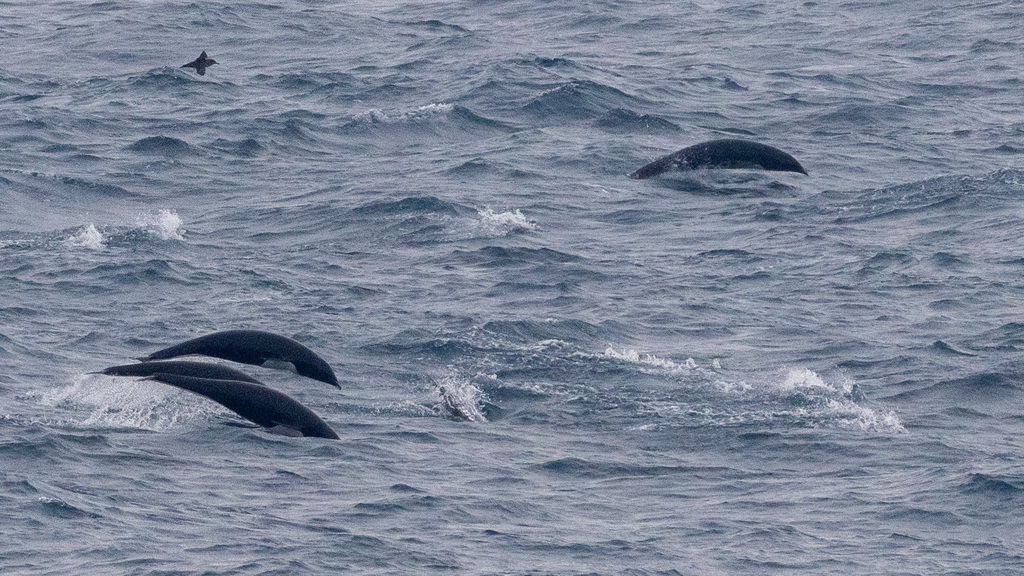
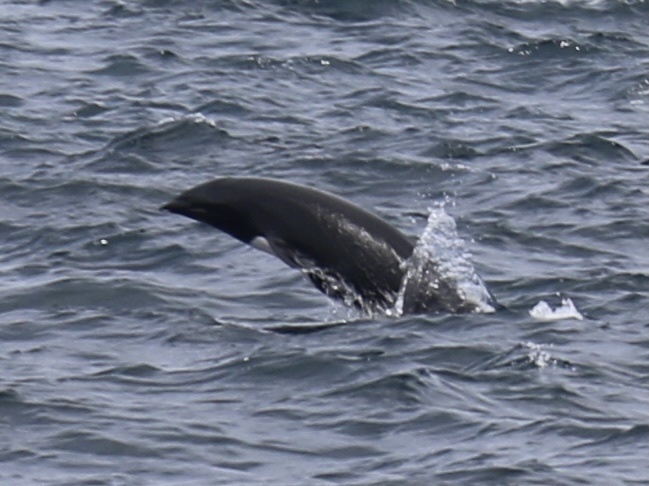
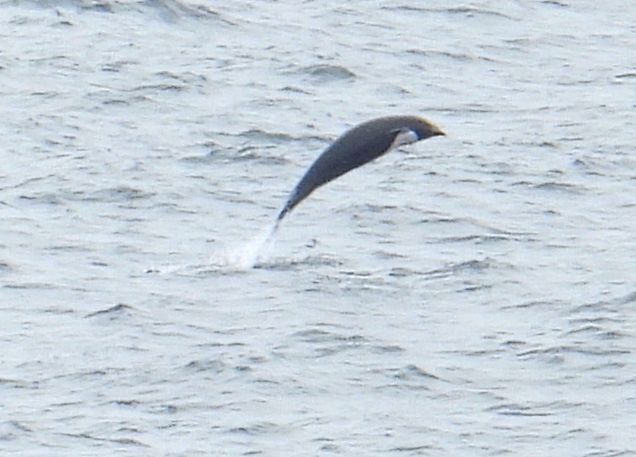
Photos show the species, not always the places on this page.
Length
About 2 to 3 m (6.6 to 9.8 ft); the largest recorded is about 3.1 m (10 ft). Males average about 2.4 m (7.8 ft) and females about 2.1 m (6.9 ft)
Weight
About 60 to 115 kg (130 to 250 lb); males are generally larger than females
Next to a person
Up to about 1.5 times as long as an adult is tall, and about as heavy as one or two adults
What it eats
Lanternfish and other mid-water fish, plus squid. In the central North Pacific lanternfish made up 89% of the fish eaten, and off southern California they take lanternfish and California market squid. They dive to at least 200 m.
Around people
Calm, give space
How it lives
Fast, social dolphins that travel in big groups. Groups usually number 100 to 200, and larger gatherings of 2,000 to 3,000 are not uncommon. They usually avoid boats, although they sometimes surf the waves boats make, and they are sometimes seen with Pacific white-sided dolphins. They use clicks and burst-pulses and do not whistle. Females are pregnant for about a year and have a single calf, usually in summer. They live for 42 years or longer.
Where it goes
Northern right whale dolphins live in cold-temperate and subarctic water of the North Pacific, roughly between 30 and 50 degrees North, from northern Baja California to the Gulf of Alaska, Kamchatka and Japan. They prefer deep offshore water at or beyond the continental shelf. The sources I opened do not describe a set migration route.
We only draw a journey on the map when scientists have tracked it or clearly documented it. For this animal we have not found one yet.
Populations
About 68,000 live in the North Pacific, with roughly 26,000 in the California, Oregon and Washington stock, according to NOAA. High-seas drift-net fishing killed an estimated 15,000 to 20,000 a year between 1985 and 1990, and estimates of how much this cut the population differ between sources. NOAA lists entanglement in fishing gear, hunting in Japanese fisheries and underwater noise as current threats. The IUCN lists the species as Least Concern.
Meet it respectfully
Watch from a boat that keeps its distance and lets the dolphins decide. NOAA notes that they usually avoid vessels, and some groups surf boat waves. Never chase them, cut across a group, touch, feed or bait them. Keep a steady course and speed. I did not read viewing rules written for this species, so follow local rules and your guide, and never count on a sighting.
Fun fact
Tap the bulb to light it up.
It does not whistle. It communicates with clicks and burst-pulses.
A white streak runs along its belly from the throat to the notch in the tail.
Groups usually number 100 to 200 dolphins, and sometimes up to 3,000.
Northern right whale dolphin in the Ocean Atlas
Places we have researched where this animal is recorded. It is never guaranteed, and some places are for watching from the boat only.
Travel with usComing soonTrusted referralExploringOn pause, story onlyEthics pass
Country colour: pink where we travel, blue where we are exploring or refer, grey for story only.
 United States
Sources for this page
- Wikipedia, 2026
- NOAA Fisheries, 2026
- University of Michigan, Animal Diversity Web
- Mammal Diversity Database, 2026
- Zenodo species account, Lissodelphis borealis
- GBIF, IUCN Red List category, 2026
Facts checked 5 October 2026. Photos: Unsplash licence, or Creative Commons as shown on each photo.
Work in ocean travel?
We are always happy to hear from exceptional local operators, accommodation, conservation organisations and destination experts. If your work fits responsible, small-group ocean travel, we would love to learn more.
Partner with Ocean CallingSwim with humpback whales in Moʻorea, September 2027
from CHF 4,500