
Polar bear
Ursus maritimus
A white shape on drifting sea ice or a swimmer in a cold fjord. Polar bears are wide-ranging and wary, and no sighting is ever a promise.
Vulnerable (IUCN, 2015) means the polar bear is at high risk of extinction in the wild, mainly because climate change is shrinking the sea ice it hunts from.
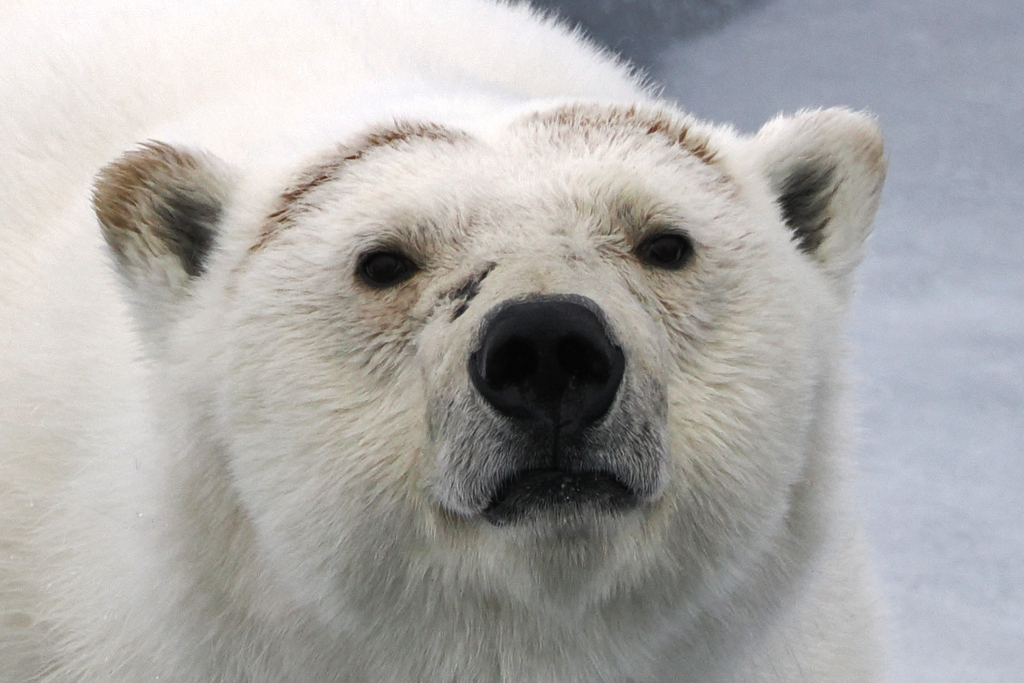
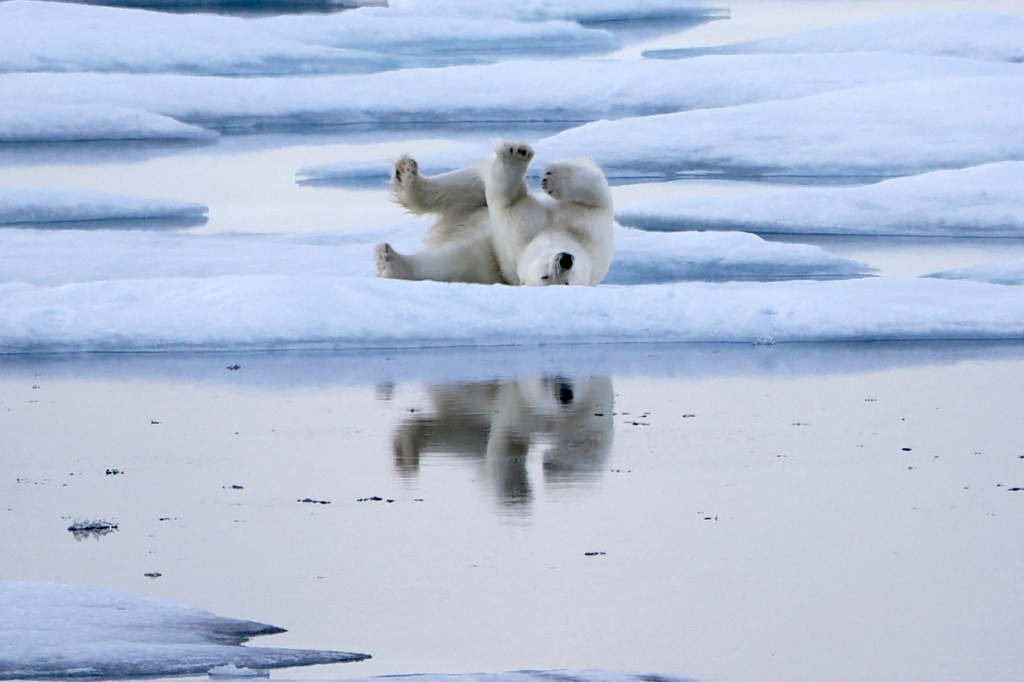
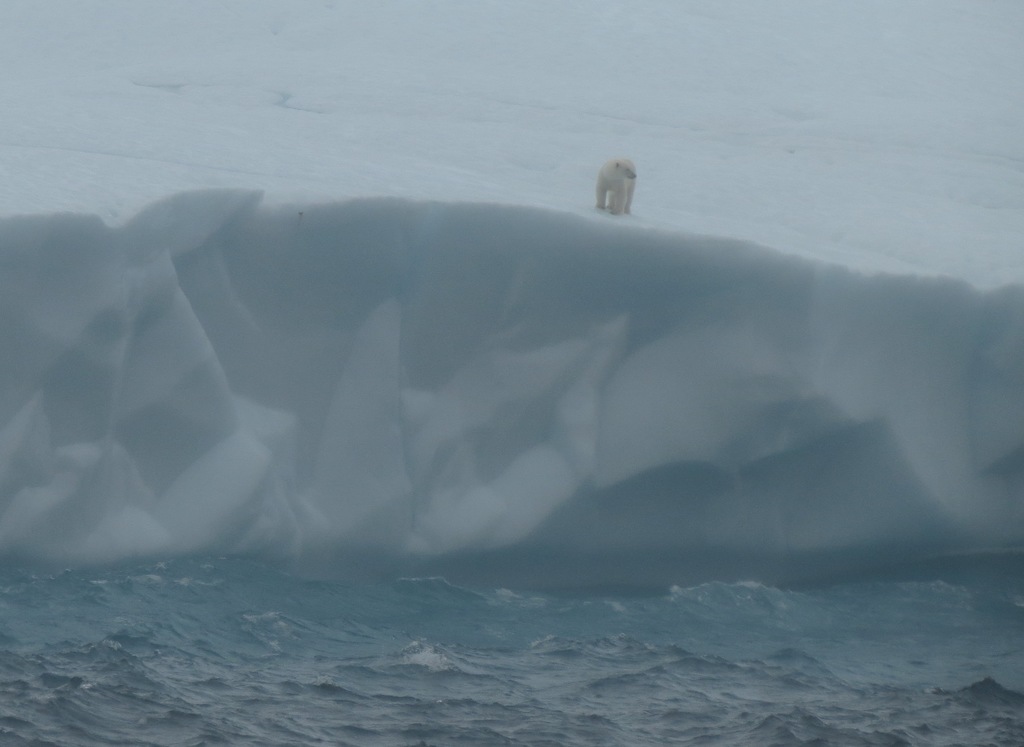

Photos show the species, not always the places on this page.
Length
Males about 200 to 250 cm (6.6 to 8.2 ft) long; females about 180 to 200 cm (5.9 to 6.6 ft). Newborn cubs are only 30 to 35 cm (12 to 14 in)
Weight
Males about 300 to 800 kg (660 to 1,760 lb); females about 150 to 300 kg (330 to 660 lb). Newborn cubs weigh little more than 0.5 kg (1 lb). Weight changes a lot with the season and food
Next to a person
A big male is longer than a tall adult is tall and can weigh as much as four to ten adults
What it eats
Mostly seals. The ringed seal is the most common prey, and bearded and harp seals are also taken. Bears hunt from the sea ice and also take walruses and beluga whales at times. When the ice retreats in summer they may eat berries, carcasses and land animals.
Around people
Distance, local guides
How it lives
Polar bears mate on the sea ice in spring, from about March to May. Females first breed at about 4 years and males at about 6. A female usually has two cubs, born in a snow den in winter, and the cubs stay with her for about 2 to 2.5 years while they learn to hunt. Polar bears can live up to about 30 years.
Where it goes
In Greenland, polar bears can be found almost anywhere along the coast, but they are rare in inhabited areas. They travel along coastal ice floes all year and are more common in the colder months. Females dig snow dens on mountain slopes for the winter. One genetically distinct group lives year-round in the fjords of Southeast Greenland, another in the northeast. Exact movements of each Greenland group are still being studied.
We only draw a journey on the map when scientists have tracked it or clearly documented it. For this animal we have not found one yet.
Populations
The world population is estimated at 22,000 to 31,000 bears in 19 subpopulations (IUCN Polar Bear Specialist Group, based on Regehr et al., 2016). The IUCN lists the species as Vulnerable (2015), and the main threat is the loss of sea ice. Greenland holds parts of five subpopulations. Kane Basin has an estimate of 357 bears (2014) and is thought to have increased since 1997. Baffin Bay has an estimate of 2,826 (2013), trend unknown. Davis Strait has an estimate of 2,015 (2018) and is likely to have decreased from 2007 to 2018. East Greenland and the Arctic Basin have no abundance estimate. Southeast Greenland was recognised as its own subpopulation in 2024, and a first assessment is planned for 2025 to 2027. The Greenland Institute of Natural Resources began its largest aerial census of East Greenland in March 2023, and I did not find published results in the sources read. Hunting is allowed in four of the Greenland subpopulations, and the quota for 2022 was 155 bears.
Meet it respectfully
A polar bear is a large predator and can be dangerous, so meet it only from a distance and with local guides. Never approach, chase, feed or bait a bear, and never leave food where it can be reached. Visit East Greenland notes that on authorised tour experiences visitors stay at least 200 m away, that anyone meeting a bear outside an organised tour should leave the area at once, and that food should be stored at least 50 m from where people sleep. Encounters are uncommon for visitors, so treat any sighting as a gift and never an expectation. Follow local rules and your guide.
Fun fact
Tap the bulb to light it up.
A newborn polar bear cub is only about 30 to 35 cm long and weighs little more than half a kilogram.
Greenland shares three of its polar bear subpopulations (Kane Basin, Baffin Bay and Davis Strait) with Canada.
Polar bears hunt seals from the sea ice, and they use the ice to travel, mate and den as well.
Polar bear in the Ocean Atlas
Places we have researched where this animal is recorded. It is never guaranteed, and some places are for watching from the boat only.
Travel with usComing soonTrusted referralExploringOn pause, story onlyEthics pass
Country colour: pink where we travel, blue where we are exploring or refer, grey for story only.
 Canada
 Greenland
 Norway
 Russia
 United States
Sources for this page
- IUCN Polar Bear Specialist Group, Population status, 2024
- IUCN Polar Bear Specialist Group, 2024
- GBIF, IUCN Red List category, 2026
- Trap Greenland, The polar bear
- Visit East Greenland, Home of the Arctic polar bear
- Polar Bears International, 2026
- Polar Journal, East Greenland census, 2023
- Wikipedia, Polar bear
Facts checked 5 October 2026. Photos: Unsplash licence, or Creative Commons as shown on each photo.
Work in ocean travel?
We are always happy to hear from exceptional local operators, accommodation, conservation organisations and destination experts. If your work fits responsible, small-group ocean travel, we would love to learn more.
Partner with Ocean Calling