
Raja Ampat epaulette shark (walking shark)
Hemiscyllium freycineti
No sighting is a promise, and the animal decides what you see, so stay open to whatever the day brings.
Near Threatened (IUCN, 2020 to 2021) means it is close to qualifying as threatened. Its range is tiny and its reef and seagrass habitat is under pressure.
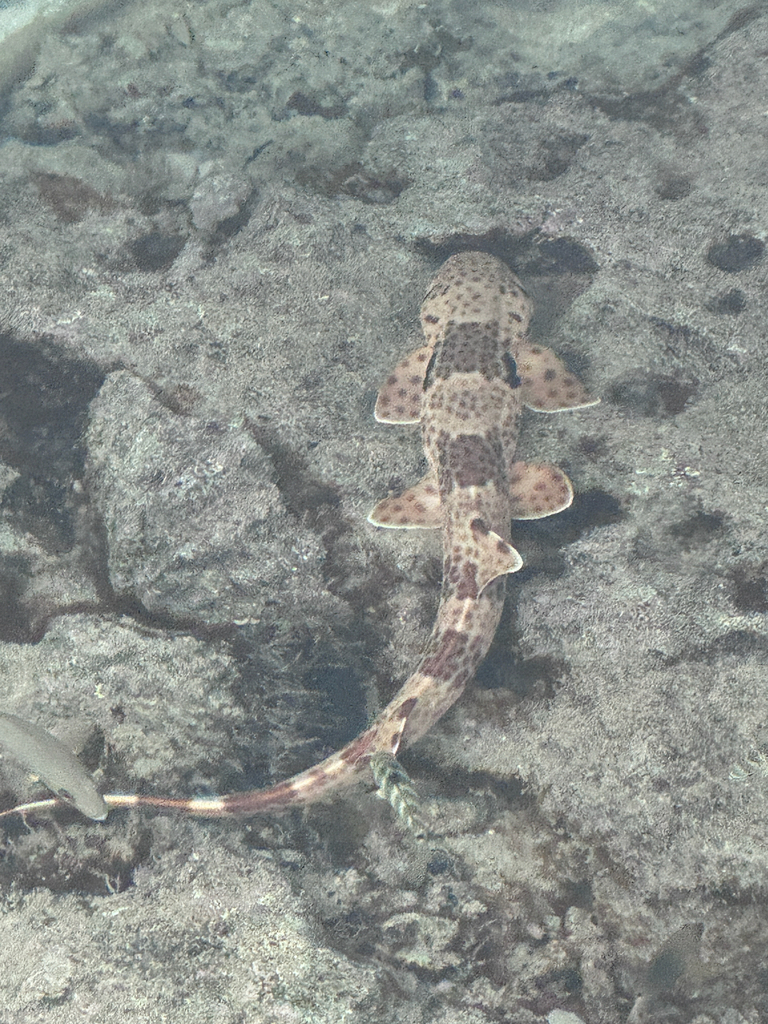
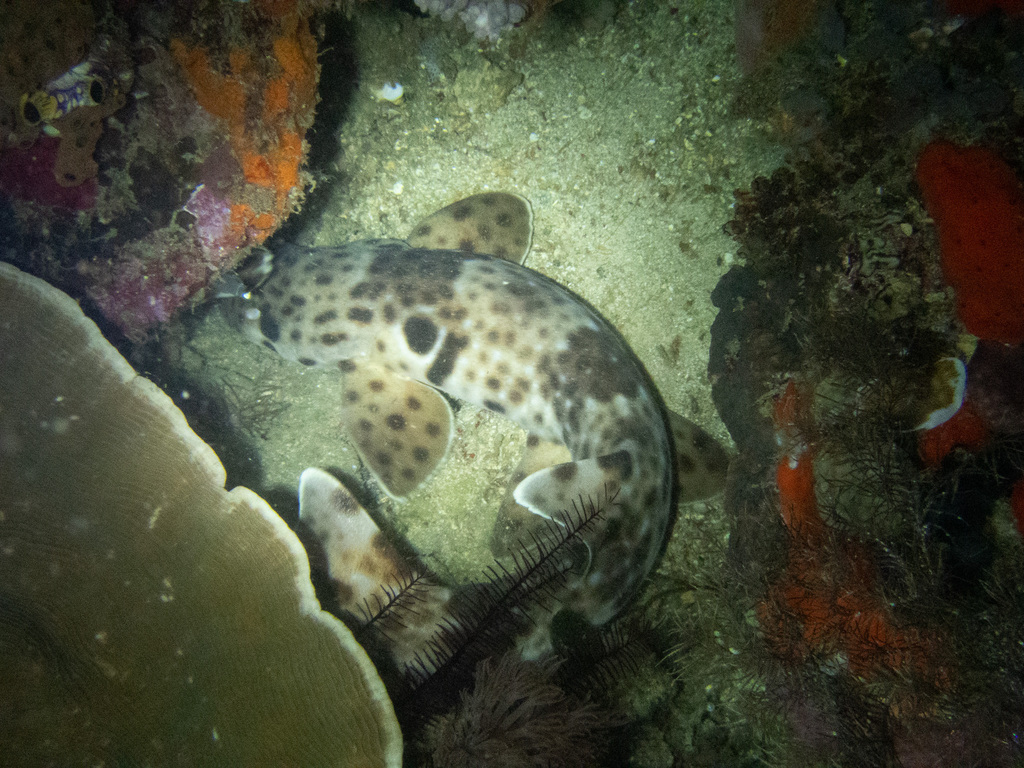
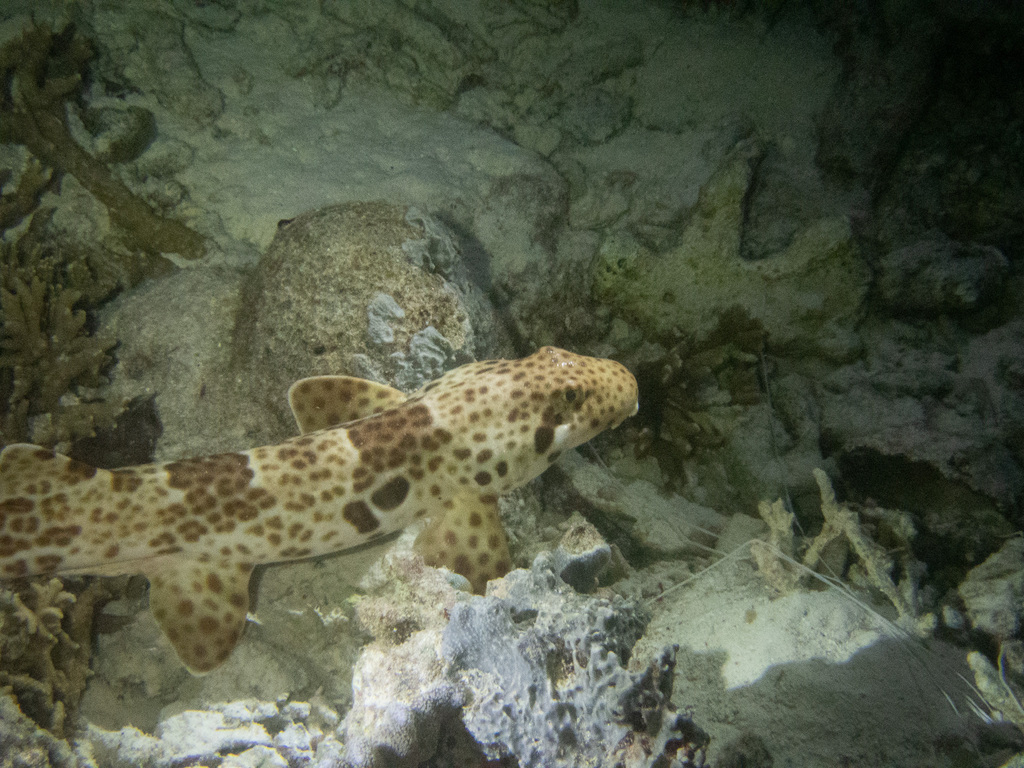
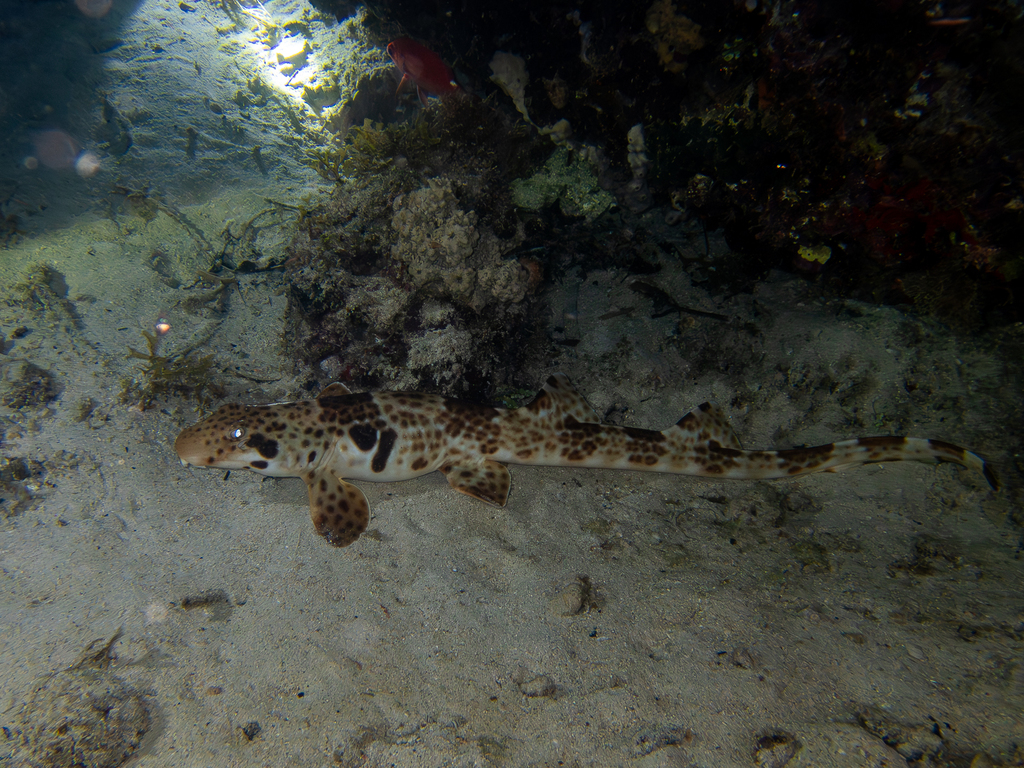
Photos show the species, not always the places on this page.
Length
Up to about 75 cm (30 in) in a 2024 to 2025 study, with one 87 cm (34 in) female recorded at Misool in 2023. FishBase gives 72 cm and another guide 68 cm, so sources differ slightly.
Weight
No weight is given in the sources I read.
Next to a person
About as long as an adult's arm span at most, and thin, so it is smaller than most people's idea of a shark.
What it eats
Not well documented for this species. One species guide lists the diet as unknown. For walking sharks in general, a conservation source lists crustaceans, worms and small fish. Adults forage at night among seagrass and mangrove roots.
Around people
Calm, give space
How it lives
It is nocturnal, resting by day in reef crevices and under corals. It uses its pectoral and pelvic fins to walk over the bottom. In the Dampier Strait study, 72.4% of sightings were in seagrass meadows and 13.3% on coral reefs, with coral reefs working as nursery habitat (about 69% of the sharks there were immature). Males and females mature at about 56.5 cm. It lays paired eggs, and its reproductive cycle is poorly known. Growth is about 7.8 cm a year when immature and 2.8 cm a year once mature.
Where it goes
Very local. In a 2024 to 2025 study in the Dampier Strait, the longest movement was about 475 m, and no tagged shark moved between islands. Individuals showed strong site fidelity.
We only draw a journey on the map when scientists have tracked it or clearly documented it. For this animal we have not found one yet.
Populations
Near Threatened on the IUCN Red List (2020 on FishBase, 2021 in a 2026 paper). It is endemic to the Raja Ampat region of West Papua, and older records elsewhere in New Guinea were confusion with other species. A 2024 to 2025 survey in the Dampier Strait found densities of 333 to 2,462 sharks per square kilometre, which are the highest recorded for the genus. Indonesia gave it full legal protection in 2023, and Raja Ampat Regency law protects sharks and rays. Threats include habitat loss in seagrass, climate change, artisanal fishing and aquarium collection. Other walking sharks nearby, such as Henry's and the Cenderawasih epaulette sharks, are rated Vulnerable.
Meet it respectfully
Look, do not handle. Keep your hands and fins off the bottom, and never lift, chase or pick up a walking shark, since it is small and easily stressed. Avoid trampling seagrass or coral in the shallows, because the study ties its numbers to those habitats. It is protected from capture under Raja Ampat Regency law and national rules, so never take or disturb one. Sightings are never guaranteed.
Fun fact
Tap the bulb to light it up.
It walks along the bottom using its paired fins, and it can cope with a period of low oxygen.
It lays eggs in pairs, and young sharks live mostly on coral reef while adults favour seagrass.
It occurs nowhere else in the world except Raja Ampat.
Raja Ampat epaulette shark (walking shark) in the Ocean Atlas
Places we have researched where this animal is recorded. It is never guaranteed, and some places are for watching from the boat only.
Travel with usComing soonTrusted referralExploringOn pause, story onlyEthics pass
Country colour: pink where we travel, blue where we are exploring or refer, grey for story only.
 Indonesia
Sources for this page
- Setyawan et al., 2026
- Bird's Head Seascape, 2026, density study
- Bird's Head Seascape, 2026, tourism and climate
- Bird's Head Seascape, 2021, extinction risk
- Sharks and Rays species guide, 2026
- Save Our Seas Foundation, 2026
- FishBase, 2026
- GBIF, IUCN category, 2026
Facts checked 5 October 2026. Photos: Unsplash licence, or Creative Commons as shown on each photo.
Work in ocean travel?
We are always happy to hear from exceptional local operators, accommodation, conservation organisations and destination experts. If your work fits responsible, small-group ocean travel, we would love to learn more.
Partner with Ocean Calling7-day freediving course in Coron, Palawan
CHF 1,480