
Sowerby's beaked whale
Mesoplodon bidens
A shy deep-diving whale that spends most of its time far below the surface, so no sighting is ever a promise.
Least Concern (IUCN, 2020) means it is not at high risk of extinction, although there is too little data to estimate its numbers or trend.
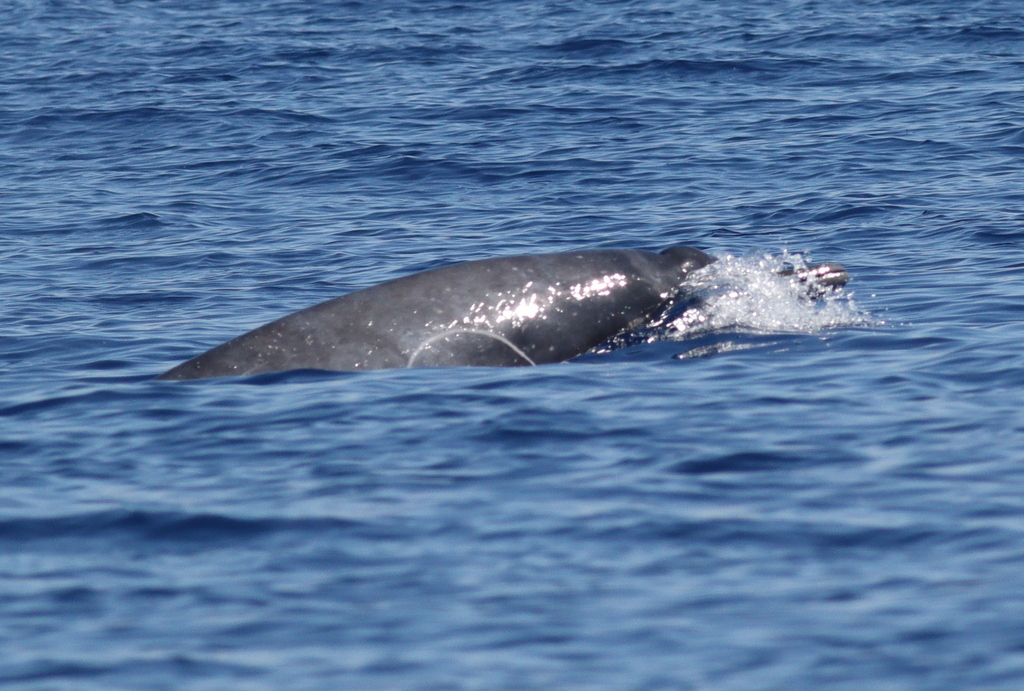
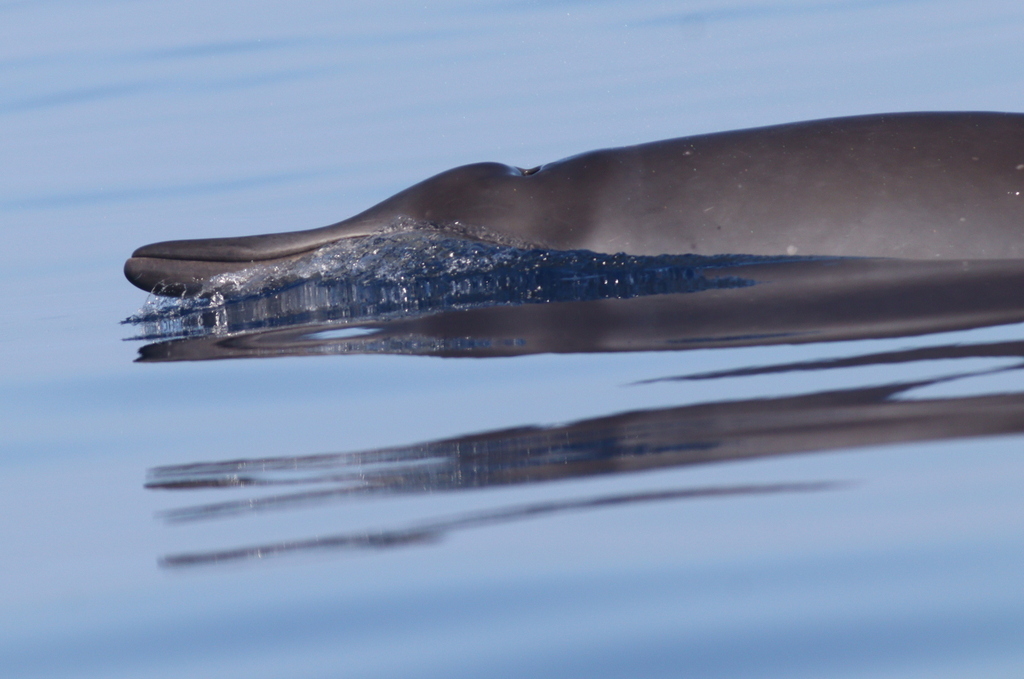
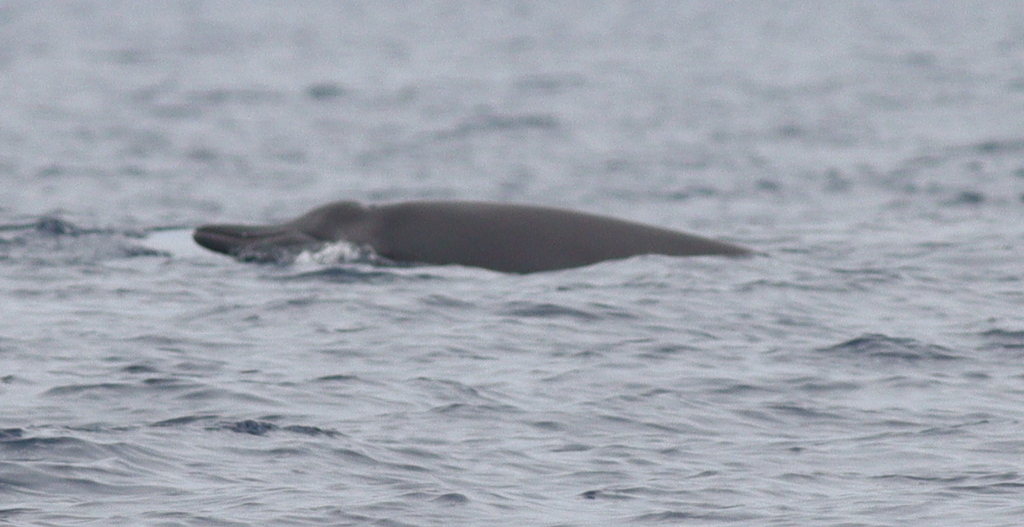
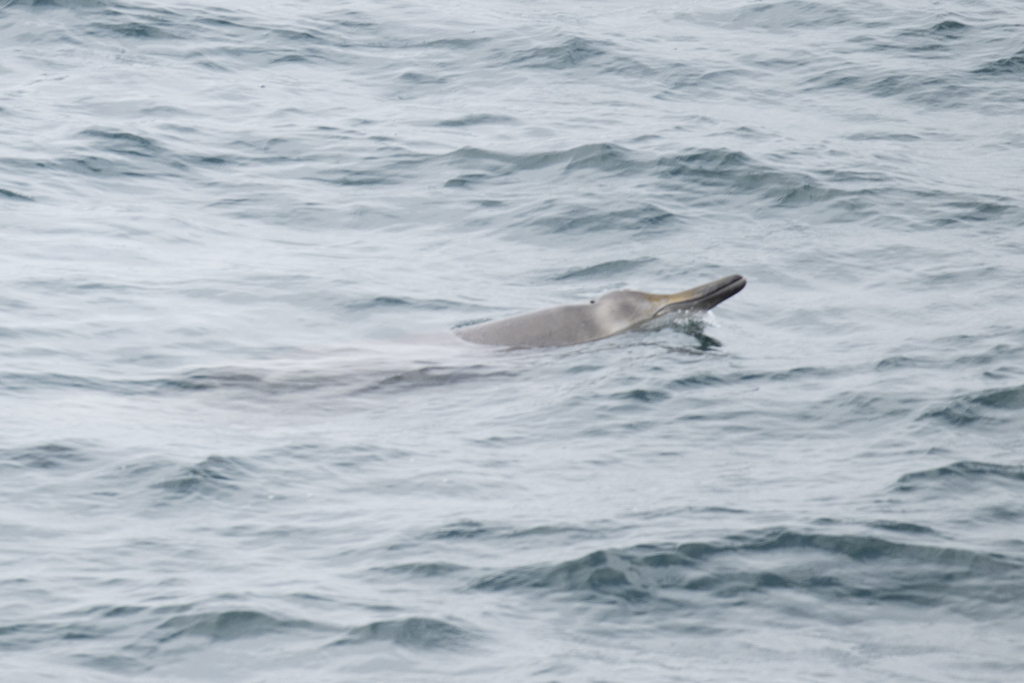
Photos show the species, not always the places on this page.
Length
About 4.4 to 6.4 m (14.5 to 21 ft) per NOAA; Wikipedia gives about 5 m for females and 5.5 m for males, and SeaLifeBase a maximum of 5.5 m
Weight
About 1,000 to 1,300 kg (2,200 to 2,900 lb), with males generally larger than females (NOAA)
Next to a person
About 3 times as long as an adult is tall, and as heavy as roughly 12 to 16 adults.
What it eats
Small deep-sea fish and squid, taken by suction feeding during deep dives. Wikipedia lists lanternfish, hake and cod among the fish, with squid playing a smaller part.
Around people
Shy, give space
How it lives
Sowerby's beaked whales are usually seen alone or in groups of three to ten. NOAA reports regular dives of 10 to 15 minutes, sometimes more than 28 minutes, to depths of about 1,500 m (4,920 ft). At the surface they often lift the head at about a 45 degree angle. Males have two teeth that show on the lower jaw, while the teeth of females and juveniles stay hidden under the gum. How long they live and how often they calve are not given in the sources read.
Where it goes
It lives in deep, cold temperate and subarctic water off the continental shelf edge of the North Atlantic, between about 30 and 71 degrees North. NOAA says it may be more common in the eastern North Atlantic and rarely enters the Mediterranean. Set migration routes are not described in the sources read.
We only draw a journey on the map when scientists have tracked it or clearly documented it. For this animal we have not found one yet.
Populations
Global: Least Concern (IUCN, assessed 2020). NOAA says the data are not enough to estimate population trends, and Wikipedia says no population estimates have been made. In the United States it is protected under the Marine Mammal Protection Act, and it is on CITES Appendix II. NOAA lists fishing gear entanglement, ocean noise and past whaling as threats.
Meet it respectfully
This is a shy whale that is rarely seen. If one appears, keep a good distance, move slowly and keep engine noise low. Never chase, surround, touch or feed it, and give mothers with calves extra room. In the United States it is protected under the Marine Mammal Protection Act. Follow your guide and local rules.
Fun fact
Tap the bulb to light it up.
Males have two teeth that show on the slightly arched lower jaw. In females and juveniles, the teeth stay hidden under the gum.
It can dive for more than 28 minutes to about 1,500 m (4,920 ft).
It often lifts its head at about a 45 degree angle as it surfaces.
Sowerby's beaked whale in the Ocean Atlas
Places we have researched where this animal is recorded. It is never guaranteed, and some places are for watching from the boat only.
Travel with usComing soonTrusted referralExploringOn pause, story onlyEthics pass
Country colour: pink where we travel, blue where we are exploring or refer, grey for story only.
 Canada
 France
 Germany
 Netherlands
 Norway
 Portugal
 United Kingdom
 United States
Sources for this page
- NOAA Fisheries, Sowerby's beaked whale
- NOAA Fisheries, Conservation and management
- Wikipedia, Sowerby's beaked whale
- SeaLifeBase, 2025
- GBIF / IUCN Red List category, 2020
Facts checked 5 October 2026. Photos: Unsplash licence, or Creative Commons as shown on each photo.
Work in ocean travel?
We are always happy to hear from exceptional local operators, accommodation, conservation organisations and destination experts. If your work fits responsible, small-group ocean travel, we would love to learn more.
Partner with Ocean Calling7-day freediving course in Coron, Palawan
CHF 1,480