
Spectacled porpoise
Phocoena dioptrica
A shy porpoise of cold southern seas that is rarely seen alive. No sighting is ever a promise.
Least Concern (IUCN, 2018) means it is not currently thought to be at high risk, but the listing is provisional because population size and fishery bycatch are poorly known.
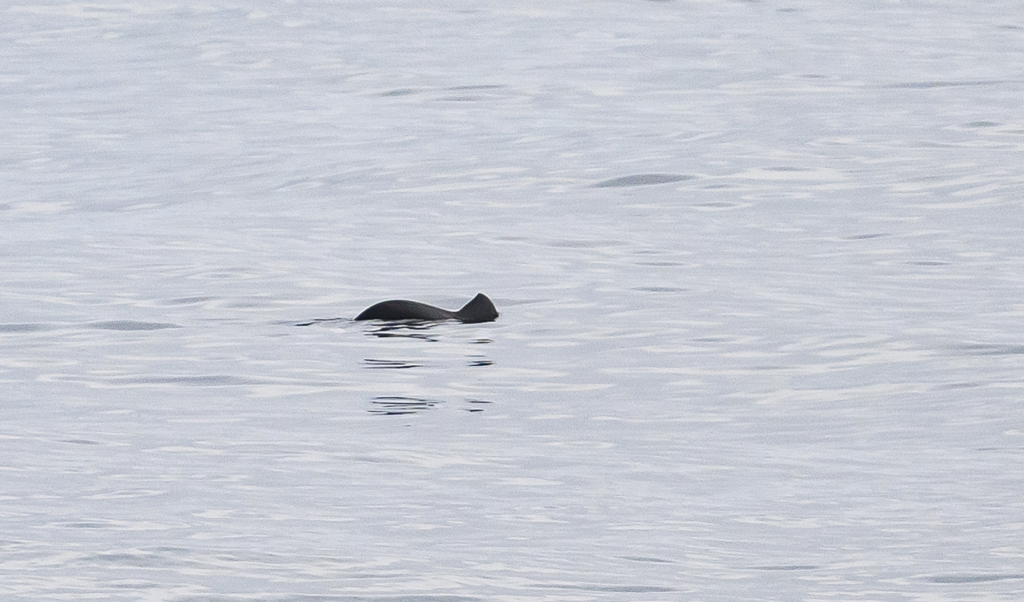
Photos show the species, not always the places on this page.
Length
Males up to 2.24 m (7 ft 4 in) and females up to 2.04 m (6 ft 8 in); Animal Diversity Web gives about 1.8 m (5 ft 11 in) for an average female
Weight
Females up to about 85 kg (187 lb) and males up to about 110 kg (240 lb). Animal Diversity Web says 55 to 80 kg (120 to 176 lb) is usual, with a record of 115 kg (254 lb)
Next to a person
About as long as a tall adult, and as heavy as one or two adults
What it eats
Diet is known only from the stomachs of stranded animals: anchovy, stomatopods (mantis shrimps), tunicates and squid beaks. No feeding has been seen at sea.
Around people
Shy, give space
How it lives
Adults are black above, with a sharply edged white belly and a dark patch around each eye that gives the species its name. They are usually alone or in groups of two or three. Males grow larger than females. Young are probably born in early spring, but this is not recorded. Breeding, age and lifespan are poorly known.
Where it goes
It lives in cold Southern Ocean waters, usually below 10 degrees C, from southern Brazil and Uruguay to Tierra del Fuego, and around the Falkland Islands, South Georgia and Kerguelen. It is mostly found near offshore islands but is sometimes found in the open ocean. Most records are strandings. How connected the groups are across the Southern Ocean is unknown, and no migration route is known.
We only draw a journey on the map when scientists have tracked it or clearly documented it. For this animal we have not found one yet.
Populations
The population size, and how connected groups are across the Southern Ocean, is unknown. Research cruises from 1978 to 2004 recorded only 28 sightings in Antarctic waters, probably too few because of poor weather. The IUCN moved it from Data Deficient (2008) to Least Concern (2018), but this is provisional until more is known about fishery bycatch. Some older sources still list it as Data Deficient. It is on CMS Appendix II since 1979. Wikipedia says porpoises may be caught for crab bait in the region, but how often is unknown.
Meet it respectfully
This is a shy porpoise that is seen only briefly. Watch from a slow, quiet boat and let it choose whether to come close. Never chase, surround, touch, feed or bait one, and keep noise low. Never expect a sighting. Ask your operator which local rules apply in Argentina; none were checked for this card.
Fun fact
Tap the bulb to light it up.
Nine sightings were made south of 64 degrees south, in Antarctic waters.
Remains have been found in shell middens of canoe people in Tierra del Fuego dating from about 6,000 to 1,400 years ago.
No one has seen one feed at sea. What is known about its diet comes from stranded animals.
Spectacled porpoise in the Ocean Atlas
Places we have researched where this animal is recorded. It is never guaranteed, and some places are for watching from the boat only.
Travel with usComing soonTrusted referralExploringOn pause, story onlyEthics pass
Country colour: pink where we travel, blue where we are exploring or refer, grey for story only.
 Argentina
Sources for this page
- Wikipedia, Spectacled porpoise
- Animal Diversity Web, Phocoena dioptrica
- CMS, Phocoena dioptrica
- Animals, 2024, tongues of two porpoises
- GBIF, IUCN Red List category
Facts checked 5 October 2026. Photos: Unsplash licence, or Creative Commons as shown on each photo.
Work in ocean travel?
We are always happy to hear from exceptional local operators, accommodation, conservation organisations and destination experts. If your work fits responsible, small-group ocean travel, we would love to learn more.
Partner with Ocean CallingShop with Ocean Calling
Visit the Ocean Calling storefront on Amazon.
As an Amazon Associate I earn from qualifying purchases. You are not only choosing products that respect the ocean, you are also helping us keep going: paying our local partners fairly and keeping our retreats ethical, sustainable and honestly priced for you. 💗