
Tamanend's bottlenose dolphin
Tursiops erebennus
Tamanend's bottlenose dolphins live close to the US Atlantic coast, in bays and estuaries as well as open surf, and no sighting is ever a promise.
Not Evaluated means the IUCN Red List has not assessed this species yet. It was restored as a separate species only in 2022.
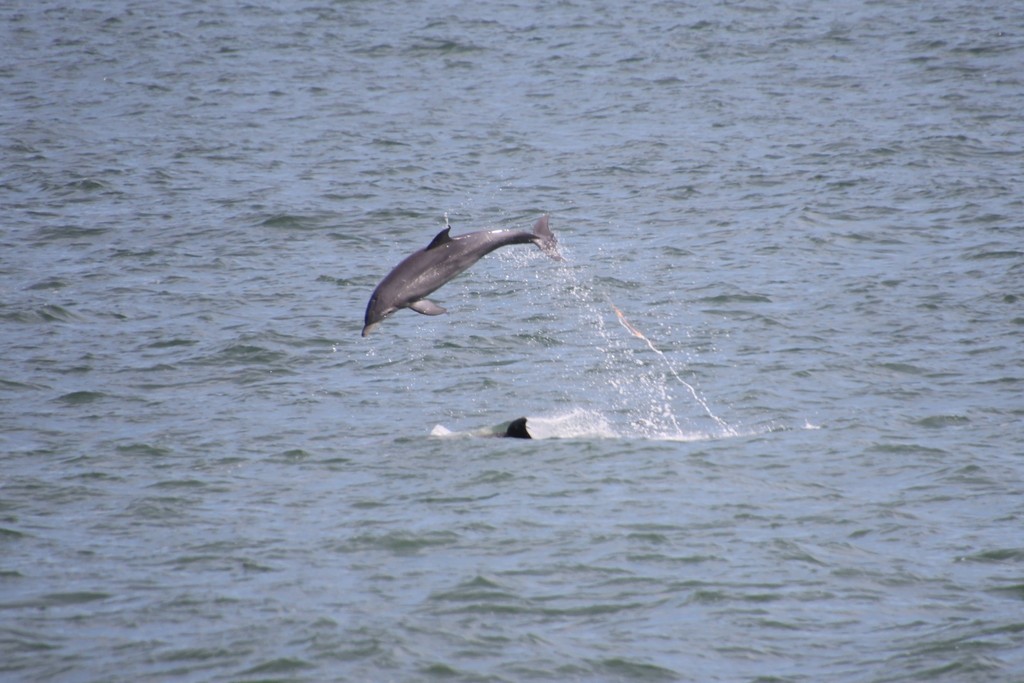
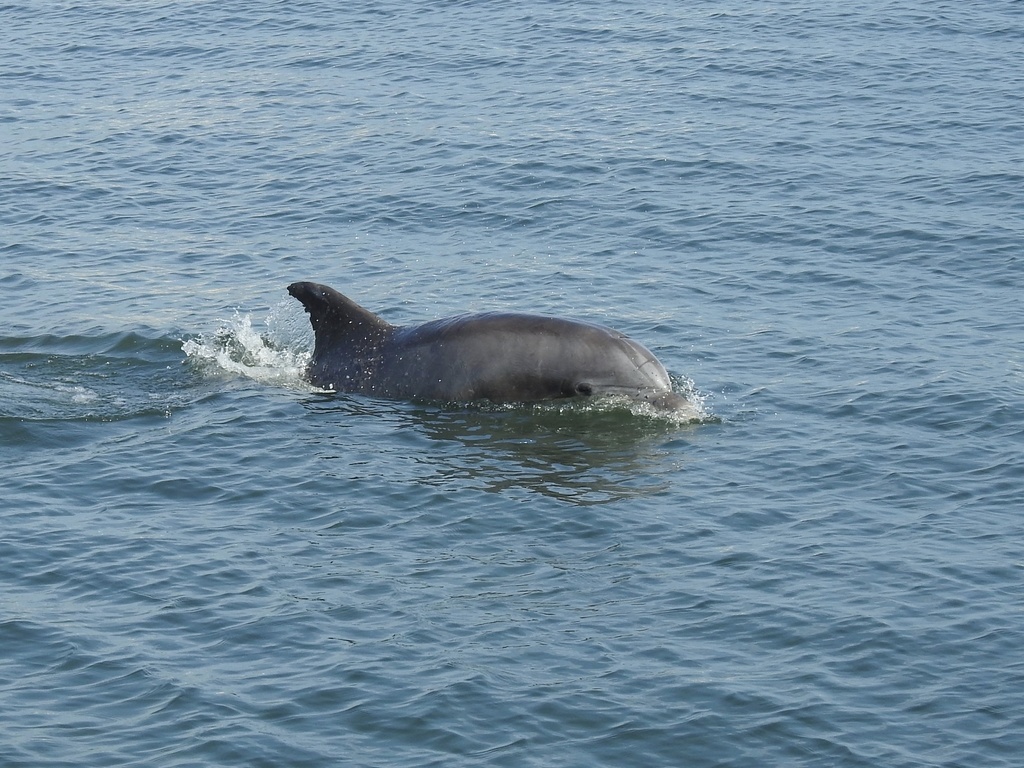
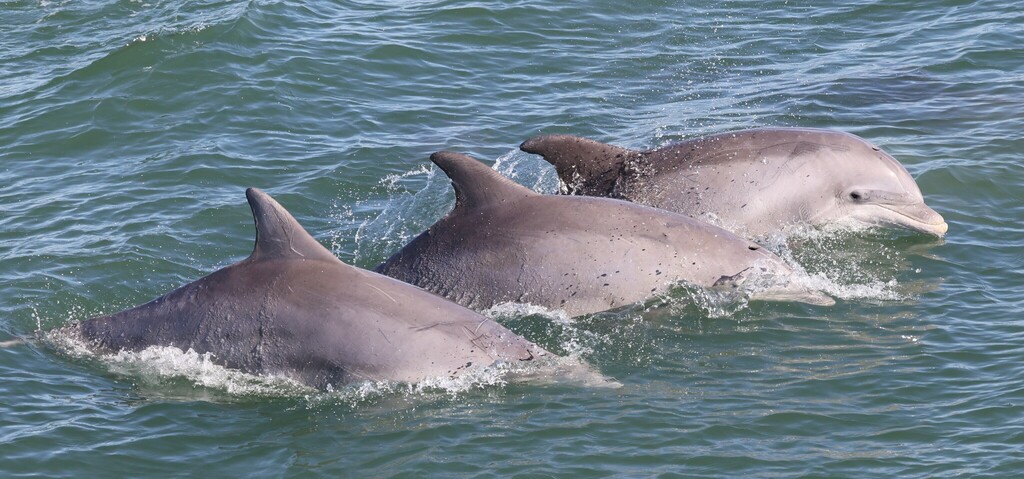
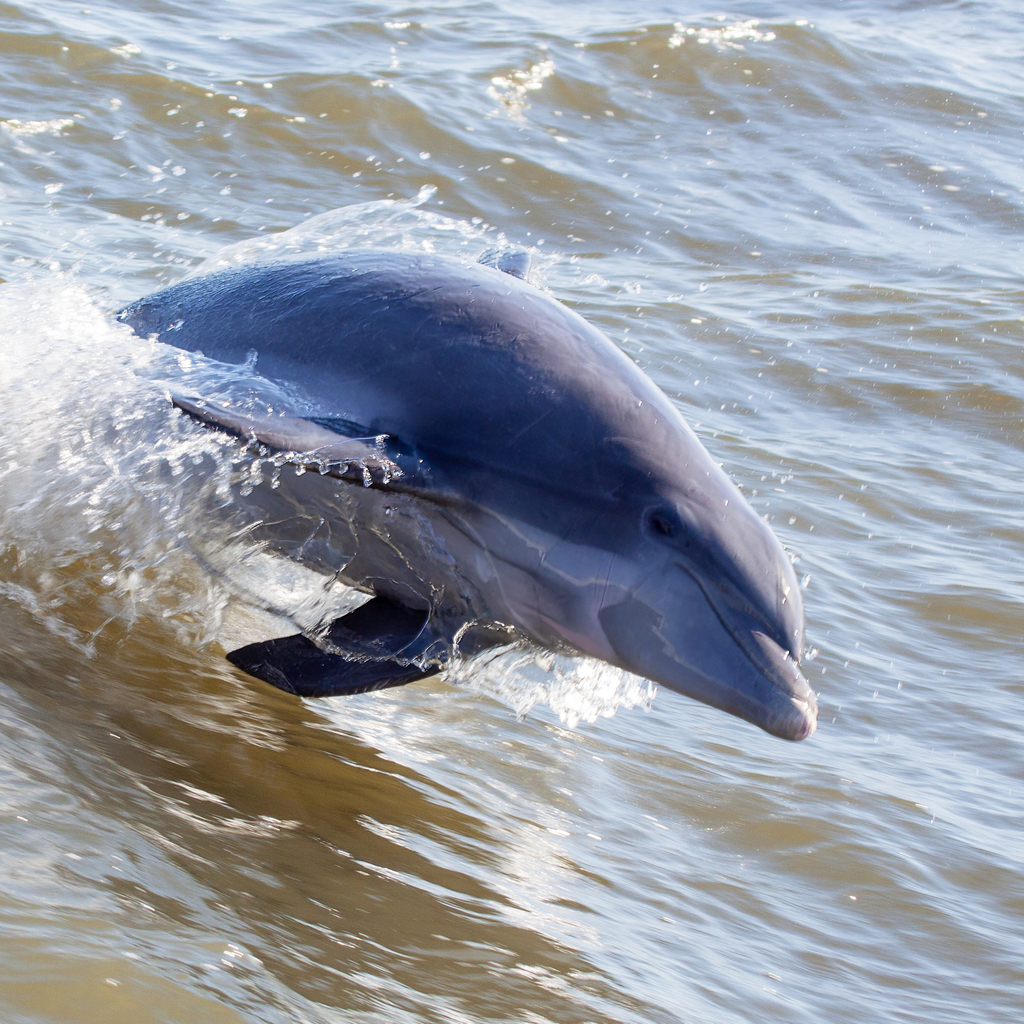
Photos show the species, not always the places on this page.
Length
Physically mature animals are at least about 232 cm (7.6 ft), with a mean of 256 cm (8.4 ft); the known maximum is 286 cm (9.4 ft)
Weight
No weight is given for this species in the sources I opened. NOAA gives 136 to 635 kg (300 to 1,400 lb) for bottlenose dolphins as a whole, and says nearshore ones tend to be smaller
Next to a person
About 1.4 to 1.7 times as long as an adult is tall
What it eats
NOAA lists fish, squid and crustaceans such as crabs and shrimp for bottlenose dolphins in general. They grip prey with their teeth and swallow it whole, usually head first. I did not find diet studies for this species alone.
Around people
Calm, give space
How it lives
A nearshore dolphin of bays, estuaries and coastal water. Groups often break apart and reform. NOAA notes, for bottlenose dolphins in general, that they live at least 40 years, calves nurse for about 20 months and stay with their mothers for 3 to 6 years. Nearshore dolphins tend to be smaller and lighter in colour than offshore ones. A 2022 study found differences in skull shape and DNA between the nearshore and offshore dolphins, with very little gene flow between them.
Where it goes
Tamanend's bottlenose dolphins live along the US Atlantic coast from New York to the east coast of Florida, in nearshore waters and estuaries. NOAA recognises 'migratory' coastal stocks, which suggests seasonal movement along the coast, but the sources I opened do not give routes.
We only draw a journey on the map when scientists have tracked it or clearly documented it. For this animal we have not found one yet.
Populations
I found no count for the whole species. It was brought back as a separate species in 2022 and accepted by the Society for Marine Mammalogy in 2023. The IUCN has not evaluated it. NOAA's page on bottlenose dolphins lists five Atlantic coastal stocks as depleted under the US Marine Mammal Protection Act: Northern Florida Coastal, Central Florida Coastal, Northern Migratory Coastal, South Carolina-Georgia Coastal and Southern Migratory Coastal. It may also live in the Gulf of Mexico and the Caribbean, which needs more research. Fishing gear, boat strikes, feeding and harassment, pollution and algal toxins are listed as threats to bottlenose dolphins in general.
Meet it respectfully
Watch from shore or from a boat that keeps its distance. NOAA asks people to stay at least 50 yards (46 m) away and to keep watching to 30 minutes or less. Feeding wild dolphins is prohibited and harmful. Never chase, touch, feed or bait a dolphin, do not block its path, and never count on a sighting.
Fun fact
Tap the bulb to light it up.
Edward Drinker Cope first described it in 1865. It was later merged with the common bottlenose dolphin and then restored as its own species in 2022.
It is named after Tamanend, a Lenni-Lenape chief, and the researchers consulted the Nanticoke Lenni-Lenape Tribal Nation about the name.
Its known maximum body length is 286 cm (9.4 ft).
Tamanend's bottlenose dolphin in the Ocean Atlas
Places we have researched where this animal is recorded. It is never guaranteed, and some places are for watching from the boat only.
Travel with usComing soonTrusted referralExploringOn pause, story onlyEthics pass
Country colour: pink where we travel, blue where we are exploring or refer, grey for story only.
 United States
Sources for this page
- Wikipedia, 2026
- Mammal Diversity Database, 2026
- NOAA Fisheries, 2026
- Costa et al., 2022, Zoological Journal of the Linnean Society
- Costa et al., 2022, species account, Zenodo
- GBIF, IUCN Red List category, 2026
Facts checked 5 October 2026. Photos: Unsplash licence, or Creative Commons as shown on each photo.
Work in ocean travel?
We are always happy to hear from exceptional local operators, accommodation, conservation organisations and destination experts. If your work fits responsible, small-group ocean travel, we would love to learn more.
Partner with Ocean CallingNew: tiger sharks in Fuvahmulah, January or March 2027
from CHF 2,900