
Tasselled wobbegong
Eucrossorhinus dasypogon
No sighting is a promise, and the animal decides what you see, so stay open to whatever the day brings.
Least Concern (IUCN, 2023) means it is not close to being threatened at present, though its population trend is not known.
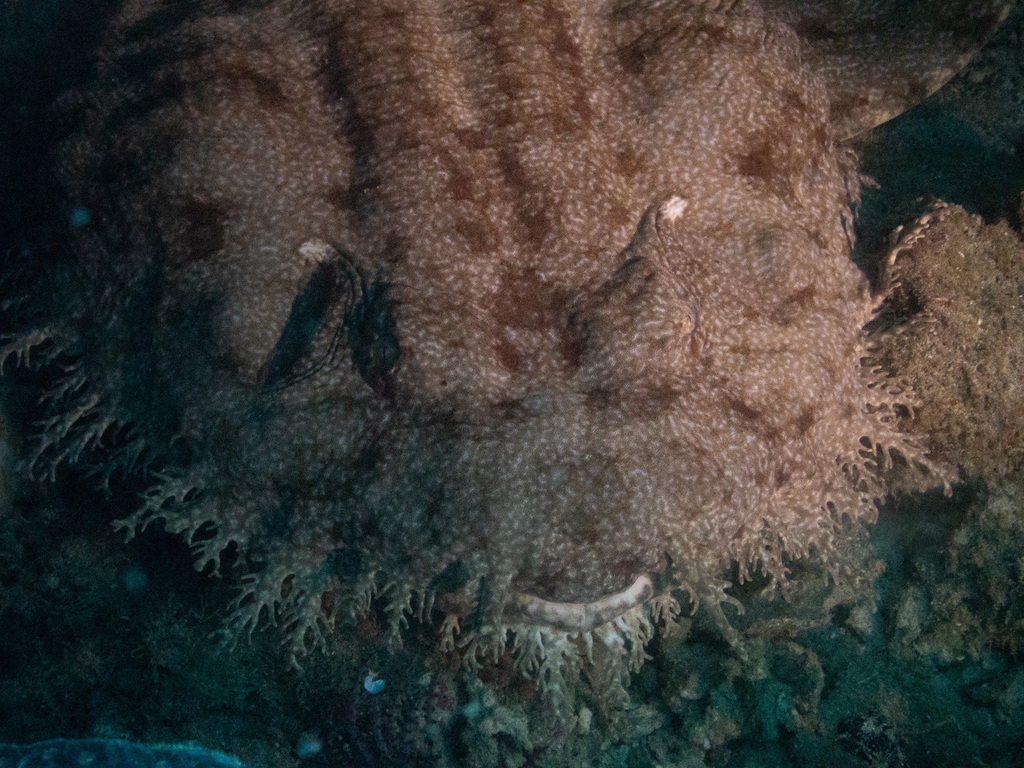
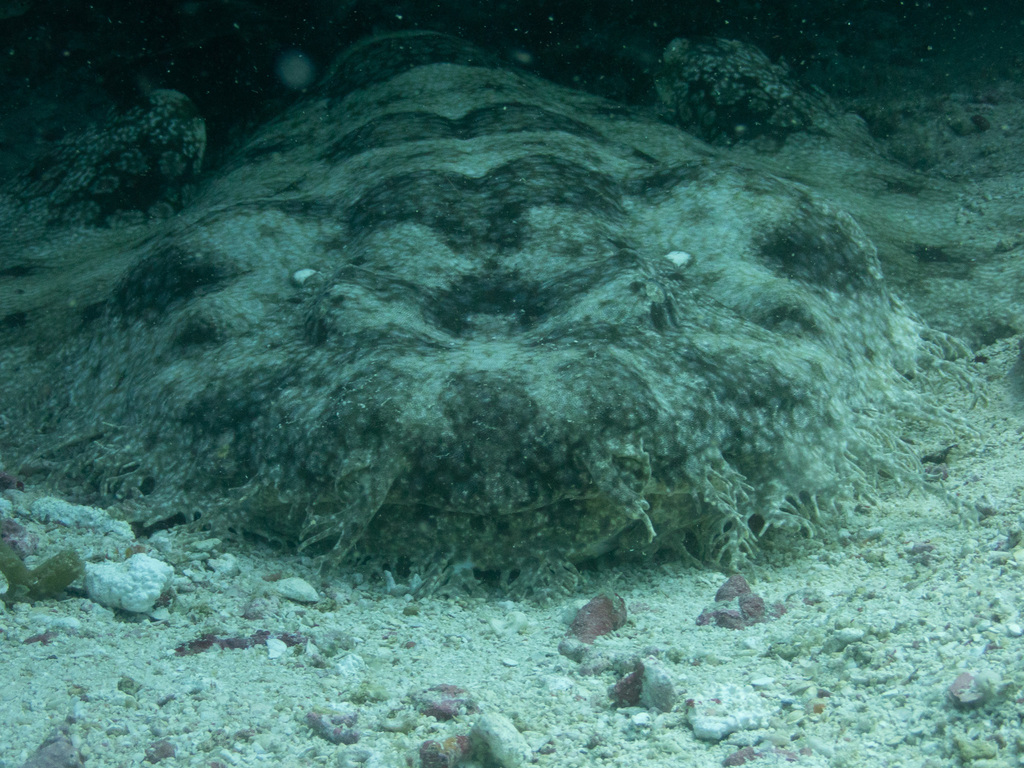
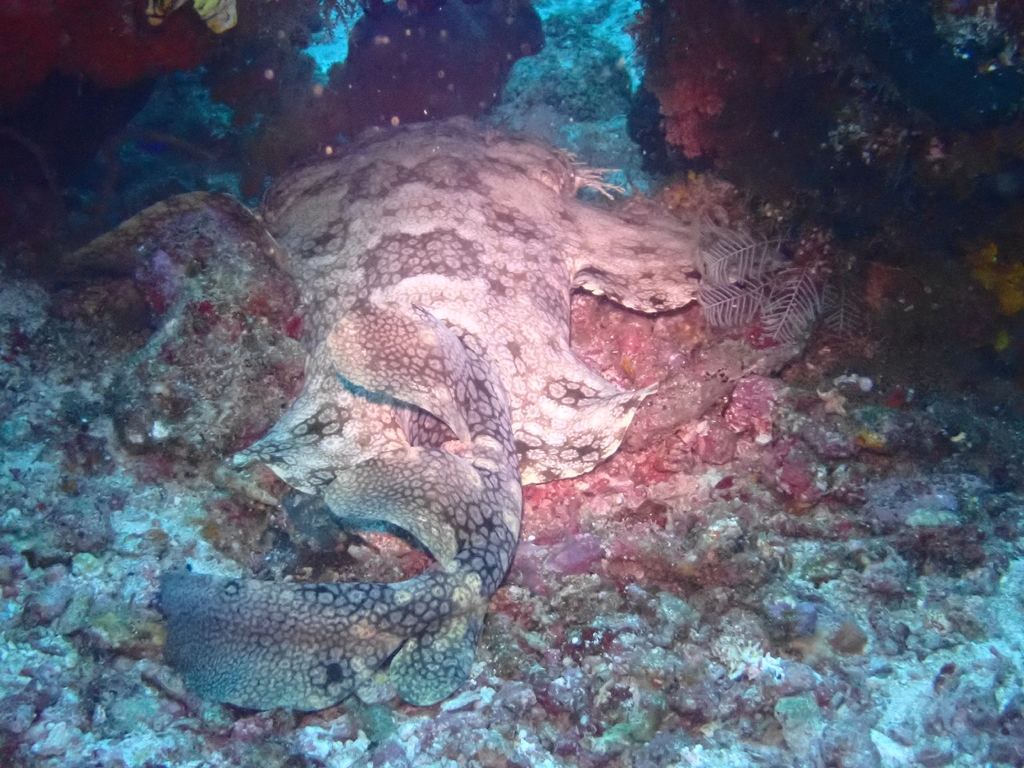
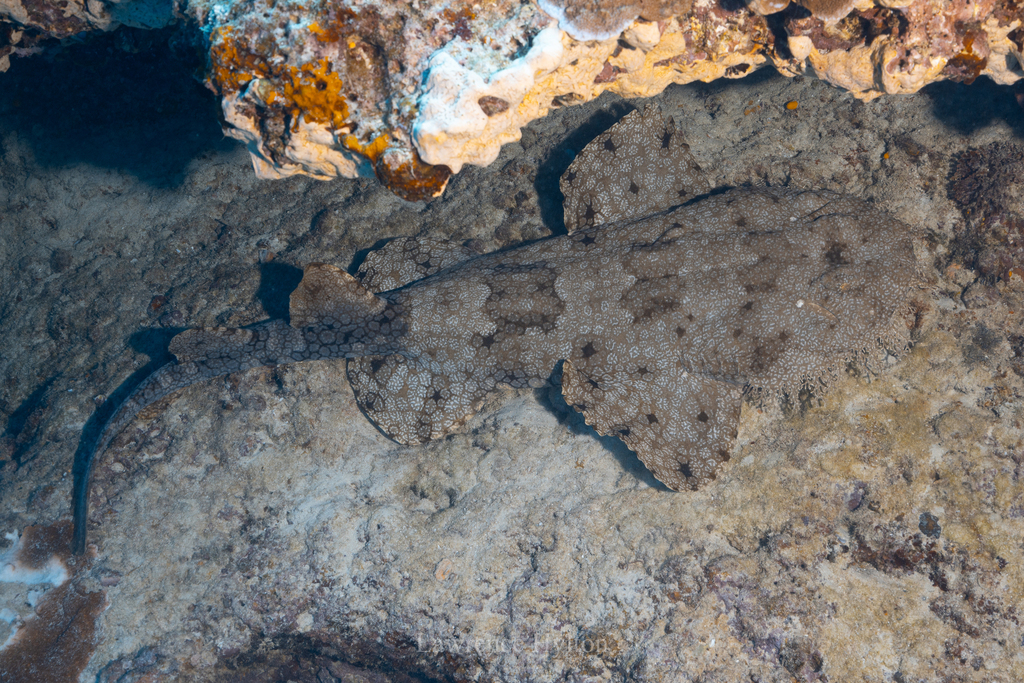
Photos show the species, not always the places on this page.
Length
Commonly about 1.25 to 1.8 m (4.1 to 5.9 ft). Records of 3.7 m (12 ft) are considered uncertain. Newborns are about 20 cm (8 in).
Weight
No weight is given in the sources I read.
Next to a person
About as long as an adult is tall, but flat and wide, and much lower to the ground.
What it eats
Bottom-living fishes, crustaceans and cephalopods. Recorded prey includes squirrelfish and sweepers, and once a 1.0 m brownbanded bamboo shark. It ambushes by day and forages at night, and it sucks prey in by suddenly opening its mouth.
Around people
Calm, give space
How it lives
A bottom-dweller of coral reefs from the shallows to about 50 m, mostly in caves and under ledges. It is nocturnal and lies motionless by day. Young develop on yolk inside the mother and are born about 20 cm long. Males mature at about 1.2 m. It is a reef animal that may live on coral reefs almost exclusively.
Where it goes
Mostly stays put. Wikipedia describes it as solitary and sedentary, with small home ranges and favourite resting spots it returns to. It spends the day motionless in caves or under ledges.
We only draw a journey on the map when scientists have tracked it or clearly documented it. For this animal we have not found one yet.
Populations
Least Concern on the IUCN Red List (listed 2023 by FishBase, 2024 by Wikipedia), and the population trend is unknown. One older source still gives Near Threatened, so assessments have changed over time. It occurs in northern Australia, New Guinea, Waigeo and the Aru Islands, with unconfirmed records from Malaysia. Outside Australia, fishing, blast fishing, pollution and coral removal are the main pressures. Much of its Australian range lies inside the Great Barrier Reef Marine Park.
Meet it respectfully
It rests so still that it is easy to miss and easy to crowd. Stay a body length or more away, keep your hands and feet clear, and never touch, poke or block its way out of its ledge. It can bite in self-defence if harassed or if a hand or foot is mistaken for prey. Photographers should not kneel on coral to get closer. I did not read local viewing rules for it, so follow your guide.
Fun fact
Tap the bulb to light it up.
A fringe of branching skin flaps around its head looks like tassels of weed and breaks up its outline against the reef.
It may wave its tail slowly, and the tail fin looks like a small fish, which can lure prey close.
It strikes by opening its mouth fast enough to suck prey in whole.
Tasselled wobbegong in the Ocean Atlas
Places we have researched where this animal is recorded. It is never guaranteed, and some places are for watching from the boat only.
Travel with usComing soonTrusted referralExploringOn pause, story onlyEthics pass
Country colour: pink where we travel, blue where we are exploring or refer, grey for story only.
 Australia
 Indonesia
Sources for this page
- Wikipedia, 2026
- FishBase, 2026
- GBIF, IUCN category, 2026
- Sharks and Rays species guide, 2026
- Florida Museum, Tasselled wobbegong
- Save Our Seas Foundation, 2026
- Divernet, Stacey, 2023
Facts checked 5 October 2026. Photos: Unsplash licence, or Creative Commons as shown on each photo.
Work in ocean travel?
We are always happy to hear from exceptional local operators, accommodation, conservation organisations and destination experts. If your work fits responsible, small-group ocean travel, we would love to learn more.
Partner with Ocean CallingNot sure where to go? Get your Ocean Match
from CHF 19