
Why Being Near the Ocean Feels Calming
You step off the bus, smell salt, and your shoulders drop before you even see the water. Why does that happen? Research on blue space, attention and breath gives part of the answer, and is honest about where it stops.
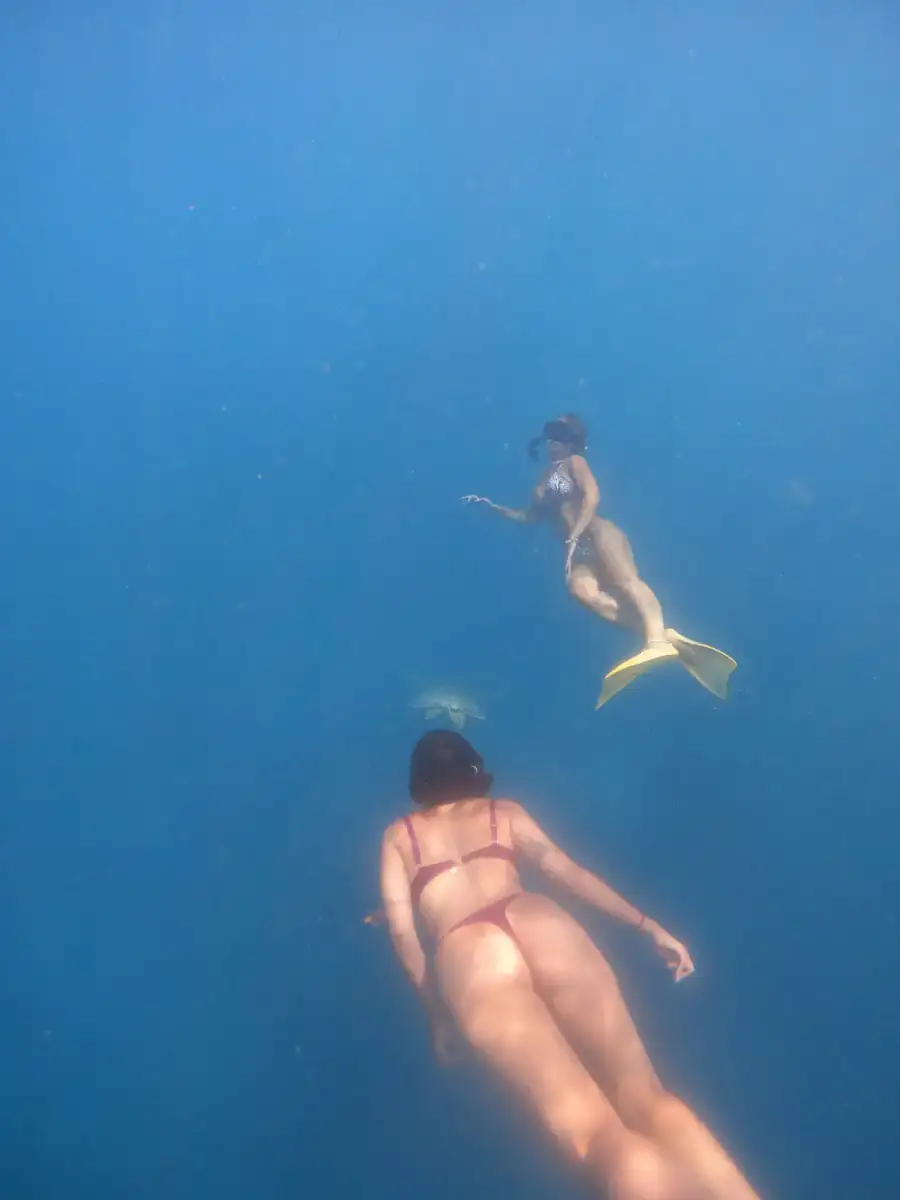
Many people describe the same small shift when they reach the sea. The shoulders come down. The breath gets deeper. Thoughts stop running in tight circles. And it often happens before anyone gets wet: the horizon feels wider, the sound turns steady, attention goes soft. So why does being near the ocean feel calming? The short answer is that the coast seems to rest our attention, lighten what our senses must handle, and invite slower breathing. The effects are real for many people, and also more modest than the popular story.
You may know this idea as "blue mind", a phrase made popular by the marine biologist Wallace J. Nichols. It is a lovely way to name a feeling, but it is not a formal scientific term. Researchers mostly use a plainer label, blue space, and what they have found is a picture of real but moderate effects, studied through a few separate mechanisms rather than one big explanation.
What do researchers mean by "blue space"?
Blue space is the term environmental psychologists and public health researchers use for outdoor places where water is visible and central: coasts, seas, lakes, rivers, canals, harbours. A systematic review in Health Promotion International (online in 2018, in print in 2020) looked at 33 studies of therapy and health programmes held in outdoor blue spaces, called "blue care". It concluded that blue care can benefit health, especially mental health and psycho-social wellbeing, while some results, such as social connectedness, were mixed. A wider 2021 meta-analysis in SSM Population Health covered 50 studies of nature-based outdoor activities in green and blue space. In randomised trials these activities reduced anxiety, and they were also linked with better mood. Doing them in a group seemed to bring bigger mental health gains, and there was less evidence for physical health benefits.
That is worth a quiet moment. The evidence supports blue space as a kind, supportive setting for many people. It does not support using the coast in place of professional care when someone is struggling, and it does not mean everyone feels the ocean the same way.
Attention behaves differently near water
One likely piece of the answer is attention.
Daily life asks a lot of what psychologists call directed attention: the effortful kind we use for screens, traffic, conversations and jumping between tasks. It is useful, and it gets tired. Attention Restoration Theory suggests that natural places let this kind of attention rest, because they hold our interest without demanding it. A 2018 systematic review and meta-analysis of 42 studies testing the theory found better working memory and cognitive flexibility after time in nature, and a less reliable gain in attentional control. The effects were described as low to moderate. A real effect, not a cure for everything.
Water seems to fit this well. Waves move, but you do not have to interpret them. The horizon is wide, but not busy. There is enough going on to hold attention loosely, without asking the mind to stay on guard. People often say they think more clearly after a few days by the sea. Usually no problem was solved. Attention was simply allowed to rest instead of perform.
Rhythm and sound seem to matter
Sound may be part of it too, although here the ground is less tested, so please read this as a reasonable idea rather than a finding. Waves are continuous rather than broken up, patterned rather than sudden. Nothing needs to be followed or answered. For a nervous system used to sharp, competing noise, that steady and predictable sound can feel unusually restful.
Breath often slows near the water
Breath is one of the quickest places stress shows up in the body, and one of the easiest places to change it. Many people notice they breathe differently by the sea: slower, deeper, freer.
This matches a solid body of research on slow, voluntary breathing. A 2018 systematic review in Frontiers in Human Neuroscience screened 2,461 abstracts and kept 15 studies of slow breathing (fewer than 10 breaths a minute) in healthy people. Slow breathing was linked with higher heart rate variability, a marker of the rest-and-recovery side of the nervous system, and with changes in brain activity. The authors are also clear that how breath control creates these effects is still debated. The ocean does not breathe for anyone. But the in and out of the waves gives a kind of outside rhythm that people often fall into naturally when they swim, float, freedive, or just sit and watch.
Ocean calm is about the senses as much as feelings
A lot of tiredness starts in the senses before it reaches the emotions: loud places, screens, poor sleep, endless small decisions. Blue space tends to offer a different sensory diet: more open space, fewer demands, a repeating pattern of sound, light and air. The reviews above point the same general way. This kind of setting is linked with lower felt stress and some recovery from mental overload, for many people, though not for all.
This may explain why the ocean can feel calming even when nothing special happens there. No breakthrough, no big emotional release. Just a place that asks less of the mind and quietly gives it more room. Often, that is enough.
Calm is not the same as passive
One curious thing about the sea is that it is never still, and yet it often feels steady. That is worth noticing, because we mix up calm and stillness more often than we should.
The ocean shows something else: constant motion that never turns into agitation. You can feel steadier without becoming distant, or go through a time of change without feeling scattered inside. Maybe that is part of why ocean places feel helpful in uncertain stretches of life. They do not offer stillness as the goal. They only show that movement and groundedness can live side by side.
Why this matters when you travel to the ocean
For people drawn to the sea, this is more than a curiosity. It shapes which trips are worth taking. When travel is rushed, or built only around ticking off sights, the quieter value of the coast tends to get lost. When there is room for attention, breath and simple presence, ocean time becomes closer to restful than just pretty.
That is part of the thinking behind our ethical freediving retreats and ocean trips: small groups, unhurried mornings, and enough quiet on the boat that people notice their own breathing. It shows up in small, ordinary details too: a refillable bottle from a simple travel kit instead of plastic ones on the boat, or a long-sleeve rash guard so you can sit in the morning sun without worrying about sunscreen. None of it is dramatic. It just gives attention a quiet place to land.
If this presence-first pace interests you beyond the water, it is also the subject of our piece on mindfulness and ocean experiences.
The sea offers perspective without asking for an answer
Perhaps this is the real reason people keep coming back to the ocean. It gives perspective without needing to mean anything. Watching is often enough.
A wide horizon, patterned sound, slower breath, a lighter load on the senses. The research on blue space, attention and breathing helps explain why these effects are more than imagination, while stopping well short of proving that the ocean fixes anything. It does not solve problems. It can change how we hold them.
Not fixed. Not remade. Just a little more spacious, a little more grounded, and a little less tightly wound.
Questions people ask
What does "blue space" mean?
It is the term researchers use for outdoor places where water is a visible, central feature: oceans, coasts, lakes, rivers. It is studied in environmental psychology and public health as a possible support for wellbeing.
Is "blue mind" the same thing as blue space research?
Not exactly. "Blue mind" is a popular phrase, not a formal scientific term. "Blue space" is the term used in research, and the evidence behind it is real but more measured than the popular phrase suggests.
Can being near the ocean actually help with stress?
Reviews suggest it can help many people. A 2021 meta-analysis found nature-based outdoor activities reduced anxiety in randomised trials, and a review of "blue care" found benefits especially for mental health. The effects are moderate and do not replace professional support.
Why might the ocean feel calming?
Probably several overlapping reasons: a wide view that holds attention without demanding it, a lighter load on the senses, and slower breathing. Research supports attention restoration and slow-breathing effects; the role of wave sound is less tested.
Is the calming effect only psychological?
Probably not. A systematic review of slow breathing found links with higher heart rate variability, a marker of rest-and-recovery activity, although the authors say the mechanisms are still debated.
If this made you curious to meet the ocean this way, you can explore our upcoming retreats.
Wildlife encounters are never guaranteed and never forced. Ocean Calling works only with vetted, ethical local operators, and every animal is free to approach, or not, entirely on its own terms.
Sources & further reading
- Britton E. et al., 2020. Blue care: a systematic review of blue space interventions for health and wellbeing. Health Promotion International 35(1).
- Coventry P.A. et al., 2021. Nature-based outdoor activities for mental and physical health: systematic review and meta-analysis. SSM - Population Health.
- University of York, 2021. Nature can improve mood and reduce anxiety (press release).
- Stevenson M.P., Schilhab T., Bentsen P., 2018. Attention Restoration Theory II: a systematic review. Journal of Toxicology and Environmental Health, Part B 21(4).
- Zaccaro A. et al., 2018. How breath-control can change your life: a systematic review on psycho-physiological correlates of slow breathing. Frontiers in Human Neuroscience 12:353.
Further reading on Ocean Calling: More from the journal · Wildlife & the law · See the retreats · Ocean Atlas
Find the retreat that fits you
Small groups of up to six guests, unhurried days and local experts. Tell us how you feel in the water and we will point you to the right trip.