
Learn Freediving Safely in Bali: Why It Works So Well
Picture your first time on a freediving line: warm blue water, a buoy above you, your heart a little too fast, and an instructor beside you who simply waits. No rush. I learned to freedive in Bali, and that kind of patience is the real reason the island is such a good place to begin.
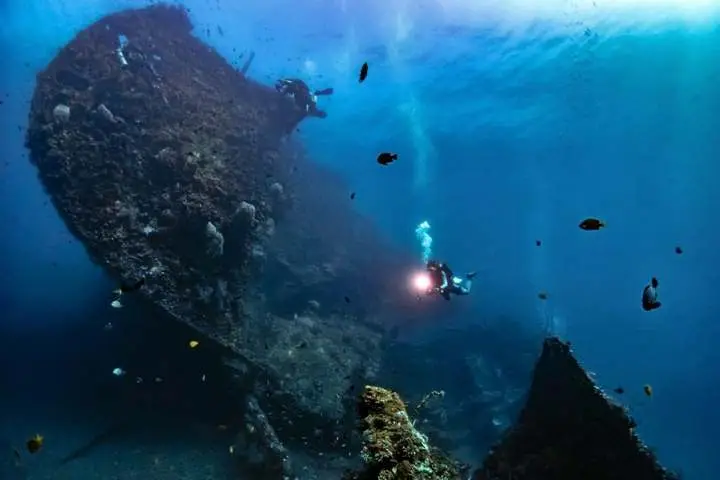
Is Bali a good place to learn freediving safely? Yes, when you learn with a qualified instructor and in conditions that match your level. Bali has warm sheltered bays like Amed, where you can often walk into the water from the beach, many experienced schools, and wilder sites like Nusa Penida for later. That mix lets you start calm and grow at your own pace.
Beginner freediving is not really about depth. In the first days, the place shapes how you learn. An easy entry, good visibility, predictable water and a training line close to shore all help. When those basics are in place, you can give your attention to what matters: breathing, equalising, technique and safety. Not to the stress of the setting.
Why the place matters so much for beginners
Freediving is often called a sport of relaxation. But that relaxation is built on structure. As a beginner you are learning to slow your breathing, to notice new feelings in your body, and to move through the water with less effort. In a place that feels exposed or unpredictable, that is much harder to practise. A good setting does not remove the challenge. It removes the extra stress that gets in the way of learning.
Bali has both. Around the island there are sheltered, sleepy bays and much more dynamic sites. This lets instructors build a natural progression: calm water first, more complex places once you are really ready. It is a kinder way to learn, because it rewards patience and body awareness instead of pushing performance too early.
Temperature is part of the picture too. Bali is in the tropics, and the sheltered bays of the east coast are usually comfortable for long sessions. But not every site is warm. Around Nusa Penida, cold upwelling from the Lombok Strait during the ocean sunfish season, roughly July to October, can bring the water down to around 16 to 22 °C, according to local dive guides. A good school will tell you which wetsuit to bring for the site and the month.
Amed: a calm place to build real foundations
If one place is linked with learning to freedive in Bali, it is Amed. On the northeast coast, Amed is a quiet line of small coastal villages, known for easy shore access and a slower pace than the busy south. Instead of long boat transfers, you can often walk into the water and spend more of the session on technique, not logistics.
The reef in Amed slopes gently, which lets instructors build sessions step by step. This matters a lot when you are getting used to equalising, or following a descent line for the first time. It is also where a well-fitted low-volume mask and snorkel makes a difference: less air to equalise in the mask, and less water leaking in when you are trying to stay relaxed. Our guide to choosing a freediving mask that fits your face explains what to look for.
There is a mental side to this too. Amed's slow rhythm matches what freediving asks of you. Progress rarely comes from forcing results. It comes from repetition, calm coaching and trust in the process. Amed does not feel like a place built around adrenaline. It feels like a place to settle into the basics, which matters if you want to learn freediving safely and not only collect a certificate. We wrote more about the village itself in Amed as a quiet base in East Bali.
Nusa Penida: beautiful, and more dynamic
If Amed is Bali's calm side, Nusa Penida is its wild one. The island is known for manta ray encounters and for seasonal sightings of ocean sunfish, the mola mola, at sites like Manta Point and Crystal Bay. Local dive guides place the sunfish season roughly between July and October, linked to cold upwelling.
Conditions here are very different from a sheltered bay. The waters around Nusa Penida are more exposed. Currents can be strong and can change quickly, and dive guides recommend sites like the Crystal Bay pinnacle only with an experienced guide.
That does not make Nusa Penida wrong for you. It means the context matters. For most beginners, it is better to go once some confidence has grown, or as part of a guided day where the operator chooses the site for the conditions, not a fixed plan. The most careful operators check the sea each morning and decide from there. This is one of Bali's real strengths: you can start somewhere protected and step into something wilder when you are ready.
Nusa Penida also teaches something worth learning early: a wildlife encounter is never something to control. The waters around the island became a marine protected area in 2014, divided into zones for tourism, seaweed farming, fishing and sacred places, and manta rays are among the species it aims to protect. Good operators brief simple manners for mantas: keep a respectful distance, never chase or block the animal, and let it decide how close it comes. Our guide to responsible manta diving in Nusa Penida goes deeper.
The same rule holds for any animal you are lucky enough to meet, mola mola included. The experience adapts to the animal, never the other way around. Sightings are never guaranteed, and any operator who suggests otherwise is not being honest with you.
Wildlife encounters are unpredictable. Freediving near manta rays should always follow local regulations and experienced professional guidance.
Why good instruction matters more than the destination
It is tempting to choose a freediving destination for the views. In the first stages, though, the instructor matters more than the scenery. A good beginner course does much more than teach you to hold your breath. It covers safety procedures, recovery breathing, buddy awareness, reading the site, equalising and slow progression in depth, always with real supervision.
Bali has kept its appeal partly because it has a mature training culture, with many schools and instructors teaching from beginner to advanced levels. For you, that means more choice, and also more responsibility to choose well. Ask a school how it thinks about progression, how big its groups are, and how it adapts to the conditions on the day. Those answers will tell you more than any polished photo.
A good instructor is comfortable with patience. They will not treat depth as the only sign of success. They will understand that some students need more time with equalising, more repetition in shallow water, or simply more space to feel at ease before going further. This kind of teaching builds a better long-term relationship with freediving. And it matches what ethical ocean travel is really about: a pace that respects both the person and the place.
The ethical layer: Bali's marine life and how we move through it
Bali is part of Indonesia, inside the Coral Triangle, which WWF describes as holding about 76% of the world's coral species, 605 of 798. That wider picture helps explain why even simple shore sites in Bali can feel so alive underwater. Coral, reef fish, tiny macro life, turtles, rays and sometimes a bigger visitor all make training sessions feel like small discoveries.
That richness comes with responsibility. Watching marine life is not only about what you hope to see. It is also about how you move while you are looking. A well-guided freediving session has a quiet, slow quality: good buoyancy, awareness of the reef, and the understanding that the ocean is not a stage. Being close is not the goal. Respectful observation is.
Small choices count here, like a long-sleeve rash guard instead of layers of sunscreen over a busy reef. And it means being honest that flying to Bali has a real environmental cost. Staying longer and moving less helps a little.
Easy to reach, but that is not the whole story
Bali is also practical. Ngurah Rai International Airport, near Denpasar, is the island's main international gateway and the usual starting point for reaching places like Nusa Penida. This is part of why Bali so often becomes someone's first freediving destination. It is easier to reach than many remote dive regions, with places to stay for many travel styles and budgets.
Still, convenience alone is not what makes Bali special. What makes it work is the balance: a place that is easy to reach and still has room for slow learning, solid instruction and real attention to the ocean. That balance is not automatic. It depends a lot on the operator, the plan and the intention behind the trip. When those line up, Bali is more than convenient. It is supportive.
Freediving and a slower way to travel
Many people come to freediving for reasons beyond sport: a wish to be present, to pay attention, to feel the ocean more closely. That does not need to sound mystical. In practice, freediving asks you to slow down, listen to your body and move with more intention. For travellers already looking for meaningful, lower-impact trips, it feels like a natural fit.
This is where responsible ocean travel becomes practical. It is rarely about perfection. It is about better questions and better choices. In Bali, that might mean a school that puts safety before performance, a wildlife encounter that respects distance and conditions, or a plan built around time in the water instead of constant moving around. Small decisions like these shape the experience more than people expect.
A balanced place to begin
Bali is not the only place to learn freediving, and it will not be right for everyone. But it has earned its reputation for real reasons: warm water, easy shore sites, experienced instructors, and the chance to move from calm conditions to more dynamic ones at your own pace. It is a strong choice if you want to build confidence carefully, one step at a time.
Bali can also widen what freediving means to you. It can be a skill, a discipline, and a way of being in the ocean with real attention and respect. Approached with patience and good guidance, it becomes part of a more thoughtful kind of travel. Maybe that is the deeper reason it keeps bringing new freedivers back.
If you would like to learn here, we can connect you with a vetted local freediving team in Amed through our Bali Amed freediving referral via Ocean Match. You book directly with the local team.
Questions people ask
What's the best area in Bali for beginner freediving?
Amed is generally one of the most supportive areas for beginners, thanks to easy shore access, calmer conditions and gentle slopes. It is a good place to build comfort in open water before anything more demanding.
Is Bali good for learning freediving safely?
Yes, when you train with a qualified instructor and in conditions that match your level. Safety depends much less on the destination and much more on the instruction, the site and how slowly you progress.
Amed or Nusa Penida: which is better for beginners?
For most beginners, Amed is the easier place to start. Nusa Penida is beautiful, but some of its best-known sites have strong, changing currents and cold upwelling, so it is better later or with carefully adapted guidance.
Is the water cold in Bali?
Not usually in sheltered bays. Around Nusa Penida, cold upwelling during the sunfish season, roughly July to October, can bring temperatures to around 16 to 22 °C, according to local dive guides. Ask your school which wetsuit to bring.
Can beginners have responsible wildlife encounters in Bali?
Yes, with the right expectations. Nusa Penida's waters have been a marine protected area since 2014, and mantas are among the species it protects. Keep your distance, never chase or block an animal, and remember that no sighting is ever guaranteed.
How do I choose an ethical freediving operator in Bali?
Ask how they manage group size, safety, site choice and wildlife encounters. Look for clear environmental briefings, plans that change with the conditions, and slow progression instead of pressure to go deeper.
Wildlife encounters are never guaranteed and never forced. Ocean Calling works only with vetted, ethical local operators, and every animal is free to approach, or not, entirely on its own terms.
Sources & further reading
- WWF. Coral Triangle facts.
- Galaxea, Journal of Coral Reef Studies 11(2): 91 (2009). Study of zooxanthellate coral diversity in the Coral Triangle.
- Mission Blue / Rolex Perpetual Planet. Nusa Penida Hope Spot (marine protected area established 2014, zoning).
- Nusa Penida dive guide. Mola mola (ocean sunfish): season, upwelling and water temperature.
- Ocean Earth Travels. Mola mola diving in Bali: season and conditions.
Further reading on Ocean Calling: More from the journal · Wildlife & the law · See the retreats · Ocean Atlas
Freediving certification in Bali: Amed, USAT Liberty wreck and Ubud
Freediving certification · Amed & Ubud, Bali, Indonesia
Ocean breath first, sacred water after. This story is about Indonesia, where we run our Bali trips.
Explore in the Ocean Atlas
Places in this article