
How Cold Is the Water? Choosing Your Thermal Protection
You jump into warm tropical water and think you will never need a wetsuit. An hour and three entries later, you are sitting on the boat in the wind, and your teeth have started to talk on their own. The water did not change. You did.
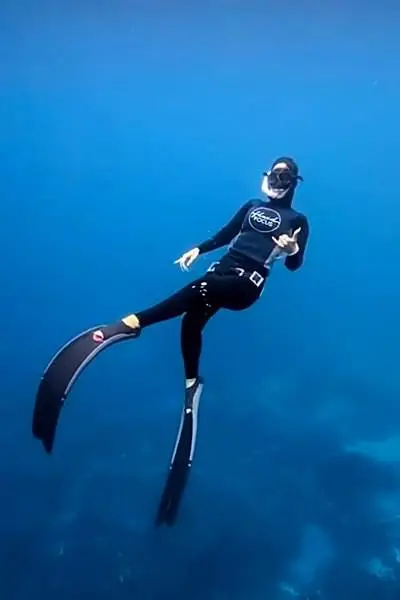
So how cold is too cold? Divers Alert Network gives a simple starting point: most divers benefit from thermal protection in water below 27°C. But the same sea can feel very different after five minutes and after a long boat day. Time in the water, depth, wind and your own body matter just as much as the number on the dive centre’s board.
Two numbers worth remembering
If you remember only two temperatures, make them these. Divers Alert Network says that most divers will benefit from thermal protection in water cooler than 27°C (80°F). And significant thermal stress can be expected in water colder than 24°C (75°F).
This surprises many people, because 27°C sounds like bath water. It is warm for a quick swim. But it is still cooler than your body, and in water the body keeps losing heat for as long as you stay in.
For tropical trips, this is often the difference between a thin layer and a proper wetsuit. We compare the two in wetsuit or rash guard for tropical water. Here I want to look at the questions behind that choice.
Why there is no “right suit” for a country
It would be easy to say “wear 3 mm here and 5 mm there”. The ocean does not work like that. One destination has many sites, seasons and depths.
Under the surface there is often a thermocline. NOAA explains it as the layer between warmer, mixed water at the top and cooler deep water below. Its depth and strength change from season to season and from year to year. A diver who drops below it can feel the change at once.
Some coasts also have upwelling, when deep, cold water rises towards the surface. That water is usually colder and rich in nutrients, which is one reason cooler places can be so full of life. It also means two sites a short boat ride apart can feel very different, and an early morning entry is not the same as a sunny afternoon snorkel in a quiet bay.
So the useful question is not “how cold is the water in this country?” It is “what range should I expect at these sites, at this depth, on these dates?” Ask the local dive or freediving professional, then think about your own body and how long each session will be.
Why do you get colder with every dive?
One long session, or several short ones in a day, can leave you colder than the water temperature suggests. DAN notes that wind and moving water speed up cooling. Wetsuits soften the first shock of cold, but they cannot stop the slow loss of heat over a long time in the water.
A breezy boat ride between entries, in a wet suit, can take away much of the warmth you had. This is why a warm, dry layer for the boat matters as much as the suit itself. I keep mine with a towel in a small dry bag, and I put it on as soon as I am out, not when the shivering starts.
Your body is part of the answer
DAN writes that every diver has their own tolerance to temperature, especially to cold water, and that this changes from day to day. Body composition, age and health all play a part in how quickly someone cools. A friend who is happy in a thin suit tells you nothing about what you need.
Cold also touches the mind. The first signs of mild hypothermia include shivering while you can still talk clearly. Confusion and difficulty speaking come later. Our story on what cold water does to your nervous system explains what happens before your thoughts catch up.
Choosing and using your layer
Check the fit first. A suit that is too loose lets cold water flush through. One that is too tight makes breathing and moving harder. Look at the seams and zips, and choose for your activity, because freediving, snorkelling and scuba each ask different things of a suit. For warm water, some people start with a long-sleeve rash guard or a thin wetsuit layer and build from there.
In the water, a cold guest should always feel free to say so and end the session. That is how we like every trip to work, including the freediving trip in Amed that we match guests with through Ocean Match. Stopping early is part of the plan, not a disappointment.
And please do not let a thicker suit replace instruction, a buddy or rescue planning. Staying warm simply helps you pay attention: to the water, to the animals, and to each other.
Questions people ask
Do I need a wetsuit in 28°C water?
Not always, but many people still like a thin layer for long or repeated sessions. Divers Alert Network says most divers benefit from thermal protection below 27°C, and tolerance varies from person to person.
Why do I get cold on the second or third dive of the day?
Heat loss adds up. Water takes heat away far faster than air, and wind on the boat between entries speeds up cooling. Warm up properly between sessions.
How do I find the water temperature for my trip?
Ask the local dive or freediving professional for the expected range at your sites and on your dates, including at depth. One average for a whole country is rarely enough.
Water temperatures and conditions change by site, depth and day, and no suit replaces good instruction. Ocean Calling works only with vetted, ethical local operators, and every animal we meet is free to approach, or not, entirely on its own terms.
Sources & further reading
- Divers Alert Network. Travelers medical guide: exposure-related injuries.
- Tillmans, F., 2022. Heated garments. Alert Diver, Divers Alert Network.
- NOAA National Ocean Service. What is a thermocline?
- NOAA National Ocean Service. What is upwelling?
Further reading on Ocean Calling: Packing a dry bag that survives a boat day · The Ocean Atlas
Find the retreat that fits you
Small groups of up to six guests, unhurried days and local experts. Tell us how you feel in the water and we will point you to the right trip.