
Wetsuit vs Rash Guard for Tropical Diving
The water is 28°C, the sun is hot, and your wetsuit sits in the bag looking like too much. Should you bring it? Here is the honest answer for freediving and snorkelling in warm water.
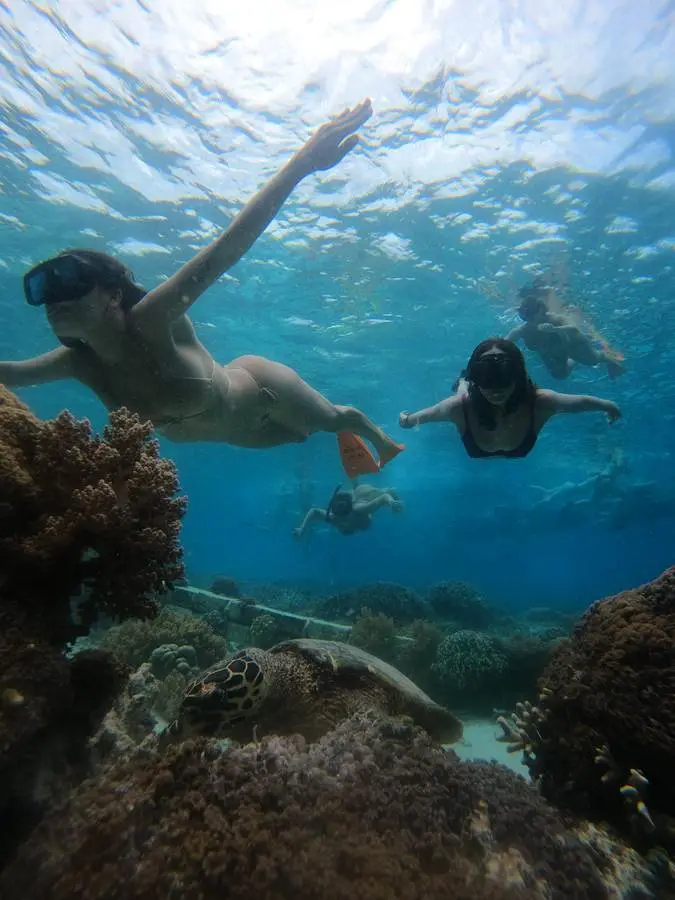
Wetsuit or rash guard: which one do you need in tropical water?
It is one of the questions guests ask most when they pack. Is a wetsuit too much in water that is 28°C? The short answer: a rash guard protects you from sun and rubbing, a wetsuit protects you from losing heat. They look similar from the beach, but they solve different problems. For one short snorkel, a rash guard is often enough. For a long day of dives, a thin wetsuit usually makes you happier.
Why you can feel cold in warm water
Water takes heat from the body much faster than air. Divers Alert Network puts it simply: a person loses heat about 25 times faster in water than on land, so it is wise to be ready for cold even in tropical water. That is why a sea that feels lovely when you walk in can leave you chilled after forty minutes of floating.
Almost all diving happens in water that is cooler than your body. The NOAA Diving Manual, as quoted by Scuba.com, warns that "warm water hypothermia" can happen even in the tropics, especially on long dives. So "tropical" describes the place, not how your body will feel on the third dive of the day, with only a short break at the surface between dives.
A rash guard does almost nothing against this. It is a thin layer of stretch fabric made to reduce skin irritation from a wetsuit, a board or salt water. It is not made to keep you warm. A wetsuit, even a thin 1.5 to 2 mm tropical one, holds a layer of water against your skin. Your body warms that water, and the neoprene keeps it there. That is how a wetsuit insulates. If your day has several long dives, some current or hours on the water, the difference adds up.
What a rash guard is really for
A rash guard earns its place with sun and friction, not temperature. The Skin Cancer Foundation explains that a fabric with a UPF of 50 blocks about 98% of the sun's rays and lets about 2% through, and UPF 50 is the minimum it asks for its Seal of Recommendation. Over a full day on the water, that is easier to trust than sunscreen alone, which washes off and is easy to forget between dives.
One honest note: the Foundation also says that stretching or wetting a fabric can lower its protection. So a tight, wet top is good, not perfect.
A rash guard also stops a small, unglamorous problem: a wetsuit rubbing on bare skin at the neck, under the arms and inside the elbow. On day one it sounds like nothing. On day four of a retreat, it can be the thing you think about most.
For freedivers there is a third reason: buoyancy and freedom to move. Thick wetsuits, 5 to 7 mm and made for colder water, float a lot. A freediver then needs more weight to balance them, and that changes how relaxed the way down feels. Neoprene also squeezes as you descend. Measurements cited in diving references suggest it loses roughly a third of its buoyancy in the first 10 metres, so a thick suit's lift changes a lot in one dive. A rash guard adds almost no buoyancy at all. This is part of why many experienced freedivers in warm water choose a rash guard or a very thin 1 to 2 mm suit, while scuba divers in the same place may wear something thicker. The two sports want different things, even in the same water.
So which one, honestly
For one shallow snorkel in warm, calm water on a hot day, a rash guard is usually enough. It may even be the more comfortable choice. It covers your shoulders and back, the two places that burn first on a boat, without adding heat you do not need.
For a full day of freediving or scuba with several sessions, any current, or water in the high 20s rather than close to 30°C, a thin 1.5 to 2 mm tropical wetsuit or a long-sleeve neoprene top is worth the space in your bag. It is not about being dramatically cold. It is about not spending your third dive a little distracted by a chill you cannot quite name. This happens often to guests who thought "tropical" meant "no wetsuit, ever".
Many guests pack both, and that is not too much. It simply matches how a real week on the water changes from day to day. A rash guard for short, hot snorkels and sun between dives. A thin wetsuit top or shorty for longer sessions and the days the wind picks up. If you choose the rash guard, a long-sleeve rash guard covers the shoulders and back, and a mineral sunscreen takes care of the face, hands and feet that stay in the sun.
None of this is about buying more gear. It is about matching the layer to the real day: how long you are in, how many times, and what the wind is doing. The word "tropical" alone will not tell you.
If you want to see how a week of changing water days really feels, you can read what day one of a freediving retreat feels like, our water temperature and wetsuit guide by destination, and our reef-safe packing list.
Questions people ask
Does a rash guard keep you warm?
Not really. It is thin stretch fabric made for sun and friction. A wetsuit insulates by holding a layer of water against the skin that your body warms.
Can you get cold in tropical water?
Yes. You lose heat roughly 25 times faster in water than on land, and the NOAA Diving Manual (as quoted by Scuba.com) warns that warm water hypothermia can happen even in the tropics on long dives.
How much UV does a UPF 50 rash guard block?
About 98%, letting roughly 2% through, according to the Skin Cancer Foundation. Stretching or wetting a fabric can reduce that protection.
Why do freedivers in warm water often skip thick wetsuits?
Thick neoprene adds buoyancy that has to be balanced with weight, and that buoyancy changes as the suit compresses with depth. A rash guard or a thin suit keeps things simpler.
Should I pack both?
For a week with changing water days, often yes: a rash guard for short, hot snorkels and sun protection, and a thin wetsuit or top for longer or repeated sessions and windy days.
If this made you curious about meeting the ocean this way, you can explore our upcoming retreats.
Wildlife encounters are never guaranteed and never forced. Ocean Calling works only with vetted, ethical local operators, and every animal is free to approach, or not, entirely on its own terms.
Sources & further reading
- Skin Cancer Foundation. Expert answers to your sun protection questions (UPF ratings).
- Divers Alert Network / Scuba Diving, 2023. Ask DAN: how can I stay warmer underwater?
- Scuba.com. Understanding warm water hypothermia in scuba diving (quotes the NOAA Diving Manual).
- University of Michigan diving pages. Not being cold (heat loss in water vs air).
- Wikipedia. Diving weighting system (neoprene compression and buoyancy loss with depth).
Further reading on Ocean Calling: More from the journal · Wildlife & the law · See the retreats · Ocean Atlas
Find the retreat that fits you
Small groups of up to six guests, unhurried days and local experts. Tell us how you feel in the water and we will point you to the right trip.