
Ethical Underwater Photography: A Beginner's Primer
Ethical underwater photography for beginners: no chasing, no baiting, no touching. How to get the shot without the harm, based on the Green Fins and PADI guidelines.
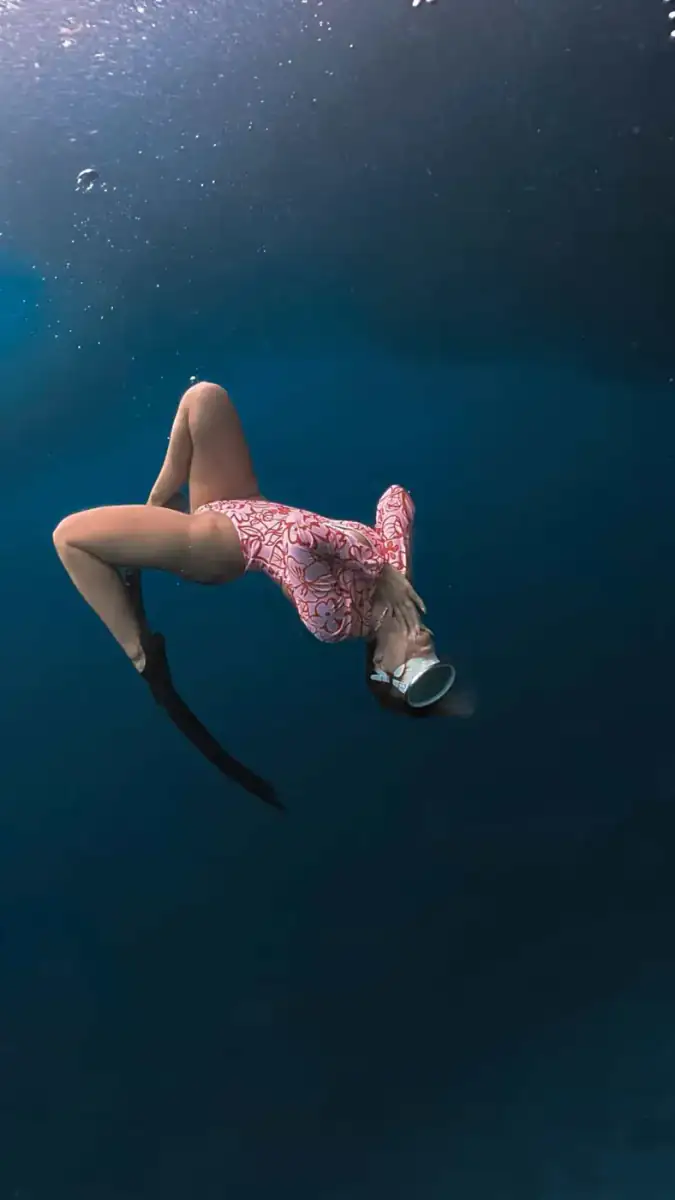
The best underwater wildlife photo most people ever take is one they did not have to chase. It sounds like a nice idea, until you see what "getting the shot" can do down there. A diver kicks sediment across a reef to move into better light. A hand reaches out to hold a reluctant octopus still. A group crowds a resting turtle because someone wants the close-up. So what do ethical underwater photography guidelines ask of you? In one line: do no harm. Do not touch or move animals, do not chase, master your buoyancy first, limit strong lights, and stop when the animal shows stress.
This is for beginners holding a housing or an action camera for the first time, not for professionals who already live by these rules.
The one rule everything else follows from
The guidelines Wetpixel wrote for PADI, "Guidelines for Underwater Photographers: Do No Harm", rest on one simple idea: if the photographer cannot capture the image without damaging the environment, the image should not be taken. Every other rule below is that same idea applied to a real situation.
The guidelines are also honest about something important. Photographers rarely mean to cause harm, but being there still affects marine life. Even disturbing an animal while it buries itself in the sand, or interrupting its feeding, has an impact. Avoiding harm is a skill, and it needs knowledge: learning how animals behave, watching before shooting, and understanding what you are actually seeing.
Don't touch, move or reposition anything, ever
Green Fins, the conservation programme coordinated internationally by the Reef-World Foundation for the UN Environment Programme, asks dive staff to stop photographers from touching, moving or manipulating marine life for photos, and from resting equipment on coral or holding onto it. The personal version is simple: don't hold the reef to steady yourself, and don't move an animal to get the perfect photo.
The examples are uncomfortable because they are so common. An octopus picked up and posed. A small crab pulled out of the rubble that is its home, for a cleaner background. If an animal has to be moved, held or provoked to get the photo, the photo is not documenting wildlife anymore. It is staging it.
Let the animal choose the interaction
Here is a test I like because it is so simple: did the animal choose to come close, or did it at least have a real option to leave? If it moves away, that is the end of the interaction, not a cue to follow. Approach slowly, from the side and not head-on, and leave it space to go.
This is also where photography meets everything else we believe about wildlife. Our piece on why touching marine animals harms them explains what even gentle contact can do, and our guide to observation versus interaction covers the bigger principle.
Should beginners learn buoyancy before taking a camera?
Green Fins says photographers should have neutral buoyancy before they are allowed to use a camera, and that checking this is the dive professional's job. My honest advice for beginners: get your buoyancy solid without a camera first. Do not try to learn both at once on a reef.
In practice, that means you can hover still, fin slowly backward away from a subject instead of kicking toward it, keep gauges, straps and hoses secured so nothing drags across coral, and stay off the bottom so you don't stir up sediment that settles on coral. A small camera on a short wrist lanyard is easier to control than a big rig. If you are starting out, there is a simple list of underwater and action cameras in our storefront. Ethics is a behaviour, not a spec sheet, but a camera you can handle with one hand helps you stay out of the reef's way.
Flash and strong lights have real limits
Green Fins' best practice for underwater photographers asks people to limit strong lights, flashes and strobes, because they can stress animals. It notes that some species, like turtles and octopuses, may leave an area and not come back. "Just one more shot" adds up fast when a whole boat of photographers is on the same dive.
Natural light, shallow water and patience often give softer, more natural pictures anyway. We wrote more about this in our piece on no-flash marine wildlife photography.
Watch for stress signals, and treat them as your stop sign
An animal that hides, changes colour, changes direction or moves away is telling you something. The right answer is to back off, not to move round for a different angle. Let the animal's behaviour decide, not your composition. If you are not sure whether an animal is stressed, assume it is.
The ethical layer: when a guide encourages the wrong thing
This part is rarely said out loud. Sometimes the person making the interaction worse is not another guest. It is a guide trying to give you a good experience. Green Fins is clear that dive staff should stop photographers from manipulating marine life. So a guide who handles an animal, pokes it with a pointer stick or coaxes it out of its shelter is going against the very standard they should protect. A polite, direct comment like "I'd rather see it as it is" is fair, and paying guests saying so is one of the things operators really listen to.
And please keep the bigger picture in mind: one photo is never worth an animal's stress. The image you didn't take leaves no trace. The one you forced does.
Small practical habits for a first camera trip
Charge and check everything the night before, so you are not playing with settings over a reef. Keep the camera and spare batteries in a roll-top dry bag on the boat. Do your first few dives with the camera switched off, just watching. You will learn more about where animals live and how they move than from any tutorial.
The takeaway
Ethical underwater photography comes down to a short list: don't touch or reposition anything, let the animal decide whether an interaction happens, get your buoyancy solid before your camera gets bulky, limit strong lights, and treat stress signals as a stop sign. None of this gives you a worse photo. An animal photographed calmly, on its own terms, looks exactly like that, and that is usually the better picture anyway. If this made you curious about experiencing it yourself, you can explore our retreats.
Questions people ask
What is the most important rule in underwater wildlife photography?
Do no harm. The PADI and Wetpixel guidelines say that if a photographer cannot take the image without damaging the environment, the image should not be taken.
Is it OK to move an animal for a better photo?
No. Green Fins asks dive staff to stop photographers touching, moving or manipulating marine life, and PADI has said that manipulating marine life to stage a photo is unacceptable.
Is flash photography harmful to marine animals?
Strong lights, flashes and strobes can stress animals. Green Fins asks photographers to limit them and notes that some species, like turtles and octopuses, may leave an area and not come back.
Should beginners bring a camera on their first dives?
Green Fins says photographers should have neutral buoyancy before using a camera. Many beginners do better to master buoyancy first, then add a small, simple camera.
What should I do if a guide handles an animal for my photo?
Say politely that you would rather see the animal as it naturally is. Green Fins asks dive staff to stop manipulation of marine life, so you are asking for the standard, not a favour.
Wildlife encounters are never guaranteed and never forced. Ocean Calling works only with vetted, ethical local operators, and every animal is free to approach, or not, entirely on its own terms.
Sources & further reading
- PADI (written by Wetpixel). Guidelines for Underwater Photographers: Do No Harm.
- Wetpixel. Guidelines for photographers.
- Green Fins (Reef-World Foundation / UN Environment Programme). Managing photographers.
- Green Fins. Reef-World launches Green Fins environmental best practice for underwater photographers poster.
Further reading on Ocean Calling: No-flash marine wildlife photography · Why touching marine animals harms them · Underwater camera basics for beginners · More from the journal · See the retreats · Ocean Atlas
Find the retreat that fits you
Small groups of up to six guests, unhurried days and local experts. Tell us how you feel in the water and we will point you to the right trip.