
Boat & Anchor Etiquette for Your First Snorkel Trip
Most snorkel briefings cover the mask, the fins and "don’t touch the coral". Fewer explain the boat. Boat and anchor etiquette for snorkeling comes down to this: listen to the briefing, take the ladder in turn, stay away from the propeller, and choose crews who use moorings or anchor on sand, never on coral.
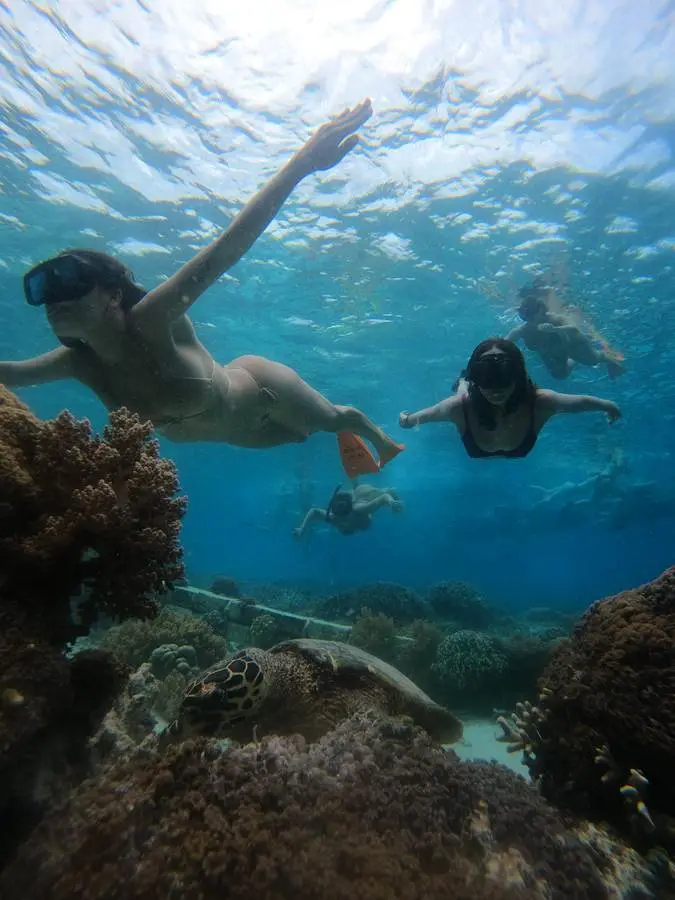
On your first snorkel boat, there is a moment when the engine is running, everyone is moving, and you are not sure where to stand. Many first-timers feel a little in the way, and that is normal. Nobody tells you, because the crew assumes you already know.
This is not a guide to using a mask. It is the boat-day layer: how to move on deck, how to behave in the water near the boat, and what the anchor is doing under the hull while you swim. These small habits keep people safer, keep the water quieter for wildlife, and take weight off the reef you came to see.
Arrive as a guest of the boat
Good operators give the briefing before the engines change sound. Listen fully the first time, ask your question once and clearly, then use the entry and exit points the crew shows you. Ladders are pinch points. Wait your turn, keep your fins away from other people’s faces, and leave the step quickly so the next person is not hanging in the wash.
On deck, bag straps and loose bottles become trip hazards when the boat rolls. Keep wet and dry things apart. A roll-top dry bag keeps a phone and a towel dry, and it stays in one place instead of sliding across the boards. I also like to put sunscreen on before boarding, so it does not end up on the deck and the ladder. A mineral formula, like the ones on this sunscreen list, is a gentler choice for the water. Read the ingredient list, not only the front of the bottle.
Why does the anchor matter so much on a snorkel trip?
The Great Barrier Reef Marine Park Authority (GBRMPA) says it simply: an anchor dropped on coral can damage or destroy it in seconds, and recovery can take years, or may never fully happen. Its Responsible Reef Practices ask boats to use public moorings where they exist. When a boat must anchor, it should anchor in sand or mud away from coral and fragile habitat, and never wrap rope or chain around bommies or large coral heads. Public moorings there are first come, first served, with time limits, and some busy sites are marked as no-anchoring areas, with penalties.
Other evidence points the same way. A fact sheet from the Florida Department of Environmental Protection reports that in a Florida Keys study, 57 percent of the shallow reef sites surveyed showed damage from recreational boating and anchor drops. It also notes that some corals grow only about one centimetre a year. That is why the damage is so slow to repair.
As a guest, you rarely set the anchor yourself. But you do choose the operator. Before you book, you can ask three simple questions. Do you use moorings? If not, do you anchor on sand? How many people are in the water at the same time? A crew that talks casually about anchoring on a reef is telling you something.
Moorings help, but they are not magic
It is easy to think a mooring solves everything. A study in the British Virgin Islands, reported by Forrester and colleagues, found that moorings roughly halved the density of boats anchored on the reef. That is good news. The same study found that total boat use was 3.6 times higher at sites with moorings. In plain words, a mooring protects the seabed, but it can also make a site busier.
For me this is a reason to ask about numbers, not only about moorings. Fewer boats and fewer people in the water at once still matter, even when the anchor is no longer the problem. I do not know how this plays out at every site, and the study comes from one place, so please read it as a caution, not a rule.
In the water: stay clear of the working boat
Once you are swimming, think of the boat as a moving workplace. Stay away from the propeller area, leave a wide lane for people using the ladder, and come back straight away when the skipper calls everyone in. Divers Alert Network (DAN) advises staying clear of the propeller at all times, because even a propeller that is not engaged can cause injury. DAN also reminds people never to assume they are visible in the water.
A dive flag warns other boats that people are in the water. DAN calls it an effective warning, required in some places, and notes that rules change from place to place. So follow your crew, and do not drift far from the boat or the flag. Currents change faster than anyone expects.
Deck habits that protect more than manners
A few small habits add up over a whole season of trips. Take litter and fruit peels back to shore. Rinse and put away borrowed gear so the next group is not stepping on fins. Keep voices and music soft, because many people came for quiet water. Never ask the crew to move closer to an animal for a better phone photo. If you feel tired, use flotation or signal the guide, instead of standing on living coral.
A mask that fits well means you are not fighting a leak while the boat moves on. Our low-volume mask and snorkel list is a good place to start.
The conservation layer: your choice of boat is a vote
Boat tourism puts many people on small pieces of reef. The best protection is not a perfect guest but a good operator, so the most useful thing you can do is choose small groups, clear briefings and crews who talk about moorings first. Be honest with yourself about travel too. Flying to a reef has a real carbon cost, so if you can, go for longer and less often.
Ocean Calling works with vetted local operators, in groups of six at most, with unhurried days where you can skip any activity. If you want the bigger picture before you go, read how to snorkel without damaging coral and our first-time snorkeling guide, and see how the rules change by country on wildlife and the law. If this made you curious about experiencing it yourself, you can explore our retreats.
Snorkeling near turtles, rays or curious fish should always follow local regulations and experienced professional guidance.
Questions people ask
Should I put sunscreen on before boarding?
It is a good habit. Putting it on while still on land keeps it off the deck and the ladder. Mineral formulas are usually the more reef-conscious choice, but "reef-safe" is not a regulated label, so check the ingredient list.
Is it okay to stand on coral to rest?
No. Use flotation, hold the boat’s line or ladder if the crew allows it, or signal the guide. GBRMPA’s guidance is clear about not standing or leaning on the reef.
What should I ask an operator about anchoring?
Ask whether they use moorings, whether they anchor on sand away from coral when there is no mooring, and how many people are in the water at the same time.
Do moorings solve the problem?
They help a lot with anchor damage. One study in the British Virgin Islands found moorings halved the density of anchored boats on the reef, but total boat use was 3.6 times higher, so numbers still matter.
Why stay away from the propeller if the engine is off?
DAN advises staying clear of the propeller at all times, because even a propeller that is not engaged can cause injury.
Do I need a dive flag as a snorkeler?
Rules change from place to place. DAN notes that a dive flag is an effective way to warn boats, and that some places require it. Ask your crew what applies locally and follow them.
Wildlife encounters are never guaranteed and never forced. Ocean Calling works only with vetted, ethical local operators, and every animal is free to approach, or not, entirely on its own terms.
Sources & further reading
- Great Barrier Reef Marine Park Authority. Responsible Reef Practices (anchoring, moorings and no-anchoring areas).
- Florida Department of Environmental Protection. Anchor damage (fact sheet).
- Divers Alert Network. Boat collision and propeller safety.
- Divers Alert Network. Safe boating guidelines (dive flags).
- Reef Futures 2018 abstract. Life on the downline: effectiveness of passive protection in preventing coral loss (mooring study, British Virgin Islands).
Further reading on Ocean Calling: How to snorkel without damaging coral · First-time snorkeling guide · Ethical freediving retreats · Wildlife and the law · Ocean Atlas
Find the retreat that fits you
Small groups of up to six guests, unhurried days and local experts. Tell us how you feel in the water and we will point you to the right trip.