
Coral Reef Resilience: Why Some Reefs Bounce Back
Same heatwave, same peak temperature, two very different reefs a year later. Coral reef resilience science explains why: genetics, past heat exposure, and the fish that graze the reef.
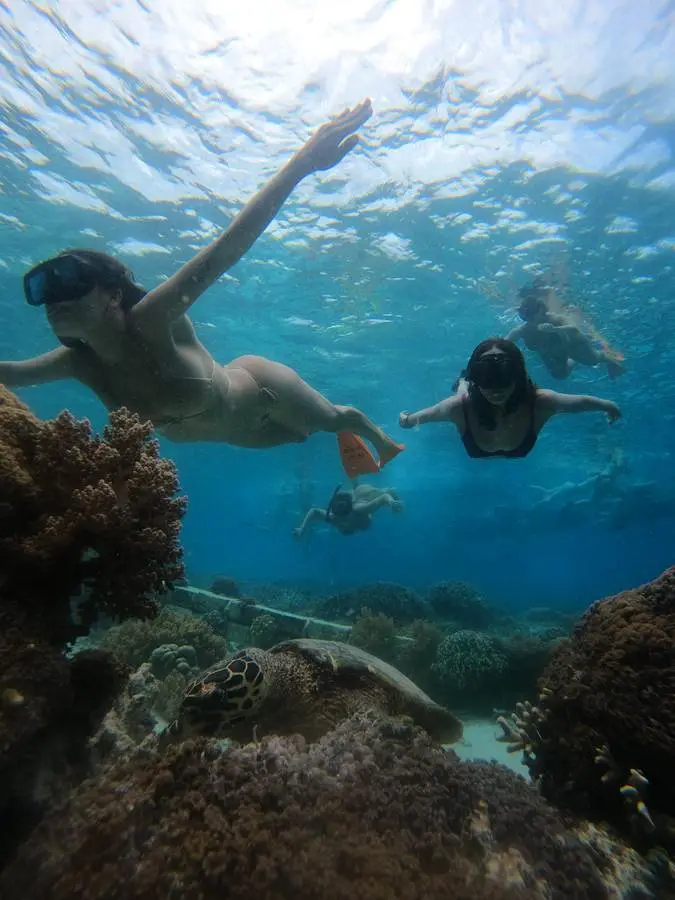
Two reefs can sit in water that reaches the same peak temperature during a marine heatwave, and come out the other side looking completely different. One is patchy and grey. The other still holds colour and structure a year later.
Why do some coral reefs bounce back and others don’t?
That gap is what coral reef resilience science tries to explain. The short answer is that it is not only luck. Three fairly specific factors help: genetic diversity, a coral’s past exposure to changing temperatures, and the health of the herbivorous fish grazing the reef.
This is not a piece about why bleaching happens or what recovery looks like once it starts. Those are different questions, covered in our article on the coral bleaching recovery process. This one is about why some reefs are better prepared to handle stress in the first place.
Genetic diversity and heat training
Some corals are simply better equipped
The first factor makes sense quickly once it is explained. Within any coral species, individual colonies differ genetically, and some of that variation makes certain colonies more heat-tolerant than others. On a reef with high genetic variation within species, and many species overall, a warming event is more likely to leave some survivors.
It works the same way genetic diversity protects any population. A genetically uniform reef is a single bet on one set of traits. A diverse reef places many bets at once, and a heatwave acts as a selection pressure that shows which bets were better placed. Ocean currents carrying coral larvae between reefs matter here too, because that connection is how heat-tolerant genes can spread to new areas over time.
I want to be honest that this is a widely used framework in reef science, not a single study I can point to, and how fast such adaptation can keep up with warming is still an open question.
A related idea is functional redundancy. If one species or lineage is lost to a stress event, others with a similar role can still fill the gap. A reef with more redundancy has more spare parts.
Living with temperature swings builds tolerance
The second factor is less obvious and, I think, more interesting. Corals that have already lived through temperature swings may handle future heat stress better, something closer to training than genetic luck.
A 2022 study led by Allyson DeMerlis, with NOAA coral scientist Ian Enochs as senior author and colleagues at the University of Miami, tested this on Caribbean staghorn coral (Acropora cervicornis), published in the journal Coral Reefs. Fragments from six nursery-raised colonies were kept for 89 days either at a steady 28°C or cycling twice a day between 28°C and 31°C. Then all of them faced two weeks of heat stress at 32°C.
The corals that had lived with the daily swings showed signs of severe heat stress later than the controls, and lost colour more gradually, while the control corals lost tissue faster. Press coverage from NOAA’s Atlantic Oceanographic and Meteorological Laboratory compared it to building an athlete’s stamina.
The same NOAA summary notes that earlier work had already found that corals from naturally variable environments bleach less under heat. So reefs in places with strong daily temperature swings, such as some shallow lagoons, may be quietly building tolerance just by living where they do.
It is worth being precise about what this study does and does not show. It is one species, six genetic sources, a short laboratory experiment, and the measured result was delayed stress, not immunity. An important finding and an active area of research, not a rule for every coral and every reef.
Herbivorous fish decide what happens after the stress
The third factor works on a different timescale. Even a reef with good genetics and strong heat tolerance still needs the right conditions to recover once a stress event has passed. That is where grazing fish come in.
Coral and algae compete for space all the time. When coral is stressed or killed, the newly free surface is exactly what fast-growing algae need, and once algae take over, new coral larvae struggle to settle. That can lock a reef into a damaged state. Herbivorous fish, such as parrotfish, surgeonfish and rabbitfish, keep algae in check by grazing.
A guide published through IUCN on monitoring herbivorous reef fishes as indicators of reef resilience describes four broad functional groups, which overlap: scrapers, excavators, grazers and browsers. Excavators erode dead coral skeleton. Scrapers clear turf algae and sediment so surfaces are ready for new corals to settle. Grazers crop turf algae. And browsers are the group that can cut back large, fleshy seaweeds.
In Moʻorea, long-term research found that after coral declined, scraper and excavator numbers rose sharply, and the authors suggested that a reef with plenty of herbivores may help stop seaweed from taking over. Other work, on the Great Barrier Reef and Ningaloo, found that some inshore reefs have less functional redundancy among herbivores than offshore reefs, so they may be more fragile.
This is one of the clearest links between fishing pressure and reef resilience. Removing parrotfish and similar species through overfishing does not only reduce fish numbers. It can weaken a reef’s ability to recover from the next bleaching event.
The ethical layer: resilience is a margin, not a shield
None of these three factors works alone, and none makes a reef immune. A diverse, heat-trained reef can still be pushed past its limits by a severe or long heatwave. In April 2024, NOAA and the International Coral Reef Initiative confirmed the fourth global coral bleaching event, and later updates reported that from January 2023 to early 2025 bleaching-level heat stress reached about 84 percent of the world’s reef area. Even well-studied reefs lost corals. What resilience gives a reef is a wider margin and a better chance, not a guarantee.
For a traveller, the practical takeaway is not really about the lab work. A reef with visible, varied fish life, including the unglamorous grazers people rarely photograph, is often healthier than one that looks pristine but has lost its herbivores to fishing. The parrotfish scraping algae off a dead coral head is doing more for that reef’s future than almost anything a visitor can see on a single dive.
Visitors can still help, mostly by not adding stress. Keep fins off the reef, never stand on coral, and choose operators who use moorings instead of anchors. Wear a rash guard so you need less sunscreen in the water, and if you use sunscreen, a mineral sunscreen is one simple choice. A good mask and snorkel that does not leak also keeps beginners calm, and calm swimmers kick less.
Eat less reef fish on islands where herbivores are fished, and ask the restaurant what is local and sustainable. And be honest with yourself about flights: the warming that drives bleaching is the bigger story, so fewer and longer trips matter.
For the wider picture, our guide to ethical ocean travel and our guide to snorkelling without damaging coral both connect back to this science.
Questions people ask
What makes a coral reef resilient?
Three factors come up again and again: genetic diversity within and between coral species, past exposure to temperature swings, and healthy, varied herbivorous fish that keep algae under control after a disturbance.
Can corals be trained to tolerate heat?
In a 2022 laboratory study, staghorn coral fragments kept in daily swings between 28°C and 31°C for 89 days showed severe heat stress later than fragments kept at a steady 28°C. It is one species in one experiment, so it is promising, not proven for all reefs.
Why are parrotfish important for reefs?
Parrotfish are scrapers and excavators. They clear algae and sediment and open space where new corals can settle. Without enough herbivores, seaweed can take over a damaged reef.
How bad was the recent global bleaching event?
NOAA and the International Coral Reef Initiative confirmed the fourth global bleaching event in April 2024. Later updates reported that about 84 percent of the world’s reef area was affected by bleaching-level heat stress between January 2023 and early 2025.
Does resilience mean a reef cannot die?
No. Resilience gives a reef a wider margin and a better chance of recovery, but a severe or long heatwave can still kill resilient corals.
If this made you curious about meeting the ocean this way, you can explore our upcoming retreats.
Wildlife encounters are never guaranteed and never forced. Ocean Calling works only with vetted, ethical local operators, and every animal is free to approach, or not, entirely on its own terms.
Sources & further reading
- DeMerlis, A. et al., 2022. Pre-exposure to a variable temperature treatment improves the response of Acropora cervicornis to acute thermal stress. Coral Reefs 41(2): 435-445 (NOAA AOML record).
- NOAA Atlantic Oceanographic and Meteorological Laboratory, 2022. Building Endurance to Beat the Heat: New Study Preps Corals for Warming Waters.
- IUCN. Monitoring Functional Groups of Herbivorous Reef Fishes as Indicators of Coral Reef Resilience (practical guide for reef managers).
- Moorea Coral Reef Long Term Ecological Research. Study of herbivorous fish functional groups after coral decline.
- Key herbivores reveal limited functional redundancy on inshore coral reefs. James Cook University.
- Smithsonian Magazine, 2024. The world's fourth mass coral bleaching event is underway (reporting the NOAA and ICRI announcement).
- The Maritime Executive, 2025. Unprecedented bleaching event affects 84 percent of world's corals.
Further reading on Ocean Calling: More from the journal · Wildlife & the law · See the retreats · Ocean Atlas
Find the retreat that fits you
Small groups of up to six guests, unhurried days and local experts. Tell us how you feel in the water and we will point you to the right trip.