
Scuba or Freediving? PADI, SSI, AIDA or Molchanovs
Scuba speaks in time and exploration. Freediving speaks in breath and stillness. Both open the door to the same ocean, and choosing a certification is easier than it looks once you know what is really different.
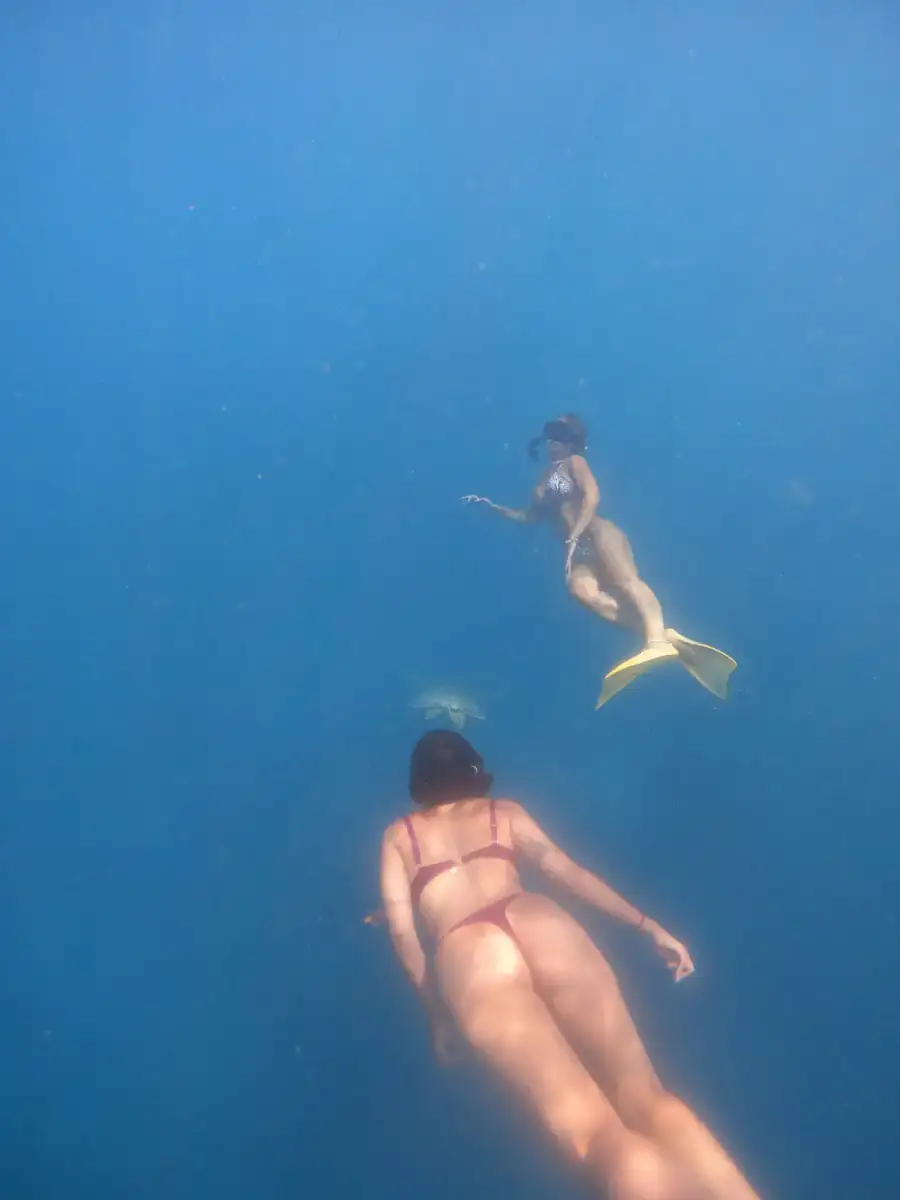
If you are new to the ocean, the first question is not which agency. It is whether you want to dive with a tank, on one breath, or both. Here is the short answer: PADI and SSI are equally good for scuba, AIDA is the most recognised name in freediving, and the instructor you learn with matters more than the logo on your card.
Two ways into the same ocean
Freediving is about breath and stillness. Scuba is about time and exploring. Many people end up doing both, because each helps the other. Freediving builds the breath and body control that make scuba richer, and scuba builds a comfort at depth that makes freediving calmer.
| Freediving | Scuba | |
|---|---|---|
| Equipment | Minimal: mask, fins, wetsuit | Full kit: tank, BCD, regulator |
| Style | Silent, meditative, flowing | Slow, observing, longer |
| Typical beginner depth | 10 to 20 m | 12 to 18 m |
| Time underwater | Seconds to a few minutes | 30 to 60 minutes per tank |
| Best for | Focus, natural movement, photography | Long dives, wrecks, tiny reef life |
| Cost to start | Lower, less gear | Moderate to higher |
Scuba: PADI or SSI?
These are the two big systems, and dive centres around the world recognise both. They follow the same steps, so the honest answer is that neither is better. PADI is the most popular worldwide. SSI is known for flexible, fully digital course materials, and for letting you choose your own specialty dives in the advanced course.
| Step | PADI | SSI |
|---|---|---|
| 1 | Open Water Diver, dive to 18 m with a buddy (2 to 4 days) | Open Water Diver, the same 18 m rating |
| 2 | Advanced Open Water, to 30 m, with specialties such as deep, navigation, night, wreck or photography | Advanced Adventurer, to 30 m, with dives you choose |
| 3 | Rescue Diver | Stress and Rescue |
| 4 | Master Scuba Diver, the highest non-professional rating | Dive Guide or Divemaster, the first professional level |
Freediving: four systems, one big difference
Freediving has more choices, and they differ more. AIDA is the most recognised worldwide. Molchanovs Wave is modern and technical, and brings depth, pool and dry training together from the first day. PADI Freediver and SSI Freediving are simple and easy to find, especially at centres that already teach PADI or SSI scuba.
| System | Levels | Typical depth targets |
|---|---|---|
| AIDA | AIDA 1 introduction, AIDA 2 beginner, AIDA 3 intermediate, AIDA 4 advanced | About 16 to 20 m at AIDA 2, up to 32 to 38 m at AIDA 4 |
| Molchanovs Wave | Wave 1 to Wave 4, with an instructor track at Wave 4 | About 12 to 20 m at Wave 1, 34 to 40 m at Wave 3 |
| PADI Freediver | Freediver, Advanced Freediver, Master Freediver | About 10 to 16 m at the first level, 32 to 40 m at Master |
| SSI Freediving | Level 1, Level 2, Level 3 | About 10 to 20 m at Level 1, 30 to 40 m at Level 3 |
These are typical course targets. Agencies update them, so ask your instructor for the current standard.
Which certification is right for you?
Start with where and with whom you will learn. The best school for you is usually the one with an instructor you trust, in water that suits you, at a time you can commit to.
- You want to try scuba once, on holiday. Choose the dive centre first. PADI and SSI courses are both accepted almost everywhere, so pick the calmer, smaller course.
- You already dive with one agency. Staying with the same agency is the simplest way to continue at the same centre.
- You want freediving for calm, breath and focus. AIDA, Molchanovs, PADI or SSI can all take you there. AIDA is the most widely recognised. Molchanovs suits people who like structure, dry training and detailed coaching.
- You want both. Start with the one that feels less scary. Many people find freediving makes scuba calmer, and scuba gives confidence with depth.
- You are nervous about deep water. Choose a gentle start: an introduction level, a small group and an instructor who never rushes you.
What really matters, beyond the numbers
In freediving, equalisation is often the most important skill, and dry training before you get in the water helps a lot. Your breath-hold improves with relaxation and repetition, and progress comes from calm, not force. Pushing through discomfort is never the answer. In scuba, good buoyancy is the skill that protects the reef and makes every dive easier. And it is normal to progress unevenly across the different freediving disciplines, so do not compare yourself with anyone.
What you need to bring
For either path, a mask that fits your face makes the biggest difference to how relaxed you feel. A well-fitting mask and snorkel is the one thing worth choosing carefully before you travel. For freediving, long freediving fins are the other piece worth choosing yourself. Many dive centres rent the rest.
Where Ocean Calling fits
With Ocean Calling, local specialist instructors teach the courses, and I focus on the planning and on helping you feel safe. You do not need to arrive fearless, only open. If you are not sure which path is for you, tell me how you feel about deep water and what you want from the ocean, and I will help you choose. You can see our upcoming retreats, try Ocean Match to be connected with a local team, or read about conservation courses on Gili Air.
Questions people ask
Can I do both scuba and freediving?
Yes. Many people practise both. Freediving builds the breath and body control that make scuba richer, and scuba builds comfort with depth that makes freediving calmer.
How long does an Open Water scuba course take?
Usually 2 to 4 days, and the certification lets you dive to 18 m with a buddy. PADI and SSI follow the same 18 m limit.
Will a PADI or SSI certification be accepted everywhere?
Both are recognised internationally and accepted at dive centres worldwide. If you already hold a card from another agency, ask the dive centre before you travel; most accept certifications from the major agencies.
Which freediving agency is most recognised?
AIDA is described as the most recognised worldwide. All four systems are respected, and the right choice depends on where you train and on your long-term goals.
I am nervous about deep water. Where do I start?
With a gentle introduction and a small group. At the AIDA 1 introduction level, for example, there are no strict performance targets, and a calm instructor matters more than any logo.
This article contains affiliate links. As an Amazon Associate I earn from qualifying purchases, at no extra cost to you.
Wildlife encounters are never guaranteed and never forced. Ocean Calling works only with vetted, ethical local operators, and every animal is given the freedom to approach, or not, entirely on its own terms.
See sources
- Rocío Ruiz. Introduction to Freediving and Scuba Diving, Ocean Calling educational guide, 2026 (PDF above)
- PADI, SSI and AIDA International: check each agency’s current course standards before you book
Further reading on Ocean Calling: Ocean Atlas · Upcoming retreats · Ocean Match
Freediving certification in Bali: Amed, USAT Liberty wreck and Ubud
Freediving certification · Amed & Ubud, Bali, Indonesia
Ocean breath first, sacred water after. If this made you want to learn to freedive, this is our beginner-friendly course.