Why Kakaban’s Jellyfish Lake Says No to Sunscreen
There is a lake in Indonesia where you may swim with jellyfish, but you may not wear sunscreen. It sounds like a strange trade, I know. It makes more sense once you hear what happened when the jellyfish went quiet.

The short answer: the lake says no to sunscreen because it is small and enclosed, the jellyfish are delicate, and local authorities linked their disappearance in 2023 to chemicals from cosmetics and sunblock. As of July 2026, swimming is reported to be allowed again, with rules: no sunscreen or repellent, no fins, no scuba and no touching. Rules here have changed before, so check on the day.
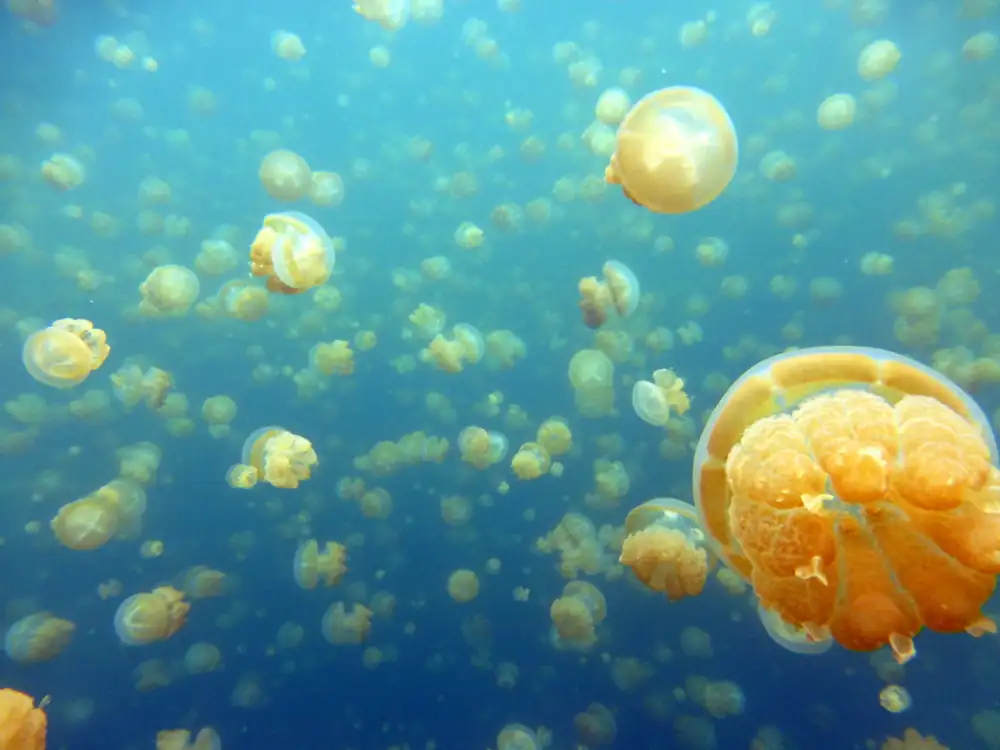
Kakaban is a small island in the Derawan archipelago, in East Kalimantan. In its middle sits a lake of seawater, cut off from the sea when an old coral atoll was lifted up and trapped the water inside. Over a very long time, the animals in the lake changed. The golden jellyfish that live here have fewer and smaller stinging cells than their relatives in the open sea.
People often call them stingless. That is a friendly word, but not a perfect one. Sensitive skin can still tingle, so the honest word is gentle.
The year the jellyfish went quiet
In December 2023, visitors began to say the jellyfish had sunk below the surface and were hard to see. A regional news report says the lake was closed to tourists from 28 December 2023. Berau’s tourism office later tied the change to chemicals from cosmetics and sunblock. I could not find a published scientific study that confirms the cause, so I treat this as the official explanation, not a proven one. It is still a very good reason to be careful.
In 2024 the lake stayed closed while the jellyfish recovered. It reopened for visits in February 2025, at first without swimming, while the rules were written. By July 2025, the news agency ANTARA reported managed snorkelling again, with limits such as no fins and no sunscreen.
What the rules say now
In July 2026, the local news site detikKalimantan reported that swimming and snorkelling are allowed again, with clear rules: rinse your gear first, no sunscreen or repellent, no fins, no scuba, move slowly and never touch the jellyfish. The tourism ministry’s page for the lake also says there is no ban on swimming as long as the animals are not disturbed.
The lake is protected at local level. A May 2026 article from Good News from Indonesia says the Berau district government declared the area a regional marine conservation area by regent’s decree number 516 of 2013, and that visitors must follow rules including no sunscreen and no fins. The lake also sits in a limited-use part of the wider Derawan marine conservation area, not in the strict no-entry zone, according to ANTARA. Please check the current rule with the local team before you travel.
Why does a closed lake need stricter rules than the sea?
The open sea has tides and currents that carry things away. This lake is cut off from the sea, so it cannot rinse itself in the same way. That is my reading, not a quote from the rule, but it explains why a rule that sounds strict can still be sensible. Whatever each swimmer leaves on their skin stays in a small body of water with animals that cannot swim away to another bay.
It also explains something that confuses people: why not even “reef-safe” sunscreen is welcome. The rule as reported says simply no sunscreen or repellent. A label on a bottle is a marketing claim, not a permission, and I would never ask a local team to make an exception for it.
What to wear instead of sunscreen
Cover your skin. A light, long-sleeve rash guard does the work of sunscreen without putting anything into the water, and it helps on the boat ride too. Add a hat, and plan the sunniest hours of your day for shade. If you are unsure about anything on your skin, ask the local team before you get in the water.
On the boat, a roll-top dry bag keeps the phone, towel and dry clothes safe from spray. If you are packing for a few islands, this tropical travel kit list is a tidy place to start.
Rules here change, so check on the day
This lake has closed and reopened before. You may still read online that swimming is banned. Some of those pages were written when it was. A February 2025 report from Berau Post, for example, described the reopening with swimming still not allowed. Before you plan a day around the lake, ask the local team on the morning you go, and be ready to enjoy the jetty and the boat views if it is closed.
That is how we would plan any visit here: the day must still work if the lake is closed. It is also a good habit anywhere, as our piece on waiting while wildlife rules take shape explains.
Where Ocean Calling stands
Maratua and Derawan are in our Ocean Atlas as a place we are still getting to know. We do not run a trip here yet, and a Kakaban swim is something we would only offer under the rules in force on the day. You can read more about the golden jellyfish in the Atlas.
Getting there also has a footprint: flights, boats and fuel, for a lake that is hardly bigger than a pond. If you go, go slowly, stay long enough to make the journey worth it, and leave nothing behind. If this made you curious about experiencing the ocean in a slower way, you can explore our upcoming retreats.
Questions people ask
Can you swim in Kakaban’s jellyfish lake?
As of July 2026, yes, under park rules: rinse your gear, no sunscreen or repellent, no fins, no scuba and no touching. The lake has closed before, so please check on the day.
Are the jellyfish really stingless?
Not completely. They have fewer and smaller stinging cells than jellyfish in the sea, and most people feel very little. Sensitive skin can tingle.
Can I wear reef-safe sunscreen?
The rule as reported says no sunscreen or repellent at all. Cover up with a long-sleeve top instead.
Can I scuba dive in the lake?
No. Scuba and fins are not allowed in the lake.
Why did the jellyfish disappear in 2023?
Visitors reported in December 2023 that the jellyfish were hard to find, and the Berau tourism office linked this to chemicals from cosmetics and sunblock. I could not find a published study confirming the cause, so it remains the official explanation.
What if the lake is closed on the day?
Then it is closed, and that is a fine answer. Plan the day so that the boat ride, the jetty and the island are still worth it, and do not ask anyone to bend the rule.
Wildlife encounters are never guaranteed and never forced. Ocean Calling works only with vetted, ethical local operators, and every animal is free to approach, or not, entirely on its own terms.
Sources & further reading
- Berau Government, 2024. Minister’s visit to Kakaban and the lake closure.
- ANTARA, 4 July 2025. Berenang bersama ubur-ubur tidak menyengat di Danau Kakaban.
- Ministry of Tourism, JADESTA. Pulau Kakaban, Danau Ubur-ubur (attraction page).
- Good News from Indonesia, May 2026. Danau Kakaban Berau, satu dari dua danau ubur-ubur langka di dunia.
- Berau Post, 21 February 2025. Reopening of Kakaban with swimming still not allowed.
- detikKalimantan, 23 July 2026. Swimming and snorkelling rules at Kakaban Lake.
- ANTARA, August 2026. Kakaban in the limited-use zone of the Derawan conservation area (KEPMEN-KP 87 of 2016).
Further reading on Ocean Calling: Indonesia in the Ocean Atlas · Golden jellyfish in the Ocean Atlas · Reef-safe sunscreen guide
Freediving certification in Bali: Amed, USAT Liberty wreck and Ubud
Freediving certification · Amed & Ubud, Bali, Indonesia
Ocean breath first, sacred water after. This story is about Indonesia, where we run our Bali trips.
Explore in the Ocean Atlas
Places in this article
Animals in this article