
Global whale protection: why the rules differ by destination
"Why can you swim with whales there, but not here?" I hear this question a lot. The answer is simple and a little surprising: there is no global rulebook for whale tourism. Here is why each coastline writes its own, and what that means for an ethical encounter.
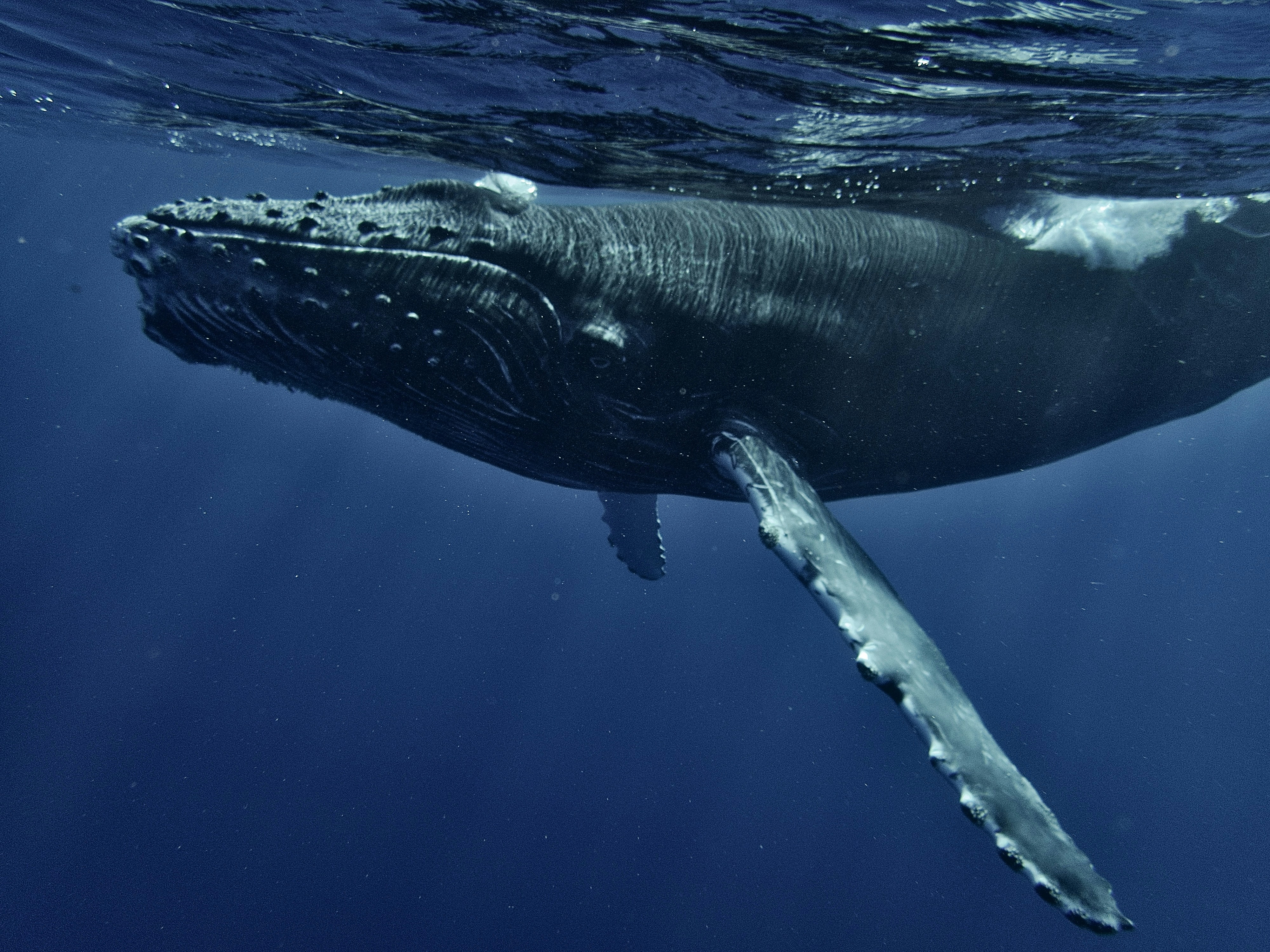
Whales are protected almost everywhere, yet what that protection looks like changes a lot from one coastline to the next. The international ban covers commercial whaling, not tourism. So each country writes its own rules for boats and swimmers, shaped by its own science, its own pressures and its own history.
Some destinations allow in-water encounters under strict conditions. Others do not allow anyone in the water at all. Approach distances, time limits and the number of boats and swimmers near an animal can all vary. None of this makes one place automatically "more ethical" than another. Usually it means the rules were written for that place's whales and that place's tourism.
What international law actually covers
Most of what people call "whale protection" goes back to the International Whaling Commission. In 1982 the IWC decided on a pause in commercial whaling on all whale species and populations from the 1985/86 season onwards. This is the commercial whaling moratorium, and it is still in place today. It is often credited with giving several whale populations room to recover after a century of industrial hunting, although a few countries still hunt under objections or reservations.
What it does not do is regulate tourism. The moratorium governs whaling, not whale watching or swimming, so each country decides for itself how, or whether, people may get close to whales in its own waters. The IWC does publish voluntary guidance for whale watching, but the binding rules are national or local. That one fact explains most of the confusion travellers run into: the rules you learned on one trip may simply not apply somewhere else.
Why do whale watching rules differ from country to country?
A few things tend to shape a destination's approach:
The whales themselves. Breeding and calving areas get extra caution almost everywhere. A mother and calf need calm water and space to rest and nurse, so places with nursery grounds often apply their strictest limits there.
How many people want to see them. Popular areas attract more boats, and more boats mean more chances of stress if nobody manages the traffic. Licensing operators, limiting boats per animal, capping swimmers in the water and setting time limits are the usual tools. Small groups help too, simply because a quieter boat with fewer people in the water disturbs less.
What the local economy needs. In many coastal communities, whale tourism supports real livelihoods: guides, boat captains, instructors, small guesthouses. Done well, that income can support conservation, because healthy whale populations become worth protecting in practical terms, not only moral ones.
What the science says right now. Researchers are still learning how whales respond to boats and swimmers, and guidelines are updated as that understanding grows. That is why a country's approach today might not match what it was five years ago.
What whales mean to the culture. In some island nations, whales carry cultural or spiritual weight, and that history shapes how tourism around them is talked about and managed, not just regulated.
Where regulated in-water encounters exist today
A handful of destinations are often named as places where getting in the water with whales is legal and organised. Tonga is one of the best known. Its Whale Watching and Swimming Regulations were published in 2013, and the IWC's Whale Watching Handbook summarises them: only licensed providers may put swimmers in the water with whales, vessels must keep a minimum distance when dropping off or picking up swimmers, swimmers have their own minimum distance, and scuba and artificial light around whales are banned. The same handbook notes the regulations have been under review, so details may change.
The Dominican Republic's Silver Bank is another. The country created a sanctuary there in 1986, later enlarged and renamed the Sanctuary for Marine Mammals, and the bank is a long-known breeding and calving area for humpbacks. Operators report that only a small number of vessel permits are issued each season. We could not confirm the exact current number from an official source.
French Polynesia shows how fast rules can move. According to AFP reporting from 2024, boats there must keep 100 metres from a whale, and swimmers a set distance too. Later press reports say that for the 2025 season the swimmer distance was 15 metres, only three boats may approach a whale at the same time, operators are limited to one boat per company, and private boats must stay at least 300 metres away. Same ocean, same species as Tonga, different rulebooks. Please check the current rule before you travel, because these numbers have changed several times. If you go, an underwater or action camera with a wide lens works well at these distances, so nobody needs to close the gap for a photo.
This is not a complete list. Wherever we plan a whale encounter, we confirm the current requirements directly with local authorities and the operators we already trust, instead of relying on what used to be true. And whales are never guaranteed to show up at all. Wildlife encounters are unpredictable. Swimming with whales should always follow local regulations and experienced professional guidance. If you are curious how this plays out country by country, we go into more detail in our guide to where whale swimming is currently legal.
Regulation is not a scorecard
It is tempting to treat "you can swim here" versus "you cannot swim there" as a measure of how much a country cares about its whales. Usually it is not. A destination that allows in-water encounters with tight licensing, trained guides and real enforcement can protect its whales well. A strict rule on paper means little if nobody enforces it on the water.
What matters most is the quality of the rules and the people carrying them out: guides who read the animal's behaviour and back off the moment it looks stressed, operators who would rather come home with no sighting than force one. That is the part a traveller can judge. Our checklist on how to recognise ethical whale encounters can help.
It is also honest to say that travelling to see whales has its own footprint: long flights, boat fuel, noise in the water. Choosing fewer, longer trips and boats that move slowly is part of the same respect.
What this means for how we plan
None of this is really about paperwork. It is about giving a wild animal the space to decide whether it wants anything to do with us that day, and being at peace when the answer is no.
That is the spirit behind our small-group ocean retreats: a maximum of six guests, briefings before every encounter, and local experts who know one stretch of coast well enough to know when to hold back. We do not sell swims in places where the rules are unclear. On a boat day, a simple roll-top dry bag keeps phones and layers dry while you wait, often for a long time, which is part of it.
Two layers of protection
Whale protection really has two layers: an international agreement that ended most commercial whaling, and a patchwork of local tourism rules that each country writes for its own waters, its own whales and its own communities. That is why the rules feel so different from one place to the next, and why the details are always worth checking fresh before you go. If this made you curious, you can look at our retreats.
Does the IWC regulate whale watching or swimming with whales?
No. The IWC's commercial whaling moratorium, decided in 1982 and applied from the 1985/86 season, covers whaling. Rules for boats and swimmers are set by each country, sometimes following voluntary IWC guidance.
Why can you swim with whales in some countries but not others?
Because each country writes its own tourism rules, based on its whales, its tourism pressure, its science and its culture. Some allow licensed in-water encounters, others only boat-based watching.
What are Tonga's rules for swimming with whales?
Tonga's 2013 Whale Watching and Swimming Regulations allow only licensed providers to put swimmers in the water and set minimum distances for vessels and swimmers. The IWC handbook notes they have been under review, so check the current rule before you travel.
What are French Polynesia's whale rules?
As reported in the press (AFP and others), boats keep 100 metres from whales. For 2025 the swimmer distance was reported at 15 metres, with a maximum of three boats per whale and 300 metres for private boats. Confirm the current rule locally.
Is a country that allows whale swims less protective?
Not necessarily. Licensing, training and enforcement matter more than whether swimming is allowed. A strict rule that nobody enforces protects little.
Wildlife encounters are never guaranteed and never forced. Ocean Calling works only with vetted, ethical local operators, and every animal is free to approach, or not, entirely on its own terms.
Sources & further reading
- Government of Tonga, 2013. Tonga Government Gazette No. 16 (Whale Watching and Swimming Regulations 2013). PacLII.
- International Whaling Commission. Whale Watching Handbook: Tonga country profile.
- International Whaling Commission. Commercial whaling (the moratorium).
- International Whaling Commission. Whale Watching Handbook: Dominican Republic country profile.
- SPREP and SPTO, 2025. Marine Tourism in the Pacific: Species-specific guideline analysis.
- AFP via The Local, 2024. Boom in whale-based tourism sparks concern in French Polynesia.
- Wikipedia. Silver Bank (history of the Dominican Republic sanctuary).
- Beat of Hawaii. Whale-Watching Crackdown In Hawaii and Tahiti: New Rules, New Reality.
Further reading on Ocean Calling: More from the journal · Wildlife & the law · See the retreats · Ocean Atlas
Swim with humpback whales in Moʻorea: an ethical whale retreat
Whale encounter retreat · Moʻorea, French Polynesia
Time in the blue, on the whales’ terms. If you love whales, this is our whale trip: small group, slow pace, on the animals’ terms.