
Neurodivergent-Friendly Travel: How We Design a Retreat
Two retreats can look the same on paper and feel completely different by lunchtime. The difference is rarely the ocean. It is the boat, the clock, the noise, and how much space is left between things.
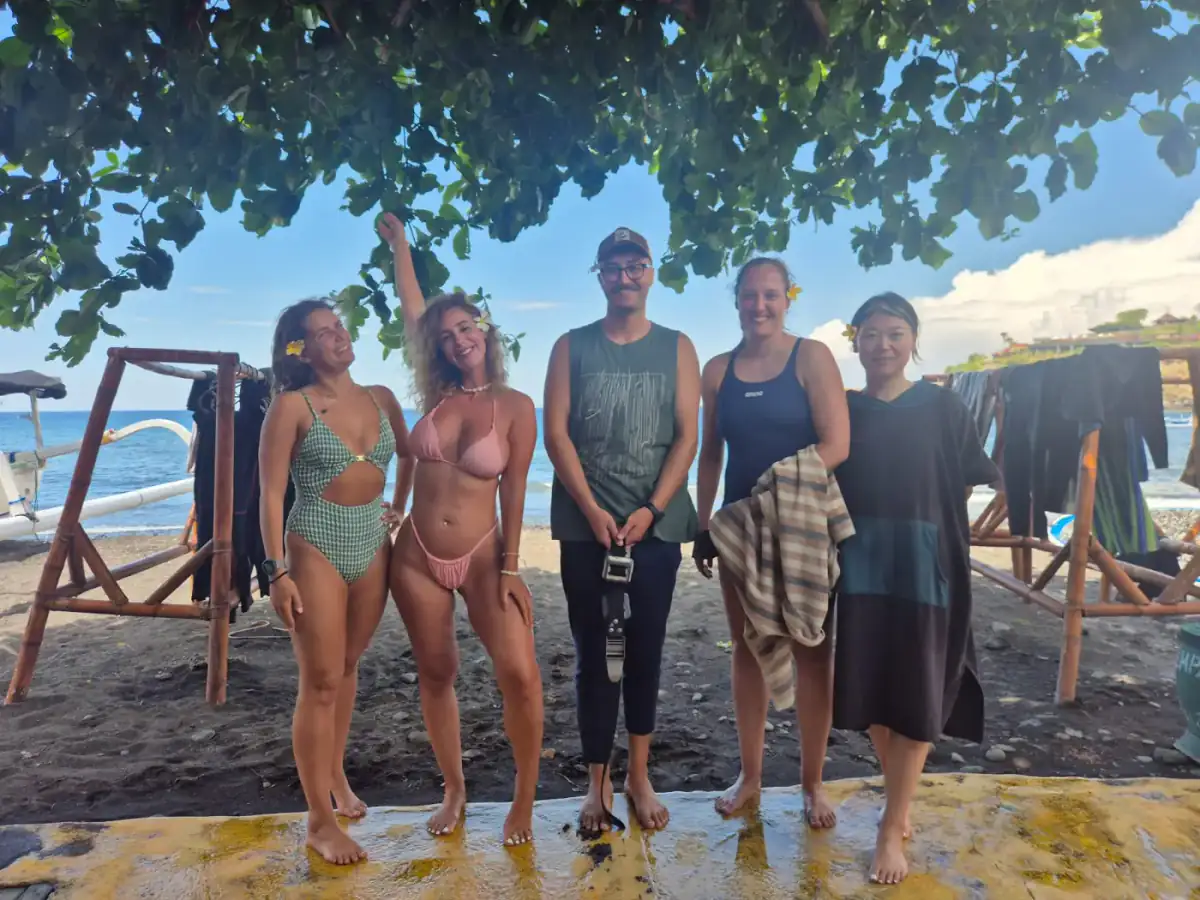
Same itinerary, two very different days
Picture two retreats with the same plan: two snorkel sessions, a boat transfer, dinner together. In the first, sixteen people share the boat, the schedule is full, and nobody knows how long the transfer will take. In the second, there are six guests, real empty time after each session, and you knew the day before what the engine would sound like. Same activities. A completely different day for a nervous system that takes in a lot.
So what makes a travel retreat neurodivergent-friendly? Mostly decisions made months before anyone arrives: how many people are in a boat, how much free time sits between activities, and how predictable the logistics are. Many conversations about inclusive travel stop at the surface: a quiet room on request, a note in the welcome pack. Useful, but thin. The real work is in how the itinerary itself is built.
We have already written about the sensory side, and what research says about cold water and the nervous system, in our piece on cold water immersion and the nervous system. This one is narrower on purpose. It is about pacing, group size, and the sensory load hidden inside logistics.
Why retreat design, not just retreat hospitality
Neurodivergence is common enough that "we will adapt later" is not a fair position for anyone running small-group travel. The US Centers for Disease Control and Prevention's Autism and Developmental Disabilities Monitoring Network reported in April 2025 that about 1 in 31 eight-year-olds in its 16 US surveillance sites had been identified with autism, based on 2022 data, up from 1 in 36 in the previous report. Those children will be travellers one day. ADHD, dyslexia and other forms of neurodivergence add many more people.
Beyond any diagnosis, psychologist Elaine Aron described a personality trait called sensory processing sensitivity, the "highly sensitive person", which Psychology Today estimates at about 15 to 20 percent of people. It is not a diagnosis, but it shapes how a busy day feels. Put together, the neurodivergent guest is not a niche request. It is a large share of anyone's real guests, whether or not they ever say so.
Tourism research is only starting to catch up. A paper by Allan Jepson, Raphaela Stadler and Brian Garrod, published in Current Issues in Tourism in 2023, argues that neurodiversity has been poorly addressed in tourism research. Using holidays for families with autistic children as an example, and building on the social model of disability, they propose three levels of responsibility: governments, the tourism system itself, and neurodiverse travellers and their families. That matters, because it puts part of the adaptation work on operators, not only on the guest.
Group size is a sensory choice
Ocean Calling runs small groups by design, with a maximum of six guests. For a neurodivergent-friendly retreat, that limit is not a marketing line. It does a job. Six people in a boat means six voices, six sets of gear noises, six different speeds of getting into the water. For most nervous systems that is a much easier amount of unpredictable input than sixteen, even if the plan on paper looks the same. We explain the wider reasons in our article on the benefits of small-group retreats.
How much free time does a sensitive traveller need?
The instinct in trip design is to fill the day: two sessions, a briefing, a boat transfer, a group meal, a sunset activity. For guests managing sensory regulation, executive-function load, or both, the cost of that density is not only tiredness. Overwhelm often arrives later, after the exciting part has ended.
That is why I think unscheduled recovery time belongs in the plan, not in a request guests have to make. Every activity on our retreats is optional, and skipping one never needs an explanation. Quiet time after a boat session, with nothing asked of anyone, is a design choice, not an afterthought.
Predictable logistics, shared before arrival
A guest can prepare for "snorkel with reef fish at nine". It is much harder to prepare for "the transfer might be ten minutes or forty, the engine is loud, and lunch could be on the boat or back at the villa". Logistics deserve the same clear description as the ocean activity itself: expected waiting times, what the boat is like, where the quiet spaces are, and what happens if something runs late.
A short, honest sensory brief before the trip helps. What a busy dive-shop check-in feels like, how loud a shared dinner tends to get, what the wetsuits are made of. It lets a guest decide in advance how to pace their own day, instead of discovering everything in real time. Small practical tools help too: packing cubes make it easier to find the same things in the same place every morning, and a roll-top dry bag means one less thing to think about on a wet boat.
Preferences also need to reach the person running the day. A pacing preference shared once, in a booking form nobody reads that morning, helps nobody. It should travel the way a dietary need does: quietly, respectfully, and never framed as a diagnosis.
The ethical layer: no promises, no labels, no pressure
We are not a clinical service. We do not diagnose, treat or promise therapeutic outcomes, and we have not studied our own retreats, so we do not claim results. Many people say a calmer, well-paced structure helps them. That is all we would say.
There is an ethical side towards the ocean too. A calm, small group is better for wildlife: fewer swimmers around a turtle, less noise near a resting ray. We never touch, chase or bait animals, and encounters are never guaranteed. For a guest who feels anxious about the unknown, that honesty matters. We will not sell a "guaranteed" encounter, because the animals decide.
And there is privacy. Nobody should have to share a diagnosis to be treated kindly. A good question at booking is simply: "Is there anything that would make your days easier?" If you are a highly sensitive traveller, our article on ocean travel for highly sensitive people may also help.
What this looks like from the outside
Retreat design for neurodivergent guests, done well, is mostly invisible. Nobody should notice the planning. That is the point: the sea is supposed to be the part everyone remembers.
If this made you curious to feel it yourself, you can explore our small-group retreats.
Questions people ask
What makes a travel retreat neurodivergent-friendly?
Mostly design decisions: small groups, real free time between activities, predictable logistics shared in advance, and the freedom to skip anything without explaining why.
How common is neurodivergence?
For one example, the CDC reported in 2025 that about 1 in 31 eight-year-olds in its US monitoring sites were identified with autism (2022 data). ADHD and other conditions add many more people, and the highly sensitive trait is estimated at about 15 to 20 percent of people.
How many guests are on an Ocean Calling retreat?
A maximum of six guests, so there are fewer voices, less waiting and less unpredictable input during the day.
Do I have to share a diagnosis?
No. You can simply tell us what makes your days easier, such as more quiet time or more information in advance. We never ask for a diagnosis.
Are your retreats a form of therapy?
No. We are not a clinical service and do not promise therapeutic outcomes. We try to build calm, well-paced days, and every activity is optional.
Wildlife encounters are never guaranteed and never forced. Ocean Calling works only with vetted, ethical local operators, and every animal is free to approach, or not, entirely on its own terms.
Sources & further reading
- CDC autism prevalence report (ADDM Network, 2022 data): 1 in 31 children. US Department of Health and Human Services, 2025.
- ADDM 2025 Community Report (surveillance year 2022). CDC ADDM Network, via Rutgers New Jersey Medical School, 2025.
- Jepson, Stadler and Garrod. Tourism and neurodiversity: a problematisation and research agenda. Current Issues in Tourism. University of Hertfordshire Research Archive, 2023.
- Highly Sensitive Person (basics). Psychology Today, accessed 2026.
Further reading on Ocean Calling: More from the journal · Wildlife & the law · See the retreats · Ocean Atlas
Find the retreat that fits you
Small groups of up to six guests, unhurried days and local experts. Tell us how you feel in the water and we will point you to the right trip.