
Whale Deterrent Sounds and Herring: What a 2025 Study Tested
Imagine a sound made to keep whales away from fishing nets. Now imagine the herring hear it too. Would the fish the whales are following change their behaviour as well?
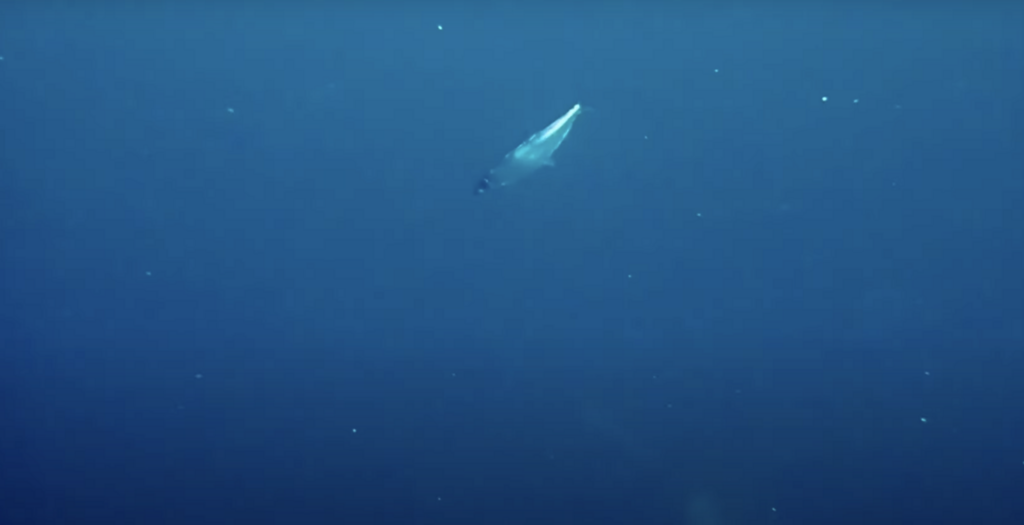
That is exactly the kind of side effect researchers need to check, and they should check it before anyone calls a deterrent “wildlife-friendly”.
So what did the study find out? A 2025 paper in the ICES Journal of Marine Science looked at how overwintering Atlantic herring in a Norwegian fjord responded to candidate acoustic signals. These signals are being developed to keep humpback whales and killer whales away during fishing operations. The fish were the test, not the whales.
Why test the fish and not only the whales?
A deterrent is meant to reduce conflict between whales and fishing. But sound travels far underwater, and in this system herring are the prey everyone is following.
If a signal changes how herring behave, that matters for the fishers, for the predators, and for how the whole experiment is read. A sound that moves the whales but also scatters the fish is a different tool from one that only moves the whales.
A difficult balancing act
Herring support fisheries and feed marine predators, including orcas and humpbacks in northern Norway. The same seasonal gathering that draws the whales also creates real problems for fishing boats. So management choices have to think about more than one species at a time.
That is why a technical paper about fish and sound belongs in a whale story. A whale’s route can follow where its prey goes. When people try to change that relationship, the effect may ripple through the whole food web.
What should happen next?
Researchers still need to test how the signals work in real conditions. They need to ask whether the signals affect the target whales and other species, and what longer-term effects may follow. Local experience and fisheries data matter here too.
I love clever technology when it helps us avoid harm. I trust it more when scientists first ask what else it might change, before it is used widely.
Questions people ask
What did the 2025 study look at?
How overwintering Atlantic herring in a Norwegian fjord responded to candidate acoustic signals being developed to keep humpback whales and killer whales away during fishing.
Does the study prove a deterrent is safe?
No. It is one piece of the evidence needed to judge a new tool. It does not show that one sound will safely solve every conflict between whales and fisheries.
Why do herring matter in this story?
Herring support fisheries and feed marine predators, including orcas and humpbacks in northern Norway.
What needs to happen next?
Testing in real conditions, checking effects on target and non-target species, looking at longer-term consequences, and using local experience and fisheries data.
Wildlife encounters are never guaranteed and never forced. Ocean Calling works only with vetted, ethical local operators, and every animal is free to approach, or not, entirely on its own terms.
Sources & further reading
Further reading on Ocean Calling: Norway’s orcas and the herring run · Norway in the Ocean Atlas · Atlantic herring in the Ocean Atlas · How to choose ethical wildlife experiences
Swim with humpback whales in Moʻorea: an ethical whale retreat
Whale encounter retreat · Moʻorea, French Polynesia
Time in the blue, on the whales’ terms. September 2027. If you love whales, this is our whale retreat: small group, slow pace, on the animals’ terms.