
Atlantic herring
Clupea harengus
A silver shoal in the dark fjord, and the reason the whales gather. Herring come and go in their own time, so no sighting is ever a promise.
Least Concern (IUCN, 2009) means the species as a whole is not close to being threatened. Some local stocks have been depleted, so the picture differs between regions.
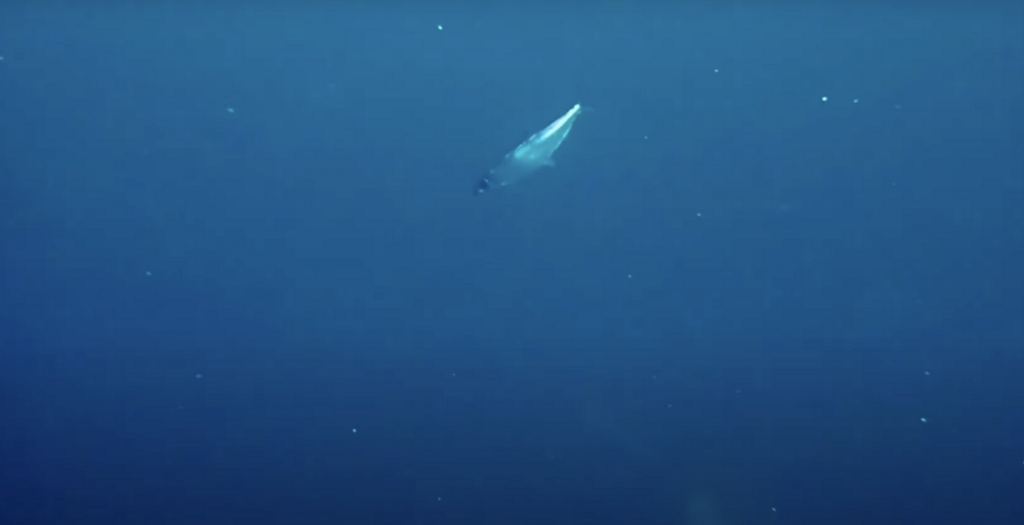
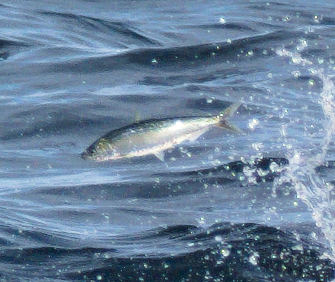
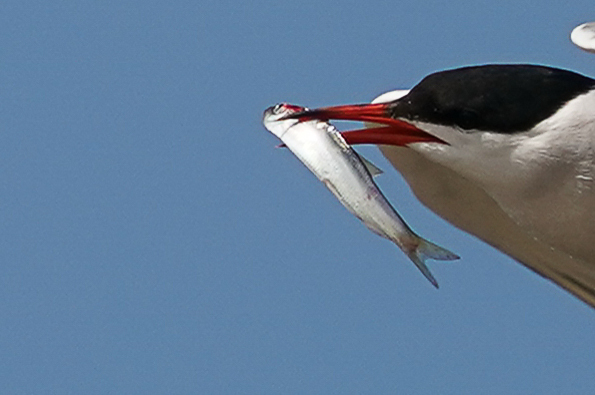
Photos show the species, not always the places on this page.
Length
Up to about 45 cm (18 in); common length about 30 cm (12 in).
Weight
Up to about 1.1 kg (2.4 lb) for the largest fish.
Next to a person
A common adult is about as long as a school ruler, and the largest weigh a little more than a bag of sugar.
What it eats
Mainly small drifting animals such as copepods and krill, plus fish larvae and small fish. It finds copepods by sight and can also filter-feed.
Around people
Calm, watch the whales
How it lives
Herring mature at about 3 to 5 years by one source (FishBase gives 2 to 9 years, depending on stock) and typically live 12 to 16 years, with a reported maximum of 25. They spawn every year at traditional sites, laying sticky eggs on gravel, rock or seaweed. Fish at spawning lay roughly 10,000 to 60,000 eggs. Eggs hatch in about 6 to 8 days at 14 to 19 C and about 17 days at 7.5 C. Adults tend to stay deeper by day and rise toward the surface at night.
Where it goes
Norwegian spring-spawning herring move into northern Norwegian fjords for the winter, from about October to January or February. Since around 2010 they have wintered in fjord systems around Andoya, Kvaloya and Kvaenangen. They stay deep, roughly 45 to 180 m down, then leave in spring to spawn between Bergen and Trondheim.
We only draw a journey on the map when scientists have tracked it or clearly documented it. For this animal we have not found one yet.
Populations
Least Concern as a species (IUCN, assessed 2009), but status differs by stock. For Norwegian spring-spawning herring, ICES advice published on 5 October 2026 sets 588,004 tonnes of catch for 2027, about 10% above the 2026 advice. Recent year classes have been small and catches rely on fish born in 2016, while larger than average 2021 and 2022 year classes are now reaching spawning age. Catches in 2026 are estimated to exceed the advice by just over 9%. In the US north-west Atlantic, a 2024 assessment lists the stock as overfished under a rebuilding plan. In the North Sea there are four distinct spawning populations, and a fifth, the Zuiderzee herring, is extinct.
Meet it respectfully
You will rarely meet herring up close. In the fjords their winter shoals matter because whales and seabirds follow them, so give all of these animals space and never chase, touch, feed or bait them. One diving-safety article notes that tour operators in Norway are not allowed to approach commercial fishing vessels closely or put swimmers in the water near them. No one can promise what the herring or the whales will do.
Fun fact
Tap the bulb to light it up.
North Atlantic herring schools can fill up to 4.8 cubic kilometres, at about 0.5 to 1 fish per cubic metre.
Herring hear very well, at frequencies from about 30 to 4,000 Hz, and schooling is their main defence against predators.
At spawning, so many eggs can be laid that they cover the seabed in a carpet several centimetres thick.
Atlantic herring in the Ocean Atlas
Places we have researched where this animal is recorded. It is never guaranteed, and some places are for watching from the boat only.
Travel with usComing soonTrusted referralExploringOn pause, story onlyEthics pass
Country colour: pink where we travel, blue where we are exploring or refer, grey for story only.
 Belgium
 Canada
 Denmark
 Estonia
 Faroe Islands
 Finland
 France
 Germany
 Greenland
 Iceland
 Ireland
 Latvia
 Lithuania
 Netherlands
 Norway
 Poland
 Russia
 Spain
Spain Sweden
 United Kingdom
 United States
Sources for this page
- Wikipedia, Atlantic herring
- FishBase, Clupea harengus
- NOAA Fisheries, Atlantic herring
- PMC, 2023, Arctic humpback whales and winter herring
- DAN, Orcas in Norway
- TheFishSite, 2026, ICES pelagic advice
- GBIF, IUCN category lookup
Facts checked 5 October 2026. Photos: Unsplash licence, or Creative Commons as shown on each photo.
Work in ocean travel?
We are always happy to hear from exceptional local operators, accommodation, conservation organisations and destination experts. If your work fits responsible, small-group ocean travel, we would love to learn more.
Partner with Ocean CallingGili Trawangan in 5 days
from CHF 790