
Antarctic fur seal
Arctocephalus gazella
A fur seal of sub-Antarctic beaches and cold southern seas. No sighting is ever a promise, and its numbers are now falling.
Endangered (IUCN, April 2026) means it faces a very high risk of extinction in the wild. It was raised from Least Concern after mature seals fell from about 2,187,000 in 1999 to 944,000 in 2025.
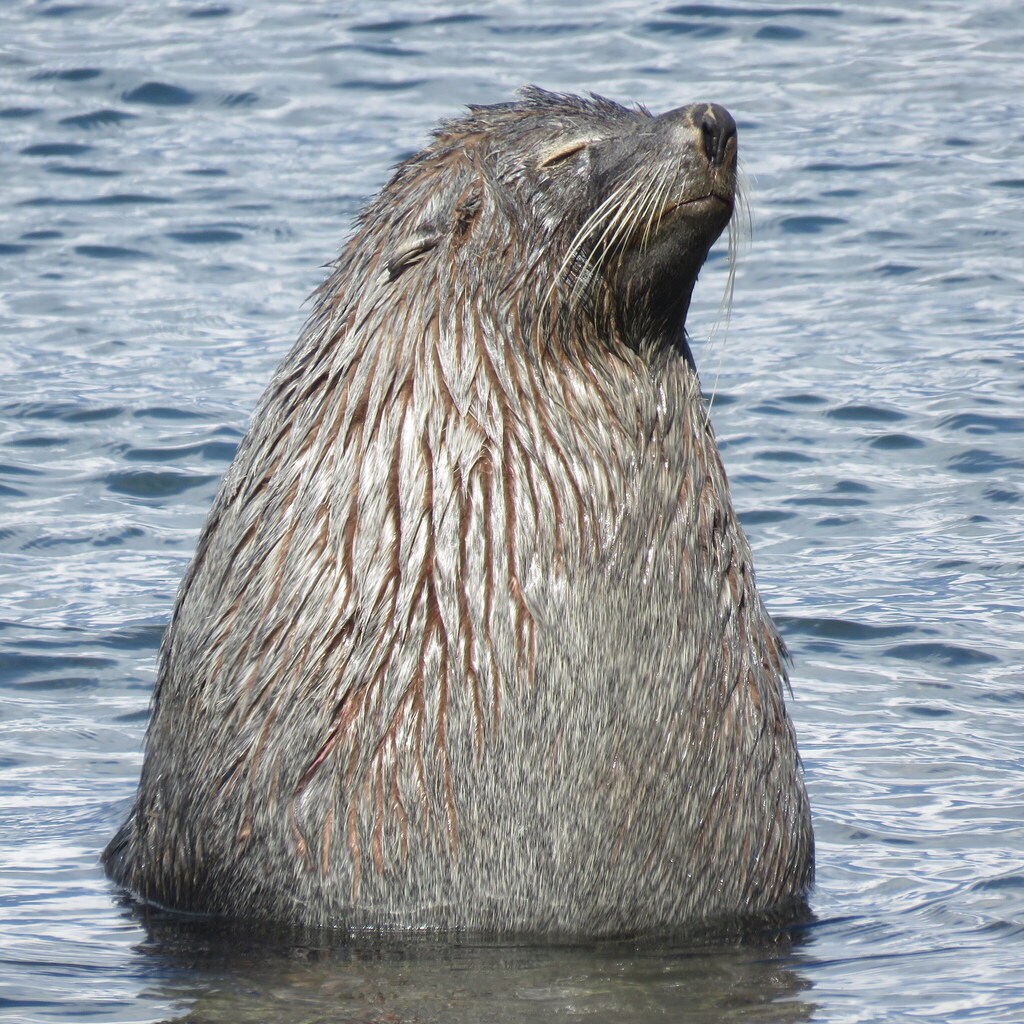
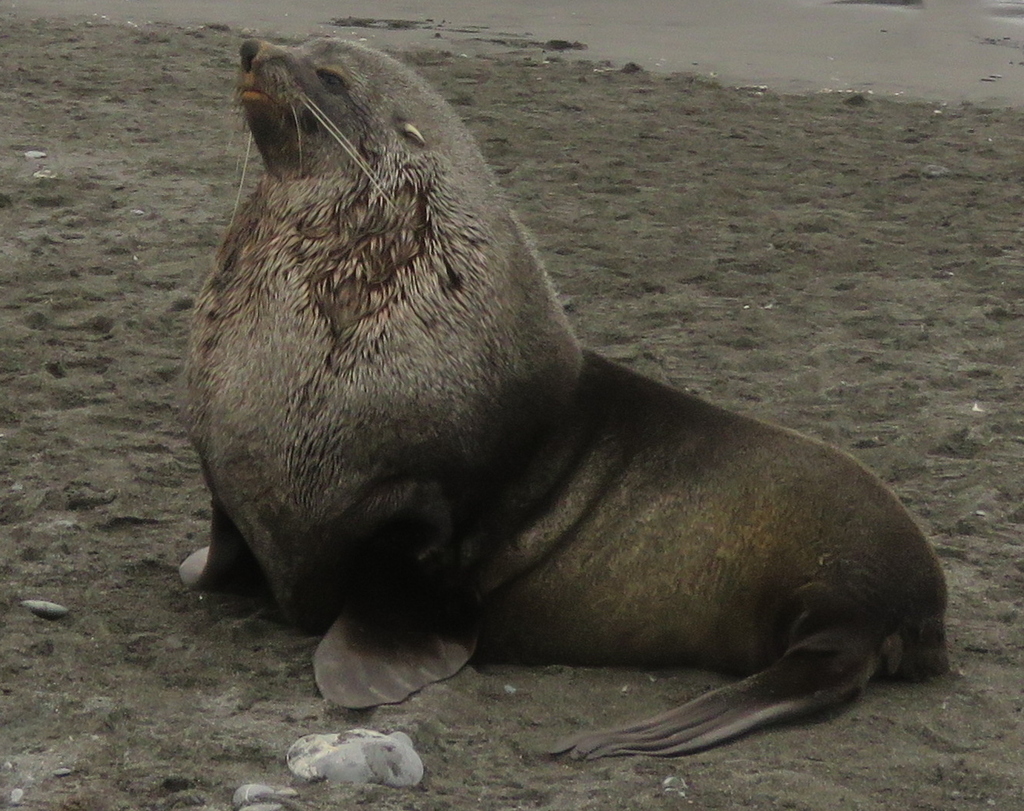
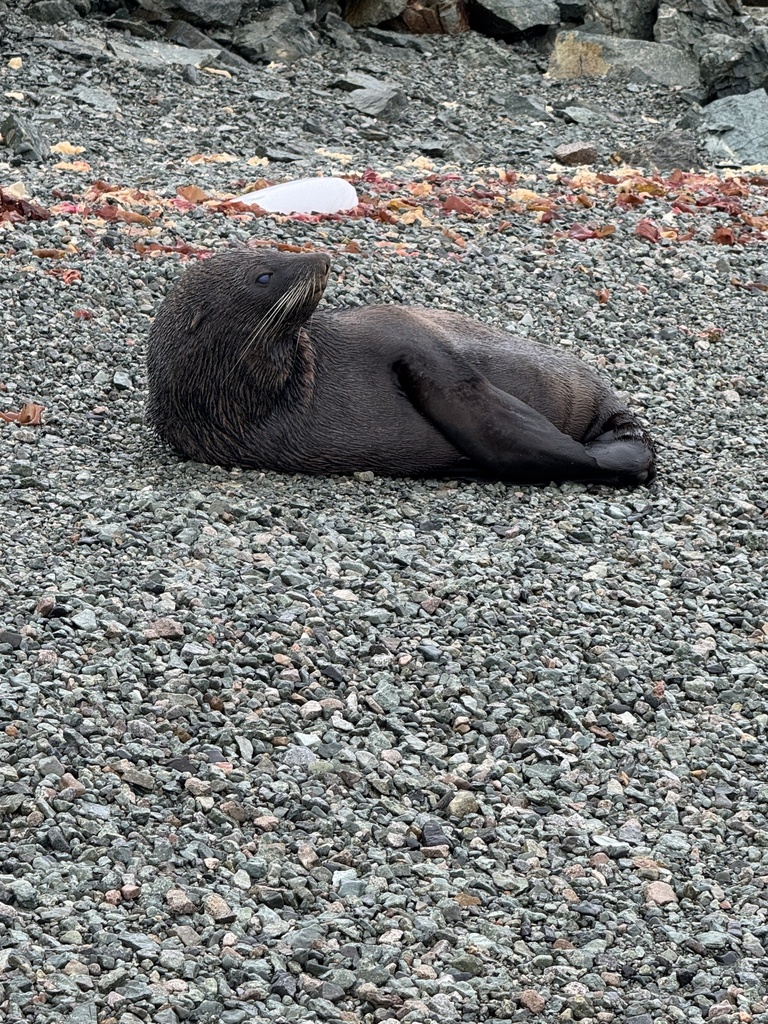
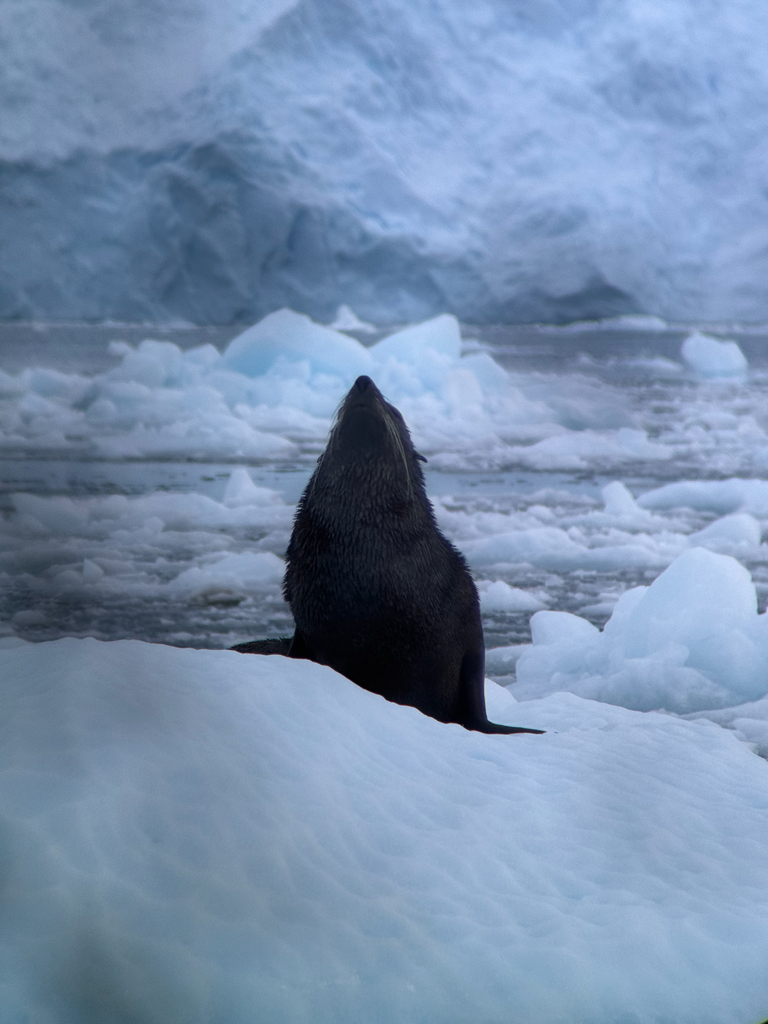
Photos show the species, not always the places on this page.
Length
Males up to about 2 m (6.5 ft); females about 1.4 m (4.6 ft)
Weight
Males average about 133 kg (293 lb); females about 34 kg (75 lb)
Next to a person
A male is about as long as a tall adult is tall, and as heavy as two adults. A female is about as heavy as a child
What it eats
Mostly Antarctic krill in the Atlantic part of its range. Further east in the Indian Ocean, fish and squid matter more. Some males also eat penguins.
Around people
Bold males, keep back
How it lives
It spends most of its time at sea and comes ashore to breed. Males take beach territories in October or November, and females arrive from late November to early January. Each female has a single pup after a pregnancy of about 8 to 9 months and nurses it for about 4 months. Mothers feed at sea for about 3 to 5 days, travelling up to 150 to 240 km, then return to nurse. Females usually dive to about 30 m for around 4 minutes, with the deepest recorded dive about 180 m. Males are aggressive during the breeding season.
Where it goes
It breeds on sub-Antarctic islands, from about 61 degrees south to the Antarctic Convergence, including South Georgia, the South Orkney and South Shetland Islands, Bouvet, Marion, Crozet, Kerguelen, Heard and Macquarie. It feeds at sea around these islands. Winter routes are not described in the sources I read.
We only draw a journey on the map when scientists have tracked it or clearly documented it. For this animal we have not found one yet.
Populations
Global: Endangered (IUCN, April 2026), moved up from Least Concern. Mature seals fell by more than half, from about 2,187,000 in 1999 to 944,000 in 2025. IUCN links this to warming seas, less sea ice and krill moving to deeper water, and notes that pups at South Georgia now survive their first year far less often. More than 95 percent of the breeding is at South Georgia. Sealing in the 1700s and 1800s left only hundreds to a few thousand animals, and the species then recovered under protection. Entanglement in marine debris is also a known problem.
Meet it respectfully
Beaches in breeding season are crowded, and males guard territories and can be aggressive. Stay well back, never walk between a seal and the sea, and give pups plenty of room because a pup alone is not necessarily abandoned. Never chase, touch, feed or bait a seal. I did not read any rules for these islands, so follow your guide and local rules.
Fun fact
Tap the bulb to light it up.
More than 95 percent of the species breeds at South Georgia.
In the 1700s and 1800s sealing nearly wiped it out. Small-scale hunting continued until 1907.
Krill makes up most of its diet, and each seal eats roughly a tonne a year according to one source.
Antarctic fur seal in the Ocean Atlas
Places we have researched where this animal is recorded. It is never guaranteed, and some places are for watching from the boat only.
Travel with usComing soonTrusted referralExploringOn pause, story onlyEthics pass
Country colour: pink where we travel, blue where we are exploring or refer, grey for story only.
 Antarctica
 Argentina
 Australia
 Chile
Chile Falkland Islands
 Norway
 South Africa
 Uruguay
Sources for this page
- IUCN, 2026 press release, Emperor penguin and Antarctic fur seal now Endangered
- Wikipedia, Antarctic fur seal
- Antarctic and Southern Ocean Coalition, Antarctic fur seals
- Seal Conservation Society, Antarctic fur seal
- One Earth, Antarctic fur seal
- GBIF, IUCN Red List category, 2026
Facts checked 5 October 2026. Photos: Unsplash licence, or Creative Commons as shown on each photo.
Work in ocean travel?
We are always happy to hear from exceptional local operators, accommodation, conservation organisations and destination experts. If your work fits responsible, small-group ocean travel, we would love to learn more.
Partner with Ocean CallingShop with Ocean Calling
Visit the Ocean Calling storefront on Amazon.
As an Amazon Associate I earn from qualifying purchases. You are not only choosing products that respect the ocean, you are also helping us keep going: paying our local partners fairly and keeping our retreats ethical, sustainable and honestly priced for you. 💗