
Atlantic manta ray
Mobula yarae
Named only in 2025, this Atlantic filter feeder may appear in green coastal water. Each meeting is a quiet gift, never a promise. Give it space and never touch.
Not Evaluated: this manta was only named as its own species in 2025, so IUCN has not assessed it yet. Before that it was counted with the oceanic manta, which is Endangered (IUCN, 2019).
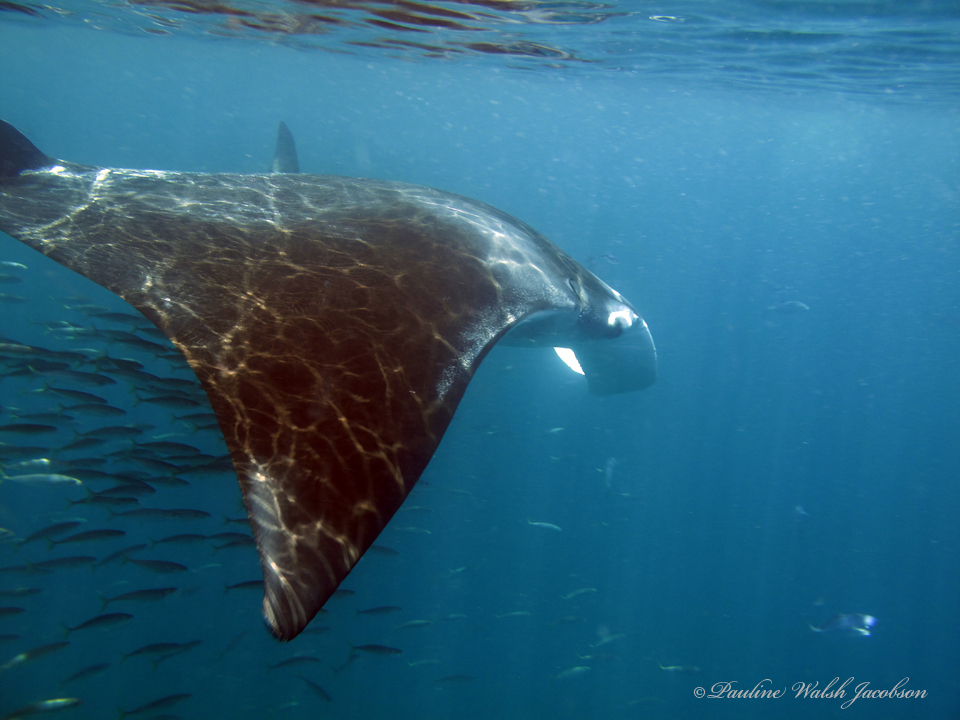
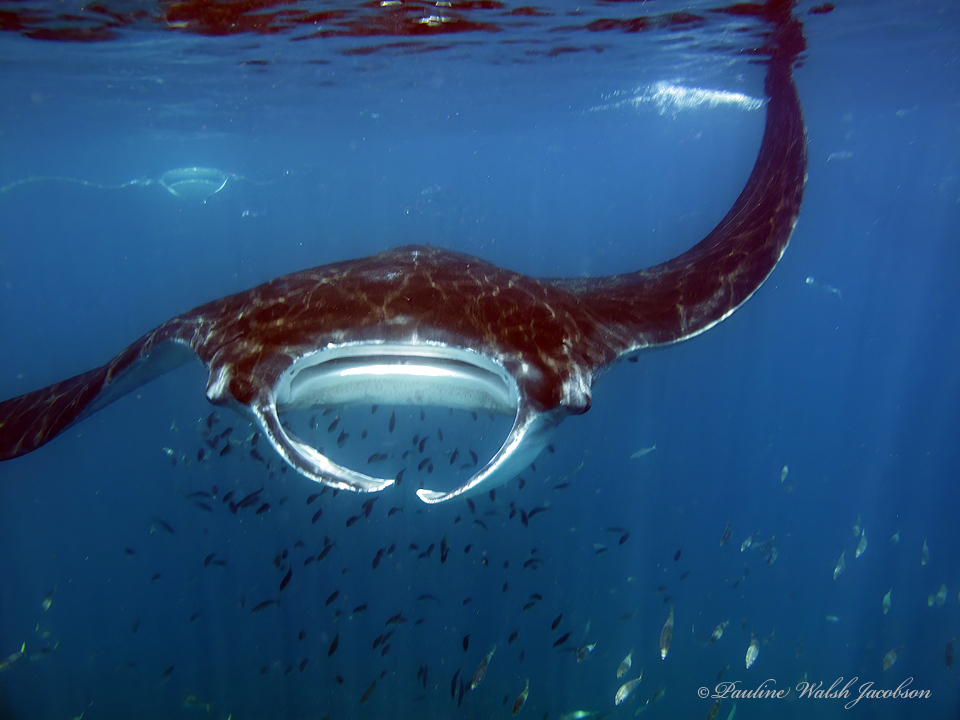
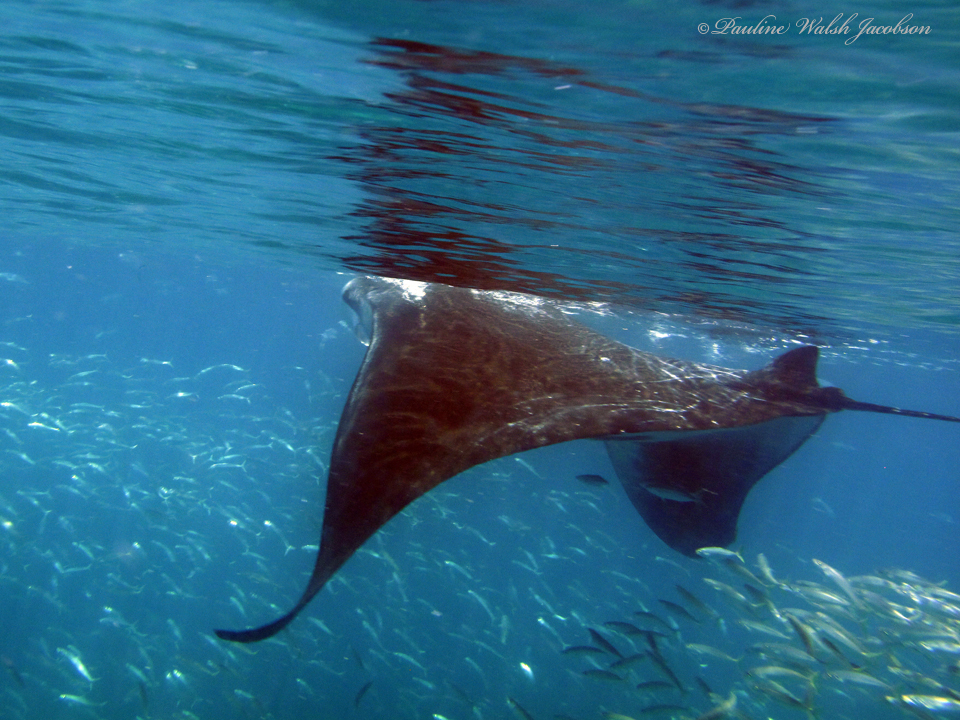
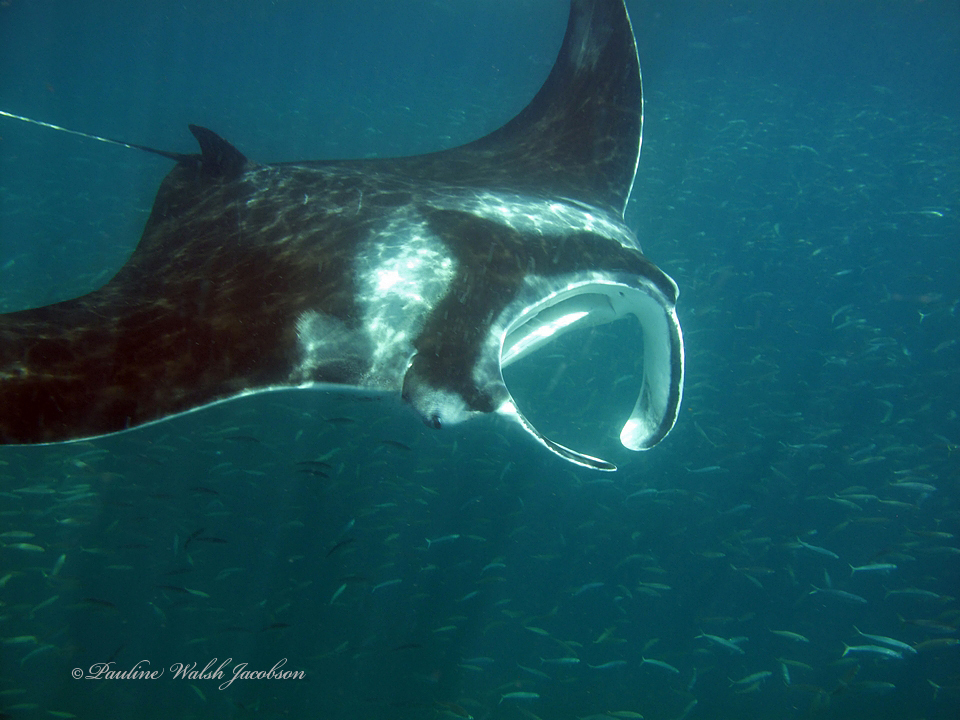
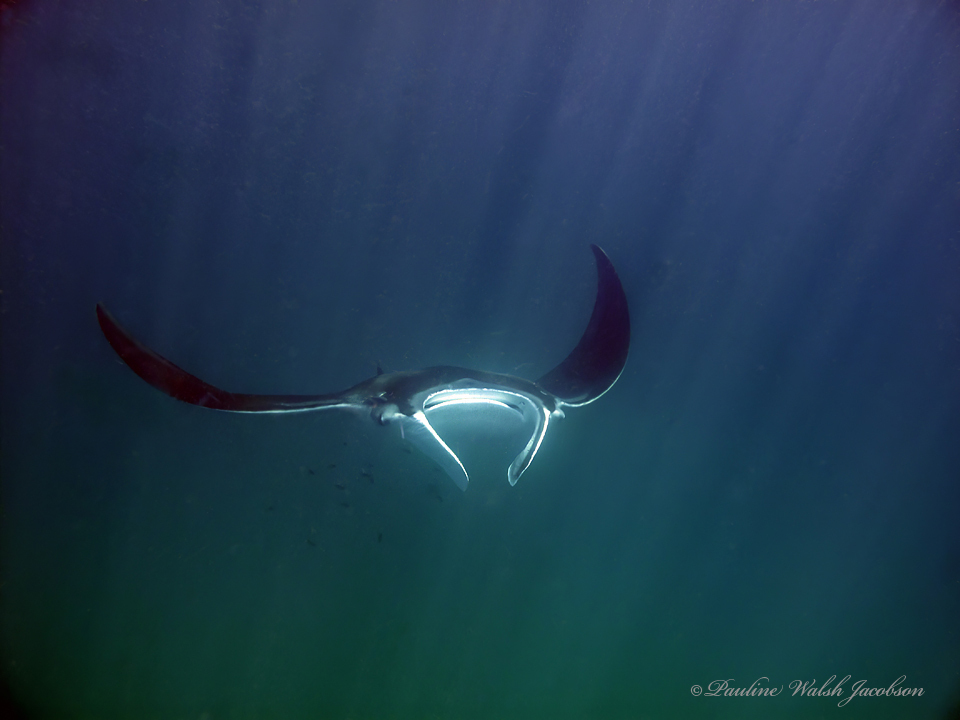
Photos show the species, not always the places on this page.
Length
The type specimen, a young female, was 2.48 m (8.1 ft) across; many coastal animals are young and under 2 to 3 m (6.6 to 9.8 ft) across. Typical adult and maximum disc width are not yet reliably known
Weight
Not reliably measured
Next to a person
Many coastal animals are young, about as wide as a person is tall to about twice that; large adults can be much wider
What it eats
Zooplankton, filtered from the water in productive coastal, estuary and island waters. When feeding it unrolls the fins on its head to guide food into its mouth.
Around people
Calm, give space
How it lives
The Atlantic manta looks like a mix of the other two mantas: dark on top like the oceanic manta, with lighter face markings like the reef manta. It lives in coastal, estuary and oceanic island waters where plankton is rich. Off southeast Florida most mantas seen are young, and this coast may be a nursery area. Its biology is still little known because it was only described in 2025.
Where it goes
Scientists know the range better than the movements. Records go from the northeastern United States to southeastern Brazil, including the Gulf of Mexico, Caribbean islands, the Amazon shelf and the islands of Saint Peter and Saint Paul and Fernando de Noronha. No long tracked journeys have been published for this species yet.
We only draw a journey on the map when scientists have tracked it or clearly documented it. For this animal we have not found one yet.
Populations
The species was described in July 2025 from a young female found at Pompano Beach, Florida, in 2017. Other material came from Brazil, Bimini in the Bahamas and Isla Contoy and Cabo Catoche in Mexico. The oceanic manta also lives in the western Atlantic, and the two can look alike, so not every Atlantic manta photo can be named with certainty.
Meet it respectfully
We follow the Manta Trust swim guidance: enter the water at least 10 m away, stay at least 3 m from the manta and approach slowly from the side. This is voluntary guidance, and local rules can differ. Never touch, grab, chase or block a manta, never hold the fins on its head, and let it decide how close to come. Boats should slow down where mantas feed near the surface.
Fun fact
Tap the bulb to light it up.
It is the third manta species known to science, after the reef manta and the oceanic manta.
Its name comes from Yara, a water spirit in Brazilian Tupi stories, known as the mother of water.
The Atlantic manta was described in July 2025. The type specimen is a young female, 2.48 m across, found at Pompano Beach, Florida, in 2017 and kept at the Smithsonian.
Source: Bucair et al., 2025, Environmental Biology of Fishes 108: 1801-1835, description of Mobula yarae
Scientists first suspected a third manta species in the Atlantic at least 15 years before it was formally named.
Source: Marine Megafauna Foundation, 2025, Mobula yarae described as the Atlantic manta
Atlantic manta ray in the Ocean Atlas
Places we have researched where this animal is recorded. It is never guaranteed, and some places are for watching from the boat only.
Travel with usComing soonTrusted referralExploringOn pause, story onlyEthics pass
Country colour: pink where we travel, blue where we are exploring or refer, grey for story only.
 The Bahamas
 Brazil
 Mexico
 Trinidad and Tobago
 United States
Sources for this page
- Bucair et al., 2025, Environmental Biology of Fishes 108: 1801-1835, description of Mobula yarae
- Plazi TreatmentBank, Mobula yarae sp. nov. treatment
- Marine Megafauna Foundation, 2025, Mobula yarae described as the Atlantic manta
- Manta Trust, Atlantic manta ray species guide
- Oceana, 2025, A new manta in the Atlantic: meet Mobula yarae
- WoRMS, Mobula yarae Bucair & Marshall, 2025
- Pate & Marshall, 2020, Endangered Species Research, juvenile mantas in southeast Florida
- iNaturalist, Mobula yarae observations (community identification)
Facts checked 26 September 2026. Photos: Unsplash licence, or Creative Commons as shown on each photo.
Work in ocean travel?
We are always happy to hear from exceptional local operators, accommodation, conservation organisations and destination experts. If your work fits responsible, small-group ocean travel, we would love to learn more.
Partner with Ocean CallingGili Trawangan in 5 days
from CHF 790