
Baird's beaked whale
Berardius bairdii
A long, tube-beaked whale that surfaces for a few minutes after a very deep dive. No sighting is ever a promise.
Least Concern (IUCN Red List) means it is not judged to be at high risk of extinction; there is little abundance data worldwide, and the assessment year was not confirmed.

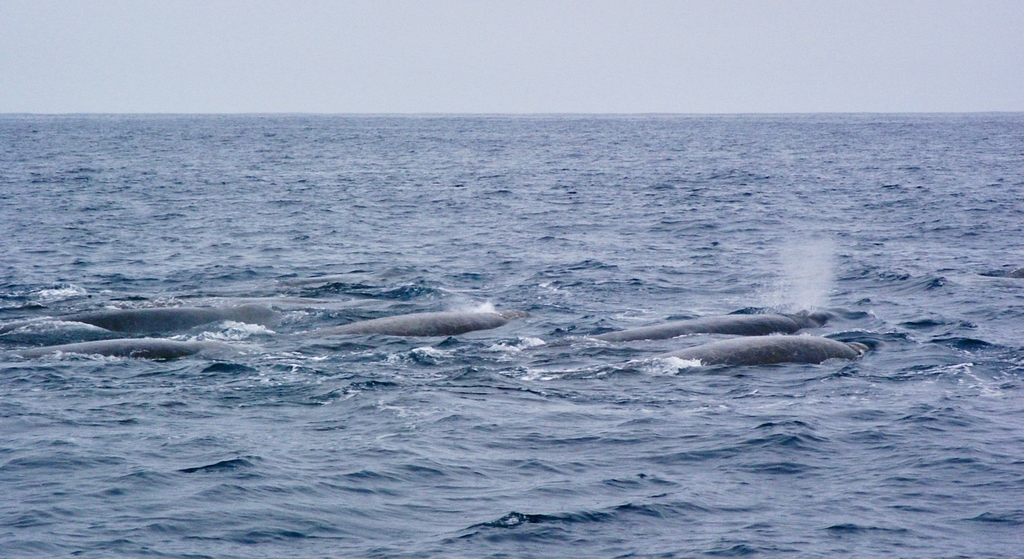
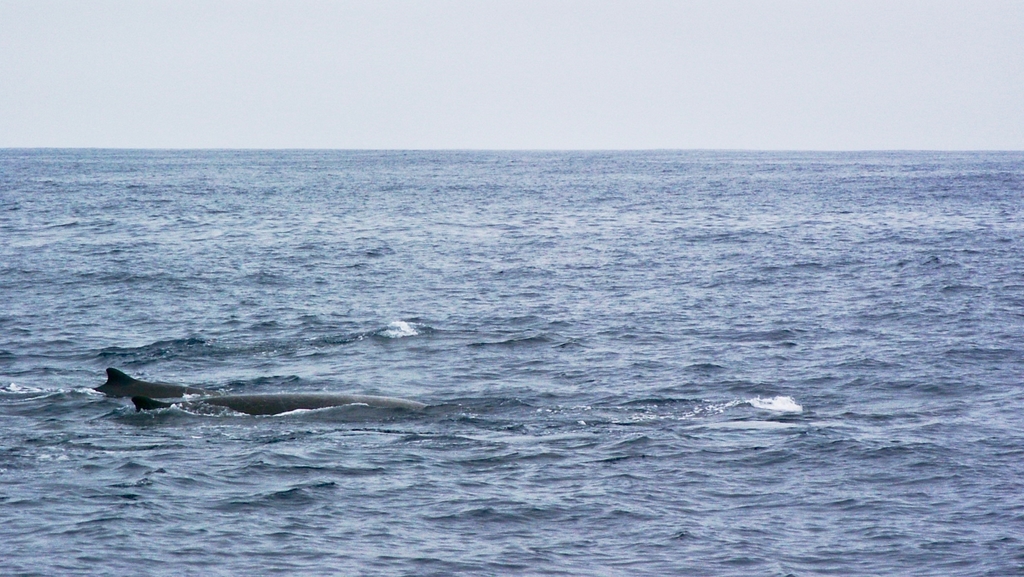
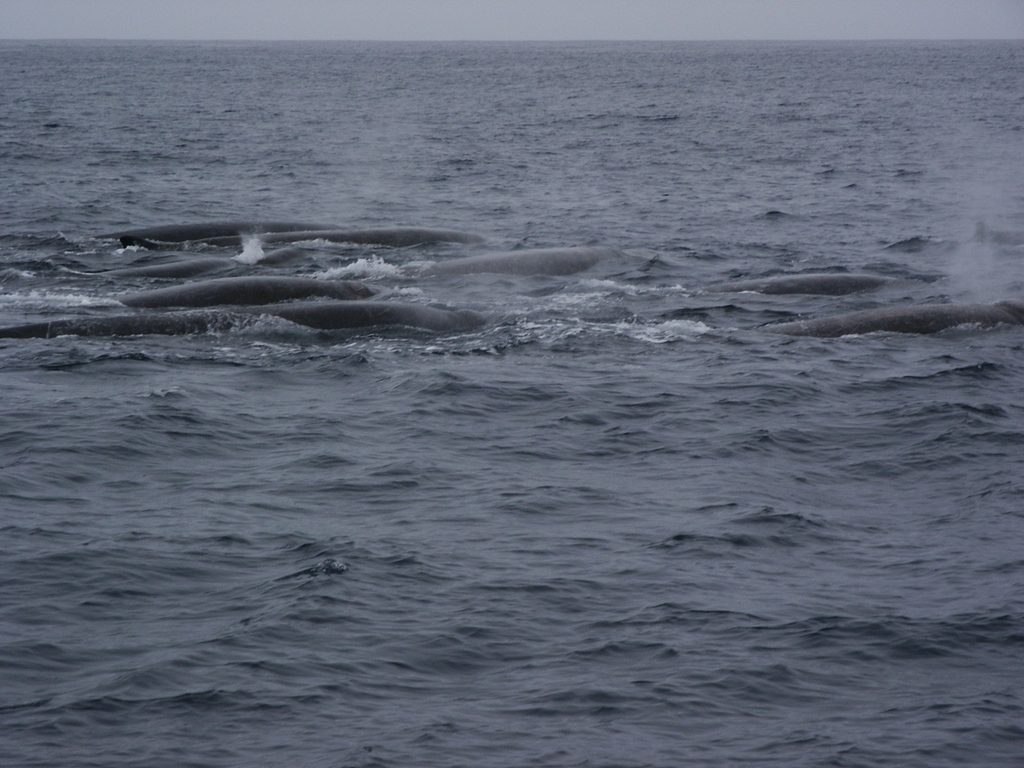
Photos show the species, not always the places on this page.
Length
Roughly 10 to 12.8 m (33 to 42 ft), depending on the source. Females are slightly larger than males. The longest confirmed was about 13 m (43 ft).
Weight
Around 9,000 kg (20,000 lb) in one source, over 11,800 kg (26,000 lb) in another, and up to about 14,000 kg (31,000 lb) reported
Next to a person
About six to seven times as long as an adult is tall, and heavier than a hundred adults put together
What it eats
Deep-sea fish such as grenadiers and longfin codling, as well as squid, octopus and crustaceans. Other prey named include mackerel, sardines, saury and sea cucumbers.
Around people
Calm, give space
How it lives
Baird's beaked whales are the largest beaked whales. Groups are usually about 5 to 20, but up to 50 have been recorded. They dive 1,000 to 3,000 m (3,300 to 9,800 ft) to feed. Typical dives last 11 to 30 minutes, and one whale stayed under for 81.7 minutes. Whaling records show females living up to 54 years and males up to 84. Females mature at about 10 to 15 years and males at about 6 to 11.
Where it goes
Baird's beaked whales live in cold, deep North Pacific water, mostly over continental slopes and seamounts deeper than about 1,000 m (3,300 ft). Their range reaches from the Sea of Okhotsk and Japan to southern Alaska and Baja California. Sources differ on seasonal movements, and no single route is known.
We only draw a journey on the map when scientists have tracked it or clearly documented it. For this animal we have not found one yet.
Populations
No worldwide estimate exists. For the California, Oregon and Washington stock, NOAA reports numbers as stable or slightly increasing. The IUCN lists the species as Least Concern. Japan still hunts Baird's beaked whales commercially. At least 4,000 have been taken historically, and older sources describe peaks above 300 a year after World War II and later quotas of around 60 a year. I could not confirm the current Japanese quota.
Meet it respectfully
Baird's beaked whales are deep divers and often wary, so give them room. Keep your distance, stay slow and quiet, and never chase, surround, touch, feed or follow a group. Noise, entanglement and marine debris are named threats. I did not read local whale-watching rules for these countries, so follow your guide and local regulations.
Fun fact
Tap the bulb to light it up.
It is the largest beaked whale.
One whale was recorded staying underwater for 81.7 minutes.
Males can live to about 84 years, against up to 54 for females, based on whaling records.
Baird's beaked whale in the Ocean Atlas
Places we have researched where this animal is recorded. It is never guaranteed, and some places are for watching from the boat only.
Travel with usComing soonTrusted referralExploringOn pause, story onlyEthics pass
Country colour: pink where we travel, blue where we are exploring or refer, grey for story only.
 Japan
Japan Mexico
 Russia
 United States
Sources for this page
- Wikipedia, Baird's beaked whale
- NOAA Fisheries, Baird's beaked whale
- Animal Diversity Web, University of Michigan
- OBIS-SEAMAP, Duke University
- GBIF, IUCN Red List category lookup, 2026
Facts checked 5 October 2026. Photos: Unsplash licence, or Creative Commons as shown on each photo.
Work in ocean travel?
We are always happy to hear from exceptional local operators, accommodation, conservation organisations and destination experts. If your work fits responsible, small-group ocean travel, we would love to learn more.
Partner with Ocean CallingShop with Ocean Calling
Visit the Ocean Calling storefront on Amazon.
As an Amazon Associate I earn from qualifying purchases. You are not only choosing products that respect the ocean, you are also helping us keep going: paying our local partners fairly and keeping our retreats ethical, sustainable and honestly priced for you. 💗