
Broad cowtail ray
Pastinachus ater
A dark disc sliding over warm sand and reef flats. Rays go where the tide and food take them, and no sighting is ever a promise.
Vulnerable (IUCN, assessed 2020) means it faces a high risk of extinction in the wild, mainly because of fishing pressure.
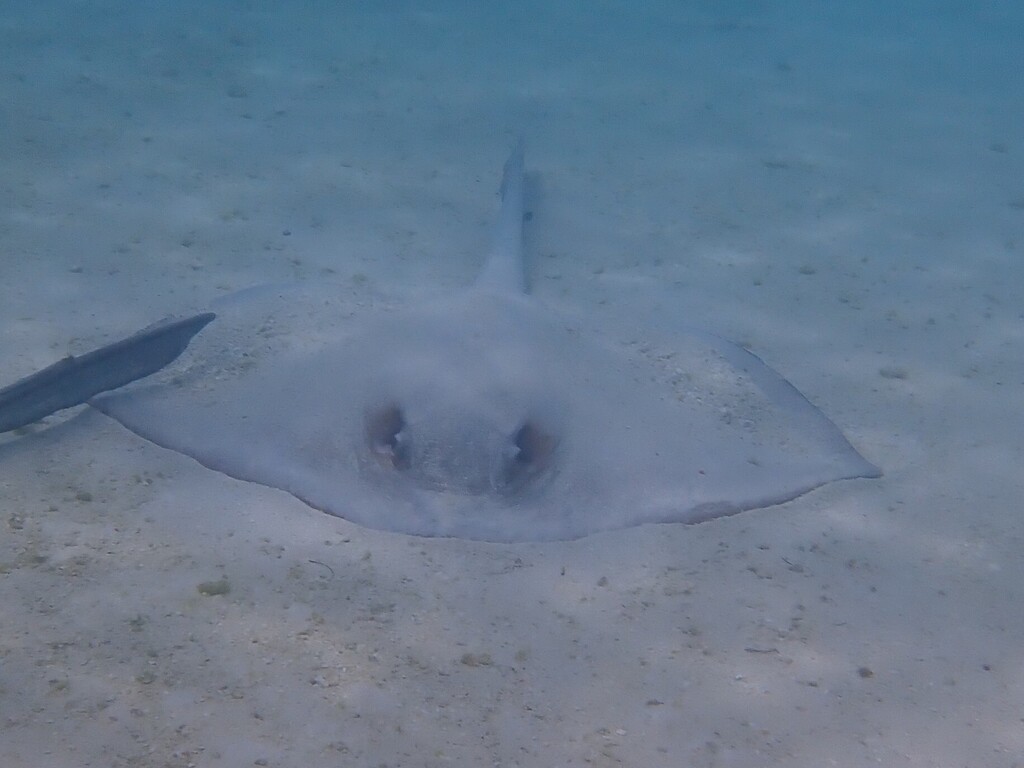
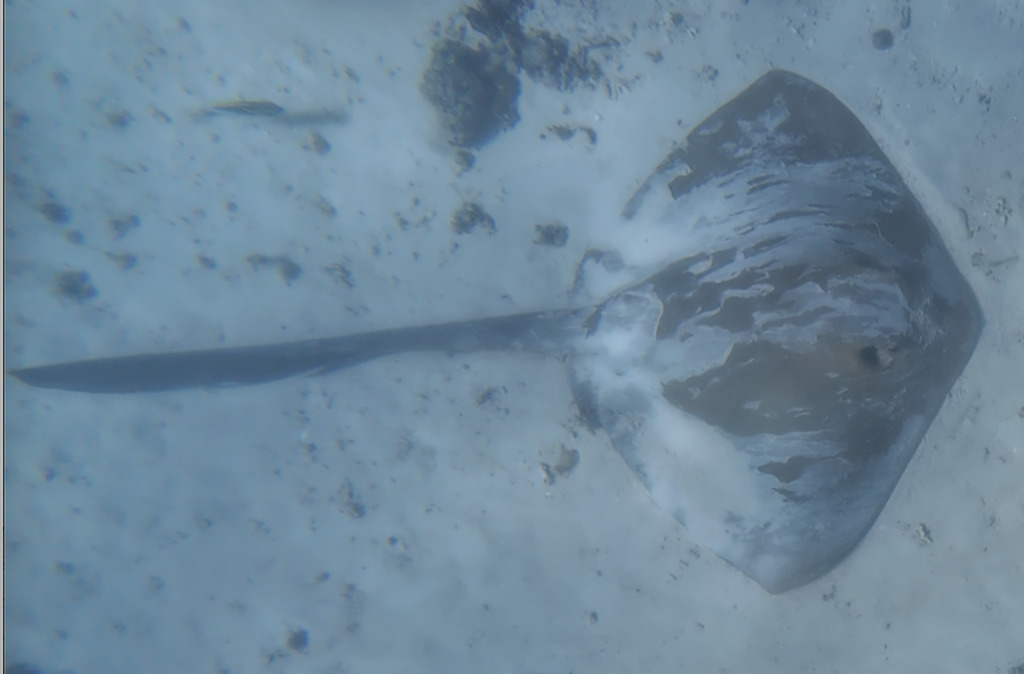
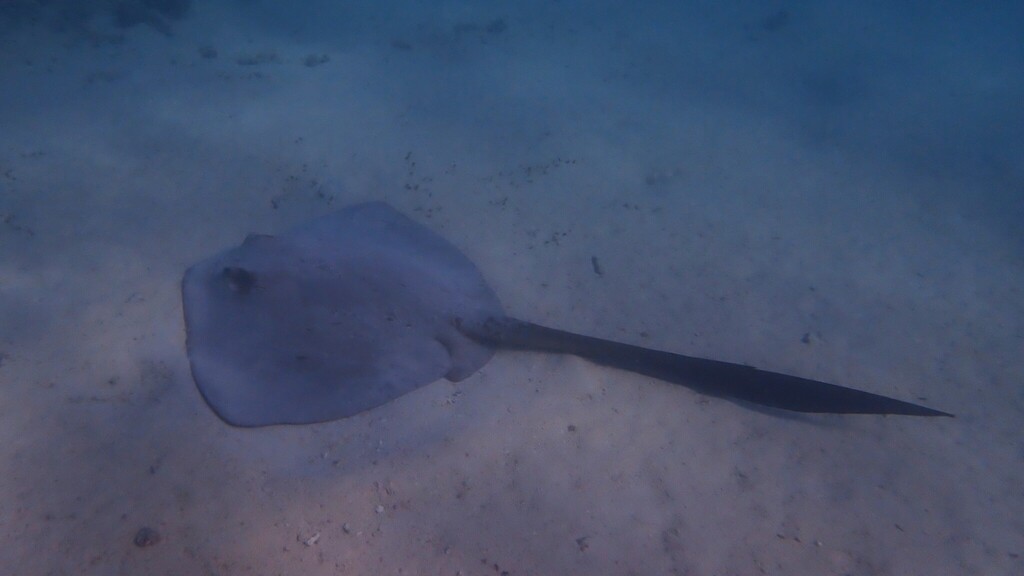
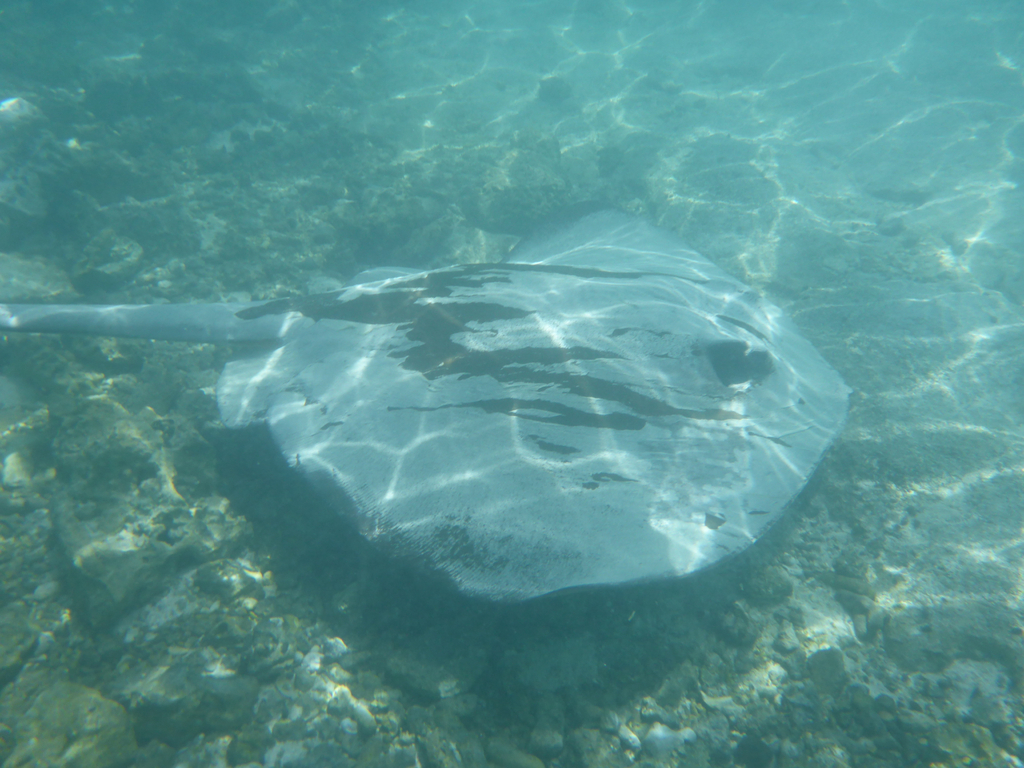
Photos show the species, not always the places on this page.
Length
Disc width up to about 2 m (6.6 ft), reported for males and unsexed animals; newborns are about 18 cm (7 in) across
Weight
Not given in the sources I read
Next to a person
A large adult can be about as wide as a tall person is tall, and a newborn is about as wide as an adult's hand is long
What it eats
Small bony fish, crustaceans and molluscs. Young rays feed mainly on bivalve molluscs. Other sources also list worms among the bottom-living prey.
Around people
Calm, give space
How it lives
Lives in coastal water shallower than about 60 m, often on intertidal lagoons and reef flats, and can enter estuaries and even fresh water. Females give birth to live young, usually two pups per litter, fed in the womb by a nutrient-rich fluid. Juveniles favour sand flats and mangrove edges, and at the lowest tides they have been seen covering themselves with sand and staying still. In Shark Bay, resting rays arrange themselves in a rosette with tails pointing outward. Lifespan is estimated at over 25 years, based on similar species.
Where it goes
Juveniles studied at Orpheus Island, Australia, moved with the tides. They moved faster on the incoming and outgoing tide and were less active at high and low tide. Long-distance movements were not described in the sources I read.
We only draw a journey on the map when scientists have tracked it or clearly documented it. For this animal we have not found one yet.
Populations
Vulnerable worldwide (IUCN, assessed 2020, criterion A2d, with a decreasing population). One source estimates global declines of 30 to 49 percent, and names bycatch in coastal fisheries, mangrove loss and pollution as causes. Ratings differ between sources: a Fishes of Australia page lists Least Concern. I did not find a population count in the sources I read. It was long treated as the same species as the cowtail stingray (Pastinachus sephen).
Meet it respectfully
Watch from a distance and move slowly. These rays rest on shallow sand and can lie buried, so look where you step and never step over or onto one. The long tail carries a serrated spine that can cause a painful wound. Never chase, touch, feed or bait a ray, and keep clear of resting groups. Rules differ by place. Follow local rules and your guide.
Fun fact
Tap the bulb to light it up.
A newborn is only about 18 cm across, and litters are usually just two pups.
The genus was long thought to hold a single species, the cowtail stingray, until researchers found several.
Resting rays in Shark Bay arrange themselves in a rosette with their tails pointing outward.
Broad cowtail ray in the Ocean Atlas
Places we have researched where this animal is recorded. It is never guaranteed, and some places are for watching from the boat only.
Travel with usComing soonTrusted referralExploringOn pause, story onlyEthics pass
Country colour: pink where we travel, blue where we are exploring or refer, grey for story only.
 Australia
 India
India Malaysia
 Maldives
 New Caledonia
 Seychelles
Sources for this page
- FishBase, 2026
- GBIF (IUCN Red List category), 2026
- Save Our Seas Foundation, 2026
- Fishes of Australia, 2026
- Martins et al., 2020, PLoS ONE
- Wikipedia, Pastinachus, 2026
Facts checked 5 October 2026. Photos: Unsplash licence, or Creative Commons as shown on each photo.
Work in ocean travel?
We are always happy to hear from exceptional local operators, accommodation, conservation organisations and destination experts. If your work fits responsible, small-group ocean travel, we would love to learn more.
Partner with Ocean CallingSwim with humpback whales in Moʻorea, September 2027
from CHF 4,500