
Brownbanded bamboo shark
Chiloscyllium punctatum
A slow, nocturnal shark that rests in the reef by day. It keeps its own hours, and no sighting is ever a promise.
Near Threatened (IUCN, assessed 2023) means it is close to qualifying as threatened, mainly because of fishing and habitat loss.
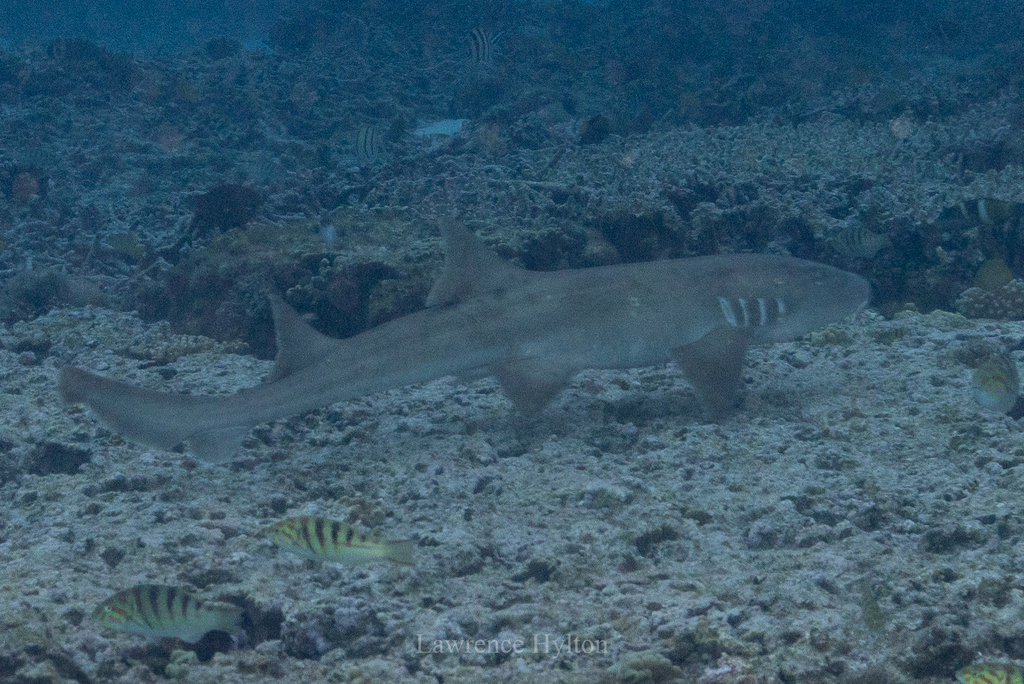
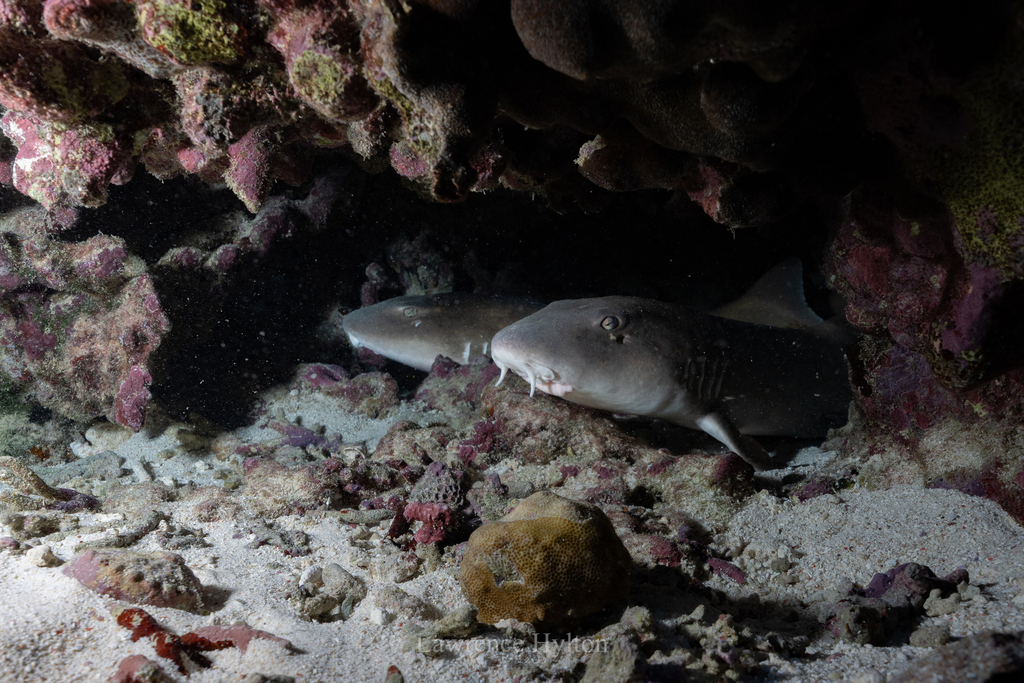
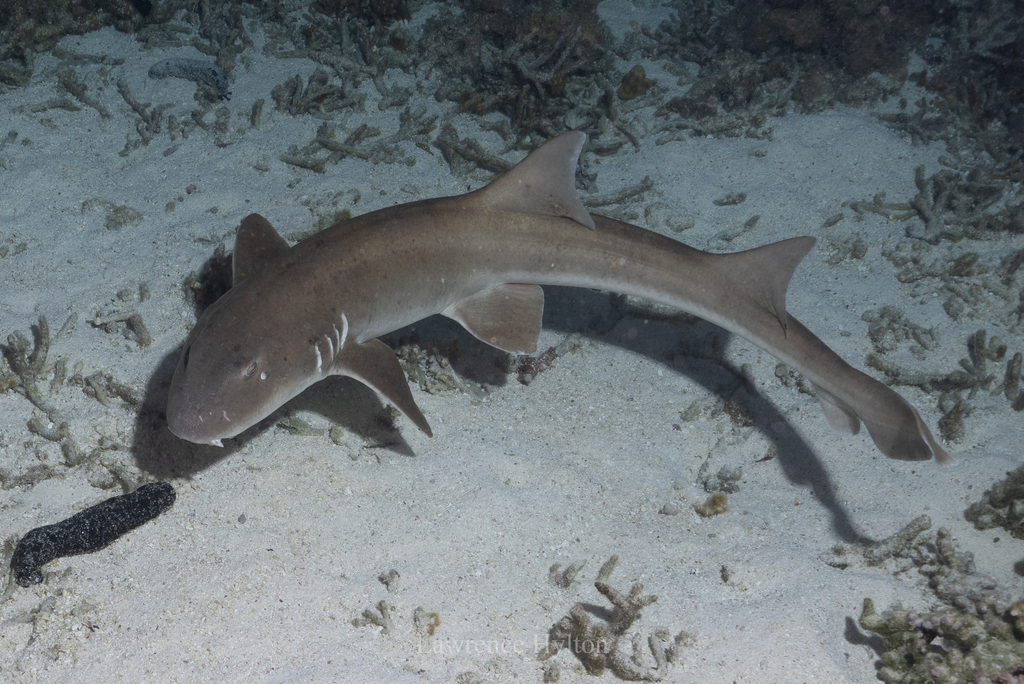
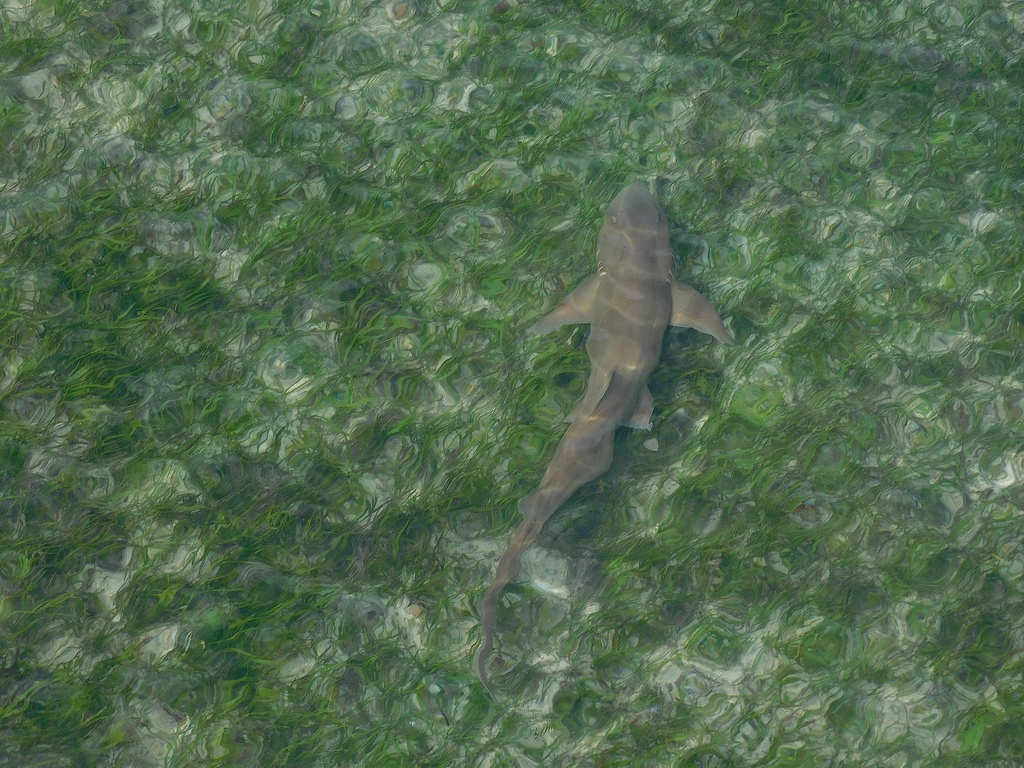
Photos show the species, not always the places on this page.
Length
Up to about 1.04 m (3.4 ft) in one source and 132 cm (4.3 ft) in another; adults in the Indo-Malay region stay under about 110 cm (3.6 ft)
Weight
Not given in the sources I read
Next to a person
Around two-thirds to three-quarters of an adult's height
What it eats
Probably bottom-dwelling invertebrates and small fish. Details of its wild diet were not given in the sources I read.
Around people
Calm, give space
How it lives
Lives on coral reefs, tide pools, sand flats and seagrass from the shore down to about 85 m, and is nocturnal. It lays eggs that hatch after about three months. Juveniles are barred dark and pale, and adults are an overall brown with faint bands. It can survive out of water for up to 12 hours, which suits tide pools. Females in the Indo-Malay region mature at about 67 to 70 cm, and those in Australia and Papua New Guinea at about 84 to 87 cm. In public aquariums it has lived up to 25 years.
Where it goes
Movements are not described in the sources I read. It is a bottom-dweller of shallow reefs, tide pools and seagrass, found down to about 85 m.
We only draw a journey on the map when scientists have tracked it or clearly documented it. For this animal we have not found one yet.
Populations
Near Threatened worldwide (IUCN, assessed 2023 according to FishBase), with low resilience and a minimum population doubling time of 4.5 to 14 years. Habitat loss, pollution and capture for food and the aquarium trade are named as threats. A genetic study found four distinct groups in the Indo-Australian region: Indo-Malay, west Sumatra, the Lesser Sunda islands and Australia with Papua New Guinea. Fishing pressure differs between them, with intensive trawling in the Indo-Malay region. I did not find a population count.
Meet it respectfully
Watch from a distance and keep your fins off the reef and sand. This shark is nocturnal, so it may be resting in a crevice or under a ledge by day. Never chase, grab, lift, touch, feed or bait it, and do not pull it from its shelter. Rules differ by place. Follow local rules and your guide.
Fun fact
Tap the bulb to light it up.
It can survive out of the water for up to 12 hours.
A genetic study found four distinct groups within what was long treated as one species, and they mature at different sizes.
Young sharks are barred dark and pale, and the bands fade as they grow.
Brownbanded bamboo shark in the Ocean Atlas
Places we have researched where this animal is recorded. It is never guaranteed, and some places are for watching from the boat only.
Travel with usComing soonTrusted referralExploringOn pause, story onlyEthics pass
Country colour: pink where we travel, blue where we are exploring or refer, grey for story only.
 Australia
 Indonesia
 Malaysia
 Papua New Guinea
 Philippines
 Thailand
Sources for this page
- FishBase, 2026
- Wikipedia, Brownbanded bamboo shark, 2026
- Fahmi et al., 2021, BMC Ecology and Evolution
- Save Our Sharks Australia, 2026
- GBIF (IUCN Red List category), 2026
Facts checked 5 October 2026. Photos: Unsplash licence, or Creative Commons as shown on each photo.
Work in ocean travel?
We are always happy to hear from exceptional local operators, accommodation, conservation organisations and destination experts. If your work fits responsible, small-group ocean travel, we would love to learn more.
Partner with Ocean CallingShop with Ocean Calling
Visit the Ocean Calling storefront on Amazon.
As an Amazon Associate I earn from qualifying purchases. You are not only choosing products that respect the ocean, you are also helping us keep going: paying our local partners fairly and keeping our retreats ethical, sustainable and honestly priced for you. 💗