
Coach whipray (reticulate whipray)
Himantura uarnak
A pale, spotted disc resting on the sand, with a long thin tail. Rays like this choose their own moments, and no sighting is ever a promise.
Endangered (IUCN, 2021) means it faces a very high risk of extinction in the wild. Its numbers are suspected to have fallen by 50 percent or more over the last 75 years.
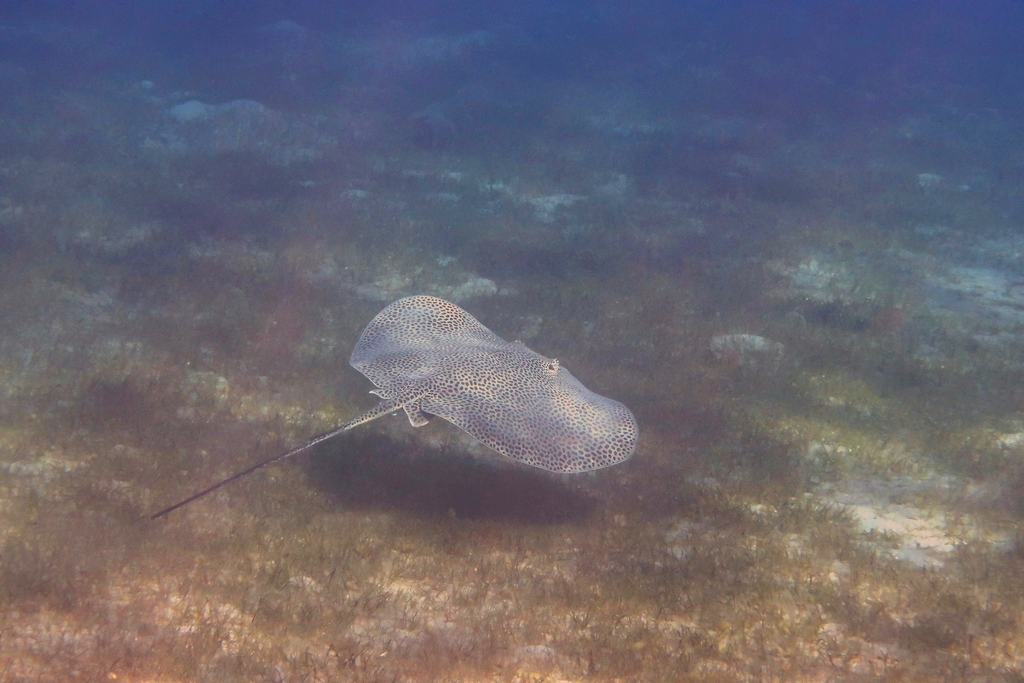
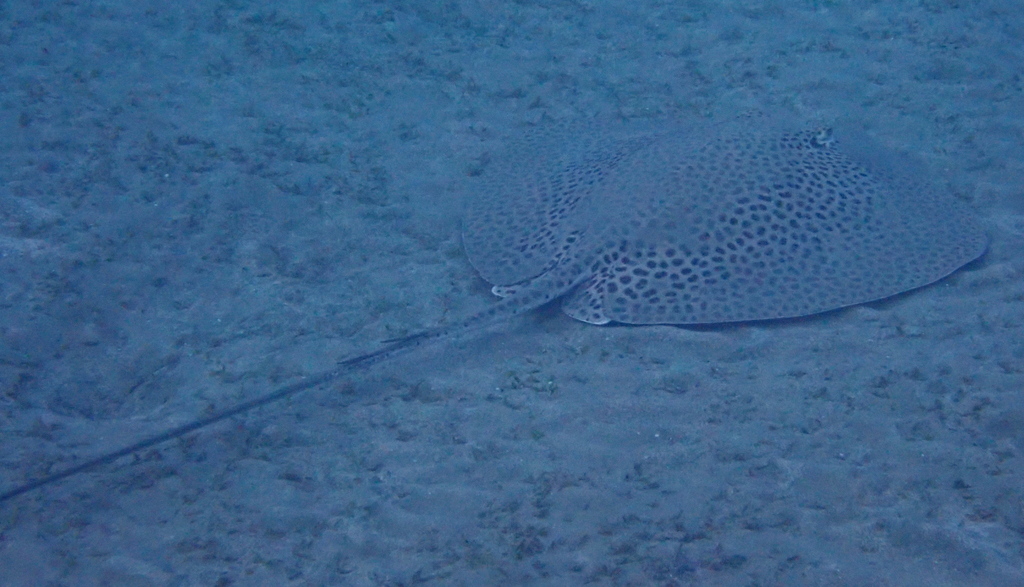
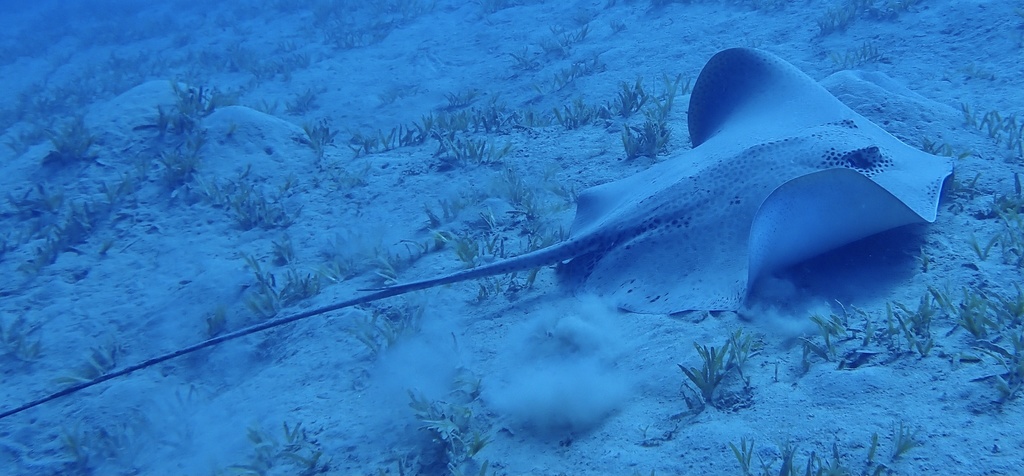
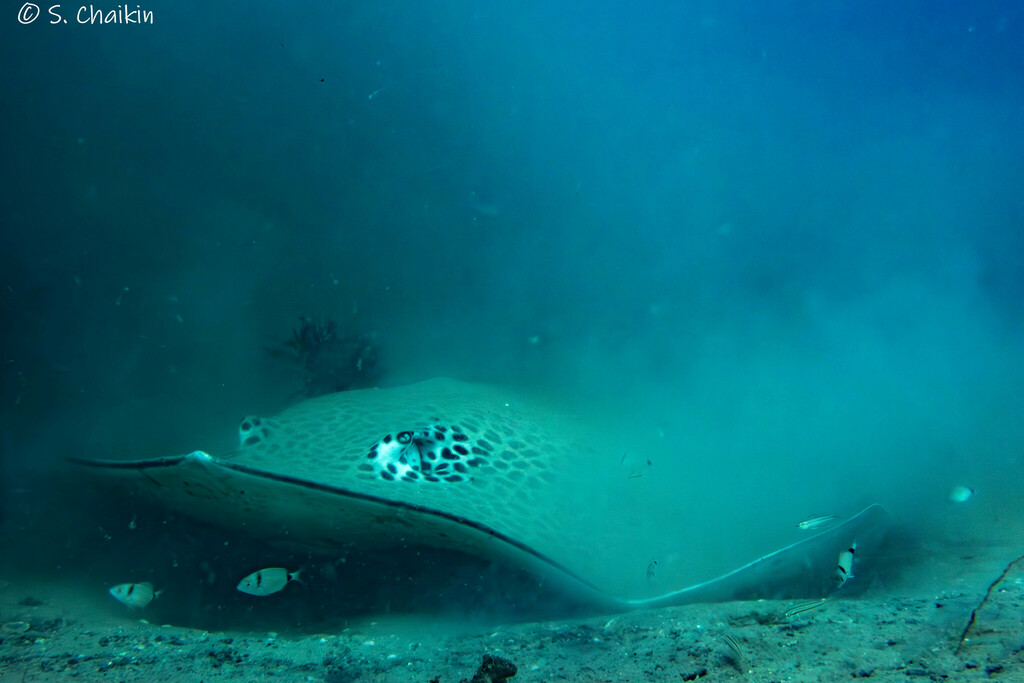
Photos show the species, not always the places on this page.
Length
Disc width at least about 1.6 m (5.2 ft), with reports up to about 2 m (6.6 ft). The thin tail is about 3 to 3.5 times as long as the disc is wide.
Weight
Up to about 120 to 150 kg (265 to 330 lb) reported; sources differ.
Next to a person
The disc of a large adult is about as wide as a tall person is tall, and the tail can be about three times that.
What it eats
Bottom-living animals such as crabs, shrimps, mantis shrimps, bivalves, gastropods, worms, small fishes and jellyfish. In the western Indian Ocean about two-thirds of the diet is fish, mostly ponyfish and anchovies. In Australia, prawns are an important prey.
Around people
Calm, give space
How it lives
It spends much of the day resting on the bottom, sometimes partly buried, and is described as shy: it generally bolts if approached closely. It lives on soft sand and mud, from shallow estuaries and lagoons to at least 50 m, sometimes near reefs, and can enter fresh water. Young are born live. FishBase gives 3 to 5 pups of about 21 to 28 cm across, while another source says two, so litter size is not settled. Females mature at a disc width of roughly 0.8 to 1 m.
Where it goes
Described as sedentary, spending much of the day resting on the bottom. The sources I read do not describe longer movements between areas.
We only draw a journey on the map when scientists have tracked it or clearly documented it. For this animal we have not found one yet.
Populations
Endangered worldwide (IUCN, 2021). Numbers are suspected to have fallen by 50 percent or more over the last 75 years. Reports from Malaysia and Indonesia suggest local drops of 50 to 99 percent over three generations, though data are limited. Overfishing, habitat loss, pollution and destructive fishing are the named threats. The range runs from South Africa and the Red Sea to India, Southeast Asia and Australia, and includes the eastern Mediterranean.
Meet it respectfully
Watch from a calm distance and let the ray choose whether to stay. It often rests on the sand and can lie partly buried, so look where you place fins and feet in shallow water. Never chase, touch, feed, bait or corner it, and do not hover directly above it. I did not read local rules for this species, so follow your guide and local regulations.
Fun fact
Tap the bulb to light it up.
Its thin tail is about 3 to 3.5 times as long as its disc is wide.
Young are born live, about 21 to 28 cm across, rather than hatching from eggs.
It has a venomous tail spine, but it is described as shy and quick to move away if approached.
Coach whipray (reticulate whipray) in the Ocean Atlas
Places we have researched where this animal is recorded. It is never guaranteed, and some places are for watching from the boat only.
Travel with usComing soonTrusted referralExploringOn pause, story onlyEthics pass
Country colour: pink where we travel, blue where we are exploring or refer, grey for story only.
 Australia
 Egypt
Egypt India
India Indonesia
 Israel
 Malaysia
 Mozambique
Sources for this page
- Wikipedia, Reticulate whipray, 2026
- FishBase, Himantura uarnak, 2026
- Sharks and Rays, Reticulate whipray, 2026
- Bogorodsky et al., 2021, Zootaxa
- GBIF, IUCN category lookup, 2026
Facts checked 5 October 2026. Photos: Unsplash licence, or Creative Commons as shown on each photo.
Work in ocean travel?
We are always happy to hear from exceptional local operators, accommodation, conservation organisations and destination experts. If your work fits responsible, small-group ocean travel, we would love to learn more.
Partner with Ocean Calling5-day freediving course in Bali
CHF 1,180