
Dall's porpoise
Phocoenoides dalli
A flash of black and white and a plume of spray. Dall's porpoises decide when to come close, and no sighting is ever a promise.
Least Concern (IUCN, 2018 according to Wikipedia) means it is not at high risk of extinction at present, and Wikipedia says there is no evidence of a range-wide decline.
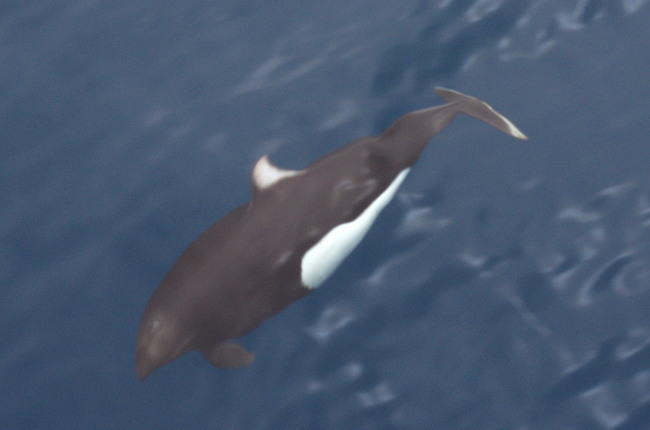
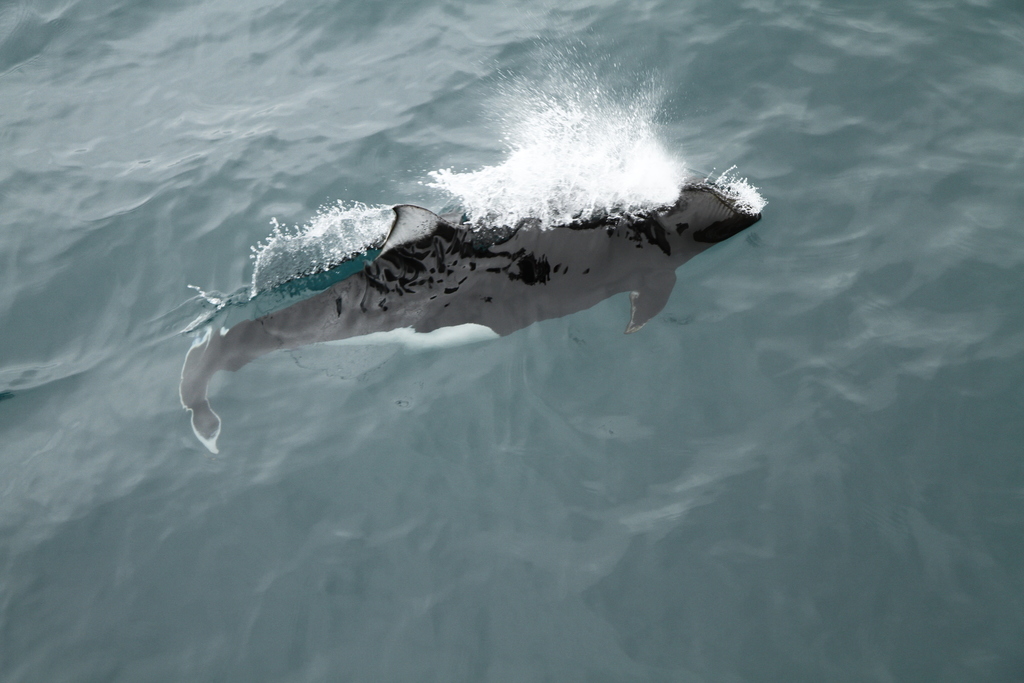
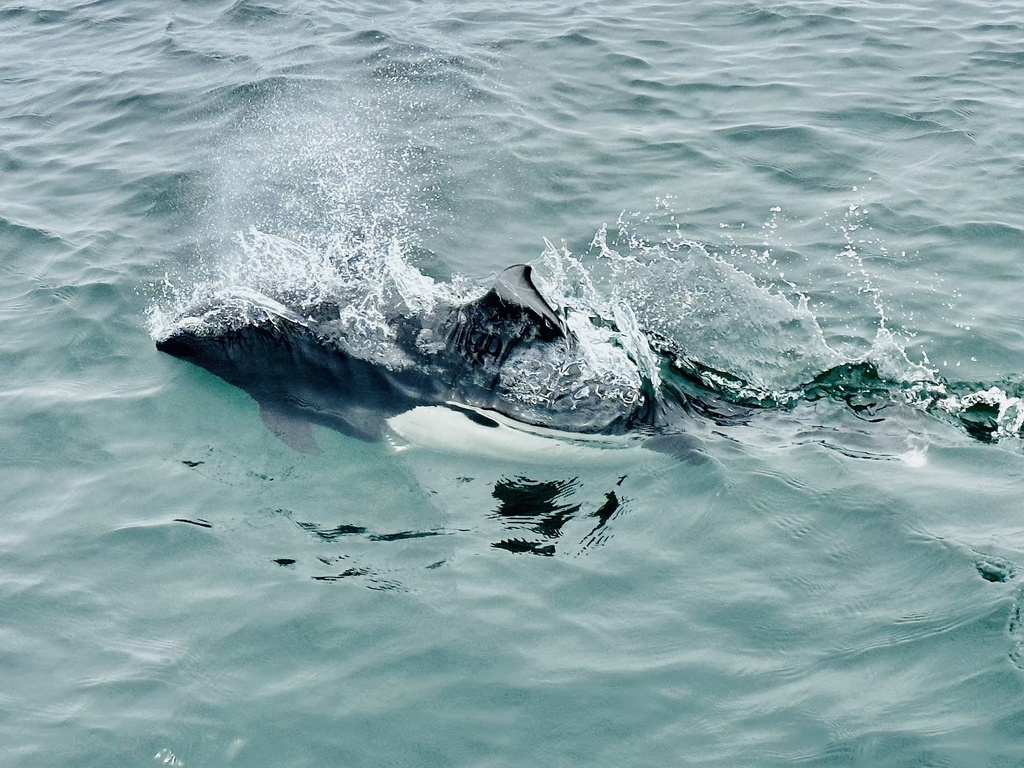
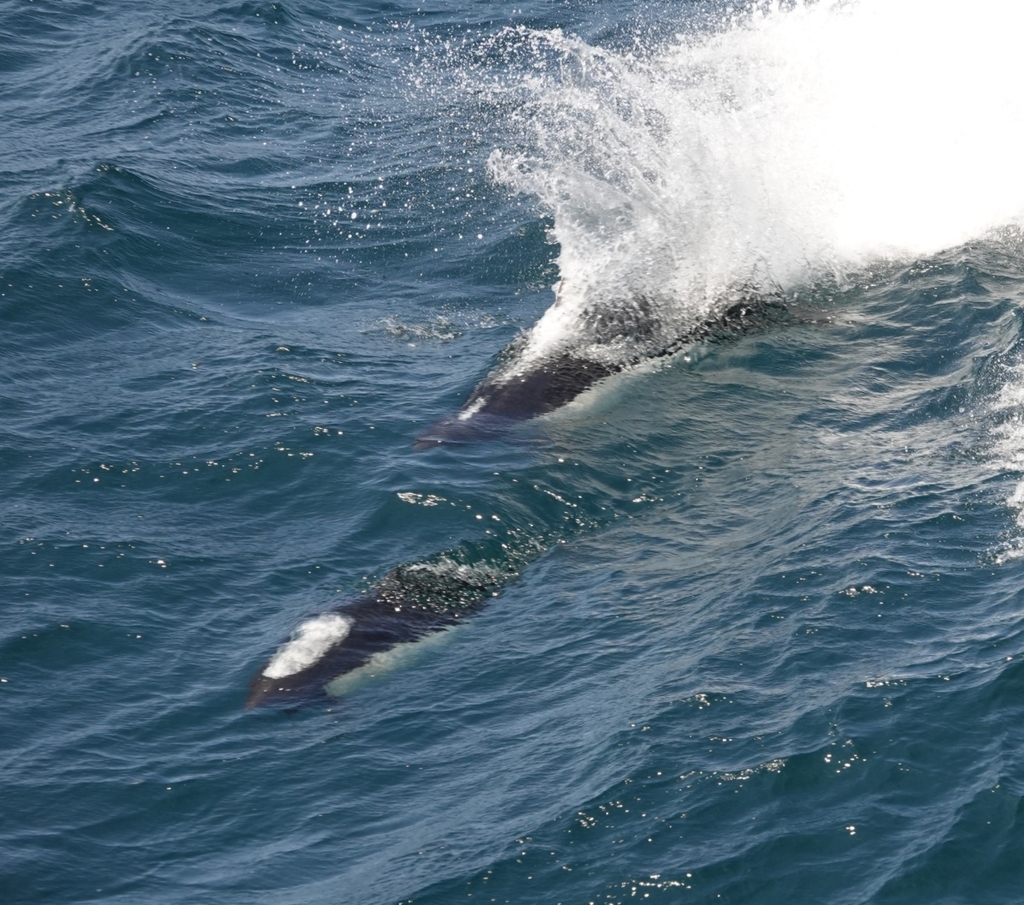
Photos show the species, not always the places on this page.
Length
Up to about 2.3 m (7 ft 7 in); NOAA gives 7 to 8 ft (about 2.1 to 2.4 m). Males are larger than females, and SeaLifeBase lists a maximum of 240 cm for males and 220 cm for females
Weight
About 130 to 220 kg (290 to 490 lb) according to Wikipedia; NOAA says up to 440 lb (about 200 kg). Sources vary, and calves are about 1 m (3 ft) long at birth
Next to a person
About 1.3 times as long as an adult is tall, and as heavy as two to three adults
What it eats
Small schooling fish such as anchovies, herring and hake, deeper-water fish such as lanternfish, and squid, octopus and some crustaceans. NOAA says they hunt mostly at night. They usually dive within the top 10 m, with dives recorded to 94 m.
Around people
Calm, give space
How it lives
Typical life span is 15 to 20 years, and NOAA gives up to 22. They reach maturity at about 3 to 5 years. Pregnancy lasts 11 to 12 months, a calf is born mostly in summer, and females calve about every 3 years. Groups are usually 2 to 10 animals, and larger groups of hundreds are reported now and then. They are fast swimmers, with a speed near 35 mph (about 56 km/h) reported by the US National Park Service, and they often come to ride the bow wave of boats. Transient killer whales prey on them.
Where it goes
Dall's porpoise lives in cold North Pacific water, from the California and Mexico border north to the Bering Sea and west to the Sea of Okhotsk and Sea of Japan, mostly where water is deeper than about 600 ft (180 m) and cooler than 18 C. In Kenai Fjords National Park it is seen in cool, glacier-fed water. Wikipedia lists separate Japan and Okhotsk groups of migrants, so some animals move seasonally in the western Pacific. I did not find detailed movement data for the eastern Pacific.
We only draw a journey on the map when scientists have tracked it or clearly documented it. For this animal we have not found one yet.
Populations
Wikipedia puts the total at over one million animals. Recent regional estimates it lists: California, Oregon and Washington 25,800 (surveys 2008 to 2014), Alaska 83,400, British Columbia about 5,000. NOAA lists about 100,000 for the US West Coast stock, 83,000 for Alaska, 104,000 around Japan and 554,000 in the Sea of Okhotsk. These figures come from different surveys and methods, so they do not match exactly. NOAA calls it reasonably abundant but says trend data are insufficient, and Wikipedia reports no evidence of a range-wide decline. Threats include fishing-gear entanglement and hunting in Japan, where the 2023 quota was 8,535 and 109 were taken, down from a peak above 45,000 in 1988. It is listed on CMS Appendix II.
Meet it respectfully
Watch quietly from a steady boat and let the porpoises choose the distance. They sometimes ride the bow wave, so keep a steady speed and course and never chase, circle, touch, feed or bait them. NOAA's Dall's porpoise page asks watchers to stay at least 50 yards (about 46 m) away and to limit watching to 30 minutes. Follow local rules and your guide.
Fun fact
Tap the bulb to light it up.
It is the largest living porpoise species.
Its black-and-white pattern looks like a small killer whale, and some visitors call it a 'little orca'.
Moving fast at the surface, it throws up a cone of spray known as a rooster tail.
Dall's porpoise in the Ocean Atlas
Places we have researched where this animal is recorded. It is never guaranteed, and some places are for watching from the boat only.
Travel with usComing soonTrusted referralExploringOn pause, story onlyEthics pass
Country colour: pink where we travel, blue where we are exploring or refer, grey for story only.
 Canada
 Japan
Japan Russia
 United States
Sources for this page
- Wikipedia, 2026
- NOAA Fisheries, 2026
- US National Park Service, Kenai Fjords, 2026
- SeaLifeBase, 2026
- Alaska Department of Fish and Game, 2026
- CMS, 2026
- GBIF, IUCN Red List category, 2026
Facts checked 5 October 2026. Photos: Unsplash licence, or Creative Commons as shown on each photo.
Work in ocean travel?
We are always happy to hear from exceptional local operators, accommodation, conservation organisations and destination experts. If your work fits responsible, small-group ocean travel, we would love to learn more.
Partner with Ocean Calling