
Double-crested cormorant
Phalacrocorax auritus
A dark, upright diving bird that dries its wings in the sun, and no sighting is ever a promise.
Least Concern (IUCN, 2018) means it is not close to qualifying as threatened. Its numbers have risen since the 1970s.
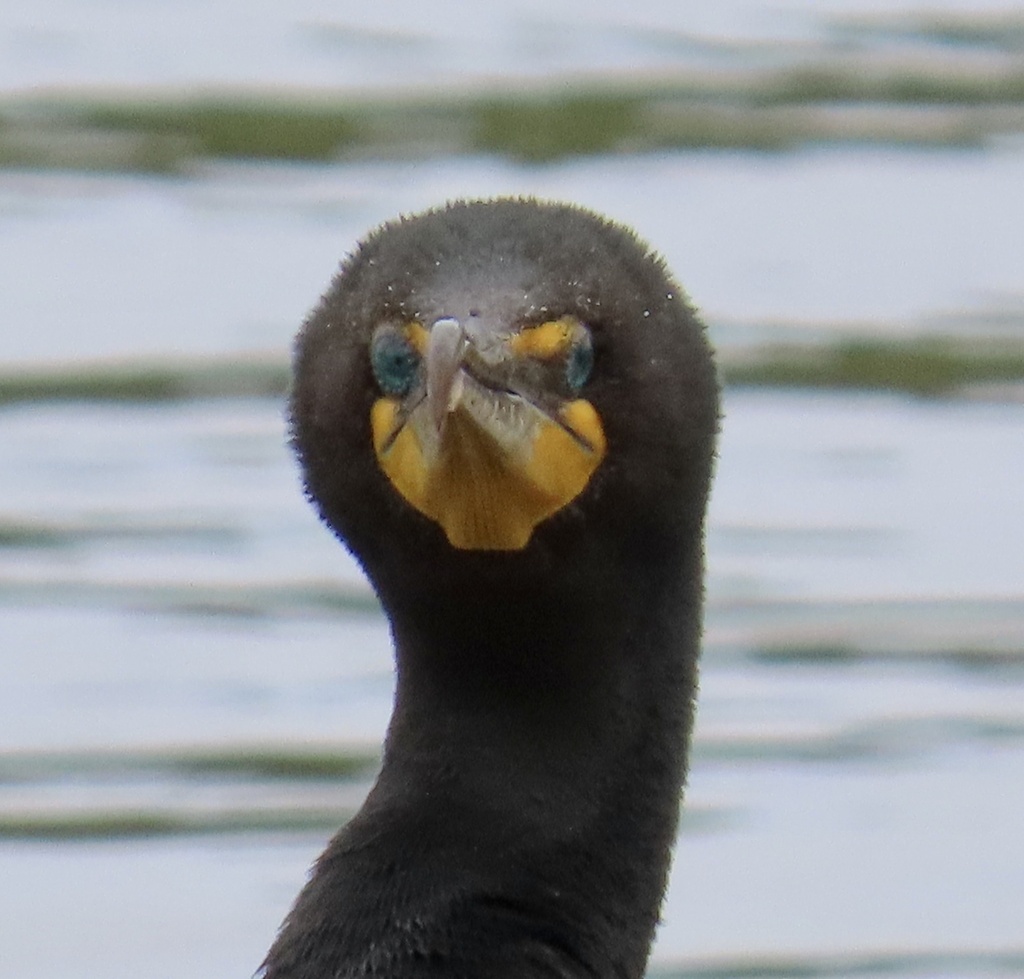
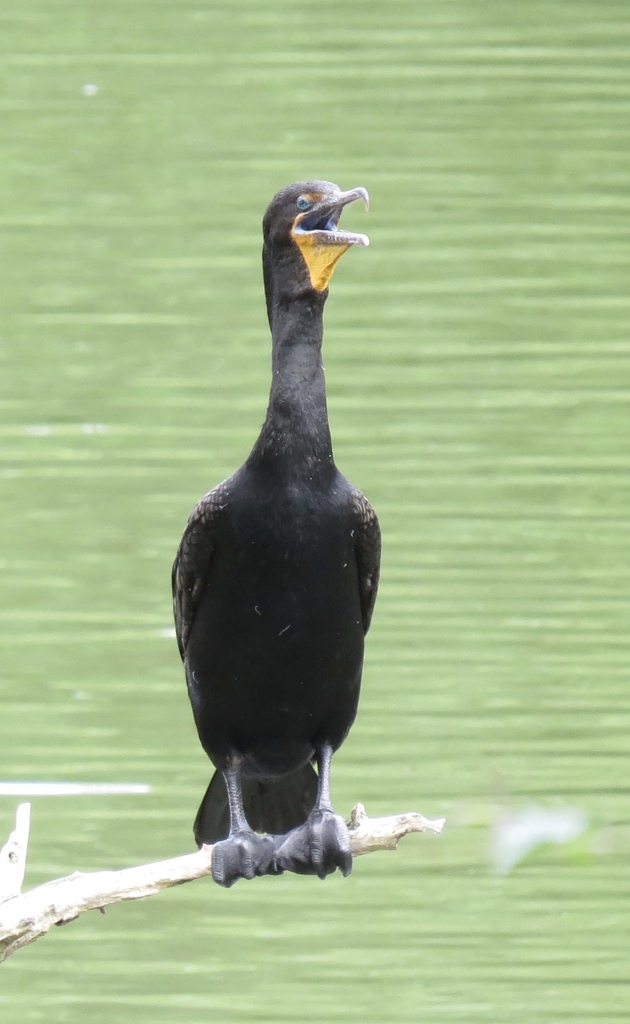
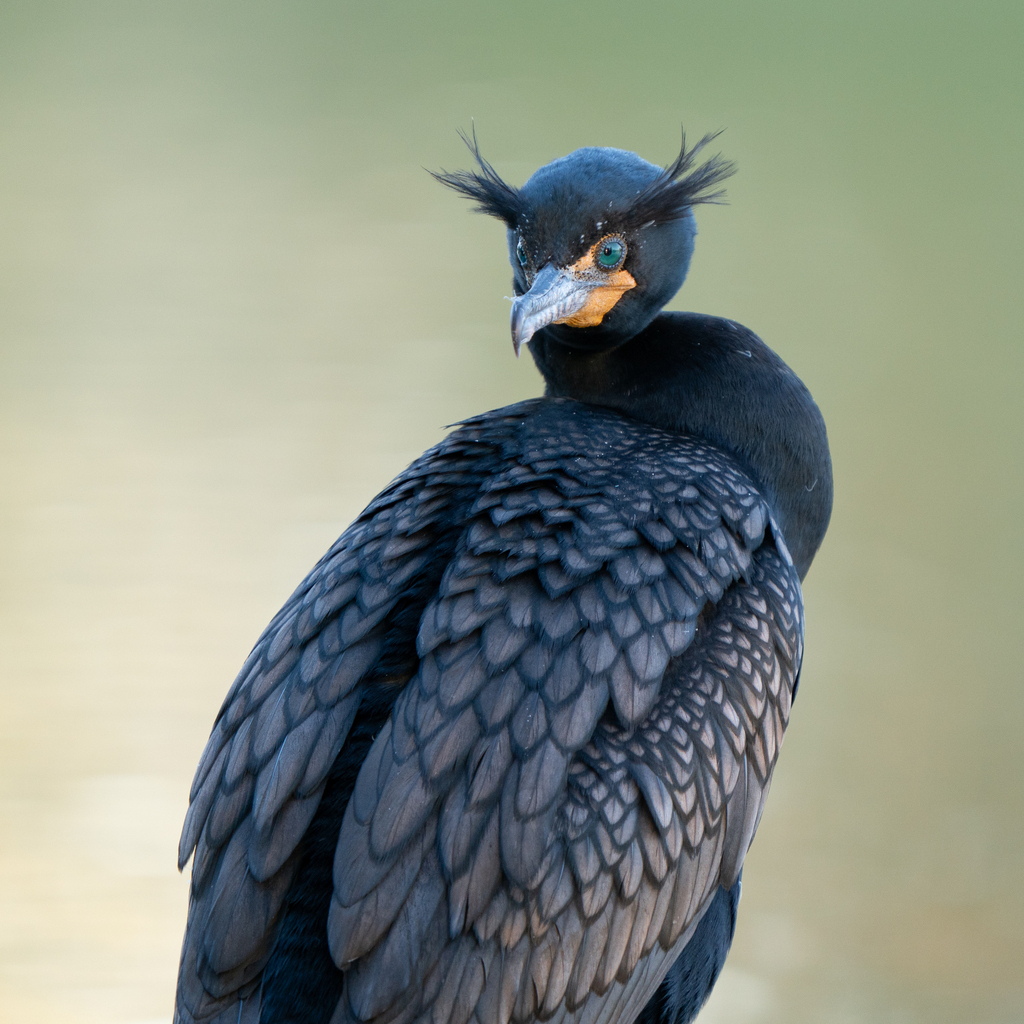
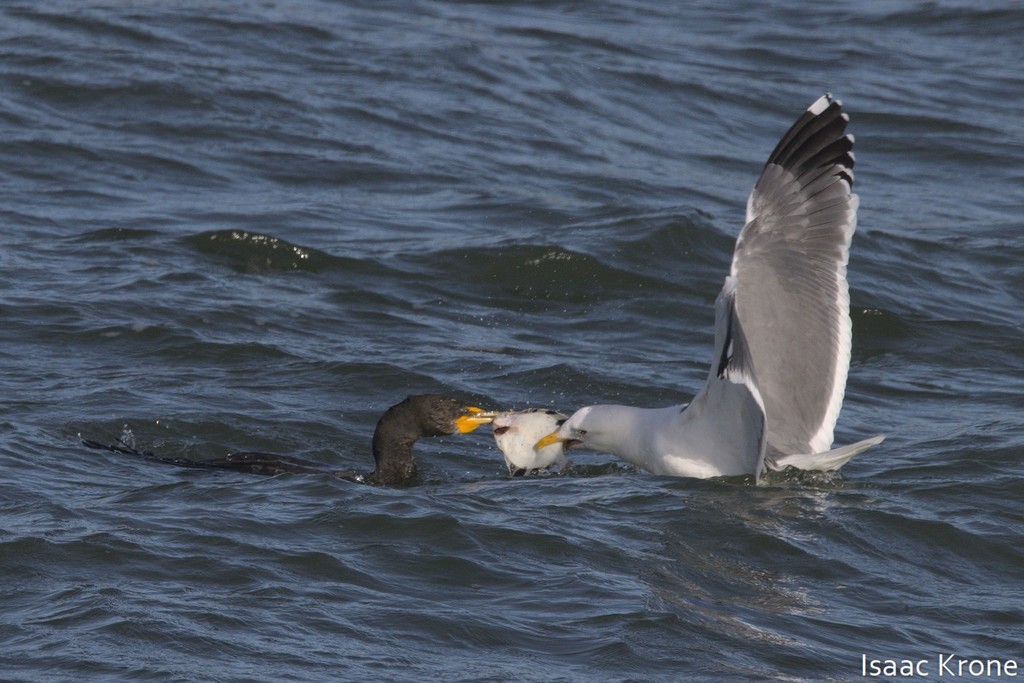
Photos show the species, not always the places on this page.
Length
About 70 to 90 cm (28 to 35 in) long, with a wingspan of about 114 to 123 cm (45 to 48 in)
Weight
About 1.2 to 2.5 kg (2.6 to 5.5 lb)
Next to a person
About as long as a child of 8 to 10 years is tall, with a wingspan roughly as wide as an adult is tall
What it eats
Mainly fish, caught by diving. One source gives dive depths of about 1.5 to 7.5 m (5 to 25 ft) lasting 30 to 70 seconds. It also takes crabs, shrimp, crayfish, frogs, salamanders and eels.
Around people
Common, give space
How it lives
A very adaptable bird, found on coasts, bays, lakes, rivers and reservoirs. It nests in colonies, in trees, on sea cliffs or on the ground on islands. Birds begin to breed at about three years old. A clutch is usually 3 to 4 eggs, sometimes 1 to 7, and incubation takes about 25 to 33 days. Its feathers are not fully waterproof, so after diving it stands with its wings held open to dry.
Where it goes
Most double-crested cormorants migrate, flying in flocks that often follow coastlines or rivers. Some stay all year, for example in Florida and on the Pacific coast. Birds that breed in the north spend the non-breeding season in places such as the Bahamas, Turks and Caicos, Hispaniola and the Cayman Islands. Single birds have turned up in Ireland, Portugal and the United Kingdom.
We only draw a journey on the map when scientists have tracked it or clearly documented it. For this animal we have not found one yet.
Populations
Least Concern worldwide (IUCN, 2018), and numbers are increasing. It declined until the 1920s, recovered into the 1950s, fell again in the 1960s because of pesticides, and has grown since DDT was banned in 1972. Population estimates in the sources I read differ, from about 630,000 to about 3.63 million birds, so treat any single number with care. In places where fish farmers see it as a competitor, authorities manage numbers by methods such as culling and egg treatment. The species is now placed in the genus Nannopterum (Nannopterum auritum).
Meet it respectfully
Watch from a distance, especially near nesting colonies, and let birds keep their roosts and drying perches. Never chase, approach nests, feed or bait the birds, and do not promise a sighting. I did not read any local viewing rules for this species.
Fun fact
Tap the bulb to light it up.
After diving it stands with its wings open to dry, because its feathers are not fully waterproof.
Its numbers fell in the 1960s because of pesticides and have grown since DDT was banned in 1972.
It nests in colonies in trees, on sea cliffs or on the ground on islands.
Double-crested cormorant in the Ocean Atlas
Places we have researched where this animal is recorded. It is never guaranteed, and some places are for watching from the boat only.
Travel with usComing soonTrusted referralExploringOn pause, story onlyEthics pass
Country colour: pink where we travel, blue where we are exploring or refer, grey for story only.
 The Bahamas
 Belize
 Bermuda
 Canada
 Cayman Islands
 Cuba
Cuba Guatemala
 Honduras
 Ireland
 Mexico
 Portugal
 Puerto Rico
 United Kingdom
 United States
Sources for this page
- Wikipedia, 2026
- Audubon Field Guide, 2026
- Audubon Bird Migration Explorer, 2026
- Featherbase, 2026
- GBIF and IUCN Red List category, 2026
Facts checked 5 October 2026. Photos: Unsplash licence, or Creative Commons as shown on each photo.
Work in ocean travel?
We are always happy to hear from exceptional local operators, accommodation, conservation organisations and destination experts. If your work fits responsible, small-group ocean travel, we would love to learn more.
Partner with Ocean CallingShop with Ocean Calling
Visit the Ocean Calling storefront on Amazon.
As an Amazon Associate I earn from qualifying purchases. You are not only choosing products that respect the ocean, you are also helping us keep going: paying our local partners fairly and keeping our retreats ethical, sustainable and honestly priced for you. 💗